[FEATURED_IMAGE_PLACEOLDER]
Knife sharpening is one of those skills that seems simple on the surface but quickly reveals its complexity the moment you pick up a whetstone or angle guide. Whether you’re a home cook, a professional chef, an outdoor enthusiast, or someone who just wants their kitchen tools to perform at their best, understanding sharpening angles is foundational to maintaining a truly sharp edge. Among the most debated topics in knife care is the choice between a 15-degree and a 20-degree sharpening angle. It’s not just a technical detail—it affects how your knife cuts, how long it stays sharp, and even how it feels in your hand during use.
This guide exists because too many people are either overwhelmed by conflicting advice or misled by oversimplified claims. You’ll find articles saying “15 degrees is always better” or “20 degrees is for beginners only,” but the truth lies in nuance. The right angle depends on your knife’s purpose, the steel it’s made from, your cutting style, and even the type of food you’re slicing. By the end of this comprehensive guide, you’ll understand not only the differences between 15-degree and 20-degree angles but also how to choose—and maintain—the ideal edge for your needs. We’ll break down the science, debunk myths, compare real-world performance, and give you actionable advice so you can stop guessing and start sharpening with confidence.
The market today offers an overwhelming array of sharpening systems, from pull-through devices to guided-angle stones and high-end electric sharpeners. Each comes with its own recommended angles, often without explaining why. Meanwhile, knife manufacturers vary widely in their factory edge specifications—some high-end Japanese knives come pre-sharpened at 12–15 degrees per side, while Western-style chef’s knives often ship at 20 degrees. This inconsistency leaves users confused: Should I stick with the factory angle? Can I go sharper? Will it break? This guide cuts through the noise. Whether you’re investing in your first whetstone or upgrading your entire sharpening setup, knowing how angle impacts performance will save you time, money, and frustration—and ensure your knives perform like the precision instruments they’re meant to be.

What to Look for When Buying Buying Guide
1. Intended Use & Cutting Tasks
The single most important factor in choosing a sharpening angle is what you’ll actually be cutting. A 15-degree edge excels at fine, delicate tasks—think paper-thin tomato slices, precise herb chiffonade, or cleanly portioning raw fish for sashimi. Its acute angle creates a finer, more acute apex that slices through soft or fibrous materials with minimal resistance. In contrast, a 20-degree edge offers greater durability and is better suited for heavier-duty work like chopping root vegetables, breaking down poultry, or cutting through small bones. The wider angle distributes force over a larger surface area, reducing the chance of chipping or rolling the edge.
If you primarily cook at home and value precision over brute strength, 15 degrees may suit you better. But if you’re doing meal prep for a family, working in a busy kitchen, or using your knife for occasional outdoor tasks (like cutting rope or opening packages), 20 degrees provides a more forgiving and resilient edge. Consider your daily cutting habits: Do you slice more than you chop? Are your ingredients mostly soft and wet, or hard and dry? Your answers will guide your ideal angle.
2. Knife Steel Type & Hardness (HRC)
Not all steels respond the same way to sharpening angles. High-hardness steels (typically 60+ HRC), common in premium Japanese knives like those made from VG-10, SG2, or ZDP-189, can hold a very fine edge and benefit from lower angles like 15 degrees. These steels are brittle by nature, so while they achieve razor-like sharpness, they’re more prone to chipping if used aggressively. Conversely, softer or more ductile steels (55–58 HRC), often found in German-style knives like Wüsthof or Henckels, are tougher and better able to withstand the impacts of chopping on a cutting board. For these, a 20-degree angle offers a sweet spot between sharpness and durability.
Always check your knife’s Rockwell hardness rating (HRC) if available. A knife rated at 62 HRC can safely be sharpened to 15 degrees for precision tasks, but the same angle on a 56 HRC blade might lead to rapid edge deformation. Modern powdered metallurgy steels (e.g., CPM-S35VN, M390) offer exceptional edge retention and toughness, allowing them to perform well even at 15 degrees—but they still require careful handling. When in doubt, lean toward the manufacturer’s recommended angle, which is usually optimized for that specific steel composition.
3. Edge Durability vs. Sharpness Trade-Off
There’s a fundamental trade-off in knife sharpening: the sharper the edge, the less durable it tends to be. A 15-degree edge is objectively sharper—it requires less force to initiate a cut and produces cleaner slices—but it’s also more fragile. The thin apex can roll, bend, or chip under lateral stress or when hitting hard surfaces (like a bone or frozen food). A 20-degree edge sacrifices some initial sharpness for robustness. It won’t slice a tomato as effortlessly, but it will survive accidental drops, heavy chopping, and repeated use without immediate degradation.
This trade-off isn’t just theoretical—it plays out in real kitchens every day. Chefs who work in high-volume environments often prefer 18–20 degrees for their workhorse knives because they can’t afford constant resharpening. Home cooks who prioritize presentation and precision may opt for 15 degrees on their favorite gyuto or santoku. The key is balancing your need for sharpness against your tolerance for maintenance. If you’re willing to strop regularly and avoid abusive use, 15 degrees rewards you with superior cutting performance. If you want a “set it and forget it” edge that lasts weeks between sharpenings, 20 degrees is more practical.
4. Sharpening Skill Level & Equipment
Your ability to maintain a consistent angle during sharpening directly impacts which angle you should choose. Achieving and holding a precise 15-degree angle freehand on a whetstone requires significant practice, steady hands, and patience. Even small deviations can result in an uneven edge or excessive metal removal. Beginners often struggle with this, leading to frustration or a dull, inconsistent edge. In contrast, 20 degrees is more forgiving—it’s easier to maintain consistency, and minor fluctuations don’t drastically affect performance.
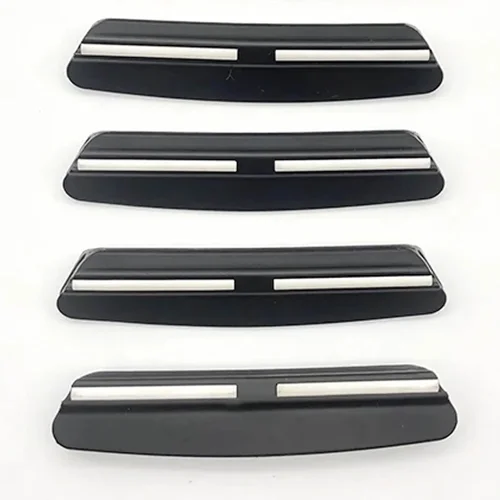
If you’re new to sharpening, consider starting with a guided system (like the Work Sharp Guided Field Sharpener or Lansky Deluxe) that locks the angle for you. These tools make it possible to achieve professional results at both 15 and 20 degrees, regardless of skill level. Alternatively, electric sharpeners with fixed-angle slots (such as the Chef’sChoice Trizor XV) automate the process entirely. However, be aware that some systems only offer preset angles—so verify that your chosen tool supports your desired angle before buying. As your skills improve, you can transition to freehand sharpening, but starting with a reliable guide reduces the learning curve and builds confidence.
5. Maintenance Frequency & Lifestyle
How often are you willing to sharpen your knife? A 15-degree edge typically requires more frequent maintenance—stropping every few uses and full resharpening every 1–3 months with regular use. A 20-degree edge can often go 3–6 months between sharpenings, depending on usage intensity. If you’re busy, travel frequently, or simply dislike frequent upkeep, the added durability of a 20-degree angle may outweigh the marginal gain in sharpness.
Also consider your storage and handling habits. Do you store knives in a block, on a magnetic strip, or in a drawer with other utensils? Drawer storage increases the risk of edge damage, making a more robust 20-degree edge a safer choice. Do you wash knives by hand or toss them in the dishwasher? Dishwashers expose edges to harsh detergents and impacts—again favoring a wider angle. Your lifestyle dictates not just how you use your knife, but how it’s treated when not in use. Choose an angle that aligns with your real-world conditions, not just ideal scenarios.
6. Knife Geometry & Blade Style
Not all blades are designed to perform optimally at the same angle. Japanese-style knives (e.g., gyuto, santoku, yanagiba) often feature thinner spines, flatter grinds, and harder steels—making them ideal candidates for 15-degree edges. Their geometry is built for precision slicing, and the acute angle complements their design. Western-style chef’s knives (e.g., German or French profiles) tend to have thicker spines, convex or hollow grinds, and softer steels, which benefit from the added strength of a 20-degree edge.
Specialty knives also matter. A paring knife used for peeling and detailed work can easily handle 15 degrees due to light-duty use. A cleaver or survival knife, designed for chopping and prying, should never go below 20 degrees—and often performs best at 22–25 degrees. Even within the same category, variations exist: a nakiri (vegetable knife) with a tall, straight blade can tolerate a sharper angle than a rocking-style chef’s knife used for heavy chopping. Always consider the knife’s intended function and physical design when selecting an angle.
7. Personal Preference & Cutting Feel
Beyond technical specs, sharpening angle affects how a knife feels during use. Some users describe a 15-degree edge as “effortless” or “gliding,” especially when slicing delicate ingredients. Others find it “twitchy” or “too sensitive,” particularly if they’re accustomed to heavier blades. A 20-degree edge often feels more stable and controlled, with a satisfying resistance that provides feedback during chopping. This subjective experience is valid and shouldn’t be ignored.
Try both angles if possible. Many sharpening systems allow you to test different settings on a single knife (e.g., sharpen one side at 15° and the other at 20° to compare). You might discover that you prefer 17 or 18 degrees—a compromise that balances sharpness and durability. Remember, there’s no universal “best” angle. What matters most is how the knife performs in your hands, on your ingredients, and within your routine. Trust your instincts as much as the data.
Different Types of Buying Guide

Common Buying Mistakes to Avoid
❌ Mistake: Assuming All Knives Should Be Sharpened to 15 Degrees
Why it’s bad: While 15 degrees produces a very sharp edge, it’s not suitable for every knife or user. Applying this angle to a soft-steel German chef’s knife or a heavy-duty cleaver can lead to rapid edge failure, chipping, or rolling—especially under heavy use. It also increases maintenance demands unnecessarily.
What to do instead: Match the angle to the knife’s design, steel, and intended use. Use 15 degrees for high-hardness Japanese knives used for precision tasks, and stick to 18–20 degrees for Western-style or utility knives.
❌ Mistake: Ignoring the Manufacturer’s Recommended Angle
Why it’s bad: Knife makers test their blades extensively and specify optimal angles based on steel composition, heat treatment, and geometry. Deviating without understanding the consequences can void performance benefits or damage the edge.
What to do instead: Check the manufacturer’s website or documentation for recommended sharpening angles. If unavailable, research similar models or contact customer support. Use their guidance as a starting point, then adjust based on your experience.
❌ Mistake: Using the Wrong Sharpening Tool for the Desired Angle
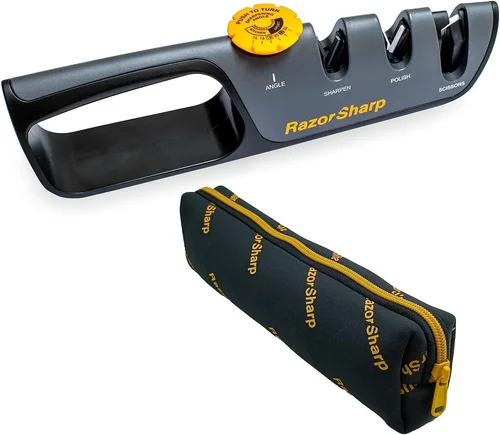
Why it’s bad: Many pull-through sharpeners only offer fixed angles like 20 degrees. If you want 15 degrees, these tools won’t work. Similarly, some electric sharpeners lack fine-angle adjustment, forcing compromises.
What to do instead: Verify that your sharpening system supports your target angle before purchasing. Look for adjustable guides or multi-angle slots. For precision work, invest in a system with clear angle markings or digital readouts.
❌ Mistake: Over-Sharpening or Removing Too Much Metal
Why it’s bad: Aggressive sharpening at acute angles can thin the blade excessively, weakening the spine and reducing longevity. It also shortens the knife’s usable life by removing material needed for future resharpening.
What to do instead: Use light pressure and frequent burr checks. Sharpen only until a consistent burr forms, then switch sides. Maintain the existing edge geometry rather than重塑ing it each time.
❌ Mistake: Neglecting Regular Maintenance
Why it’s bad: A 15-degree edge dulls faster and requires more frequent stropping and honing. Ignoring this leads to frustration when the knife no longer performs as expected.
What to do instead: Strop your knife weekly with a leather strop and compound. Use a honing rod daily (even if just for 10 seconds) to realign the edge. Schedule full resharpening based on usage—not calendar time.
❌ Mistake: Choosing Based Solely on Price
Why it’s bad: Cheap sharpeners often lack angle precision, leading to inconsistent edges. Conversely, expensive systems aren’t always better—some prioritize features over functionality.
What to do instead: Focus on value: Does the tool deliver consistent results at your desired angle? Read user reviews, watch demo videos, and prioritize reliability over bells and whistles.
Budget Guidelines: How Much Should You Spend?
Entry-Level ($10–$40): At this price, expect basic pull-through sharpeners or low-end whetstones. These are fine for occasional touch-ups on 20-degree edges but lack precision for 15-degree work. Ideal for casual users with inexpensive knives who prioritize convenience over performance.
Mid-Range ($40–$120): This is the sweet spot for most buyers. Guided systems like the Lansky Standard or Work Sharp Guided Field Sharpener offer excellent angle control, durability, and versatility. You can achieve both 15 and 20 degrees with confidence. Suitable for home cooks, outdoor enthusiasts, and anyone serious about knife maintenance.
Premium ($120–$300): High-end electric sharpeners (e.g., Chef’sChoice Trizor XV) or professional whetstone sets fall here. These deliver museum-quality edges, fast results, and long-term reliability. Best for chefs, collectors, or those with high-end knives who want minimal effort and maximum performance.
Luxury ($300+): Custom sharpening rigs, diamond stone systems, or professional-grade equipment belong here. These are overkill for most users but offer unparalleled control and consistency. Reserved for sharpening professionals or obsessive enthusiasts who demand perfection.
Expert Tips for Getting the Best Deal
- Buy during off-seasons: Sharpening tools often go on sale in late winter or early spring, after holiday shopping ends. Watch for Black Friday deals, but also check post-holiday clearance events.
- Prioritize adjustable systems: Choose sharpeners that allow multiple angle settings (e.g., 15°, 17.5°, 20°). This future-proofs your investment as your skills and knife collection grow.
- Read real user reviews: Look beyond star ratings. Search for phrases like “holds 15 degrees consistently” or “easy for beginners” to find honest insights.
- Test before committing: If possible, try a friend’s sharpener or visit a store that offers demos. Feel how stable the guide is and whether the angle feels right.
- Check return policies: Some sharpeners seem great online but disappoint in practice. Buy from retailers with generous return windows (30+ days).
- Bundles can save money: Many kits include stones, guides, and strops. Compare individual item costs to ensure you’re getting a true discount.
- Consider long-term costs: Diamond stones last longer than water stones. Electric sharpeners save time but may wear out motors. Factor in replacement parts and lifespan.

Frequently Asked Questions
Q: Can I sharpen a 20-degree knife to 15 degrees?
A: Yes, but it requires removing significant material and reshaping the edge. This is best done with a coarse stone and guided system. Be prepared to thin the blade slightly, which may affect balance. Only attempt this if the knife has enough spine thickness to support the change.
Q: Is a 15-degree edge twice as sharp as a 20-degree edge?
A: Not exactly. Sharpness depends on multiple factors—edge polish, burr removal, and steel quality—not just angle. However, a well-honed 15-degree edge will cut with noticeably less resistance than a 20-degree one, especially on soft foods.
Q: Do professional chefs use 15-degree edges?
A: Many do, especially in Japanese cuisine or fine dining. However, line cooks in busy kitchens often prefer 18–20 degrees for durability. It varies by role, cuisine, and personal preference.
Q: Can I use a 15-degree angle on a serrated knife?
A: Generally no. Serrated edges are designed to cut via sawing motion, not slicing. Sharpening them requires specialized tools and techniques. Stick to smooth blades for acute angles.
Q: How often should I sharpen at 15 vs. 20 degrees?
A: A 15-degree edge may need resharpening every 1–3 months with regular use; a 20-degree edge can last 3–6 months. Always strop regularly regardless of angle.
Q: Will a sharper angle make my knife last longer?
A: No—it may actually shorten the knife’s life if the edge chips or rolls frequently. Proper maintenance and appropriate angle selection are more important than sheer sharpness.
Q: Are there angles between 15 and 20 degrees?
A: Absolutely. Many users prefer 17 or 18 degrees as a compromise. Some sharpening systems offer half-degree increments for fine-tuning.
Q: Does angle affect food sticking to the blade?
A: Indirectly. A sharper, cleaner edge (often achieved at lower angles) reduces tearing, which minimizes cell rupture and sticking—especially with tomatoes or onions.
Q: Can I damage my knife by using the wrong angle?
A: Not immediately, but over time, an inappropriate angle can lead to premature wear, chipping, or loss of performance. It’s better to err on the side of a slightly wider angle than too narrow.
Our Final Recommendations
- Best for Budget-Conscious Buyers: Lansky Deluxe 5-Stone System – Offers multiple angle settings (including 15° and 20°), consistent results, and durable construction under $80.
- Best Overall Value: Work Sharp Guided Field Sharpener – Portable, versatile, and capable of handling everything from pocket knives to chef’s knives at precise angles.
- Best Premium Option: Chef’sChoice Trizor XV EdgeSelect – Delivers professional-grade 15-degree edges quickly and consistently, ideal for high-end knife owners.
- Best for Beginners: AccuSharp 001 Knife Sharpener – Simple pull-through design with a reliable 20-degree angle—perfect for those new to sharpening.
- Best for Advanced Users: Shapton Pro 5000/8000 Grit Whetstone Set with Angle Guide – For freehand enthusiasts who want ultimate control over edge geometry and finish.
Conclusion: Making the Right Choice
Choosing between a 15-degree and 20-degree sharpening angle isn’t about finding the “best” angle—it’s about finding the right angle for your knife, your skills, and your lifestyle. The 15-degree edge offers unparalleled sharpness and precision, ideal for high-hardness Japanese knives and delicate culinary tasks. The 20-degree edge provides durability, ease of maintenance, and resilience, making it perfect for everyday kitchen work, softer steels, and heavier chopping. Rather than viewing this as a binary choice, consider it a spectrum: many users find success at 17 or 18 degrees, blending the benefits of both worlds.
Remember, sharpening is both science and art. The tools matter, but so does your understanding of how angle interacts with steel, geometry, and use case. Invest in a quality sharpening system that supports your target angle, maintain your edge regularly, and don’t be afraid to experiment—safely and gradually—as your confidence grows. Your knives are extensions of your hands; when they’re properly sharpened, they don’t just cut better—they feel better, work better, and inspire better cooking.
So take what you’ve learned here, assess your needs honestly, and sharpen with intention. Whether you land on 15, 20, or somewhere in between, the goal is the same: a knife that performs flawlessly, lasts for years, and makes every cut a pleasure. Now go put that edge to work.