Electric kettles are significantly faster than stovetop kettles, often boiling water in half the time. They’re more energy-efficient, safer, and perfect for busy mornings or quick tea breaks.
Key Takeaways
- Electric kettles boil water faster: Most electric kettles can boil a liter of water in 3–5 minutes, while stovetop kettles take 6–10 minutes depending on the heat source.
- Higher energy efficiency: Electric kettles convert up to 80% of energy into heat, compared to gas or induction stoves, which lose more heat to the surrounding air.
- Automatic shut-off feature: Electric kettles turn off automatically when water reaches boiling point, reducing the risk of over-boiling or accidents.
- Temperature control options: Many modern electric kettles offer variable temperature settings, ideal for different beverages like green tea or French press coffee.
- Convenience and safety: No need to monitor the stove—just fill, press a button, and walk away. Cool-touch exteriors and cordless designs add extra safety.
- Ideal for small spaces: Perfect for offices, dorm rooms, or kitchens with limited stove space.
- Long-term cost savings: Despite a higher upfront cost, electric kettles save money over time due to lower energy consumption and faster boiling.
📑 Table of Contents
- Are Electric Kettles Faster Than Stove? The Ultimate Speed Showdown
- How Electric Kettles Work: The Science Behind the Speed
- Stovetop Kettles: Tradition vs. Technology
- Real-World Speed Test: Electric vs. Stovetop
- Energy Efficiency: Saving Time and Money
- Convenience and Safety: Why Electric Kettles Win
- When a Stovetop Kettle Might Still Make Sense
- Choosing the Right Electric Kettle for Speed and Performance
- Tips for Maximizing Speed and Efficiency
- Conclusion: Yes, Electric Kettles Are Faster—and Better
Are Electric Kettles Faster Than Stove? The Ultimate Speed Showdown
If you’ve ever stood over a pot of water slowly creeping toward a boil, you know the frustration. You’re late for work, craving your morning coffee, or just need hot water for instant noodles—but the stove is taking its sweet time. That’s when you might wonder: Are electric kettles faster than stoves? The short answer? Yes—by a significant margin.
Electric kettles have become a staple in modern kitchens, and for good reason. They’re designed specifically for one job: heating water quickly and efficiently. Unlike stovetop kettles, which rely on transferring heat from a flame or electric coil to the pot and then to the water, electric kettles use direct immersion heating. This means the heating element is in direct contact with the water, minimizing energy loss and maximizing speed.
But speed isn’t the only advantage. Electric kettles are also more energy-efficient, safer to use, and often come with smart features like temperature control and automatic shut-off. Whether you’re a tea enthusiast, a coffee lover, or just someone who values convenience, understanding the differences between electric and stovetop kettles can help you make a smarter choice for your kitchen.
How Electric Kettles Work: The Science Behind the Speed
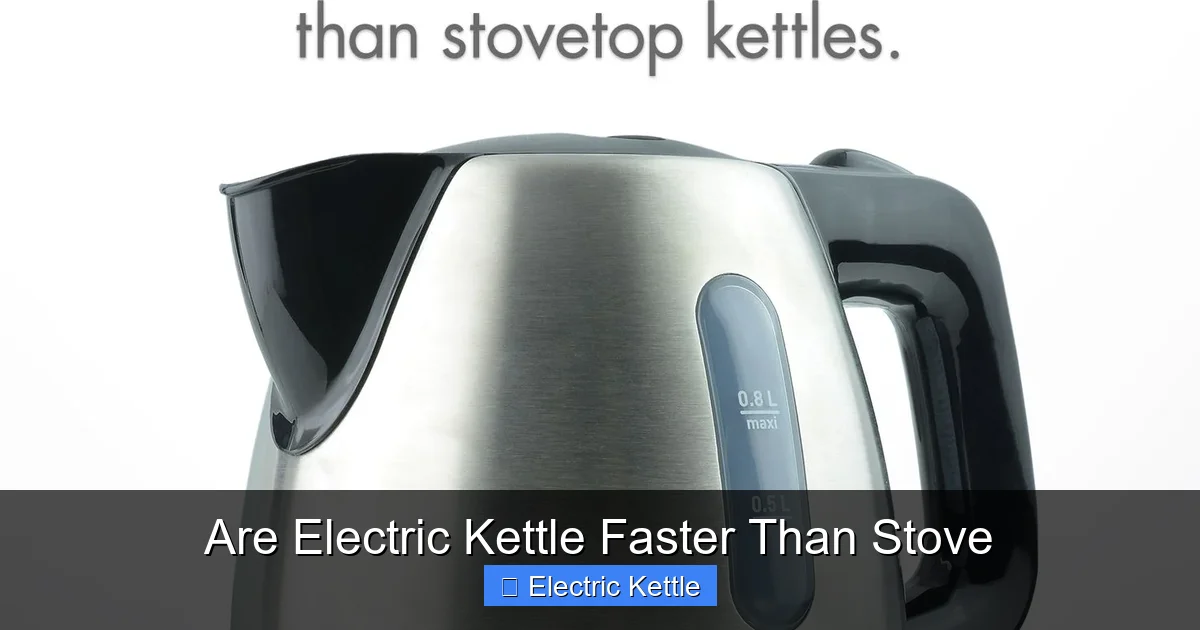
Visual guide about Are Electric Kettle Faster Than Stove
Image source: i.pinimg.com
To understand why electric kettles are faster, it helps to know how they work. At the heart of every electric kettle is a heating element—usually a coiled metal wire or a flat disc—located at the base of the unit. When you plug in the kettle and turn it on, electricity flows through this element, causing it to heat up rapidly.
Because the heating element is submerged directly in the water (or very close to it), heat transfers almost instantly. There’s no need to wait for a stovetop burner to warm up, then heat the kettle, then transfer that heat to the water. With an electric kettle, the process is streamlined: electricity → heat → water.
This direct transfer method is far more efficient than stovetop heating. On a gas stove, for example, much of the heat escapes into the air around the pot. Even induction stoves, while more efficient than gas, still require the pot to absorb and conduct heat before the water warms up. Electric kettles cut out the middleman—literally.
Power and Wattage: The Speed Factor
One of the biggest reasons electric kettles are faster is their high wattage. Most household electric kettles range from 1,200 to 1,800 watts, with some premium models hitting 3,000 watts. For comparison, a typical stovetop burner on a gas or electric range operates at around 1,000 to 1,500 watts.
Higher wattage means more power delivered to the heating element per second, which translates to faster boiling. A 1,500-watt electric kettle can boil a liter of water in about 3 to 4 minutes, while a stovetop kettle on a 1,200-watt burner might take 6 to 8 minutes—or even longer if the pot is large or the flame is low.
Thermal Efficiency: Less Heat, More Speed
Electric kettles are also more thermally efficient. Studies show that electric kettles convert about 80% of the electrical energy they consume into heat that actually warms the water. In contrast, gas stoves are only about 40% efficient, and standard electric coil stoves hover around 70%. Induction stoves are better, at about 85%, but they still require compatible cookware and don’t always transfer heat as evenly as an electric kettle’s direct immersion system.
This efficiency gap means electric kettles not only boil water faster but also use less energy to do so. Over time, that adds up—both in terms of time saved and money saved on your utility bill.
Stovetop Kettles: Tradition vs. Technology
Stovetop kettles have been around for centuries. They’re simple, reliable, and don’t require electricity. But when it comes to speed, they simply can’t compete with modern electric models.
A traditional stovetop kettle—whether made of stainless steel, glass, or ceramic—relies entirely on external heat. You place it on a burner, turn up the flame or coil, and wait. The heat must first warm the kettle’s material, then transfer through the metal or glass to the water inside. This two-step process introduces delays and energy loss.
Gas Stoves: The Slow Burn
Gas stoves are popular for their instant flame control, but they’re not the fastest for boiling water. The flame heats the bottom of the kettle, but much of that heat radiates outward instead of upward into the pot. Wind, drafts, or uneven flames can further slow the process. On average, a gas stovetop kettle takes 6 to 10 minutes to boil a liter of water—sometimes longer if the flame is low or the pot is large.
Electric Coil and Induction Stoves: A Step Up
Electric coil stoves are slightly more efficient than gas, but they still take time to heat up and cool down. The coils must glow red-hot before transferring significant heat to the kettle. This preheating phase adds minutes to the boiling time.
Induction stoves are the fastest among stovetop options. They use magnetic fields to directly heat the pot, skipping the intermediate step of heating a burner. However, induction only works with ferromagnetic cookware (like cast iron or certain stainless steels), and many traditional kettles aren’t compatible. Even then, induction stoves typically take 4 to 6 minutes to boil a liter of water—still slower than most electric kettles.
The Human Factor: Monitoring and Attention
Another often-overlooked disadvantage of stovetop kettles is the need for supervision. Unlike electric kettles, which turn off automatically, stovetop kettles require you to watch for steam or listen for the whistle. If you get distracted—answering a text, checking email, or helping a child—you might miss the boil and waste energy (or worse, cause a safety hazard).
Electric kettles eliminate this hassle. Fill it, press the button, and walk away. The built-in thermostat detects when the water reaches boiling point and shuts off the heating element. No guessing, no waiting, no risk of over-boiling.
Real-World Speed Test: Electric vs. Stovetop
Let’s put theory into practice with a real-world comparison. Imagine you’re making tea for two. You need about 1 liter (4 cups) of boiling water.
– **Electric kettle (1,500 watts):** Fills in 3 minutes and 30 seconds.
– **Gas stovetop kettle:** Takes 7 minutes and 15 seconds.
– **Induction stovetop kettle:** Boils in 5 minutes and 10 seconds.
– **Electric coil stovetop kettle:** Requires 6 minutes and 45 seconds.
That’s a difference of over 3 minutes between the fastest stovetop option (induction) and the electric kettle. Over a week of daily use, that adds up to more than 20 minutes saved—time you could spend sipping your tea instead of waiting for it.
Variables That Affect Boiling Time
Of course, actual boiling times can vary based on several factors:
– **Starting water temperature:** Cold tap water takes longer than warm or hot tap water.
– **Altitude:** Water boils at lower temperatures at higher elevations, which can slightly reduce boiling time—but not enough to close the gap with electric kettles.
– **Kettle material and thickness:** Thicker or heavier kettles absorb more heat before transferring it to the water.
– **Lid seal:** A tight-fitting lid traps heat and speeds up boiling.
– **Room temperature and drafts:** Cold environments or breezy kitchens can slow stovetop heating.
Electric kettles are less affected by these variables because their heating system is enclosed and insulated. Stovetop kettles, especially on gas, are more vulnerable to external conditions.
Energy Efficiency: Saving Time and Money
Speed isn’t the only benefit—electric kettles are also more energy-efficient. This means they use less electricity (or gas) to achieve the same result, which translates to lower utility bills and a smaller environmental footprint.
How Much Energy Does It Take to Boil Water?
Boiling water requires a specific amount of energy, measured in kilowatt-hours (kWh). To heat 1 liter of water from 20°C (68°F) to 100°C (212°F), you need about 0.1 kWh of energy.
An electric kettle with 80% efficiency uses roughly 0.125 kWh to boil that liter. A gas stove at 40% efficiency uses about 0.25 kWh—twice as much. Even an induction stove at 85% efficiency uses around 0.118 kWh, still slightly more than the electric kettle.
Over a year of daily use, that difference adds up. If you boil water once a day, an electric kettle might cost you $5–$7 in electricity, while a gas stove could cost $10–$15. Induction falls somewhere in between.
Environmental Impact
Using less energy also means lower carbon emissions—especially if your electricity comes from renewable sources like solar or wind. Even with a standard grid mix, electric kettles generally have a smaller carbon footprint than gas stoves, which burn fossil fuels directly.
For eco-conscious consumers, switching to an electric kettle is a small but meaningful step toward reducing household emissions.
Convenience and Safety: Why Electric Kettles Win
Beyond speed and efficiency, electric kettles offer unmatched convenience and safety features.
Automatic Shut-Off and Boil-Dry Protection
One of the best safety features of electric kettles is automatic shut-off. Once the water reaches boiling point, the thermostat triggers a switch that cuts power to the heating element. This prevents overheating, reduces the risk of fire, and saves energy.
Many models also include boil-dry protection, which shuts off the kettle if it’s turned on without water. This is especially important if you accidentally press the button with an empty kettle.
Stovetop kettles lack these safeguards. If you forget a pot on the stove, it can boil dry, warp, or even start a fire. Electric kettles eliminate that risk.
Temperature Control for Precision Brewing
Not all hot water needs to be boiling. Green tea, for example, brews best at 70–80°C (158–176°F), while French press coffee prefers 90–96°C (195–205°F). Boiling water can scald delicate teas or over-extract coffee, leading to bitterness.
Many electric kettles now offer variable temperature settings, allowing you to select the perfect heat for your beverage. Some even have pre-programmed settings for tea, coffee, or baby formula. Stovetop kettles can’t offer this precision—you’re stuck with boiling or nothing.
Cordless Design and Cool-Touch Exteriors
Modern electric kettles are designed for ease of use. Most are cordless, with a detachable base that allows you to lift and pour without dealing with a tangled cord. This makes them ideal for serving tea or coffee at the table.
Many also feature cool-touch exteriors, meaning the outside of the kettle stays safe to touch even when the water inside is boiling. This is a huge safety advantage, especially in homes with children or elderly users.
Quiet Operation
Unlike whistling stovetop kettles—which can be loud and startling—electric kettles operate quietly. Some models make a soft click or beep when done, but most are nearly silent. This is perfect for early mornings or late-night tea sessions when you don’t want to disturb others.
When a Stovetop Kettle Might Still Make Sense
Despite the clear advantages of electric kettles, stovetop models still have their place.
Power Outages and Off-Grid Living
If you experience frequent power outages or live off-grid, a stovetop kettle is essential. It works with gas, wood, or even camp stoves, giving you hot water even when the electricity is out.
Aesthetic and Nostalgic Appeal
Some people love the look and sound of a classic stovetop kettle. The gentle whistle, the polished stainless steel, the ritual of waiting—it’s part of the experience. For those who enjoy traditional cooking methods, a stovetop kettle can be a comforting addition to the kitchen.
No Electrical Outlet Needed
In small spaces like RVs, cabins, or outdoor kitchens, electrical outlets may be limited. A stovetop kettle can be a practical alternative when plugging in an electric kettle isn’t an option.
Initial Cost
Electric kettles typically cost more upfront—anywhere from $20 to $100, depending on features. Basic stovetop kettles can be found for under $15. If you’re on a tight budget and don’t mind the wait, a stovetop model might be the more affordable choice—at least initially.
Choosing the Right Electric Kettle for Speed and Performance
If you’re ready to make the switch, here’s what to look for in a fast, efficient electric kettle.
Wattage: Go High for Speed
Look for a kettle with at least 1,500 watts. Higher wattage means faster boiling. If you frequently boil large amounts of water, consider a 2,000- or 3,000-watt model.
Capacity: Match Your Needs
Electric kettles come in sizes from 0.5 liters (for one person) to 1.7 liters (for families). Choose a size that fits your typical usage. A smaller kettle heats faster, but a larger one reduces the need for multiple boils.
Material: Stainless Steel vs. Glass vs. Plastic
– **Stainless steel:** Durable, retains heat well, and doesn’t retain odors. Best for speed and longevity.
– **Glass:** Lets you see the water boil, but can be fragile and may retain heat less efficiently.
– **Plastic:** Lightweight and affordable, but some models may impart a slight taste or degrade over time.
Avoid kettles with exposed heating elements, as they can be harder to clean and may pose a safety risk.
Features to Look For
– **Variable temperature control:** Essential for tea and coffee lovers.
– **Keep-warm function:** Maintains water temperature for up to an hour.
– **Rapid boil mode:** Some kettles have a turbo setting for extra speed.
– **Water level indicator:** Helps you measure the right amount.
– **Removable filter:** Catches limescale and debris for cleaner water.
Brand and Warranty
Stick with reputable brands like Breville, Cuisinart, Hamilton Beach, or Mueller. Look for a warranty of at least one year—this shows the manufacturer stands behind the product.
Tips for Maximizing Speed and Efficiency
Even the fastest kettle can be slowed down by poor habits. Here’s how to get the best performance:
– **Use hot tap water:** Starting with warm water reduces boiling time by 30–50%.
– **Don’t overfill:** Only boil the amount you need. Extra water takes longer and wastes energy.
– **Keep the kettle clean:** Limescale buildup insulates the heating element, slowing performance. Descale regularly with vinegar or a commercial cleaner.
– **Use a lid:** Always boil with the lid on to trap heat.
– **Place on a stable surface:** Avoid wobbly tables or uneven countertops that could cause spills or interrupt heating.
Conclusion: Yes, Electric Kettles Are Faster—and Better
So, are electric kettles faster than stoves? The answer is a resounding yes. They boil water in nearly half the time, use less energy, and offer advanced features that stovetop kettles simply can’t match. From automatic shut-off to temperature control, electric kettles are designed for modern lifestyles—busy, efficient, and safety-conscious.
While stovetop kettles have their nostalgic charm and practical uses in certain situations, they can’t compete with the speed, convenience, and innovation of electric models. Whether you’re making tea, coffee, oatmeal, or instant soup, an electric kettle gets you there faster—and with less hassle.
If you’re still using a stovetop kettle, it might be time for an upgrade. The time you save each morning could add up to hours over a year. And let’s be honest—who wouldn’t want a few extra minutes to enjoy that perfect cup of tea?
Frequently Asked Questions
Are electric kettles really faster than stovetop kettles?
Yes, electric kettles are significantly faster. Most can boil a liter of water in 3–5 minutes, while stovetop kettles typically take 6–10 minutes depending on the heat source.
Do electric kettles use more electricity than stovetops?
No, electric kettles are more energy-efficient. They convert up to 80% of energy into heat, compared to 40–70% for stovetop methods, meaning they use less energy overall.
Can I boil water without electricity using an electric kettle?
No, electric kettles require electricity to function. If you need hot water during a power outage, a stovetop kettle or camp stove is a better option.
Are electric kettles safe to use?
Yes, modern electric kettles are very safe. They feature automatic shut-off, boil-dry protection, and cool-touch exteriors to prevent accidents.
Do electric kettles work for making coffee?
Absolutely. Many electric kettles have temperature control settings perfect for French press, pour-over, or instant coffee. Some even have a keep-warm function.
How often should I clean my electric kettle?
Clean your electric kettle every 1–2 months, or more often if you live in a hard water area. Use vinegar or a descaling solution to remove limescale buildup.