Electric kettles heat water faster, use less energy, and offer built-in safety features, making them a smarter choice for most households. While stovetop kettles have nostalgic charm and work during power outages, they’re slower and less efficient. For daily use, electric kettles win on convenience, precision, and performance.
If you’ve ever stood over a whistling stovetop kettle, waiting impatiently for your morning tea while the coffee maker sputters to life, you’ve probably wondered: is there a better way? Enter the electric kettle—a sleek, modern appliance that promises faster boiling, quieter operation, and hands-free convenience. But does it really outshine the classic stovetop kettle that’s been a kitchen staple for generations?
The answer isn’t black and white. Both types have their fans, and each comes with its own set of perks and drawbacks. Stovetop kettles evoke nostalgia, with their gentle whistle and old-world charm. They’re simple, reliable, and don’t need an outlet. Electric kettles, on the other hand, are the tech-savvy cousins—fast, efficient, and packed with features like temperature control and auto shut-off. So which one truly deserves a spot on your countertop?
In this guide, we’ll dive deep into the electric kettle vs. stovetop debate. We’ll compare speed, energy use, safety, convenience, maintenance, and even taste. Whether you’re a tea enthusiast, a busy parent, or just someone who wants hot water in under five minutes, this article will help you decide which kettle fits your lifestyle best. Spoiler alert: for most people, electric kettles come out on top—but we’ll let the facts speak for themselves.
Key Takeaways
- Electric kettles boil water faster: Most models heat a full liter in under 4 minutes, while stovetop kettles take 6–10 minutes depending on stove type.
- They’re more energy-efficient: Electric kettles convert nearly 80% of energy into heat, compared to gas stoves (40%) or electric coils (70%).
- Built-in safety features reduce risks: Auto shut-off, boil-dry protection, and cool-touch exteriors make electric kettles safer for families and busy kitchens.
- Temperature control enhances brewing: Many electric kettles offer variable temperature settings ideal for green tea, coffee, or baby formula.
- Stovetop kettles work without electricity: A key advantage during outages or camping, but they require constant monitoring and lack precision.
- Maintenance is simpler with electric models: Fewer parts to clean, no soot or burner residue, and removable filters in many designs.
- Long-term cost favors electric kettles: Higher upfront cost is offset by energy savings and durability over time.
📑 Table of Contents
- Speed and Efficiency: Which Kettle Boils Faster?
- Energy Use and Environmental Impact
- Safety Features: Which Kettle Is Safer?
- Convenience and Features: Why Electric Kettles Shine
- Taste and Performance: Does It Affect Your Beverage?
- Maintenance and Longevity: Which Kettle Lasts Longer?
- Cost Comparison: Is an Electric Kettle Worth the Investment?
- Conclusion: So, Are Electric Kettles Better?
Speed and Efficiency: Which Kettle Boils Faster?
When it comes to boiling water, time is everything. Whether you’re rushing to make oatmeal before work or steeping a delicate white tea that demands precise timing, how quickly your kettle heats up can make or break your routine.
Electric kettles are built for speed. Most modern models can bring a full liter of water to a rolling boil in just 3 to 4 minutes. High-wattage units (1500W to 3000W) are especially fast, often outperforming even gas stoves. For example, a popular 1800W electric kettle might take 3 minutes and 45 seconds to boil 1 liter, while the same amount on a gas burner could take 6 to 8 minutes—depending on flame intensity and kettle material.
Stovetop kettles, by contrast, rely entirely on your stove’s heat output. Gas stoves are generally faster than electric coils, but even then, they’re no match for a dedicated electric kettle. Electric coil stoves are the slowest, often taking 8 to 10 minutes to boil a liter. And if you’re using a small burner or a low flame, that time can stretch even longer.
But speed isn’t just about convenience—it’s also about energy efficiency. Electric kettles are designed to transfer heat directly to the water with minimal loss. They’re typically 80% to 90% efficient, meaning nearly all the energy they consume goes into heating the water. Stovetop kettles, especially on gas stoves, lose a lot of heat to the surrounding air. Gas stoves are only about 40% efficient, and electric stovetops hover around 70%. That means you’re paying more in energy bills for the same result.
Let’s say you boil water twice a day. Over a year, an electric kettle could save you $10 to $15 in energy costs compared to a gas stovetop kettle. Multiply that by several years of use, and the savings add up. Plus, faster boiling means less time waiting—something anyone with a hectic schedule will appreciate.
Real-World Example: Morning Rush Comparison
Imagine it’s 7 a.m., and you’re trying to get your kids ready for school while making coffee and heating water for instant oatmeal. With an electric kettle, you fill it, press a button, and walk away. In under four minutes, it beeps—done. You pour, and it’s ready to go.
With a stovetop kettle, you place it on the burner, turn the flame to high, and hope you don’t forget it. If you get distracted helping a child with homework, you might return to a whistling kettle that’s boiled dry—or worse, one that’s still not ready. And if you’re using an electric coil stove, you might be waiting long enough to brew a second cup of coffee before the water even boils.
In high-pressure situations, the electric kettle’s speed and reliability are game-changers.
Energy Use and Environmental Impact
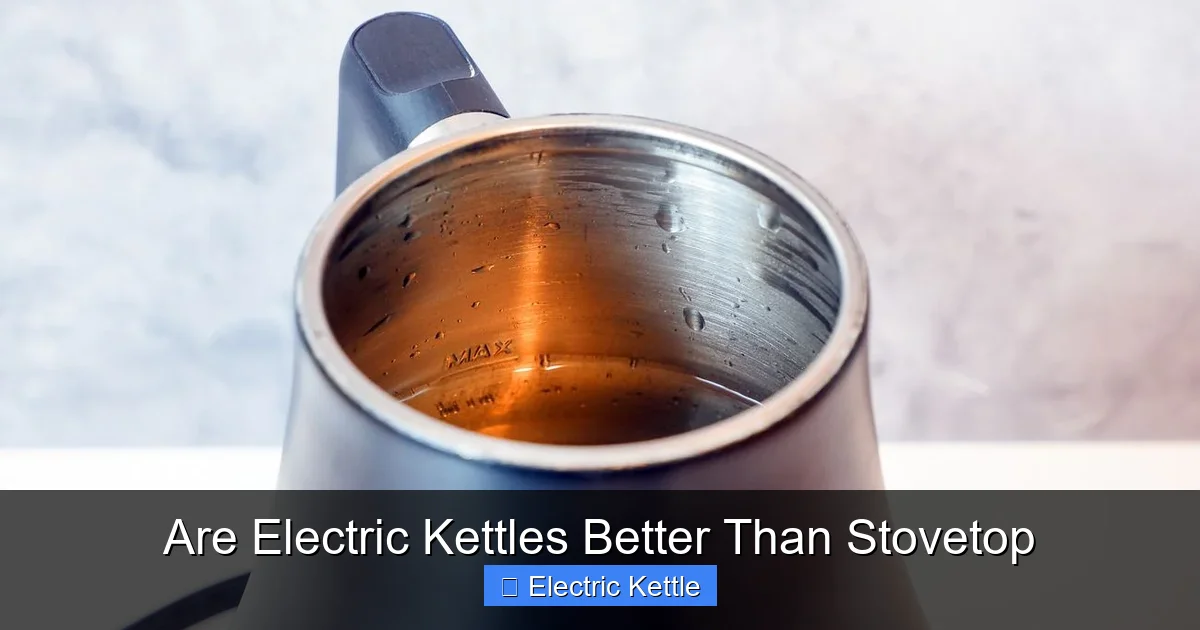
Visual guide about Are Electric Kettles Better Than Stovetop
Image source: allrecipes.com
Beyond speed, energy consumption is a major factor in the electric vs. stovetop debate. In an era where sustainability matters, choosing appliances that use energy wisely isn’t just smart—it’s responsible.
Electric kettles are among the most energy-efficient kitchen appliances. Because they heat water directly through an internal element, there’s very little wasted energy. Most models use between 1200W and 3000W, but they operate for such short durations that their total energy use remains low. For example, boiling 1 liter of water uses about 0.1 kWh of electricity—roughly equivalent to running a 100W light bulb for one hour.
Stovetop kettles, especially on gas stoves, are far less efficient. Gas flames heat the bottom of the kettle, but much of that heat escapes into the air instead of transferring to the water. Studies show that gas stoves are only about 40% efficient, meaning 60% of the energy is lost. Electric stovetops do better, at around 70% efficiency, but they still can’t match the direct heating of an electric kettle.
Over time, this inefficiency adds up. If you boil water multiple times a day, the difference in energy use becomes significant. Let’s say you boil 1.5 liters of water daily. Using an electric kettle, that’s about 0.15 kWh per day, or 55 kWh per year. At an average electricity rate of $0.13 per kWh, that’s about $7.15 annually.
Now compare that to a gas stovetop kettle. Gas is cheaper per unit, but because of inefficiency, you’ll use more of it. Boiling the same amount of water on gas might cost $10 to $12 per year. While the difference seems small, it’s not just about money—it’s about resource use. Every bit of wasted energy contributes to higher carbon emissions, especially if your electricity comes from fossil fuels.
That said, if your home runs on renewable energy—like solar or wind—an electric kettle becomes an even greener choice. You’re using clean energy to heat water efficiently, with minimal environmental impact. Stovetop kettles, particularly gas ones, still burn fossil fuels directly, releasing CO₂ into the atmosphere.
Tip: Use Only the Water You Need
One way to maximize efficiency with any kettle is to boil only the amount of water you’ll actually use. Overfilling wastes energy and increases boiling time. Most electric kettles have clear minimum and maximum markers, making it easy to measure. Stovetop kettles often lack precise markings, so it’s easy to overfill without realizing it.
For example, if you only need one cup of water for tea, boiling a full kettle wastes up to 75% of the energy. Electric kettles with variable capacity settings or gooseneck designs for pour-over coffee make it easier to heat just the right amount.
Safety Features: Which Kettle Is Safer?
Safety is a crucial consideration, especially in homes with children, elderly family members, or busy cooks who multitask. When it comes to safety, electric kettles have a clear advantage.
One of the biggest risks with stovetop kettles is forgetting they’re on. It happens to the best of us—you start boiling water, get distracted by a phone call or a child’s question, and suddenly the kettle is whistling loudly or, worse, has boiled dry. Dry boiling can damage the kettle, create smoke, or even start a fire if the material overheats.
Electric kettles eliminate this risk with automatic shut-off. Once the water reaches boiling point, the kettle turns off instantly. Many models also include boil-dry protection, which cuts power if the kettle is turned on without water. This feature alone makes electric kettles far safer for forgetful or distracted users.
Another safety benefit: cool-touch exteriors. Most electric kettles have double-walled designs or insulated handles that stay cool to the touch, even when the water inside is boiling. This reduces the risk of burns, especially if a child reaches for the handle. Stovetop kettles, by contrast, often have metal handles that get extremely hot—sometimes too hot to touch without a pot holder.
Spillage is another concern. Electric kettles typically have secure, hinged lids that open smoothly, reducing the chance of hot water splashing out. Some models even have locking lids for added safety. Stovetop kettles often have loose-fitting lids that can shift or fall off when pouring, increasing the risk of burns.
Real-World Safety Scenario
Imagine you’re making tea while helping your toddler with a puzzle. You fill the stovetop kettle, place it on the stove, and turn away. Five minutes later, you hear a loud whistle—but your child has pulled a chair over to the counter and is reaching for the kettle. The handle is scorching hot, and the lid is loose. You rush over just in time to prevent a burn.
Now picture the same scene with an electric kettle. You press the button, walk away, and the kettle shuts off automatically after 3 minutes. The handle stays cool, and the lid is secure. Even if your child gets curious, the risk is minimal. That peace of mind is priceless.
Convenience and Features: Why Electric Kettles Shine
Convenience is where electric kettles truly pull ahead. They’re designed for modern lifestyles—fast, hands-off, and packed with features that stovetop kettles simply can’t match.
One of the biggest conveniences is automation. With an electric kettle, you fill it, press a button, and walk away. No need to monitor the stove, adjust the flame, or listen for a whistle. Many models even have keep-warm functions that maintain the water temperature for up to an hour—perfect for multiple cups of tea or coffee.
Temperature control is another standout feature. While stovetop kettles only boil water (around 212°F or 100°C), many electric kettles offer variable temperature settings. This is a game-changer for tea lovers. Green tea, for example, brews best at 160–180°F (70–80°C). Boiling water can scorch the leaves, making the tea bitter. With an electric kettle, you can select the perfect temperature for white, oolong, black, or herbal teas.
Some high-end models even have preset programs for different beverages. Press “Green Tea,” and the kettle heats to 175°F, then beeps when it’s ready. Others have gooseneck spouts for precise pouring—ideal for pour-over coffee or matcha preparation.
Cordless designs add to the convenience. Most electric kettles sit on a separate base, so you can lift the kettle easily for pouring, then place it back without dealing with a tangled cord. This makes them ideal for serving guests or using at the dining table.
Stovetop kettles, while simple, require more hands-on effort. You have to monitor the heat, listen for the whistle, and pour carefully to avoid spills. They also take up burner space, which can be a problem if you’re cooking multiple dishes.
Practical Tip: Choose the Right Features for Your Needs
Not all electric kettles are created equal. If you’re a casual tea drinker, a basic model with auto shut-off and a 1.7-liter capacity may be all you need. But if you’re a coffee connoisseur or enjoy specialty teas, look for one with temperature control and a gooseneck spout.
For families, consider a kettle with a large capacity and cool-touch handle. For small kitchens, a compact model with a cord storage base saves counter space. And if you’re eco-conscious, choose a kettle with energy-saving modes or a BPA-free interior.
Taste and Performance: Does It Affect Your Beverage?
You might be wondering: does the type of kettle affect the taste of your tea or coffee? The short answer is yes—but not in the way you might think.
The material of the kettle can influence flavor. Stovetop kettles are often made of stainless steel, copper, or enamel. Copper kettles, while beautiful, can impart a metallic taste if not lined properly. Stainless steel is neutral and durable, but some people claim it can retain odors over time.
Electric kettles are typically made of plastic, stainless steel, or glass. Plastic models are lightweight and affordable, but lower-quality plastics may leach chemicals when heated—especially if they’re not BPA-free. Glass kettles are aesthetically pleasing and don’t retain flavors, but they’re fragile and can be heavy when full.
Stainless steel electric kettles are the most popular because they’re durable, non-reactive, and easy to clean. Many have concealed heating elements, which prevent mineral buildup and keep the interior smooth.
In terms of performance, electric kettles offer more consistent results. Because they heat water evenly and shut off at the exact boiling point, there’s less risk of over-boiling or under-heating. This consistency is especially important for delicate teas and precision brewing methods.
Stovetop kettles can vary in performance depending on your stove. A weak flame might not bring water to a full boil, while a high flame can cause rapid evaporation. And if you’re using a gas stove, the flame can scorch the bottom of the kettle over time, affecting both taste and longevity.
Example: Brewing the Perfect Cup of Tea
Let’s say you’re brewing a high-quality sencha green tea. The ideal temperature is 160°F (71°C). With a stovetop kettle, you’d have to boil the water, then let it cool for several minutes—guessing the temperature. You might end up too hot (bitter tea) or too cool (flat flavor).
With an electric kettle, you select 160°F, wait for the beep, and pour immediately. The result? A perfectly brewed cup every time.
Maintenance and Longevity: Which Kettle Lasts Longer?
No one wants to replace their kettle every year. So which type offers better durability and easier maintenance?
Electric kettles are generally low-maintenance. Most have removable lids and wide openings, making them easy to clean. Some models include built-in filters to catch limescale, which can be removed and rinsed. Descaling is recommended every few months, especially in hard water areas, but it’s a quick process with vinegar or a commercial solution.
Stovetop kettles require more upkeep. Gas flames can leave soot on the exterior, and electric coils can burn residue onto the bottom. Over time, mineral buildup can affect performance and taste. Cleaning often requires scrubbing with baking soda or vinegar, and some designs have hard-to-reach corners.
In terms of lifespan, both types can last 5 to 10 years with proper care. However, electric kettles have more electronic components, which can fail over time—especially the thermostat or heating element. Stovetop kettles are mechanically simpler, so they’re less likely to break down, but they can dent, scratch, or develop leaks.
Tip: Prevent Limescale Buildup
To extend the life of any kettle, use filtered water and descale regularly. In areas with hard water, consider a water softener or a kettle with a built-in filter. Avoid overfilling, as this can cause mineral deposits around the heating element.
Cost Comparison: Is an Electric Kettle Worth the Investment?
Electric kettles typically cost more upfront—anywhere from $30 to $150, depending on features. Stovetop kettles are cheaper, ranging from $15 to $60. But when you factor in energy savings, convenience, and longevity, electric kettles often provide better long-term value.
Let’s break it down. A mid-range electric kettle costs about $60. Over five years, it might save you $50 in energy costs compared to a gas stovetop kettle. Add in the time saved, reduced risk of accidents, and enhanced brewing precision, and the investment pays off quickly.
Stovetop kettles may be cheaper to buy, but they cost more to operate and offer fewer features. And if you value your time and safety, the extra cost of an electric kettle is well worth it.
Conclusion: So, Are Electric Kettles Better?
After weighing the evidence, the answer is clear: for most people, electric kettles are better than stovetop models. They’re faster, safer, more energy-efficient, and packed with features that enhance convenience and performance. Whether you’re brewing tea, making coffee, or heating water for cooking, an electric kettle delivers consistent results with minimal effort.
Stovetop kettles have their place—especially during power outages or for those who love their classic design. But in the modern kitchen, where speed, safety, and efficiency matter, electric kettles come out on top.
If you’re ready to upgrade, look for a model with auto shut-off, temperature control, and a durable stainless steel interior. Your mornings—and your taste buds—will thank you.
Frequently Asked Questions
Are electric kettles safe to use?
Yes, electric kettles are very safe when used properly. Most models include auto shut-off, boil-dry protection, and cool-touch handles to prevent accidents. Always follow the manufacturer’s instructions and avoid overfilling.
Do electric kettles use a lot of electricity?
No, electric kettles are energy-efficient. They use about 0.1 kWh to boil 1 liter of water—less than running a microwave or oven for the same task. Their short operating time keeps overall consumption low.
Can I boil milk in an electric kettle?
It’s not recommended. Most electric kettles are designed for water only. Milk can scorch, spill over, or damage the heating element. Use a stovetop kettle or a dedicated milk frother instead.
Do electric kettles affect the taste of water?
High-quality electric kettles with stainless steel or glass interiors don’t affect taste. Avoid cheap plastic models, as they may leach chemicals when heated. Always use BPA-free materials.
How often should I descale my electric kettle?
Descale every 1 to 3 months, depending on water hardness. Use a mixture of vinegar and water, let it sit, then rinse thoroughly. Regular descaling improves performance and extends lifespan.
Can I use an electric kettle during a power outage?
No, electric kettles require electricity to function. If you need hot water during outages, a stovetop kettle or portable camping stove is a better backup option.