Yes, electric kettles are generally faster than stovetop kettles—often boiling water in half the time. Thanks to higher wattage, direct heating elements, and better energy transfer, they deliver speed and convenience without sacrificing safety or taste.
Key Takeaways
- Electric kettles boil water faster: Most models reach boiling point in 3–5 minutes, compared to 6–10 minutes on a stovetop.
- Higher wattage equals quicker heating: Electric kettles typically use 1500–3000 watts, far more than a standard stovetop burner.
- Energy efficiency plays a role: Electric kettles convert up to 80% of energy into heat, while stovetops lose significant heat to the air.
- Automatic shut-off enhances safety and speed: No need to monitor—electric kettles turn off when water boils, saving time and preventing accidents.
- Material and design impact performance: Kettles with flat bases, concealed elements, and insulated walls heat more efficiently.
- Real-world usage confirms the advantage: In home and office settings, electric kettles consistently outperform stovetops in speed and convenience.
- Speed doesn’t compromise taste: Modern electric kettles preserve water quality and don’t impart metallic flavors when properly maintained.
📑 Table of Contents
- Are Electric Kettles Faster? The Short Answer
- How Electric Kettles Work: The Science Behind the Speed
- Comparing Electric vs. Stovetop Kettles: A Side-by-Side Look
- Factors That Affect Boiling Speed
- Do Electric Kettles Affect the Taste of Water?
- Safety and Convenience: More Than Just Speed
- Environmental and Cost Considerations
- Choosing the Right Electric Kettle for Speed
- Final Thoughts: Yes, Electric Kettles Are Faster—and Better
Are Electric Kettles Faster? The Short Answer
If you’ve ever stood over a whistling stovetop kettle, watching the minutes tick by as you wait for your morning tea or instant coffee, you’ve probably wondered: *Is there a faster way?* The answer is a resounding yes—electric kettles are significantly faster at boiling water than their stovetop counterparts. In fact, most electric kettles can bring a full liter of water to a boil in just 3 to 5 minutes, while stovetop kettles often take 6 to 10 minutes or more, depending on the heat source and kettle material.
This speed advantage isn’t just a minor convenience—it’s a game-changer for busy mornings, quick meals, or office breaks. Whether you’re making oatmeal, instant noodles, or a soothing cup of herbal tea, waiting less time for water to boil means you get to your drink (or meal) faster. But why exactly are electric kettles faster? It comes down to a combination of design, power, and efficiency. Unlike stovetop kettles, which rely on indirect heat transfer from a burner to the kettle base, electric kettles use built-in heating elements that directly heat the water. This direct contact minimizes heat loss and maximizes energy use, resulting in faster boiling times.
How Electric Kettles Work: The Science Behind the Speed
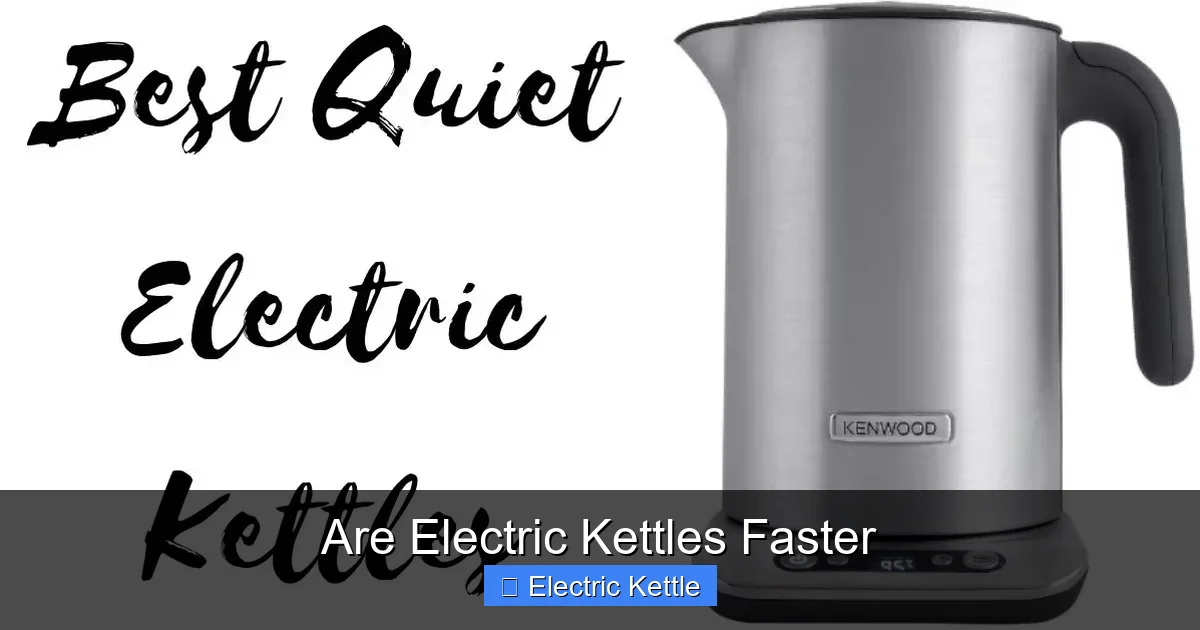
Visual guide about Are Electric Kettles Faster
Image source: homegearslab.com
To understand why electric kettles are faster, it helps to know how they work. At the heart of every electric kettle is a heating element—usually a coiled metal wire or a flat, concealed plate—located at the base of the appliance. When you plug in the kettle and press the switch, electricity flows through this element, causing it to heat up rapidly. Because the element is in direct contact with the water (or very close to it), heat is transferred efficiently and almost instantly.
This direct heating method is far more effective than the indirect process used by stovetop kettles. On a gas or electric stove, heat must first travel from the burner to the kettle’s base, then through the metal to the water. Along the way, a significant amount of heat is lost to the surrounding air—especially with gas stoves, where flames can flare outward. Electric kettles, by contrast, are designed to contain and focus heat directly into the water, reducing waste and speeding up the process.
Wattage: The Power Behind the Performance
One of the biggest factors contributing to the speed of electric kettles is their high wattage. Most household electric kettles operate between 1500 and 3000 watts, with many standard models sitting around 1800–2200 watts. To put that in perspective, a typical stovetop burner on a home electric range delivers about 1200–1800 watts, and gas burners, while powerful, are less efficient at transferring heat to the kettle due to heat loss.
Higher wattage means more energy is delivered to the water per second, which translates to faster boiling. For example, a 2200-watt electric kettle can boil 1 liter of water in about 3.5 minutes, while a 1500-watt stovetop burner might take 7–8 minutes to do the same. Even if your stovetop has a high-output burner, the inefficiency of heat transfer still puts it at a disadvantage.
Energy Efficiency: Less Waste, More Heat
Electric kettles aren’t just faster—they’re also more energy-efficient. Studies show that electric kettles convert up to 80% of the electrical energy they consume into heat that actually warms the water. In contrast, stovetop kettles, especially on gas stoves, may only transfer 40–55% of the heat generated to the water. The rest is lost to the air, heating your kitchen instead of your tea.
This efficiency isn’t just good for your wallet—it’s better for the environment too. Using less energy to achieve the same result means lower electricity bills and a smaller carbon footprint. And because electric kettles heat water so quickly, they spend less time drawing power overall, further improving their efficiency.
Comparing Electric vs. Stovetop Kettles: A Side-by-Side Look
Let’s put electric and stovetop kettles head-to-head to see how they stack up in real-world use. Imagine you’re making tea for two people and need to boil 1 liter of water. Here’s what you can expect:
– **Electric Kettle (2200W):** Boils in 3–4 minutes. Automatically shuts off when done. No supervision needed.
– **Stovetop Kettle (Gas, medium flame):** Takes 6–8 minutes. Requires monitoring to avoid boiling over or burning.
– **Stovetop Kettle (Electric coil, 1500W):** Takes 7–9 minutes. Heat transfer is slower, and you must turn it off manually.
In this scenario, the electric kettle saves you at least 3–5 minutes—time you could use to prep your tea, check your phone, or simply relax. Over the course of a week, that adds up to more than 20 minutes saved. Multiply that by months or years, and the convenience becomes undeniable.
Real-Life Examples: Who Benefits Most?
The speed advantage of electric kettles is especially valuable in certain situations. Office workers, for instance, often rely on shared kitchens where stovetops may be in use or slow to heat. An electric kettle lets them boil water quickly at their desk or in a break room without waiting for a burner. Students in dorms or small apartments also benefit, as many don’t have full kitchens but still want hot water for instant meals or beverages.
Even at home, electric kettles shine during busy mornings. If you’re rushing to get the kids ready for school or preparing breakfast while multitasking, a fast-boiling kettle can be a lifesaver. And for people who drink multiple cups of tea or coffee throughout the day, the cumulative time saved is substantial.
Factors That Affect Boiling Speed
While electric kettles are generally faster, not all models are created equal. Several factors can influence how quickly your kettle boils water, including wattage, design, material, and even the amount of water you’re heating.
Wattage and Power Settings
As mentioned earlier, wattage is a major determinant of speed. Higher-wattage kettles (2000W and above) will boil water faster than lower-wattage models (1200–1500W). Some premium kettles even offer variable temperature settings, allowing you to heat water to specific temperatures for different types of tea or coffee. While these settings don’t necessarily make the kettle faster, they do add precision—boiling water to 80°C for green tea instead of 100°C saves a little time and preserves flavor.
Kettle Design and Heating Element
The design of the heating element plays a crucial role. Kettles with concealed heating elements (where the coil is hidden under a flat stainless steel plate) tend to heat more evenly and efficiently than those with exposed coils. They’re also easier to clean and less prone to mineral buildup, which can slow heating over time.
Additionally, kettles with flat, wide bases make better contact with the heating element, improving heat transfer. Some models also feature double-wall insulation, which helps retain heat and can slightly reduce boiling time by minimizing heat loss.
Water Volume and Starting Temperature
The amount of water you’re boiling directly affects how long it takes. Most kettles are fastest when filled to their minimum or mid-level mark. Boiling a full kettle takes longer simply because there’s more water to heat. Similarly, starting with cold tap water (around 10–15°C) will take longer than using warm or hot water from the tap (if your kettle allows it—some models warn against this to prevent scaling).
For the quickest boil, use only the amount of water you need. Many electric kettles have clear water level indicators, making it easy to measure precisely. This not only saves time but also reduces energy use.
Do Electric Kettles Affect the Taste of Water?
A common concern about electric kettles is whether they affect the taste of water—especially if the heating element is exposed or made of metal. The good news is that modern electric kettles are designed to preserve water quality. Most high-quality models use stainless steel or BPA-free plastic interiors that don’t leach chemicals or impart flavors when properly maintained.
Material Matters: Stainless Steel vs. Plastic
Stainless steel kettles are generally preferred for their durability and neutral taste. They don’t react with water and are easy to clean. However, some people worry about metallic tastes, especially if the kettle has an exposed element. To avoid this, look for kettles with concealed elements or those labeled “food-grade” or “304 stainless steel.”
Plastic kettles are lighter and often more affordable, but they can retain odors or degrade over time, especially if exposed to high heat repeatedly. If you choose a plastic kettle, opt for BPA-free models and avoid boiling water multiple times, as this can increase the risk of chemical leaching.
Maintenance Keeps Taste Clean
Regular cleaning is essential to maintaining good taste. Mineral deposits from hard water can build up on the heating element or inside the kettle, leading to odd flavors or slower heating. To prevent this, descale your kettle every few weeks using a mixture of white vinegar and water (1:1 ratio). Let it sit for an hour, then rinse thoroughly.
Also, avoid overfilling or boiling empty kettles, as this can damage the element and affect performance. And if your kettle has a filter (many do), clean or replace it as recommended by the manufacturer.
Safety and Convenience: More Than Just Speed
While speed is a major advantage, electric kettles offer other benefits that make them a smart choice for everyday use. Safety features, in particular, set them apart from stovetop models.
Automatic Shut-Off and Boil-Dry Protection
One of the most important safety features in modern electric kettles is automatic shut-off. Once the water reaches boiling point, the kettle turns itself off, preventing overheating or damage. Many models also include boil-dry protection, which shuts off the kettle if it’s turned on without water—a common cause of stovetop accidents.
These features not only protect your appliance but also give you peace of mind. You can walk away while the kettle boils, knowing it won’t overheat or start a fire. Stovetop kettles, by contrast, require constant monitoring to avoid boiling over or burning.
Temperature Control and Keep-Warm Functions
Many electric kettles now come with advanced features like variable temperature settings and keep-warm functions. These allow you to heat water to the ideal temperature for different beverages—80°C for green tea, 90°C for white tea, or 100°C for black tea or coffee. Some models even maintain the water at the desired temperature for up to an hour, so you don’t have to reheat it.
These features add convenience and precision, especially for tea enthusiasts who know that overheating delicate leaves can ruin the flavor. They also save time by eliminating the need to wait for water to cool or reheat.
Environmental and Cost Considerations
Beyond speed and taste, it’s worth considering the broader impact of using an electric kettle. From an environmental and economic standpoint, electric kettles often come out ahead.
Energy Use and Carbon Footprint
Because electric kettles are more energy-efficient, they use less electricity to boil the same amount of water. This means lower energy consumption and a smaller carbon footprint, especially if your electricity comes from renewable sources. Even with grid electricity, the reduced heating time and higher efficiency make electric kettles a greener choice than most stovetop methods.
Long-Term Savings
While electric kettles have an upfront cost (typically $20–$80), they can save you money over time. Their efficiency means lower electricity bills, and their durability—many last 5–10 years with proper care—means you won’t need to replace them often. In contrast, stovetop kettles may seem cheaper initially, but they offer no energy savings and can wear out faster, especially if made of thin metal.
Choosing the Right Electric Kettle for Speed
If speed is your top priority, here’s what to look for when shopping for an electric kettle:
– **High wattage (2000W or more):** Ensures fast boiling.
– **Concealed heating element:** Improves efficiency and ease of cleaning.
– **Stainless steel interior:** Preserves taste and resists corrosion.
– **Automatic shut-off and boil-dry protection:** Enhances safety.
– **Clear water level indicator:** Helps you measure the right amount.
– **Compact design:** Fits easily on countertops or in small spaces.
Popular fast-boiling models include the **Breville BKE820XL Smart Kettle** (2400W, variable temps), the **Cuisinart CPK-17 PerfecTemp** (1500W, 6 presets), and the **Hamilton Beach 40880** (1500W, budget-friendly). For ultra-fast performance, consider the **Russell Hobbs 24363** (3000W), one of the fastest on the market.
Final Thoughts: Yes, Electric Kettles Are Faster—and Better
So, are electric kettles faster? Absolutely. They outperform stovetop kettles in speed, efficiency, safety, and convenience. With boiling times often cut in half, they save you precious minutes every day—time that adds up over weeks, months, and years. Whether you’re a tea lover, a busy professional, or just someone who values efficiency, an electric kettle is a worthwhile investment.
But speed isn’t the only benefit. Modern electric kettles offer precise temperature control, automatic shut-off, and designs that preserve water taste. They’re also more energy-efficient, helping you save money and reduce your environmental impact. And with a wide range of models available—from budget-friendly basics to high-tech smart kettles—there’s an option for every need and kitchen.
In the end, the question isn’t just “Are electric kettles faster?” It’s “Why haven’t you switched yet?” If you’re still waiting for water to boil on the stove, it might be time to make the leap. Your tea—and your schedule—will thank you.
Frequently Asked Questions
Are electric kettles faster than stovetop kettles?
Yes, electric kettles are significantly faster, typically boiling water in 3–5 minutes compared to 6–10 minutes for stovetop kettles. This is due to higher wattage and more efficient heat transfer.
What makes electric kettles boil water so quickly?
Electric kettles use high-wattage heating elements (1500–3000W) that directly heat the water, minimizing heat loss. This direct contact allows for faster and more efficient boiling than stovetop methods.
Do electric kettles use more electricity than stovetops?
No, electric kettles are more energy-efficient. They convert up to 80% of energy into heat, while stovetops lose significant heat to the air, making electric kettles cheaper and greener to operate.
Can electric kettles affect the taste of water?
Modern electric kettles with stainless steel or BPA-free interiors don’t affect taste. Regular cleaning and descaling help maintain water quality and prevent mineral buildup.
Are electric kettles safe to use?
Yes, most electric kettles include safety features like automatic shut-off and boil-dry protection, making them safer than stovetop kettles that require constant monitoring.
How much water should I boil in an electric kettle for the fastest results?
For the quickest boil, only heat the amount of water you need. Boiling a full kettle takes longer, so use the water level indicator to measure precisely and save time and energy.