Electric kettles are significantly faster than gas stoves at boiling water—often by several minutes. Thanks to direct heating elements and better energy transfer, they heat water more efficiently, making them ideal for quick tea, coffee, or instant meals.
Key Takeaways
- Electric kettles boil water faster: Most electric kettles can boil a full liter in 3–5 minutes, while gas stoves typically take 6–10 minutes.
- Higher energy efficiency: Electric kettles convert up to 80% of energy into heat, compared to gas stoves’ 40–55% efficiency.
- Consistent heating performance: Electric kettles maintain steady temperatures and often include auto-shutoff features for safety.
- Ideal for small spaces: Perfect for offices, dorm rooms, or kitchens without gas lines.
- Lower long-term costs: Despite higher upfront cost, electric kettles use less energy per boil, saving money over time.
- Convenience and precision: Many models offer variable temperature settings for different beverages like green tea or French press coffee.
- Safety advantages: No open flame or hot burner means reduced risk of burns or accidental fires.
📑 Table of Contents
- Are Electric Kettles Faster Than Gas Stove? The Ultimate Showdown
- How Do Electric Kettles Work?
- How Gas Stoves Heat Water—and Why They’re Slower
- Speed Comparison: Real-World Boiling Times
- Energy Efficiency: Which Uses Less Power?
- Convenience, Safety, and Everyday Use
- Cost Considerations: Upfront vs. Long-Term Savings
- Environmental Impact: Which Is Greener?
- When Might a Gas Stove Be Better?
- Tips for Choosing the Right Electric Kettle
- Final Verdict: Electric Kettles Win on Speed and Efficiency
Are Electric Kettles Faster Than Gas Stove? The Ultimate Showdown
Picture this: It’s early morning, you’re running late, and all you want is a hot cup of tea or coffee. You fill your kettle, press a button, and within minutes—steam rises, and your drink is ready. Now imagine doing the same on a gas stove. You place a pot on the burner, wait for the flame to heat the water, and after what feels like forever, it finally boils. Sound familiar?
This everyday scenario highlights a common kitchen debate: Are electric kettles faster than gas stoves? The short answer is yes—electric kettles are generally much quicker at boiling water. But why? And does speed really matter in the grand scheme of things? In this detailed guide, we’ll explore the science, efficiency, cost, and convenience behind both methods to help you decide which is best for your lifestyle.
Whether you’re a busy professional, a student living in a dorm, or just someone who values time and energy, understanding the differences between electric kettles and gas stoves can transform your kitchen routine. Let’s dive into the facts, myths, and real-world performance to settle this once and for all.
How Do Electric Kettles Work?
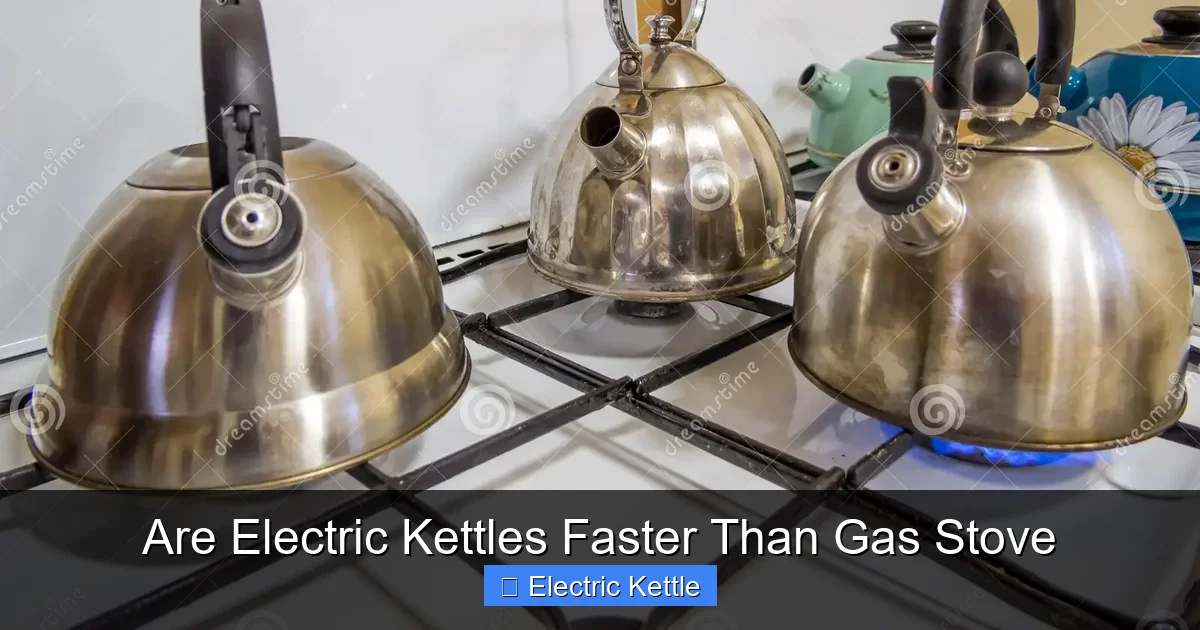
Visual guide about Are Electric Kettles Faster Than Gas Stove
Image source: thumbs.dreamstime.com
Electric kettles are simple yet highly efficient appliances designed specifically for heating water. Unlike gas stoves, which rely on an open flame to transfer heat indirectly to a pot, electric kettles use a built-in heating element submerged directly in the water. This direct contact allows for rapid and uniform heating.
Most modern electric kettles operate on 120V or 240V power (depending on your region) and draw between 1,200 to 3,000 watts of electricity. When you turn the kettle on, electrical current flows through the heating coil, which quickly becomes hot. Because the element is in direct contact with the water, nearly all the generated heat is transferred into the liquid—minimizing waste.
Many electric kettles also come with advanced features like thermostatic controls, keep-warm functions, and automatic shut-off when boiling is detected. These not only improve safety but also ensure consistent results every time. Some premium models even let you select specific temperatures—perfect for delicate teas that require lower boiling points.
One of the biggest advantages of electric kettles is their portability. You don’t need a stove or gas line—just an electrical outlet. This makes them ideal for small kitchens, offices, RVs, or college dorm rooms where space and utilities are limited.
How Gas Stoves Heat Water—and Why They’re Slower
Gas stoves have been a kitchen staple for decades. They offer instant flame control, visible heat, and a traditional cooking experience many people love. But when it comes to boiling water, they’re not the fastest option.
Here’s how it works: When you light a gas burner, natural gas or propane combusts, producing a flame that heats the bottom of your pot. The heat then conducts through the metal and into the water. However, this process is far less efficient than direct immersion heating.
Several factors slow down the boiling process on a gas stove:
– **Heat loss to the air:** A significant amount of heat escapes around the sides of the pot, warming the kitchen instead of the water.
– **Indirect heating:** The flame doesn’t touch the water—it heats the pot first, which then heats the water. This two-step process takes longer.
– **Inconsistent flame control:** Even with adjustable knobs, maintaining a steady, optimal flame can be tricky. Too high, and you risk boiling over; too low, and it takes forever.
– **Pot material matters:** Thin or warped pots conduct heat poorly, further slowing things down. Only heavy-bottomed, flat pans perform well.
On average, it takes about 6 to 10 minutes to boil a liter of water on a gas stove, depending on the burner size, pot quality, and starting water temperature. In contrast, most electric kettles do the same job in half that time.
Speed Comparison: Real-World Boiling Times
Let’s get into the numbers. Speed is often the deciding factor for people choosing between an electric kettle and a gas stove. So, how much faster are electric kettles really?
In controlled tests, a standard 1.7-liter electric kettle with a 1,500-watt heating element can boil water in approximately 3 to 4 minutes when starting from room temperature (around 70°F or 21°C). High-performance models with 3,000 watts can do it even faster—sometimes under 3 minutes.
Now, compare that to a gas stove. Using a medium-sized burner (about 9,000–12,000 BTUs) and a decent stainless steel pot, boiling the same amount of water typically takes 7 to 9 minutes. If your pot is thin, your flame is uneven, or your water starts colder (like from the tap in winter), it could take even longer.
Here’s a quick breakdown:
– **Electric kettle (1.7L, 1,500W):** 3–4 minutes
– **Gas stove (medium burner, good pot):** 7–9 minutes
– **Gas stove (low flame or poor pot):** 10+ minutes
That’s a difference of 4 to 6 minutes—time that adds up if you boil water multiple times a day. For someone making tea, instant noodles, or French press coffee daily, those saved minutes can make a real difference in routine efficiency.
It’s also worth noting that electric kettles often heat water more evenly. Because the heating element surrounds the base or sits inside the chamber, there are fewer cold spots. On a gas stove, the center of the pot gets hottest, which can lead to uneven boiling and potential scorching if you’re not careful.
Energy Efficiency: Which Uses Less Power?
Speed isn’t the only factor—energy efficiency matters too. After all, faster doesn’t always mean better if it costs more to operate.
Electric kettles are among the most energy-efficient appliances in the kitchen. Studies show they convert about 80% of the electricity they use directly into heat for the water. The rest is lost minimally through the kettle’s body or steam.
Gas stoves, on the other hand, are far less efficient. Only about 40% to 55% of the heat from the flame actually reaches the water. The rest is lost to the surrounding air, heating your kitchen instead of your tea. This inefficiency is due to the open flame design and the indirect heating method.
Let’s look at a real example. Suppose you boil 1 liter of water once a day:
– **Electric kettle (1,500W, 4 minutes):** Uses about 0.1 kWh per boil
– **Gas stove (10,000 BTU burner, 8 minutes):** Uses roughly 0.12 therms of gas per boil
While the cost difference per boil is small (a few cents), it adds up over time. In regions where electricity is cheaper than gas, electric kettles can save you money. Even where gas is cheaper, the higher efficiency of electric kettles often balances the cost.
Moreover, electric kettles heat only the water you need. You don’t have to preheat a large pot or worry about leftover hot water going to waste. Many people overfill pots on gas stoves “just in case,” which wastes energy. Electric kettles encourage precise filling, reducing unnecessary consumption.
Convenience, Safety, and Everyday Use
Beyond speed and efficiency, convenience plays a huge role in daily kitchen decisions. Electric kettles win hands-down in several practical areas.
Ease of Use
With an electric kettle, it’s as simple as fill, press, and wait. No need to monitor the flame, adjust the heat, or worry about boiling over. Most models have clear water level indicators, so you can measure exactly how much you need. Once boiling is complete, many kettles automatically shut off—no timers or reminders needed.
Gas stoves require more attention. You have to light the burner, choose the right pot, monitor the heat, and stay nearby to avoid spills or burns. If you get distracted (like answering a text or checking email), you might return to a boiled-over mess or, worse, a dry pot.
Safety Features
Safety is a major advantage of electric kettles. There’s no open flame, so the risk of fire or gas leaks is eliminated. Most kettles include boil-dry protection, which turns off the heating element if there’s no water inside. Some even have child-safe lids and cool-touch exteriors.
Gas stoves, while generally safe when used properly, pose higher risks. Open flames can ignite nearby materials, and gas leaks—though rare—can be dangerous. Hot burners also increase the chance of accidental burns, especially in homes with children or pets.
Space and Portability
Electric kettles are compact and portable. You can use them anywhere with an outlet—your desk, bedroom, or even a hotel room. Gas stoves require a fixed installation and aren’t movable. If you live in a small apartment or frequently travel, an electric kettle offers unmatched flexibility.
Temperature Control
This is where electric kettles truly shine. Many modern models offer variable temperature settings—perfect for different types of tea or coffee. Green tea, for example, should be brewed at around 175°F (80°C), not a full boil. With an electric kettle, you can select the exact temperature and avoid scalding delicate leaves.
Gas stoves don’t offer this precision. You can lower the flame, but it’s hard to maintain a specific temperature. You’re either boiling or not—no in-between.
Cost Considerations: Upfront vs. Long-Term Savings
Let’s talk money. Electric kettles typically cost between $20 and $100, depending on features and brand. Gas stoves are part of a larger appliance setup, so their cost is harder to isolate—but you’re likely already paying for gas service.
At first glance, gas might seem cheaper. But when you factor in efficiency, usage patterns, and long-term savings, electric kettles often come out ahead.
For example, if you boil water 3 times a day:
– Electric kettle: ~0.3 kWh/day → ~$0.04/day (at $0.13/kWh)
– Gas stove: ~0.36 therms/day → ~$0.06/day (at $1.60/therm)
Over a year, that’s about $14.60 for the electric kettle vs. $21.90 for gas—a savings of over $7. And that’s before considering the time saved and reduced wear on your stove.
Additionally, electric kettles last 3–5 years with proper care. High-quality models with stainless steel interiors and durable components can last even longer. Gas stoves, while built to endure, require more maintenance and are prone to burner clogging or ignition issues over time.
If you’re on a tight budget, a basic electric kettle under $30 can deliver most of the benefits. You don’t need fancy features to enjoy faster boiling and lower energy use.
Environmental Impact: Which Is Greener?
For eco-conscious consumers, the environmental footprint matters. So, which option is more sustainable?
Electric kettles have a smaller carbon footprint—especially if your electricity comes from renewable sources like wind, solar, or hydro. Even with grid electricity, their high efficiency means less overall energy consumption per boil.
Gas stoves rely on fossil fuels (natural gas or propane), which emit carbon dioxide when burned. While gas is cleaner than coal or oil, it’s still a non-renewable resource. Plus, methane leaks during extraction and distribution contribute to greenhouse gas emissions.
That said, if your home runs entirely on clean energy, an electric kettle becomes an even greener choice. And because it uses less energy per use, it reduces demand on the grid.
Another environmental benefit: electric kettles reduce water waste. Since they heat only what you need, there’s less chance of overfilling and boiling off excess water—something that happens often with large pots on gas stoves.
When Might a Gas Stove Be Better?
Despite the clear advantages of electric kettles, gas stoves aren’t obsolete. There are still situations where they make more sense.
If you’re cooking large quantities of food—like pasta, soup, or boiling eggs for a crowd—a gas stove offers more flexibility. You can use multiple pots, adjust heat instantly, and simmer for long periods. Electric kettles are designed for water only and can’t handle solid foods.
Gas stoves also perform better during power outages. If the electricity goes out, you can still boil water (as long as you have a manual ignition or matches). Electric kettles are useless without power.
Additionally, some people prefer the tactile experience of cooking with gas. The visible flame, the sound of boiling, and the traditional feel can be comforting—especially for home chefs who enjoy the process.
But for the specific task of boiling water quickly and efficiently, electric kettles remain the superior choice.
Tips for Choosing the Right Electric Kettle
If you’re convinced that an electric kettle is right for you, here are some tips to help you pick the best one:
– **Look for wattage:** Higher wattage (1,500W–3,000W) means faster boiling. Aim for at least 1,500W for good performance.
– **Choose the right size:** 1.5 to 1.7 liters is ideal for most households. Larger kettles take longer to heat and take up more counter space.
– **Material matters:** Stainless steel is durable and doesn’t retain odors. Glass kettles let you see the water boil but can break. Avoid plastic if possible—some cheaper models may impart a taste.
– **Check for temperature control:** If you drink different types of tea or coffee, look for variable temperature settings.
– **Safety first:** Ensure the kettle has auto shut-off, boil-dry protection, and a secure lid.
– **Ease of cleaning:** Removable filters and wide openings make cleaning easier. Some models are dishwasher-safe.
– **Cordless design:** A 360-degree swivel base allows you to lift and pour without tangling cords.
Popular brands like Breville, Cuisinart, and Hamilton Beach offer reliable models with great features. Reading user reviews can also help you avoid common issues like leaking or slow heating.
Final Verdict: Electric Kettles Win on Speed and Efficiency
So, are electric kettles faster than gas stoves? Absolutely. They boil water in nearly half the time, use less energy, and offer greater convenience and safety. For anyone who values speed, efficiency, and precision in the kitchen, an electric kettle is a smart investment.
While gas stoves have their place—especially for cooking meals or during power outages—they simply can’t match the performance of a dedicated electric kettle when it comes to boiling water.
Whether you’re making your morning coffee, steeping a cup of herbal tea, or preparing instant oatmeal, an electric kettle delivers quick, consistent results with minimal effort. It’s a small appliance that makes a big difference in daily life.
If you haven’t made the switch yet, now might be the perfect time. Your future self—sipping a hot drink in record time—will thank you.
Frequently Asked Questions
Are electric kettles really faster than gas stoves?
Yes, electric kettles are significantly faster. Most can boil a full liter of water in 3–5 minutes, while gas stoves typically take 6–10 minutes due to less efficient heat transfer.
Do electric kettles use more electricity than gas stoves?
No, electric kettles are more energy-efficient. They convert up to 80% of electricity into heat, compared to 40–55% for gas stoves, meaning less energy is wasted.
Can I boil water on a gas stove faster by using a lid?
Yes, using a lid traps heat and can reduce boiling time by 1–2 minutes. However, it still won’t match the speed of an electric kettle.
Are electric kettles safe to use?
Yes, modern electric kettles include safety features like auto shut-off, boil-dry protection, and cool-touch handles, making them very safe for daily use.
Do electric kettles work during a power outage?
No, electric kettles require electricity to function. If the power is out, a gas stove (with manual ignition) is a better option for boiling water.
Can I use an electric kettle for anything other than water?
Electric kettles are designed for water only. Do not use them to heat milk, soup, or other liquids, as this can damage the appliance and create safety hazards.