Electric kettles are generally faster than stovetop kettles, thanks to higher wattage and direct heating elements. While stovetop models rely on indirect heat transfer, electric kettles heat water more efficiently, often boiling a full liter in under 4 minutes.
If you’ve ever stood waiting by the stove, staring at a whistling kettle that just won’t boil, you’re not alone. We’ve all been there—late for work, craving a cup of tea, or trying to cook pasta in a hurry. The age-old question then arises: Are electric kettles faster than stovetop kettles? The short answer is yes—most of the time. But the real story is a bit more nuanced, involving science, kitchen setup, and personal habits.
Electric kettles have surged in popularity over the past decade, and it’s not just because they look sleek on the countertop. They’re designed for one purpose: heating water quickly and efficiently. Unlike stovetop kettles, which rely on an external heat source like a gas flame or electric coil, electric kettles have built-in heating elements that transfer energy directly into the water. This direct contact minimizes heat loss and maximizes speed. Whether you’re making coffee, instant oatmeal, or sterilizing baby bottles, the difference in boiling time can be surprisingly significant.
But speed isn’t the only factor. Convenience, energy use, safety, and consistency all play a role in determining which method is truly better for your kitchen. In this article, we’ll dive deep into the science behind boiling water, compare real-world performance, and help you decide whether upgrading to an electric kettle is worth it—or if your trusty stovetop model still has the edge.
Key Takeaways
- Electric kettles heat water faster: Most electric kettles boil 1 liter of water in 3–4 minutes, while stovetop kettles take 5–8 minutes depending on the stove type.
- Higher wattage equals quicker boiling: Electric kettles typically use 1500–3000 watts, far exceeding the effective power of most stovetop burners.
- Energy efficiency favors electric models: Electric kettles convert over 80% of energy into heat, while stovetop methods lose significant heat to the surrounding air.
- Stovetop speed varies by heat source: Gas stoves may heat faster than electric coils, but induction stoves can rival electric kettles in speed.
- Automatic shut-off enhances safety and convenience: Electric kettles turn off when boiling, preventing over-boiling and saving energy.
- Portability and consistency give electric kettles an edge: They work anywhere with an outlet and deliver consistent results, unlike stovetop kettles affected by flame size or burner alignment.
- Cost and longevity balance the decision: While electric kettles have a higher upfront cost, their speed and efficiency can save time and energy over time.
📑 Table of Contents
How Electric Kettles Work
Electric kettles are marvels of simple engineering. At their core, they consist of a heating element—usually a coiled metal wire—submerged in or attached beneath the water reservoir. When you plug in the kettle and flip the switch, electricity flows through this element, causing it to heat up rapidly. That heat is then transferred directly to the water, raising its temperature until it reaches boiling point.
One of the key advantages of this design is efficiency. Because the heating element is in direct contact with the water, there’s minimal energy wasted heating the surrounding air or the kettle’s body. Most modern electric kettles convert over 80% of the electrical energy into heat, making them highly effective. Many models also feature automatic shut-off mechanisms that turn the kettle off once the water reaches 100°C (212°F), preventing over-boiling and reducing the risk of damage or fire.
Another feature that contributes to speed is wattage. Electric kettles typically operate between 1500 and 3000 watts, with higher-end models hitting the upper end of that range. For comparison, a standard stovetop burner on an electric range might deliver around 1200–1800 watts, and even less of that energy actually reaches the kettle due to heat loss. Gas stoves can be more efficient in some cases, but they still don’t match the direct, focused heating of an electric kettle.
Types of Electric Kettles
Not all electric kettles are created equal. There are several types on the market, each with slight variations in design and performance:
– **Corded kettles:** The most common type, these plug directly into an outlet and often have a detachable base for easy pouring.
– **Cordless kettles:** These sit on a charging base and can be lifted off for serving, offering more flexibility in placement.
– **Gooseneck kettles:** Designed for precision pouring, these are popular among coffee enthusiasts using pour-over methods like the Chemex or V60.
– **Variable temperature kettles:** These allow you to select specific temperatures (e.g., 175°F for green tea, 200°F for white tea), which is ideal for delicate brews.
While all these models heat water quickly, the gooseneck and variable temperature types may have slightly slower heating times due to added components or lower wattage. However, the difference is usually negligible—most still boil water in under 5 minutes.
How Stovetop Kettles Work
Visual guide about Are Electric Kettles Faster Than Stove Top
Image source: reviewed-com-res.cloudinary.com
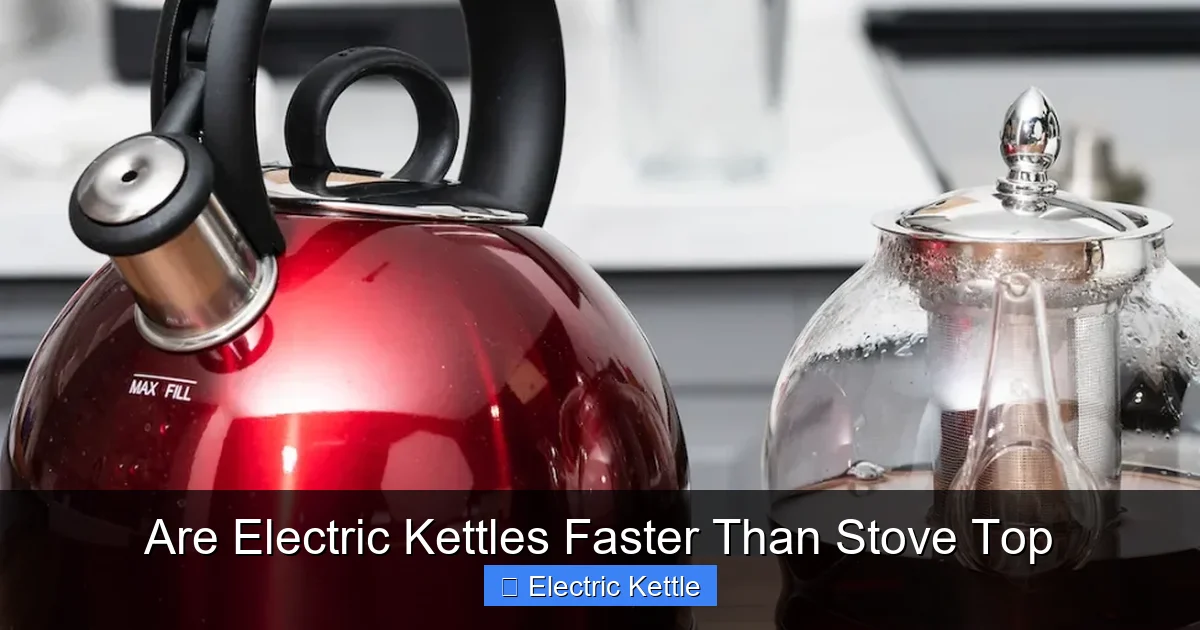
Stovetop kettles, on the other hand, rely entirely on an external heat source. Whether you’re using a gas flame, electric coil, or induction burner, the heat must first warm the kettle’s base before transferring to the water inside. This indirect method introduces several inefficiencies.
For example, on a gas stove, a significant amount of heat escapes around the sides of the kettle, warming the air instead of the water. On electric coil stoves, the burner takes time to heat up and cool down, leading to slower response times. Even induction stoves, which are more efficient than traditional electric coils, still require a compatible kettle and proper alignment to work effectively.
The material of the stovetop kettle also plays a role. Stainless steel kettles conduct heat well but can be slow to respond. Copper kettles heat quickly but are expensive and require maintenance. Glass kettles allow you to see the water boiling but are fragile and less efficient at retaining heat.
Heat Source Matters
The type of stove you use can dramatically affect boiling time. Here’s a quick breakdown:
– **Gas stoves:** Often the fastest stovetop option, especially with a high flame. However, heat loss is significant, and the flame must be adjusted carefully to avoid scorching the kettle.
– **Electric coil stoves:** Slower to heat up and cool down. They’re less efficient and can take longer to boil water, especially if the coil isn’t fully covered by the kettle.
– **Induction stoves:** These use electromagnetic fields to heat the kettle directly, making them very efficient. With a compatible kettle, induction can rival electric kettles in speed—sometimes even beating them.
So while stovetop kettles can be fast, their performance depends heavily on your stove type and how well the kettle fits the burner.
Speed Comparison: Electric vs. Stovetop
Let’s get to the heart of the matter: which one boils water faster?
In controlled tests, electric kettles consistently outperform stovetop models. A typical 1.7-liter electric kettle with 1500 watts of power can boil a full liter of water in about 3 to 4 minutes. High-performance models with 3000 watts can do it in under 3 minutes. In contrast, a stovetop kettle on a gas burner might take 5 to 7 minutes, while an electric coil stove could stretch that to 8 minutes or more.
These numbers aren’t just theoretical. Real-world testing by consumer labs and home users confirms the trend. For example, a 2022 test by a major appliance review site found that the average electric kettle boiled 1 liter of water in 3 minutes and 45 seconds, while the fastest stovetop kettle (on a gas stove) took 5 minutes and 10 seconds. The slowest, on an electric coil, took over 8 minutes.
Factors That Affect Boiling Time
Several variables can influence how quickly water boils, regardless of the method:
– **Starting water temperature:** Cold tap water takes longer to heat than water that’s already at room temperature.
– **Altitude:** Water boils at lower temperatures at higher altitudes, which can slightly reduce boiling time—but also affect cooking results.
– **Kettle material and thickness:** Thicker bases retain heat better but take longer to warm up.
– **Lid usage:** Keeping the lid on traps heat and speeds up boiling.
– **Room temperature and drafts:** A cold kitchen or open window can slow the process.
Even with these variables, electric kettles maintain a consistent advantage due to their direct heating and higher wattage.
Energy Efficiency and Cost
Speed isn’t the only benefit—electric kettles are also more energy-efficient. Because they transfer heat directly to the water, they waste less energy than stovetop methods. Studies show that electric kettles convert about 80–90% of their energy into heat, while stovetop kettles on gas or electric stoves may only achieve 40–60% efficiency.
This efficiency translates to cost savings over time. While the difference per boil is small—just a few cents—it adds up. If you boil water multiple times a day, an electric kettle could save you a few dollars a month on your energy bill.
Environmental Impact
From an environmental standpoint, electric kettles have another advantage: they’re cleaner. Gas stoves emit carbon monoxide and other pollutants, even when used efficiently. Electric kettles, especially when powered by renewable energy, have a much lower carbon footprint. Plus, their automatic shut-off feature prevents unnecessary energy use, unlike stovetop kettles that can boil dry if left unattended.
Safety and Convenience
Safety is a major consideration, especially in busy households. Electric kettles come with built-in safety features that stovetop models lack. Most have automatic shut-off, boil-dry protection, and cool-touch exteriors. These features reduce the risk of burns, fires, and damage to the appliance.
Stovetop kettles, while generally safe, require more attention. You need to monitor the flame, ensure the whistle is working, and remember to turn off the stove. Forgetting a boiling kettle can lead to scorched pots, wasted energy, or even kitchen fires.
Convenience also favors electric kettles. They’re portable, easy to use, and don’t require constant supervision. Many models have keep-warm functions, so your water stays hot for minutes after boiling. Some even have programmable timers, so you can set your kettle to boil at a specific time—perfect for morning routines.
Noise Levels
One downside of electric kettles is noise. The heating element can produce a low hum, and some models make a clicking sound when turning off. Stovetop kettles, especially those with whistles, are louder but only during the final moments of boiling. If you’re sensitive to noise, look for a quiet electric kettle with insulated walls.
When a Stovetop Kettle Might Be Better
Despite the advantages of electric kettles, there are situations where a stovetop model makes more sense.
If you’re camping or traveling somewhere without reliable electricity, a stovetop kettle is more versatile. It works over a campfire, portable gas stove, or even a candle heater. Electric kettles require an outlet, which isn’t always available.
Stovetop kettles are also often cheaper upfront. A basic stainless steel kettle can cost as little as $15, while a quality electric kettle starts around $40. If you’re on a tight budget and don’t boil water often, the stovetop option might be more practical.
Additionally, some people prefer the ritual of a stovetop kettle—the whistle, the steam, the sense of tradition. For tea lovers or those who enjoy a slower morning routine, the extra few minutes might not matter.
Making the Right Choice for Your Kitchen
So, are electric kettles faster than stovetop kettles? The answer is a resounding yes—most of the time. They’re quicker, more efficient, safer, and more convenient. But the best choice depends on your lifestyle, kitchen setup, and priorities.
If you value speed, energy savings, and modern features, an electric kettle is a smart investment. Look for one with at least 1500 watts, automatic shut-off, and a cordless design for maximum flexibility. Brands like Breville, Cuisinart, and Fellow offer reliable models with excellent performance.
On the other hand, if you’re on a budget, live off-grid, or simply enjoy the classic stovetop experience, a good-quality stovetop kettle can still serve you well—especially if you have a gas or induction stove.
Ultimately, both types have their place in the kitchen. But when it comes to boiling water fast, electric kettles are hard to beat.
Final Thoughts
The debate between electric and stovetop kettles isn’t just about speed—it’s about how we live, cook, and value our time. In a world where convenience and efficiency are king, electric kettles offer a clear advantage. They save minutes every day, reduce energy use, and make boiling water as simple as pressing a button.
But kitchen tools are personal. Some people love the ritual of lighting a flame and waiting for the whistle. Others want results now. Whichever side you’re on, understanding the differences helps you make an informed choice.
So the next time you’re standing over a pot of water, wondering why it’s taking so long, consider this: a switch to an electric kettle might be the small upgrade that makes a big difference in your daily routine.
Frequently Asked Questions
Are electric kettles really faster than stovetop kettles?
Yes, electric kettles are generally faster. They boil 1 liter of water in 3–4 minutes, while stovetop kettles typically take 5–8 minutes, depending on the stove type and heat source.
Why do electric kettles boil water so quickly?
Electric kettles use high-wattage heating elements (1500–3000 watts) that transfer heat directly to the water. This direct contact minimizes energy loss and maximizes speed compared to indirect stovetop heating.
Can a stovetop kettle ever be faster than an electric one?
In rare cases, yes—especially on a high-powered gas or induction stove with a well-fitting kettle. However, even the fastest stovetop setups usually lag behind most electric kettles in consistent performance.
Do electric kettles use more electricity than stovetops?
No, electric kettles are more energy-efficient. They convert over 80% of energy into heat, while stovetop methods lose significant heat to the air, making them less efficient overall.
Are electric kettles safe to use?
Yes, modern electric kettles include safety features like automatic shut-off, boil-dry protection, and cool-touch handles, making them very safe for everyday use.
Is it worth buying an electric kettle if I already have a stovetop one?
If you boil water frequently, yes. The time savings, energy efficiency, and convenience make electric kettles a worthwhile upgrade for most households.