Electric kettles are not induction stoves—they’re standalone appliances that heat water using internal heating elements. While some electric kettles have induction-compatible bases for stovetop use, most are not designed for induction cooking. Understanding the difference helps you pick the right kettle for your kitchen.
Key Takeaways
- Electric kettles are not induction stoves: They use built-in heating elements, not magnetic induction, to boil water.
- Induction requires magnetic materials: Only kettles with ferromagnetic bases (like stainless steel) work on induction stoves.
- Most electric kettles are not induction-compatible: Their bases are often made of plastic or non-magnetic metal, blocking induction heating.
- Some dual-use kettles exist: A few models can be used both electrically and on induction stovetops.
- Check the base before buying: Look for induction symbols or test with a magnet to confirm compatibility.
- Induction stovetops need special kettles: Regular electric kettles won’t work unless designed for dual use.
- Efficiency varies by type: Electric kettles are generally faster and more energy-efficient than stovetop boiling.
📑 Table of Contents
Are Electric Kettles Induction? The Simple Answer
If you’ve ever stood in the kitchen, kettle in hand, wondering whether it will work on your new induction stove, you’re not alone. The question “Are electric kettles induction?” comes up often—especially as more homes switch to modern induction cooktops. The short answer? Most electric kettles are not induction-compatible. But the full story is a bit more nuanced.
Electric kettles are standalone appliances. They plug into the wall and use an internal heating element—usually hidden under the base—to heat water quickly and efficiently. This is different from induction cooking, which uses electromagnetic fields to heat pots and pans directly. Induction stoves don’t produce flames or radiant heat. Instead, they create a magnetic field that excites molecules in magnetic cookware, generating heat from within.
So, while both electric kettles and induction stoves can boil water, they do it in completely different ways. An electric kettle doesn’t rely on the stove at all—it’s self-contained. That means even if you have an induction cooktop, your standard electric kettle won’t “work” on it unless it’s specifically designed to do so.
Why the Confusion Exists
The confusion makes sense. Many people assume that because both technologies involve electricity and heating, they must be related. Plus, some kettles look like they could sit on a stove. But appearances can be deceiving. The base of most electric kettles is made of plastic or non-magnetic stainless steel—materials that don’t respond to induction fields.
Another source of confusion is the rise of “dual-use” kettles. These are kettles that can be used both as electric appliances and placed directly on a stovetop, including induction. They’re less common but growing in popularity. If you’re considering one, it’s important to read the specs carefully.
How to Know If Your Kettle Works on Induction
The easiest way to check is with a magnet. If a magnet sticks firmly to the bottom of your kettle, it’s likely made of ferromagnetic material and may work on induction. If it doesn’t stick—or only sticks weakly—it probably won’t work.
You can also look for symbols on the packaging or base of the kettle. Many induction-compatible products display a coil-like icon or the word “induction.” If you don’t see it, assume it’s not compatible.
Remember: even if a kettle has a magnetic base, it may still not be safe or efficient to use on an induction stove unless it’s explicitly designed for that purpose. Using the wrong kettle can damage your cooktop or create safety hazards.
How Electric Kettles Work
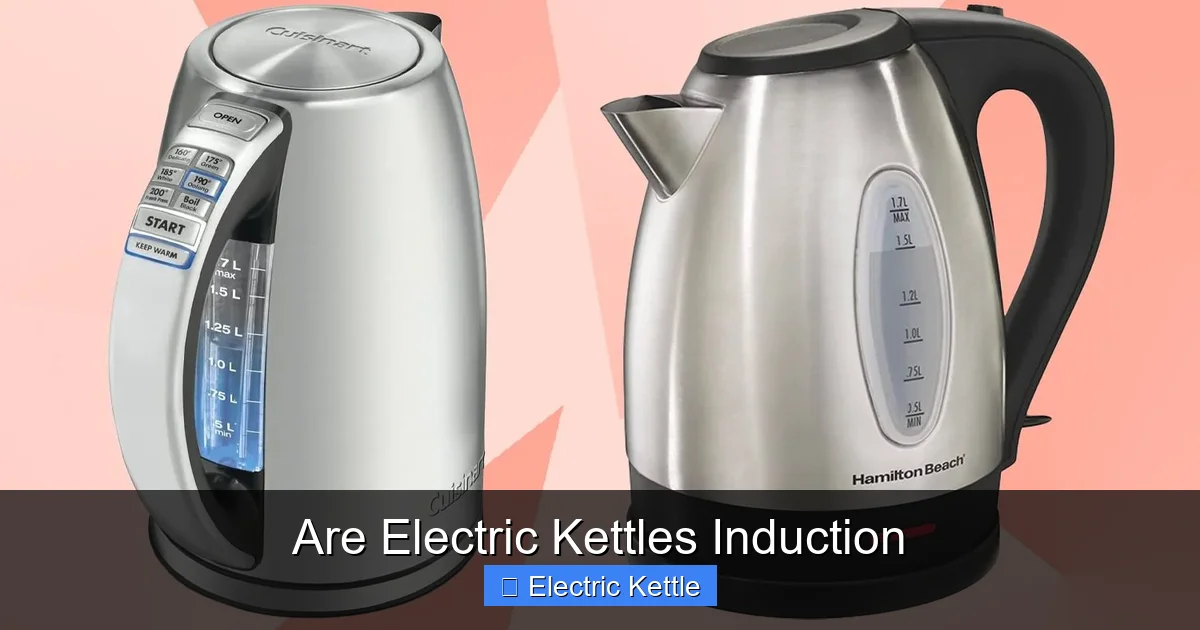
Visual guide about Are Electric Kettles Induction
Image source: realsimple.com
To understand why most electric kettles aren’t induction-compatible, it helps to know how they actually work. Electric kettles are marvels of simplicity and efficiency. When you press the “on” button, electricity flows through a heating element—usually a coiled wire or a flat disc—located at the base of the kettle.
This element gets hot very quickly, transferring heat directly to the water inside. Because the heat is generated inside the kettle, there’s minimal energy loss. That’s why electric kettles are often faster and more energy-efficient than stovetop methods.
The Heating Element: Heart of the Kettle
The heating element is the core component. In most modern kettles, it’s a concealed element—meaning it’s sealed under a stainless steel plate. This design prevents mineral buildup and makes cleaning easier. Older models sometimes had exposed elements, which were more prone to corrosion and harder to maintain.
The power of the element varies, but most household electric kettles range from 1,200 to 3,000 watts. Higher wattage means faster boiling. For example, a 3,000-watt kettle can boil a liter of water in under three minutes, while a 1,200-watt model might take five or six.
Thermostats and Auto-Shutoff
Safety and convenience are built into most electric kettles. A thermostat monitors the water temperature and automatically shuts off the heating element once boiling is reached. This prevents overheating and saves energy.
Some advanced models go further. They offer variable temperature settings for different types of tea or coffee. Green tea, for instance, brews best at around 175°F (80°C), while black tea needs near-boiling water. These kettles let you select the perfect temperature with the push of a button.
Materials Matter
Electric kettles come in a variety of materials, each with pros and cons:
– Plastic: Lightweight and affordable, but can retain odors and may degrade over time. Look for BPA-free options.
– Stainless steel: Durable, easy to clean, and doesn’t affect taste. Often used in higher-end models.
– Glass: Allows you to see the water boil, but can be fragile and show water spots.
– Ceramic: Stylish and retains heat well, but heavier and more expensive.
The material of the base is especially important if you’re considering induction use. Only stainless steel with magnetic properties will work.
How Induction Cooking Works
Induction cooking is a modern technology that’s gaining popularity for its speed, precision, and safety. Unlike gas or electric stoves, induction cooktops don’t heat the surface. Instead, they use electromagnetic fields to heat the cookware directly.
Here’s how it works: beneath the glass surface of an induction stove, there’s a copper coil. When electricity passes through it, it creates a rapidly alternating magnetic field. If you place a magnetic pot or pan on the surface, this field induces electric currents in the metal. Those currents generate heat through resistance—essentially, the pot heats itself.
The Role of Magnetic Materials
Not all cookware works on induction. The material must be ferromagnetic—meaning it contains iron and responds to magnetic fields. Cast iron and magnetic stainless steel are ideal. Aluminum, copper, and glass won’t work unless they have a magnetic layer added.
This is why induction stoves often come with a compatibility test: if a magnet sticks to the bottom of your pot, it will likely work. If not, it won’t.
Benefits of Induction Cooking
Induction offers several advantages:
– Speed: Water boils faster than on gas or electric stoves.
– Precision: Temperature control is instant and accurate.
– Safety: The surface stays relatively cool, reducing burn risks.
– Efficiency: Up to 85% of the energy goes directly into heating the food—compared to 40–55% for gas.
But these benefits only apply if you’re using the right cookware. A regular electric kettle, even if it has a metal base, may not be designed to handle the intense, localized heat of an induction field.
Can You Use an Electric Kettle on an Induction Stove?
This is the million-dollar question. And the answer depends on the kettle.
Most electric kettles are not designed to be used on any stovetop—gas, electric, or induction. They’re meant to sit on a counter and plug into an outlet. Their bases are often made of plastic or non-magnetic stainless steel, which won’t respond to induction fields.
However, there are exceptions. Some manufacturers make “stovetop electric kettles” or “dual-use kettles” that can function both as electric appliances and as traditional stovetop kettles. These models have solid, magnetic bases and are safe to use on induction, gas, or electric stoves.
Dual-Use Kettles: The Best of Both Worlds
Dual-use kettles are a great option if you want flexibility. You can boil water quickly using the electric function, or use the stovetop mode when you’re camping or during a power outage.
When shopping for one, look for these features:
– A flat, magnetic stainless steel base
– Clear labeling indicating stovetop and induction compatibility
– A heat-resistant handle that stays cool during stovetop use
– A whistle or indicator for stovetop boiling
Popular brands like Le Creuset, Cuisinart, and OXO offer dual-use models. They tend to be more expensive than standard electric kettles, but the versatility can be worth it.
Risks of Using the Wrong Kettle
Using a non-compatible electric kettle on an induction stove can cause problems:
– No heating: The kettle won’t boil because the base isn’t magnetic.
– Damage to the stove: Some induction cooktops detect incompatible cookware and shut off automatically, but repeated attempts can strain the system.
– Safety hazards: If the kettle has a plastic base, it could melt or warp under high heat.
Always check the manufacturer’s instructions before placing any kettle on an induction stove.
How to Choose the Right Kettle for Your Kitchen
With so many options on the market, picking the right kettle can feel overwhelming. Here’s a simple guide to help you decide.
Step 1: Determine Your Primary Use
Ask yourself: Will you mostly use the kettle plugged in, or do you need stovetop flexibility?
– If you want speed and convenience, go for a standard electric kettle.
– If you have an induction stove and want to use it for boiling water, look for an induction-compatible stovetop kettle or a dual-use model.
Step 2: Check the Base Material
As mentioned, the base material is crucial for induction use. Stainless steel with magnetic properties is your best bet. Test it with a magnet—if it sticks firmly, you’re good to go.
Avoid kettles with plastic bases or those labeled “electric only.”
Step 3: Consider Capacity and Features
Think about how much water you typically boil. Kettles range from 0.5 liters (great for one person) to 1.7 liters (ideal for families).
Also consider features like:
– Variable temperature control
– Keep-warm function
– Rapid boil technology
– Quiet operation
– Easy-pour spout and lid
These can make a big difference in daily use.
Step 4: Read Reviews and Warranty
Before buying, check customer reviews for reliability and performance. Look for brands with good warranties—typically one to three years. A longer warranty often indicates confidence in the product’s durability.
Step 5: Think About Energy Efficiency
Electric kettles are generally more efficient than stovetops, but some models are better than others. Look for kettles with high wattage (2,000W or more) and auto-shutoff features. These boil water faster and use less energy overall.
Common Myths About Electric Kettles and Induction
There are several misconceptions floating around. Let’s clear them up.
Myth 1: All Metal Kettles Work on Induction
False. Only magnetic metals work. Aluminum and copper kettles, even if they look shiny and metallic, won’t respond to induction fields unless they have a magnetic layer.
Myth 2: Electric Kettles Are Slower Than Stovetops
Actually, the opposite is usually true. Electric kettles heat water faster because the energy goes directly into the water, not lost to the air or stove surface.
Myth 3: You Can Modify Any Kettle for Induction
Not safely. Adding a magnetic disk or adapter might work in theory, but it can create hot spots, damage the kettle, or void warranties. It’s better to buy a kettle designed for induction.
Myth 4: Induction Kettles Are Always Better
It depends on your needs. Induction is great for precision cooking, but electric kettles are simpler, often faster, and don’t require special cookware. For boiling water, an electric kettle is usually the better choice.
Myth 5: All Dual-Use Kettles Are Equal
Quality varies. Some dual-use kettles have thin bases that warp over time. Others have handles that get too hot. Always read specs and reviews before buying.
Final Thoughts: Making the Right Choice
So, are electric kettles induction? The answer is: not usually. Most electric kettles are designed to work independently, using internal heating elements. They’re not meant to be placed on stovetops, especially induction ones.
But that doesn’t mean you can’t have both. If you love your induction stove and want to use it for boiling water, invest in a high-quality stovetop kettle with a magnetic base. Or go for a dual-use model that gives you the best of both worlds.
The key is understanding the technology behind each appliance. Electric kettles are efficient, fast, and convenient. Induction stoves are precise, safe, and modern. They can coexist in your kitchen—just not always in the same pot.
When in doubt, check the label, test with a magnet, and read the manual. A little research now can save you time, money, and frustration later.
And remember: the best kettle is the one that fits your lifestyle. Whether you’re brewing morning tea, making instant coffee, or preparing pasta, the right tool makes all the difference.
Frequently Asked Questions
Can I use my electric kettle on an induction stove?
Most electric kettles are not designed for stovetop use, including induction. Their bases are often made of plastic or non-magnetic metal, so they won’t heat up on an induction cooktop. Only dual-use kettles with magnetic stainless steel bases are safe and effective.
How do I know if a kettle is induction-compatible?
Check the base for a magnetic material. If a magnet sticks firmly, it may work on induction. Also look for induction symbols or labels like “induction safe” on the packaging or bottom of the kettle.
Are all stainless steel kettles induction-friendly?
No. Only stainless steel with magnetic properties (like 18/10 or 430 grade) works on induction. Some stainless steel is non-magnetic and won’t respond to the electromagnetic field.
What’s the difference between an electric kettle and an induction kettle?
An electric kettle uses a built-in heating element and plugs into the wall. An “induction kettle” isn’t a standard term—most kettles used on induction stoves are stovetop kettles with magnetic bases, not electric appliances.
Can I boil water faster with an electric kettle or induction stove?
Electric kettles are generally faster because they transfer heat directly to the water. Induction stoves are also quick, but the speed depends on the kettle’s material and design.
Is it safe to use a non-induction kettle on an induction stove?
It’s not recommended. The kettle won’t heat properly, and repeated use can damage the stove or create safety risks, especially if the base is plastic or warps under heat.