Electric kettles are significantly more energy efficient than stovetop kettles or microwaves, often using up to 50% less energy to boil the same amount of water. They heat water faster, waste less heat, and are ideal for quick, eco-friendly hot drinks and meals.
Key Takeaways
- Electric kettles use less energy: They convert nearly all their energy into heat, making them up to 80% efficient compared to stovetop methods.
- Faster boiling times: Most electric kettles boil water in 3–5 minutes, reducing overall energy use.
- Better than microwaves for water: Microwaves are less efficient and can overheat water, wasting energy.
- Only heat what you need: Many models let you boil precise amounts, avoiding wasted water and energy.
- Lower long-term costs: Despite higher upfront cost, they save money on electricity over time.
- Eco-friendly choice: Less energy use means lower carbon emissions, especially with renewable power sources.
- Smart features enhance efficiency: Auto shut-off,保温 (keep-warm), and variable temperature settings help save energy.
📑 Table of Contents
- Are Electric Kettles More Energy Efficient? The Truth Behind the Boil
- How Do Electric Kettles Work?
- Energy Efficiency: Electric Kettle vs. Stovetop Kettle
- Electric Kettles vs. Microwaves: Which Is Better for Heating Water?
- Smart Features That Boost Energy Efficiency
- Environmental Impact: Are Electric Kettles Eco-Friendly?
- Tips to Maximize Energy Efficiency with Your Electric Kettle
- Common Misconceptions About Electric Kettle Efficiency
- Conclusion: Yes, Electric Kettles Are More Energy Efficient
Are Electric Kettles More Energy Efficient? The Truth Behind the Boil
If you’ve ever stood over a whistling stovetop kettle, waiting impatiently for your morning tea, you’ve probably wondered: is there a better way? Enter the electric kettle—a sleek, modern appliance that promises faster boiling and less hassle. But beyond convenience, one of the biggest questions people ask is: Are electric kettles more energy efficient?
The short answer? Yes—electric kettles are generally much more energy efficient than traditional stovetop kettles, microwaves, or even some coffee makers when it comes to heating water. But why? And how much energy are we really talking about? Let’s dive into the science, the numbers, and the real-world benefits of switching to an electric kettle.
In this article, we’ll explore how electric kettles work, compare their energy use to other common methods, and break down the environmental and financial advantages. Whether you’re trying to cut down on your electricity bill, reduce your carbon footprint, or simply make your kitchen routine more efficient, understanding the energy efficiency of electric kettles can help you make smarter choices.
How Do Electric Kettles Work?
Visual guide about Are Electric Kettles More Energy Efficient
Image source: app.agilitywriter.ai
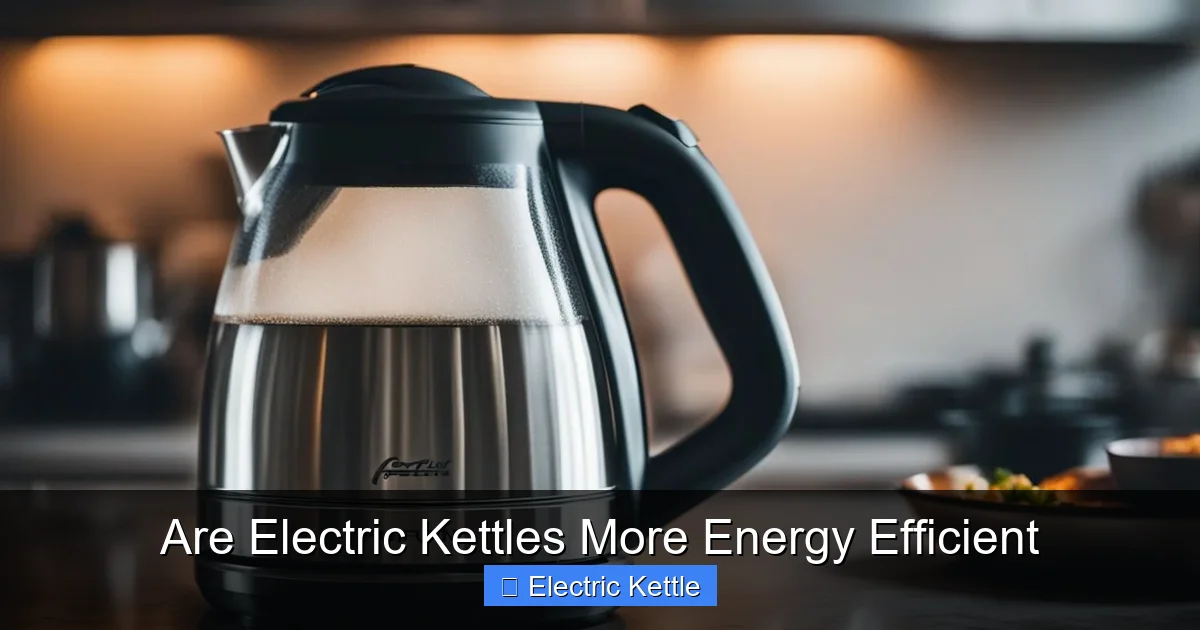
Before we get into efficiency, it helps to understand how electric kettles actually function. Unlike stovetop kettles that rely on an external heat source—like a gas flame or electric coil—electric kettles have a built-in heating element, usually located at the base of the appliance.
When you plug in an electric kettle and turn it on, electricity flows through this heating element, which becomes extremely hot. That heat is transferred directly to the water inside the kettle through conduction. Because the heating element is submerged or in direct contact with the water, there’s very little energy lost to the surrounding air.
Most modern electric kettles also come with automatic shut-off features. Once the water reaches boiling point (around 212°F or 100°C), a thermostat triggers the kettle to turn off. This not only prevents overheating but also stops unnecessary energy use. Some advanced models even let you choose specific temperatures—perfect for green tea, which brews best at lower temps than black coffee.
Key Components That Boost Efficiency
- Heating element: Made from materials like stainless steel or copper, these elements heat up quickly and transfer energy efficiently.
- Thermostat: Monitors water temperature and cuts power when boiling is reached, preventing energy waste.
- Insulated walls: Many kettles have double-walled or insulated designs that retain heat and reduce reheating needs.
- Lid seal: A tight-fitting lid traps steam and heat, speeding up the boiling process.
All these features work together to make electric kettles one of the most efficient ways to boil water at home.
Energy Efficiency: Electric Kettle vs. Stovetop Kettle
Now let’s get into the numbers. When comparing energy efficiency, we’re looking at how much of the input energy actually goes into heating the water—not lost to the air, the stove, or the surrounding environment.
Studies and energy audits consistently show that electric kettles outperform stovetop kettles in efficiency. Here’s why:
Heat Loss on the Stovetop
Stovetop kettles—whether used on gas or electric stoves—lose a significant amount of heat to the air. On a gas stove, only about 40–55% of the heat generated actually reaches the kettle. The rest escapes into the kitchen, warming the room instead of your water. Electric stovetops are slightly better, with efficiency around 70%, but they still lose heat through radiation and convection.
In contrast, electric kettles are designed to contain heat. The heating element is inside the unit, and the water is in direct contact with it. This means nearly all the energy goes into heating the water, not the air around it.
Real-World Example: Boiling 1 Liter of Water
Let’s say you want to boil 1 liter (about 4 cups) of water starting at room temperature (68°F or 20°C). Here’s how the energy use compares:
- Electric kettle: Uses about 0.1 kWh (kilowatt-hour) of electricity and takes 3–4 minutes.
- Gas stovetop kettle: Uses about 0.15–0.2 kWh equivalent in gas and takes 5–7 minutes.
- Electric stovetop kettle: Uses about 0.12–0.14 kWh and takes 6–8 minutes.
Even though gas is cheaper per unit than electricity in some areas, the lower efficiency means you end up using more total energy. And because electric kettles boil faster, they also reduce standby losses—like heat escaping from the kettle while it’s heating.
Cost Comparison Over Time
Let’s put this into dollars. Suppose you boil water twice a day, every day of the year.
- Electric kettle: 0.1 kWh × 2 × 365 = 73 kWh/year. At $0.15/kWh, that’s about $11/year.
- Gas stovetop: 0.18 kWh equivalent × 2 × 365 = 131.4 kWh/year. At $0.06/kWh (gas), that’s about $7.90/year.
Wait—gas seems cheaper? Yes, in terms of fuel cost. But remember: gas stoves are less efficient, and you’re also paying for the inefficiency in energy waste. Plus, electric kettles are faster, quieter, and safer. And if you’re on a time-of-use electricity plan or use solar power, the cost advantage of electric kettles grows even more.
Electric Kettles vs. Microwaves: Which Is Better for Heating Water?
You might be thinking: “Can’t I just use the microwave?” It’s quick, right? Well, not when it comes to boiling water.
Microwaves heat water by agitating water molecules with electromagnetic waves. While this works well for reheating soup or coffee, it’s not ideal for boiling pure water—especially large amounts.
Why Microwaves Are Less Efficient
- Uneven heating: Microwaves don’t heat water uniformly. You often get hot spots and cold zones, which means you may need to stir or reheat.
- Energy loss: Microwaves use more energy overall because they heat the entire cavity, not just the water. Only about 50–60% of the energy goes into the water.
- Risk of superheating: Water in a microwave can become “superheated”—meaning it’s hotter than boiling point but not bubbling. When disturbed, it can erupt violently, causing burns.
In contrast, electric kettles heat water evenly and safely, with minimal energy waste. A study by the UK’s Energy Saving Trust found that microwaves use up to 50% more energy than electric kettles to boil the same amount of water.
Practical Tip: Use the Kettle, Not the Microwave
If you’re making tea, instant coffee, or oatmeal, always reach for the electric kettle. It’s faster, safer, and uses less energy. Save the microwave for reheating leftovers or cooking food—not boiling water.
Smart Features That Boost Energy Efficiency
Modern electric kettles aren’t just about speed—they’re packed with smart features designed to save energy and improve usability.
Variable Temperature Control
Not all drinks need boiling water. Green tea, for example, brews best at 160–185°F (70–85°C), while white tea prefers 175–185°F (80–85°C). Boiling water can scald delicate leaves, making the tea bitter.
Many high-efficiency electric kettles now offer variable temperature settings. You can select the perfect temp for your drink, which means you’re not wasting energy heating water hotter than necessary. This also improves flavor and reduces the need to cool down boiling water with cold water—another energy-saving win.
Keep-Warm Function
Some kettles have a保温 (keep-warm) feature that maintains water at a set temperature for 30 minutes to an hour after boiling. While this does use a small amount of extra energy, it eliminates the need to reboil water for a second cup—saving time and energy in the long run.
Just be mindful: if you’re only making one cup, it’s still more efficient to boil just what you need and skip the keep-warm mode.
Auto Shut-Off and Boil-Dry Protection
Safety and efficiency go hand in hand. Auto shut-off ensures the kettle turns off as soon as the water boils, preventing energy waste and reducing fire risk. Boil-dry protection cuts power if the kettle is turned on without water—another layer of safety and efficiency.
Rapid Boil Technology
High-wattage kettles (1500W to 3000W) can boil water in under 3 minutes. While they use more power per minute, the shorter boiling time often results in lower total energy use compared to slower, less efficient methods.
For example, a 3000W kettle might use 0.15 kWh to boil 1 liter in 3 minutes, while a 1000W stovetop kettle takes 8 minutes and uses 0.13 kWh—but with more heat loss. The faster kettle wins on both speed and efficiency.
Environmental Impact: Are Electric Kettles Eco-Friendly?
Energy efficiency isn’t just about saving money—it’s also about reducing your environmental footprint. The less energy you use, the fewer greenhouse gases are emitted, especially if your electricity comes from fossil fuels.
Lower Carbon Emissions
Because electric kettles use less energy to boil water, they produce fewer carbon emissions over time. According to the U.S. Department of Energy, replacing a gas stovetop kettle with an electric one can reduce CO₂ emissions by up to 30% per boil, depending on your local energy mix.
If you’re on a green energy plan—or have solar panels—the environmental benefits are even greater. Every kilowatt-hour saved is a step toward a cleaner planet.
Longevity and Durability
High-quality electric kettles are built to last 5–10 years with proper care. This reduces electronic waste and the need for frequent replacements. Look for models with removable limescale filters, stainless steel interiors, and warranties of 2+ years.
Recyclability
Most electric kettles are made from recyclable materials like stainless steel, plastic, and copper. When it’s time to retire your kettle, check with your local e-waste recycling program to ensure it’s disposed of responsibly.
Tips to Maximize Energy Efficiency with Your Electric Kettle
Even the most efficient appliance can waste energy if used incorrectly. Here are some simple tips to get the most out of your electric kettle:
Only Boil What You Need
It’s tempting to fill the kettle to the max “just in case,” but this wastes energy. Most kettles have minimum and maximum fill lines—stick to them. If you only need one cup, boil one cup. Modern kettles with precise pour spouts and measurement markers make this easy.
Descale Regularly
Limescale buildup from hard water insulates the heating element, making it less efficient. Over time, this can increase boiling time and energy use. Clean your kettle every 1–2 months with a vinegar solution or a commercial descaler.
Use the Right Temperature
As mentioned earlier, not all drinks need boiling water. Use lower temperature settings for green tea, white tea, or baby formula. This saves energy and improves taste.
Unplug When Not in Use
Even when off, some kettles draw a small amount of standby power. Unplugging them between uses eliminates this “vampire load.”
Choose an Energy-Efficient Model
Look for kettles with high wattage (1500W+), insulated walls, and smart features like variable temperature and auto shut-off. ENERGY STAR-certified models are rare for kettles, but you can check reviews and energy labels for efficiency ratings.
Common Misconceptions About Electric Kettle Efficiency
Despite their advantages, some myths about electric kettles persist. Let’s clear them up.
Myth 1: “Electric kettles use too much electricity.”
Reality: While they draw high wattage, they operate for a short time. The total energy used per boil is still lower than stovetop or microwave methods.
Myth 2: “Gas is always cheaper than electricity.”
Reality: It depends on your location and usage. In areas with high gas prices or low-efficiency stoves, electric kettles can be more cost-effective—especially when factoring in speed and convenience.
Myth 3: “All electric kettles are the same.”
Reality: Quality varies widely. Cheap kettles may have poor insulation, weak thermostats, or short lifespans. Investing in a well-reviewed model pays off in efficiency and durability.
Conclusion: Yes, Electric Kettles Are More Energy Efficient
So, are electric kettles more energy efficient? The evidence is clear: yes, they are. From faster boiling times to smarter design and lower energy waste, electric kettles outperform stovetop kettles and microwaves in nearly every way.
They save you time, money, and energy—while also being better for the environment. With features like variable temperature control, auto shut-off, and rapid boil technology, modern electric kettles are more efficient than ever.
Whether you’re a tea lover, a coffee enthusiast, or just someone who wants a quicker way to heat water, switching to an electric kettle is a smart, sustainable choice. It’s a small change in your kitchen routine that can make a big difference in your energy use and carbon footprint.
So next time you’re waiting for the kettle to whistle, ask yourself: could an electric kettle make your life—and your planet—a little bit better? The answer is probably yes.
Frequently Asked Questions
Are electric kettles more energy efficient than stovetop kettles?
Yes, electric kettles are significantly more energy efficient. They convert up to 80% of their energy into heat, while stovetop kettles lose a lot of heat to the air. This means electric kettles use less energy to boil the same amount of water.
Do electric kettles use a lot of electricity?
No, despite high wattage, electric kettles operate for a short time. Boiling 1 liter of water uses about 0.1 kWh—roughly the same as running a 100W light bulb for one hour. Over a year, this adds up to minimal electricity use.
Can I save money by using an electric kettle?
Yes, especially if you boil water frequently. While the upfront cost is higher, the lower energy use and faster boiling times can reduce your electricity bill over time, particularly compared to gas or microwave use.
Is it safe to leave water in an electric kettle?
It’s safe for short periods, but avoid leaving water sitting for days. Stagnant water can promote bacterial growth and limescale buildup. For best results, empty and rinse the kettle daily.
Do electric kettles work with hard water?
Yes, but hard water causes limescale, which reduces efficiency. Clean your kettle regularly with vinegar or a descaler to maintain performance and extend its lifespan.
Are electric kettles better for the environment?
Yes, because they use less energy and produce fewer emissions. When powered by renewable energy, their environmental impact is even lower, making them a greener choice than gas or inefficient appliances.