Electric kettles vary widely in noise levels—some are nearly silent, while others can be quite loud. Factors like heating technology, build quality, and design influence how quiet an electric kettle is during operation.
Key Takeaways
- Noise levels vary significantly: Not all electric kettles are equally quiet—some produce soft hums, while others make noticeable boiling sounds.
- Heating element type matters: Kettles with concealed heating elements tend to be quieter than those with exposed coils.
- Material affects sound: Glass and stainless steel kettles often dampen noise better than plastic models.
- Advanced features reduce noise: Models with temperature control, slow boil, or insulated walls operate more quietly.
- Placement impacts perceived noise: Using a silicone mat or placing the kettle on a soft surface can minimize vibrations and sound.
- Brand and price influence quietness: Premium brands often invest in noise-reducing engineering, but affordable options can also be quiet.
- Maintenance helps maintain quiet operation: Regular descaling prevents mineral buildup that can increase noise over time.
📑 Table of Contents
- Are Electric Kettles Quiet? A Comprehensive Look at Noise Levels in Modern Kettles
- Understanding Kettle Noise: Why Do Electric Kettles Make Sound?
- Factors That Influence How Quiet an Electric Kettle Is
- Top Quiet Electric Kettles on the Market
- Tips to Reduce Kettle Noise at Home
- Are Quiet Electric Kettles Worth the Investment?
- Conclusion: Finding the Right Balance of Speed, Efficiency, and Quiet
Are Electric Kettles Quiet? A Comprehensive Look at Noise Levels in Modern Kettles
If you’ve ever stood in your kitchen at 6 a.m., waiting for your morning tea while trying not to wake the household, you’ve probably wondered: *Are electric kettles quiet?* It’s a fair question. After all, the sound of boiling water can range from a gentle whisper to a startling rattle—especially if you’re brewing coffee before sunrise or preparing a late-night cup of chamomile.
Electric kettles have become a staple in homes around the world. They’re fast, efficient, and convenient. But convenience doesn’t always mean quiet. While some models are designed to operate with minimal noise, others can be surprisingly loud, especially during the final stages of boiling. The good news? With the right knowledge, you can find a kettle that heats your water quickly *and* quietly.
In this guide, we’ll explore what makes electric kettles noisy or quiet, how different features affect sound levels, and which models are known for their whisper-quiet performance. Whether you’re a light sleeper, work from home, or just prefer a peaceful kitchen environment, understanding kettle noise can help you make a smarter purchase.
Understanding Kettle Noise: Why Do Electric Kettles Make Sound?
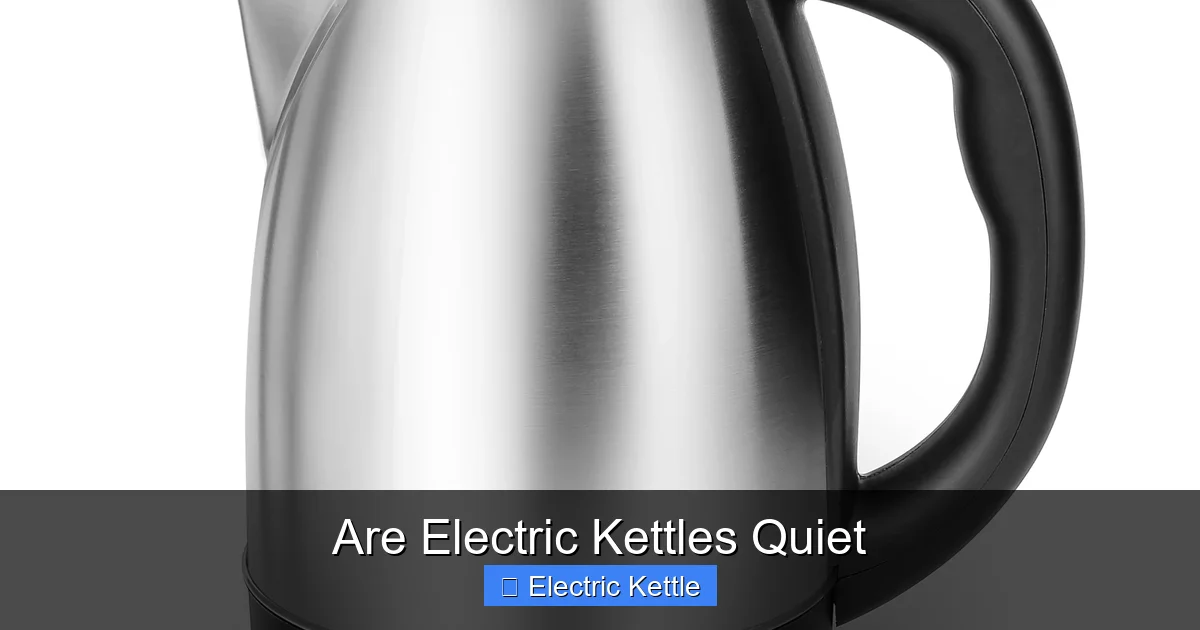
Visual guide about Are Electric Kettles Quiet
Image source: m.media-amazon.com
At first glance, it might seem odd that a simple appliance like an electric kettle would make noise at all. After all, it’s just heating water, right? But the process of boiling water involves several physical and mechanical actions that generate sound.
When you turn on an electric kettle, electricity flows through a heating element—either exposed or concealed—at the base of the unit. This element rapidly heats up, transferring thermal energy to the water. As the water temperature rises, tiny bubbles form and collapse, creating a soft bubbling or gurgling sound. This is known as *cavitation*, and it’s a natural part of the boiling process.
But that’s not the only source of noise. The heating element itself can vibrate slightly as it expands and contracts with heat. If the kettle isn’t securely placed or if the base isn’t level, these vibrations can amplify, leading to a rattling or buzzing sound. Additionally, the lid, spout, or internal components may rattle if they’re loose or poorly designed.
Even the material of the kettle plays a role. Plastic kettles, for example, tend to transmit sound more easily than metal or glass, making them seem louder. On the other hand, stainless steel and glass models often have better sound-dampening properties, especially if they feature double-wall insulation.
So, while some noise is inevitable, the *amount* of noise depends heavily on design, materials, and engineering. The key is finding a kettle that minimizes unnecessary sound without sacrificing performance.
Common Sources of Noise in Electric Kettles
Let’s break down the main culprits behind kettle noise:
– **Heating element vibrations:** As the element heats up, it expands. If it’s not firmly secured, it can vibrate against the base, creating a buzzing or humming sound.
– **Water bubbling and cavitation:** As water heats, bubbles form and pop—this is normal, but in some kettles, the sound is more pronounced due to design or water quality.
– **Lid and spout rattling:** A loose or poorly fitted lid can rattle as steam escapes, especially during rapid boiling.
– **Base instability:** If the kettle isn’t sitting flat on the counter or base, vibrations can transfer to the surface, amplifying noise.
– **Mineral buildup:** Over time, limescale can accumulate on the heating element, causing it to work harder and produce more noise.
Understanding these sources helps you identify whether a kettle’s noise is normal or a sign of a design flaw.
Factors That Influence How Quiet an Electric Kettle Is
Not all electric kettles are created equal when it comes to noise. Several key factors determine how quietly a kettle operates. Let’s explore the most important ones.
1. Heating Element Design
One of the biggest factors in kettle noise is the type of heating element used. There are two main types: exposed and concealed.
– **Exposed heating elements** are visible at the bottom of the kettle. They’re typically made of coiled metal and are in direct contact with the water. While they heat quickly, they can be noisier because the metal expands and contracts rapidly, creating vibrations. They’re also more prone to limescale buildup, which can increase noise over time.
– **Concealed heating elements**, on the other hand, are hidden beneath a smooth, flat base. This design reduces direct contact with water, which helps prevent scaling and minimizes vibrations. Because the element is enclosed, it tends to operate more quietly. Many modern quiet electric kettles use concealed elements for this reason.
For example, the *Breville BKE820XL IQ Electric Kettle* features a concealed element and is known for its quiet operation. Users often comment on how little sound it makes, even during a full boil.
2. Kettle Material and Construction
The material your kettle is made from plays a significant role in sound transmission.
– **Stainless steel kettles** are popular for their durability and sleek look. They also tend to be quieter than plastic models because metal absorbs and dampens sound better. Some high-end stainless steel kettles even feature double-wall insulation, which further reduces noise and keeps water hot longer.
– **Glass kettles** offer a modern, transparent design and are often quieter than plastic. Glass doesn’t vibrate as much as plastic, and many glass models come with silicone bases or rubber feet to reduce noise.
– **Plastic kettles** are usually the loudest. Plastic transmits sound more easily and can vibrate more during heating. However, some newer plastic models use noise-reducing designs, such as thicker walls or rubberized bases, to improve quietness.
For instance, the *Cuisinart CPK-17 PerfecTemp* is a stainless steel kettle with a concealed element and is frequently praised for its quiet boil.
3. Insulation and Double-Wall Design
Kettles with double-wall insulation are not only better at retaining heat—they’re also quieter. The air gap between the inner and outer walls acts as a sound barrier, reducing the amount of noise that escapes.
This design is common in premium kettles, such as the *Fellow Stagg EKG*, which is beloved by coffee enthusiasts for its precision and quiet operation. The insulated walls help keep the exterior cool and the interior quiet.
4. Temperature Control and Boil Settings
Advanced kettles with variable temperature settings often operate more quietly than basic models. Why? Because they don’t always boil water at full power.
For example, if you’re brewing green tea, which requires water around 175°F (80°C), the kettle will heat more slowly and gently, producing less noise. In contrast, a full boil for black tea or instant coffee may be louder, but even then, some kettles have a “slow boil” or “quiet mode” that reduces power output to minimize sound.
The *Hamilton Beach 40880C* is a budget-friendly kettle with multiple temperature presets and is known for its relatively quiet performance across settings.
5. Base and Stability
Even the best-designed kettle can be noisy if it’s not stable. A wobbly base or uneven countertop can cause vibrations that amplify sound. Look for kettles with non-slip rubber feet or silicone pads on the bottom. These help absorb vibrations and keep the kettle steady during use.
Some kettles also come with a weighted base or a magnetic cordless design that ensures a secure fit on the power base, reducing movement and noise.
Top Quiet Electric Kettles on the Market
If quiet operation is a priority, here are some of the best electric kettles known for their low noise levels.
1. Fellow Stagg EKG
This sleek, minimalist kettle is a favorite among coffee professionals. It features a gooseneck spout for precise pouring, variable temperature control, and a double-wall stainless steel body. The insulated design keeps noise to a minimum, and the slow, controlled heating process ensures a quiet boil. It’s on the pricier side, but the build quality and quiet performance make it worth the investment.
2. Breville BKE820XL IQ
Breville is known for high-performance appliances, and this kettle is no exception. With a concealed heating element, multiple temperature settings, and a sturdy stainless steel body, it heats water quickly and quietly. The LCD display shows the target and current temperature, and the kettle automatically shuts off when done. Users consistently praise its near-silent operation.
3. Cuisinart CPK-17 PerfecTemp
This versatile kettle offers six preset temperatures for different types of tea and coffee. The stainless steel construction and concealed element contribute to its quiet performance. It also has a keep-warm function that maintains temperature for up to 30 minutes without reheating, reducing the need for repeated boiling.
4. Hamilton Beach 40880C
For a more affordable option, the Hamilton Beach 40880C delivers excellent value. It has five temperature settings, a concealed element, and a stainless steel interior. While not as premium as the Fellow or Breville, it’s noticeably quieter than many budget kettles and is a great choice for everyday use.
5. OXO Brew Adjustable Temperature Pour-Over Kettle
Another gooseneck option, this kettle is ideal for pour-over coffee lovers. It features a double-wall stainless steel body, precise temperature control, and a quiet heating process. The ergonomic handle and balanced design make it easy to use, and the insulation helps keep noise down.
Tips to Reduce Kettle Noise at Home
Even if you don’t have a top-tier quiet electric kettle, there are several steps you can take to minimize noise in your kitchen.
1. Use a Silicone or Rubber Mat
Placing your kettle on a silicone trivet or rubber mat can absorb vibrations and reduce noise. This is especially helpful if you have a hard countertop like granite or tile. The mat acts as a buffer, preventing sound from traveling through the surface.
2. Keep the Kettle Clean and Descaled
Limescale buildup on the heating element can cause it to work harder, leading to louder operation. Regular descaling with vinegar or a commercial descaling solution keeps the element clean and efficient. Most manufacturers recommend descaling every 1–3 months, depending on water hardness.
3. Fill the Kettle Properly
Avoid overfilling or underfilling your kettle. Too little water can cause the element to overheat and make more noise. Too much water increases boiling time and can lead to louder bubbling. Most kettles have minimum and maximum fill lines—stick to them.
4. Choose the Right Temperature Setting
If your kettle has variable temperature controls, use lower settings when possible. Heating water to 175°F instead of 212°F reduces the intensity of boiling and results in quieter operation.
5. Place the Kettle on a Soft Surface
If you don’t have a mat, try placing the kettle on a wooden cutting board or a folded kitchen towel. These materials absorb vibrations better than hard surfaces.
6. Check for Loose Parts
Over time, the lid, spout, or handle may loosen. Tighten any screws or fittings to prevent rattling. If the kettle has a removable filter, make sure it’s properly seated.
Are Quiet Electric Kettles Worth the Investment?
So, are quiet electric kettles worth the extra cost? It depends on your needs and lifestyle.
If you live in a small apartment, work from home, or have a baby who naps during the day, a quiet kettle can make a big difference. The peace and quiet it provides may justify the higher price tag.
On the other hand, if you only use your kettle occasionally or don’t mind a bit of noise, a basic model may suffice. Many mid-range kettles offer a good balance of performance and quietness without breaking the bank.
Ultimately, the best kettle is one that fits your routine, budget, and noise tolerance. But if quiet operation is important to you, investing in a well-designed model with a concealed element, insulation, and temperature control is a smart move.
Conclusion: Finding the Right Balance of Speed, Efficiency, and Quiet
So, are electric kettles quiet? The answer is: *it depends*. While no kettle is completely silent, many modern models are designed to operate with minimal noise. Factors like heating element type, materials, insulation, and temperature control all play a role in how quietly a kettle boils water.
For those who value a peaceful kitchen environment, choosing a kettle with a concealed element, stainless steel or glass construction, and double-wall insulation can significantly reduce noise. Brands like Fellow, Breville, and Cuisinart offer excellent options that combine quiet performance with advanced features.
Even if you already own a kettle, simple steps like using a silicone mat, descaling regularly, and filling it properly can help keep noise to a minimum.
In the end, the perfect electric kettle is one that heats your water quickly, lasts for years, and doesn’t disrupt your peace. With the right knowledge and a little research, you can find a model that checks all the boxes—including quiet operation.
Frequently Asked Questions
Are all electric kettles loud?
No, not all electric kettles are loud. While some models can be noisy, many modern kettles are designed to operate quietly, especially those with concealed heating elements and insulated walls.
What makes an electric kettle quiet?
Quiet electric kettles typically feature concealed heating elements, stainless steel or glass construction, double-wall insulation, and stable bases with rubber feet to reduce vibrations.
Can I make my existing kettle quieter?
Yes! Use a silicone mat, descale regularly, fill the kettle properly, and place it on a soft surface to reduce noise from your current kettle.
Are glass kettles quieter than plastic ones?
Generally, yes. Glass kettles tend to dampen sound better than plastic models and often have fewer vibrations during heating.
Do temperature-controlled kettles boil more quietly?
Often, yes. Kettles with variable temperature settings can heat water more gently at lower temperatures, resulting in quieter operation compared to a full, rapid boil.
Is a more expensive kettle always quieter?
Not always, but premium brands often invest in noise-reducing features like insulation and better engineering. However, some affordable models can also be very quiet.