Electric tea kettles are often allowed in dorms—but with important restrictions. Most colleges permit them if they’re under 1500 watts, auto-shutoff enabled, and used safely. Always check your school’s housing policy before plugging in.
Key Takeaways
- Check your school’s housing policy first: Every college has different rules about appliances in dorm rooms. Some ban all heating elements, while others allow low-wattage kettles with safety features.
- Look for kettles under 1500 watts: Most dorms restrict high-wattage appliances to prevent circuit overloads. A 1200W or lower electric tea kettle is usually safe and compliant.
- Auto-shutoff and boil-dry protection are must-haves: These safety features reduce fire risk and are often required by campus housing guidelines.
- Use only in approved areas: Even if allowed, some schools require you to use your kettle in shared kitchens or common areas—not at your desk or bed.
- Choose compact, quiet models: Dorm rooms are small and shared. A small, quiet electric tea kettle is more considerate and practical.
- Keep it clean and well-maintained: Limescale buildup or damaged cords can trigger safety concerns. Regular cleaning and inspections help avoid violations.
- When in doubt, ask housing staff: If the policy is unclear, email your residence life office. It’s better to confirm than risk a fine or eviction.
📑 Table of Contents
- Are Electric Tea Kettles Allowed in Dorms? A Complete Guide for Students
- Understanding Dorm Appliance Policies
- Safety Features That Matter in Dorms
- Wattage Limits and Electrical Safety
- Best Electric Tea Kettles for Dorm Rooms
- Tips for Using Your Kettle Responsibly
- Alternatives If Kettles Are Banned
- Conclusion
Are Electric Tea Kettles Allowed in Dorms? A Complete Guide for Students
Moving into a dorm is exciting—new friends, late-night study sessions, and the freedom of living away from home. But with that freedom comes responsibility, especially when it comes to what you can and can’t bring. One common question students ask is: Are electric tea kettles allowed in dorms? The short answer? It depends—but in most cases, yes, as long as you follow your school’s rules.
Electric tea kettles are popular among students for good reason. They’re fast, convenient, and perfect for making tea, instant coffee, oatmeal, or even ramen. Unlike microwaves or hot plates, many kettles are compact, energy-efficient, and designed with safety in mind. But because they involve heating elements and electricity, colleges treat them with caution. Some schools welcome them; others ban them outright. The key is knowing your campus policy and choosing the right kettle for dorm life.
In this guide, we’ll walk you through everything you need to know about using an electric tea kettle in your dorm room. From understanding housing rules to picking the safest, most dorm-friendly model, we’ve got you covered. Whether you’re a tea lover, coffee enthusiast, or just need hot water for quick meals, this article will help you stay compliant, safe, and caffeinated.
Understanding Dorm Appliance Policies
Every college and university sets its own rules about what appliances students can use in dorm rooms. These policies exist for good reason—safety, fire prevention, and protecting shared infrastructure like electrical systems. While some schools are lenient, others have strict bans on anything with a heating element.
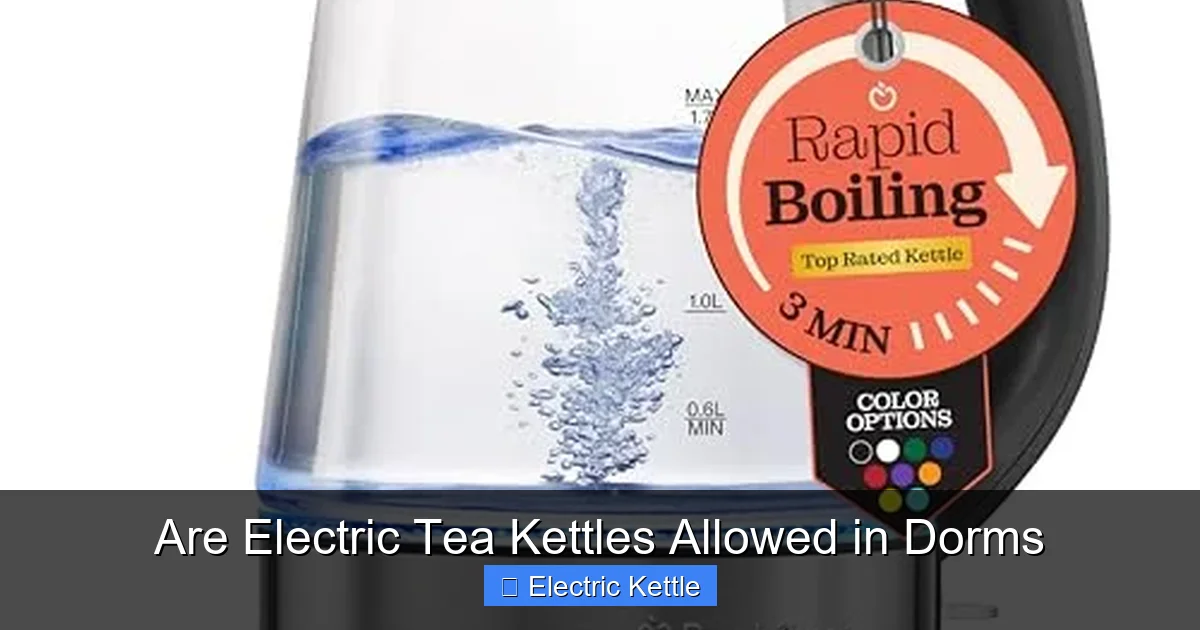
Visual guide about Are Electric Tea Kettles Allowed in Dorms
Image source: m.media-amazon.com
Why Do Colleges Restrict Appliances?
Dorm buildings are often older structures with limited electrical capacity. Plugging in too many high-wattage devices—like space heaters, microwaves, or hot plates—can overload circuits, trip breakers, or even cause fires. That’s why many schools limit or ban appliances that generate heat. Electric tea kettles fall into this category, but they’re often treated more leniently than other devices because they’re typically used for short bursts and have built-in safety features.
Common Dorm Appliance Rules
Most colleges allow small, low-wattage appliances that are considered “safe” for student use. These usually include:
- Mini refrigerators (under 5 cubic feet)
- Electric kettles (under 1500 watts with auto-shutoff)
- Hair dryers and straighteners (used responsibly)
- Laptops and phone chargers
On the other hand, banned items often include:
- Microwaves (unless provided by the school)
- Hot plates, toaster ovens, and griddles
- Space heaters
- Candles and incense
Some schools go a step further and require appliances to be registered or inspected before use. Others only allow kettles in designated common areas, like shared kitchens or lounges.
How to Find Your School’s Policy
The best place to start is your college’s housing or residence life website. Look for a section called “Resident Handbook,” “Housing Policies,” or “Approved Appliances.” These documents usually list what’s allowed, what’s prohibited, and any special conditions.
If you can’t find clear information online, don’t guess—reach out. Email your resident advisor (RA), housing office, or campus safety department. A quick message like, “Hi, I’m moving in next week and wanted to confirm if electric tea kettles are allowed in dorm rooms. Are there any wattage or safety requirements?” can save you from trouble later.
Pro tip: Keep a copy of the policy (or a screenshot) on your phone. If an RA or housing staff member questions your kettle, you’ll have proof that it’s compliant.
Safety Features That Matter in Dorms
Even if your school allows electric tea kettles, not all models are created equal. Safety should be your top priority—especially in a shared living space where a small mistake could affect dozens of students.
Auto-Shutoff Function
This is the most important feature to look for. An auto-shutoff (or automatic shut-off) turns the kettle off as soon as the water reaches boiling point. This prevents overheating, reduces energy use, and minimizes fire risk. Most modern electric kettles include this feature, but it’s worth double-checking the product description.
Why it matters in dorms: Students often get distracted—answering texts, studying, or chatting with friends. Without auto-shutoff, a kettle left unattended could boil dry, damage the heating element, or even start a fire.
Boil-Dry Protection
Related to auto-shutoff, boil-dry protection detects when there’s no water in the kettle and shuts it off immediately. This prevents the heating element from burning out and reduces the risk of smoke or fire.
Example: Imagine you fill your kettle halfway, start boiling, then get called to a group study session. You forget about it. With boil-dry protection, the kettle will turn off safely once the water evaporates. Without it, you could return to a smoldering appliance.
Cool-Touch Exterior
A cool-touch or insulated exterior keeps the outside of the kettle from getting too hot. This is especially important in small dorm rooms where space is tight and accidental bumps happen.
Tip: Look for kettles with double-wall construction or heat-resistant handles. These reduce the chance of burns if someone brushes against the kettle while it’s heating.
Stable Base and Non-Slip Feet
Dorm desks and nightstands are often cluttered. A kettle with a wide, stable base and rubberized feet is less likely to tip over—preventing spills, burns, or water damage to electronics.
Bonus: Some kettles come with cordless designs, where the kettle lifts off the base for pouring. This reduces tripping hazards and makes it easier to use in tight spaces.
Certifications and Compliance
Always check for safety certifications like UL (Underwriters Laboratories), ETL, or CSA. These labels mean the kettle has been tested and meets U.S. safety standards. Avoid cheap, uncertified models from unknown brands—they may lack proper insulation or use substandard materials.
Red flag: If a kettle doesn’t list any certifications or has vague safety claims (like “safe for home use” without details), it’s best to skip it.
Wattage Limits and Electrical Safety
Wattage is a big deal in dorms. Most college buildings have older electrical systems that can’t handle high-powered appliances. That’s why many schools set strict wattage limits—and electric kettles are no exception.
Typical Dorm Wattage Limits
Most colleges allow appliances under 1500 watts. Some are even stricter, capping it at 1200W or 1000W. To stay safe, aim for a kettle that’s 1200W or lower. These models still heat water quickly—usually in 3 to 5 minutes—while reducing the risk of tripping a circuit.
Example: A 1500W kettle might boil water in 2 minutes, but it draws more power than a 1200W model. In a dorm room with a laptop, lamp, phone charger, and mini-fridge already plugged in, that extra load could overload the outlet.
How to Check Your Kettle’s Wattage
The wattage is usually listed on the product label, in the user manual, or on the manufacturer’s website. If you’re shopping online, check the “Specifications” section. Avoid kettles that don’t clearly state their wattage—this is often a sign of poor quality or lack of transparency.
Pro tip: If you’re unsure, choose a model with adjustable temperature settings. Some kettles let you select lower heat for delicate teas, which uses less power and is gentler on your dorm’s electrical system.
Using Power Strips and Surge Protectors
Never plug your kettle directly into a wall outlet if you’re also using other devices. Instead, use a high-quality surge protector with overload protection. Look for one with a built-in circuit breaker and indicator lights.
Warning: Avoid “daisy-chaining” power strips (plugging one strip into another). This is a major fire hazard and often violates dorm rules.
Also, don’t use extension cords unless absolutely necessary—and never run them under rugs or furniture. If you must use one, choose a heavy-duty, UL-listed cord rated for at least 15 amps.
Signs of Electrical Overload
Even with a low-wattage kettle, be alert for warning signs:
- Flickering lights when the kettle turns on
- The outlet feels warm to the touch
- The circuit breaker trips frequently
- You smell burning plastic or ozone
If you notice any of these, stop using the kettle immediately and report it to your RA or housing office. It could indicate a wiring issue or incompatible appliance.
Best Electric Tea Kettles for Dorm Rooms
Not all electric kettles are dorm-friendly. The best models are compact, quiet, energy-efficient, and packed with safety features. Here are some top picks that meet typical dorm requirements.
Top Features to Look For
- Capacity: 1 liter or less—enough for 2–3 cups, but not so large it takes up counter space.
- Material: Stainless steel or BPA-free plastic. Glass kettles look nice but can break easily in busy dorm rooms.
- Noise level: Look for models with quiet boil technology—ideal for early mornings or late-night study sessions.
- Temperature control: Useful for different types of tea (green, white, herbal), but not essential if you mostly drink black tea or coffee.
- Ease of cleaning: Removable lids and wide openings make descaling easier.
Recommended Models
1. Cuisinart CPK-17 PerfecTemp
– 1.7L capacity (a bit large, but great for shared use)
– 1500W (check your school’s limit)
– 6 preset temperature settings
– Auto-shutoff and boil-dry protection
– Stainless steel with cool-touch handle
2. Hamilton Beach 40880
– 1L capacity—perfect for small spaces
– 1200W—safe for most dorms
– Simple on/off switch with auto-shutoff
– Cordless design with 360° swivel base
– Affordable and reliable
3. Breville BKE820XL IQ
– 1.5L capacity
– 1500W (verify with your school)
– Quiet boil technology
– LCD display with temperature control
– Premium build, but higher price point
4. Mueller Ultra Kettle
– 1.8L capacity
– 1100W—very dorm-friendly
– Fast boiling with auto-shutoff
– Stainless steel interior, BPA-free
– Great value for the price
What to Avoid
Steer clear of:
- Kettles over 1500W
- Models without auto-shutoff or boil-dry protection
- Cheap, uncertified brands (e.g., no UL/ETL listing)
- Glass kettles with fragile handles
- Kettles with exposed heating elements
Also, avoid kettles with built-in coffee makers or toasters—these are often classified as multi-cookers and banned in dorms.
Tips for Using Your Kettle Responsibly
Even with a compliant kettle, how you use it matters. Responsible use keeps you safe, respects your roommates, and helps you avoid housing violations.
Use Only When Supervised
Never leave your kettle unattended while it’s heating. Step away for a second? Turn it off. This simple habit prevents accidents and shows you’re taking safety seriously.
Keep It Clean
Limescale buildup from hard water can damage your kettle and affect taste. Clean it monthly with a vinegar solution (1:1 vinegar and water, boil, then rinse thoroughly). If your dorm has soft water, you may only need to clean it every few months.
Also, wipe down the exterior and base regularly to prevent dust or spills from causing electrical issues.
Store It Safely
When not in use, unplug the kettle and store it in a dry, cool place. Don’t wrap the cord tightly around the base—this can damage the wires over time. If your dorm has limited space, consider a kettle with a detachable cord or compact design.
Be Mindful of Roommates
If you share a room, talk to your roommate about using the kettle. Agree on quiet hours, cleaning responsibilities, and where to place it. A little communication goes a long way in avoiding conflicts.
Also, avoid using the kettle during late-night hours if it’s noisy. Some models whistle when boiling—this can disturb light sleepers.
Report Issues Immediately
If your kettle starts making strange noises, smells odd, or doesn’t heat properly, stop using it. Report it to your RA or housing office. They may ask you to remove it until it’s inspected or replaced.
Remember: A malfunctioning appliance isn’t just a personal risk—it could endanger your entire floor.
Alternatives If Kettles Are Banned
Some colleges have strict no-kettle policies. If that’s the case at your school, don’t worry—there are still ways to enjoy hot beverages and quick meals.
Use Campus Facilities
Many dorms have shared kitchens or lounges with microwaves, hot water dispensers, or coffee makers. These are safe, approved options for heating water. Just bring your own mug and tea bags.
Try a French Press or Pour-Over
These brewing methods don’t require electricity. Use hot water from a microwave or hot water station, then steep your tea or coffee manually. They’re quiet, portable, and dorm-friendly.
Invest in a Travel Mug with Insulation
Some high-end travel mugs (like Yeti or Hydro Flask) can keep water hot for hours. Boil water in a common area, then pour it into your mug for later use.
Ask About Exceptions
In rare cases, students with medical needs (e.g., requiring hot water for medications) may request an exception. Contact your housing office with documentation if this applies to you.
Conclusion
So, are electric tea kettles allowed in dorms? In most cases, yes—but only if they meet your school’s safety and wattage requirements. The key is doing your homework: check the housing policy, choose a kettle with auto-shutoff and low wattage, and use it responsibly.
An electric tea kettle can be a game-changer for students. It’s faster than a microwave, more convenient than waiting in line at the café, and perfect for late-night study fuel. But with great convenience comes great responsibility. By following the tips in this guide, you can enjoy your favorite hot drinks without risking your safety or your housing status.
Remember: When in doubt, ask. Your RA, housing office, or campus safety team are there to help. A quick email or conversation can save you from fines, eviction, or worse. Stay safe, stay caffeinated, and enjoy your dorm experience—one perfectly brewed cup at a time.
Frequently Asked Questions
Are electric tea kettles allowed in all college dorms?
No, policies vary by school. Some colleges allow them with restrictions, while others ban all heating appliances. Always check your institution’s housing guidelines before bringing one.
What wattage electric kettle is safe for dorms?
Most dorms allow kettles under 1500 watts, with many recommending 1200W or lower to prevent circuit overloads. Check your school’s specific rules to be sure.
Can I use my electric kettle in my dorm room if it has auto-shutoff?
Possibly—but only if your school permits kettles and your model meets all safety and wattage requirements. Auto-shutoff helps, but it doesn’t override housing bans.
What should I do if my dorm doesn’t allow electric kettles?
Use shared kitchen facilities, try manual brewing methods like French press, or ask your housing office about exceptions for medical or accessibility needs.
Is it safe to leave an electric kettle plugged in overnight?
It’s not recommended. Even with safety features, leaving any appliance plugged in unattended increases risk. Unplug it when not in use.
Can I get in trouble for using a banned kettle in my dorm?
Yes. Violating housing policies can result in warnings, fines, or even eviction. Always follow your school’s rules to avoid penalties.