Electric tea kettles are significantly faster than stovetop kettles, often boiling water in under 3 minutes thanks to direct heating elements and higher wattage. This speed, combined with energy efficiency and smart features, makes them the top choice for quick, consistent hot water—perfect for tea lovers, busy mornings, and modern kitchens.
Key Takeaways
- Electric kettles heat water faster than stovetop models: Most electric kettles boil water in 2–4 minutes, while stovetop kettles take 5–10 minutes depending on heat source.
- Higher wattage equals quicker boiling: Electric kettles typically range from 1200W to 1800W, allowing faster heat transfer compared to gas or electric stovetops.
- Direct heating improves efficiency: The heating element is submerged in water, reducing heat loss and speeding up the boiling process.
- Temperature control enhances speed and precision: Variable temperature settings let you heat water to the ideal temp for different teas without over-boiling.
- Automatic shut-off saves time and energy: Once water reaches the set temperature, the kettle turns off, eliminating guesswork and reducing boil time waste.
- Energy efficiency supports faster performance: Electric kettles use less energy to boil the same amount of water, making them both faster and more eco-friendly.
- Modern features boost convenience: Rapid-boil modes, keep-warm functions, and LED indicators make electric kettles faster and easier to use daily.
📑 Table of Contents
- Are Electric Tea Kettles Faster? The Surprising Truth
- Why Speed Matters in a Tea Kettle
- How Electric Kettles Work: The Science of Speed
- Electric vs. Stovetop Kettles: A Side-by-Side Comparison
- Factors That Affect Electric Kettle Speed
- Advanced Features That Make Electric Kettles Even Faster
- Real-World Examples: How Fast Are Popular Electric Kettles?
- Tips to Maximize Your Electric Kettle’s Speed
- Are Electric Kettles Worth the Investment?
- Conclusion: Speed, Efficiency, and the Future of Tea Brewing
Are Electric Tea Kettles Faster? The Surprising Truth
If you’ve ever stood over a stovetop kettle, tapping your fingers and wondering if the water will ever boil, you’re not alone. Waiting for water to heat up can feel like an eternity—especially when you’re craving that perfect cup of tea or need hot water for instant coffee, oatmeal, or noodles. In today’s fast-paced world, speed matters. That’s why so many people are making the switch to electric tea kettles. But the big question remains: Are electric tea kettles faster?
The short answer? Yes—electric kettles are almost always faster than their stovetop counterparts. But the real story goes deeper than just boiling time. It’s about efficiency, technology, and how modern design has transformed a simple kitchen task into a near-instant experience. Whether you’re a tea enthusiast, a busy parent, or someone who just values convenience, understanding why electric kettles heat water so quickly can help you make a smarter choice for your kitchen.
In this guide, we’ll break down the science behind electric kettle speed, compare them to stovetop models, explore the role of wattage and design, and show you how features like temperature control and auto shut-off contribute to faster, safer boiling. By the end, you’ll know exactly why electric kettles aren’t just faster—they’re better.
Why Speed Matters in a Tea Kettle
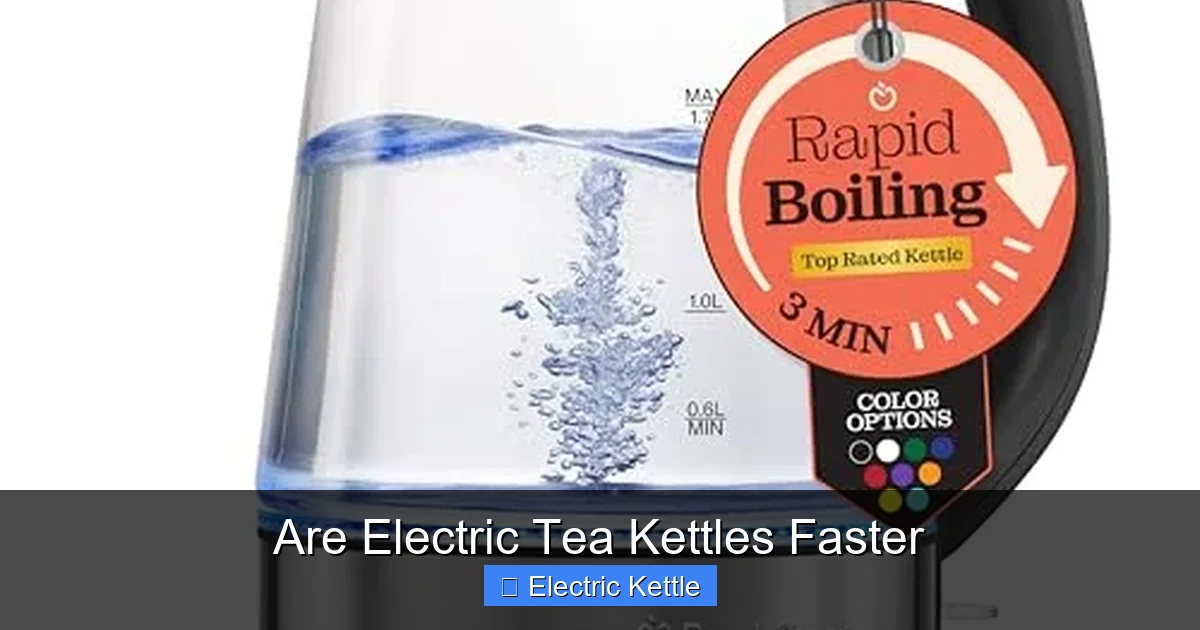
Visual guide about Are Electric Tea Kettles Faster
Image source: m.media-amazon.com
Let’s face it: nobody likes waiting. Whether you’re rushing out the door in the morning or unwinding after a long day, the last thing you want is to stand around watching a kettle. Speed isn’t just about convenience—it’s about efficiency, energy use, and even the quality of your drink.
When water takes too long to boil, you might be tempted to turn up the heat on a stovetop kettle, which can lead to overheating, wasted energy, or even burnt kettles. Electric kettles, on the other hand, are designed to heat water quickly and evenly, reducing the risk of over-boiling and saving you time and electricity.
But speed also affects flavor. Different teas require different water temperatures. Green tea, for example, brews best at around 160–180°F (71–82°C), while black tea needs a full boil at 212°F (100°C). If your kettle takes too long to reach the right temperature, you might end up over-steeping or under-extracting your tea, leading to a bitter or weak cup. Electric kettles with variable temperature settings solve this by heating water precisely and quickly—so you get the perfect brew every time.
Moreover, in households with multiple people making drinks throughout the day, a faster kettle means less downtime. Imagine a family where one person wants tea, another wants coffee, and a third needs hot water for pasta—having a kettle that boils in under three minutes makes all the difference.
How Electric Kettles Work: The Science of Speed
To understand why electric kettles are faster, it helps to know how they work. Unlike stovetop kettles that rely on external heat from a gas flame or electric coil, electric kettles use an internal heating element submerged directly in the water. This direct contact allows for rapid heat transfer, which is the key to their speed.
Direct Heating Element
Inside every electric kettle is a metal coil or plate—usually made of stainless steel or another heat-conductive material—that sits at the bottom of the water reservoir. When you plug in the kettle and press the boil button, electricity flows through this element, causing it to heat up almost instantly. Because the element is in direct contact with the water, heat is transferred efficiently and with minimal loss.
This is a major advantage over stovetop kettles, where heat must travel from the burner, through the kettle’s base, and into the water. Each step introduces potential heat loss, especially if the stove is slow to respond or the kettle has a thin base. Electric kettles eliminate these inefficiencies by cutting out the middleman.
High Wattage = Faster Boiling
Another factor contributing to speed is wattage. Most electric kettles operate between 1200 and 1800 watts, with higher-end models reaching up to 3000 watts in commercial settings. For comparison, a typical electric stovetop burner maxes out around 1500 watts, and gas flames can be even less efficient due to heat dispersion.
Higher wattage means more power delivered to the heating element per second, which translates to faster boiling. A 1500W electric kettle can boil a full liter of water in about 3–4 minutes, while a stovetop kettle under the same conditions might take 6–8 minutes. That’s a difference of several minutes—time you could be spending sipping your tea instead of waiting for it.
Insulated Design and Heat Retention
Many modern electric kettles also feature insulated walls or double-walled construction, which helps retain heat and reduce energy loss. This not only speeds up the initial boil but also keeps water hot longer after boiling—ideal if you’re making multiple cups or need hot water for cooking.
Some premium models even include rapid-boil technology, which uses extra power for the first minute to jump-start the heating process. This can shave off another 30–60 seconds, making the kettle even faster.
Electric vs. Stovetop Kettles: A Side-by-Side Comparison
To truly appreciate how much faster electric kettles are, let’s compare them directly to stovetop kettles across several key factors.
Boiling Time
This is the most obvious difference. On average:
– A 1500W electric kettle boils 1 liter of water in 3–4 minutes.
– A stovetop kettle on a gas burner takes 5–7 minutes.
– On an electric coil stove, it can take 6–10 minutes.
The gap widens with larger volumes. For 1.5 liters, an electric kettle might take 5–6 minutes, while a stovetop kettle could take 8–12 minutes. That’s a significant difference, especially during busy mornings.
Energy Efficiency
Electric kettles are not only faster—they’re also more energy-efficient. Studies show that electric kettles use about 20–30% less energy to boil the same amount of water compared to stovetop kettles. This is because less heat is lost to the surrounding air. The direct heating element ensures that nearly all the energy goes into heating the water, not the kettle or the stove.
For example, boiling 500ml of water in an electric kettle might use around 0.1 kWh of electricity, while the same task on a gas stove could use more due to flame dispersion and heat loss.
Consistency and Control
Stovetop kettles rely on manual heat adjustment. If you turn the flame too high, you risk boiling over or scalding. Too low, and you’re waiting forever. Electric kettles, especially those with temperature control, offer consistent, precise heating. You set the temperature, press a button, and walk away—no babysitting required.
Safety and Convenience
Electric kettles come with built-in safety features like automatic shut-off, boil-dry protection, and cool-touch exteriors. These not only prevent accidents but also save time. You don’t have to stand by the stove to turn it off—the kettle does it for you. Some models even have keep-warm functions that maintain the water temperature for up to an hour, so your second cup is just as hot as the first.
Portability and Use Cases
Electric kettles are portable and can be used anywhere with an outlet—perfect for offices, dorm rooms, or travel. Stovetop kettles require a stove, limiting their use. Plus, electric kettles often have cordless designs, making them easy to pour and store.
Factors That Affect Electric Kettle Speed
While electric kettles are generally fast, not all models perform the same. Several factors can influence how quickly your kettle boils water.
Wattage
As mentioned earlier, wattage is a major determinant of speed. A 1200W kettle will be slower than a 1800W model. If speed is your top priority, look for a kettle with at least 1500W—preferably 1800W or higher.
Water Volume
The more water you’re heating, the longer it takes. Most kettles are fastest when filled to about 50–75% capacity. Overfilling can slow down boiling, while underfilling may trigger boil-dry protection and delay the process.
Starting Water Temperature
Cold tap water takes longer to boil than room-temperature or preheated water. In winter, when tap water is colder, boiling times may increase slightly. Some kettles have “rapid boil” modes that compensate by using extra power initially.
Kettle Material and Design
Stainless steel kettles tend to heat faster than glass or plastic models because metal conducts heat more efficiently. However, glass kettles allow you to see the water boiling, which some users prefer. Look for kettles with flat, thick bases and well-insulated walls for optimal performance.
Altitude
At higher altitudes, water boils at a lower temperature, which can affect boiling time. While the kettle may still heat quickly, the water won’t reach 212°F (100°C). Most electric kettles compensate with temperature sensors, but it’s something to keep in mind if you live in a mountainous region.
Advanced Features That Make Electric Kettles Even Faster
Modern electric kettles aren’t just about boiling water—they’re packed with smart features that enhance speed, safety, and convenience.
Variable Temperature Control
One of the biggest advantages of electric kettles is precise temperature control. Instead of boiling everything to 212°F, you can set the exact temperature for different beverages:
– 160°F (71°C) for delicate green teas
– 185°F (85°C) for white or oolong teas
– 200°F (93°C) for French press coffee
– 212°F (100°C) for black tea or instant noodles
This not only improves flavor but also saves time. You’re not waiting for water to cool down after boiling—it’s ready to use immediately.
Rapid Boil and Boost Modes
Some high-end kettles include a “rapid boil” or “boost” mode that increases power output for the first minute or two. This can cut boiling time by up to 30 seconds, making it ideal for when you’re in a hurry.
Keep-Warm Function
After boiling, many electric kettles can maintain the water temperature for 30–60 minutes. This means you can boil once and make multiple drinks without reheating—saving time and energy.
LED Indicators and Digital Displays
Visual cues like LED lights or digital screens let you know when the water is heating, boiling, or ready to pour. No more guessing or lifting the lid to check—just glance at the display and go.
Quiet Operation
While not directly related to speed, quieter kettles make the waiting experience more pleasant. Some models are designed to minimize noise, so you can boil water without disturbing others—perfect for early mornings or late nights.
Real-World Examples: How Fast Are Popular Electric Kettles?
Let’s look at some real-world examples to see how different electric kettles perform.
Breville BKE820XL IQ Electric Kettle
– Wattage: 1500W
– Capacity: 1.7 liters
– Boil time (1 liter): ~3.5 minutes
– Features: 6 preset temperatures, keep-warm for 20 minutes, LCD display
This premium kettle is a favorite among tea lovers for its precision and speed. It heats water quickly and maintains the perfect temperature for different brews.
Hamilton Beach 40880 Electric Kettle
– Wattage: 1500W
– Capacity: 1.7 liters
– Boil time (1 liter): ~4 minutes
– Features: Auto shut-off, boil-dry protection, cordless design
A budget-friendly option that still delivers fast boiling and reliable performance.
Cuisinart CPK-17 PerfecTemp
– Wattage: 1500W
– Capacity: 1.7 liters
– Boil time (1 liter): ~3.8 minutes
– Features: 6 temperature settings, keep-warm, blue LED indicator
Known for its sleek design and consistent heating, this kettle is a great mid-range choice.
OXO Brew Classic Tea Kettle
– Wattage: 1500W
– Capacity: 1.7 liters
– Boil time (1 liter): ~4.2 minutes
– Features: Gooseneck spout, temperature presets, quiet boil
Ideal for pour-over coffee and precision brewing, with a focus on control and speed.
Across the board, these kettles boil water in under 4.5 minutes—often faster than stovetop models by several minutes.
Tips to Maximize Your Electric Kettle’s Speed
Even the fastest kettle can be slowed down by poor habits. Here are some tips to keep your kettle performing at its best.
Fill to the Right Level
Don’t overfill or underfill. Most kettles have minimum and maximum markings. Filling to about 75% capacity ensures optimal heating and prevents boil-dry protection from kicking in.
Use Cold Water
While it might seem counterintuitive, starting with cold water is actually more efficient. Hot water from the tap may contain impurities or minerals that can affect taste and heating. Cold water heats more evenly and quickly in most cases.
Clean Regularly
Mineral buildup from hard water can insulate the heating element, slowing down boiling. Clean your kettle monthly with a vinegar solution or use a descaling product to maintain peak performance.
Keep the Lid Closed
Every time you open the lid, heat escapes. Keep it closed while heating to maintain temperature and speed up the process.
Use the Right Settings
If your kettle has temperature presets, use them. Boiling water to 212°F when you only need 180°F wastes time and energy. Choose the right setting for your drink.
Unplug When Not in Use
Even when off, some kettles draw a small amount of standby power. Unplugging saves energy and ensures safety.
Are Electric Kettles Worth the Investment?
So, are electric tea kettles faster? Absolutely. But speed is just one part of the equation. When you consider energy efficiency, safety, precision, and convenience, electric kettles offer far more value than stovetop models.
Yes, they cost more upfront—typically $30 to $100 depending on features—but the time and energy savings add up over time. For households that boil water multiple times a day, the investment pays for itself quickly.
Plus, the added features—like temperature control, auto shut-off, and keep-warm—make daily use more enjoyable and efficient. You’re not just buying a kettle; you’re upgrading your entire hot beverage experience.
Conclusion: Speed, Efficiency, and the Future of Tea Brewing
In the battle of speed, electric tea kettles win—hands down. They boil water faster, use less energy, and offer features that stovetop kettles simply can’t match. Whether you’re brewing a delicate green tea or making instant coffee, an electric kettle gets you there quicker and with greater precision.
But beyond speed, electric kettles represent a shift toward smarter, more efficient kitchen appliances. They save time, reduce waste, and enhance the quality of your drinks. For anyone who values convenience, consistency, and performance, an electric kettle is a must-have.
So the next time you’re waiting for water to boil, ask yourself: why wait? Switch to an electric kettle and taste the difference speed makes.
Frequently Asked Questions
Are electric kettles really faster than stovetop kettles?
Yes, electric kettles are significantly faster. Most boil water in 2–4 minutes, while stovetop kettles take 5–10 minutes depending on the heat source. The direct heating element and higher wattage make the difference.
Does wattage affect how fast an electric kettle boils water?
Absolutely. Higher wattage means faster boiling. A 1500W kettle will boil water quicker than a 1200W model. Look for at least 1500W for optimal speed.
Can I boil water faster by filling the kettle less?
Yes, but only to a point. Filling to 50–75% capacity is ideal. Too little water may trigger safety features, while too much increases boiling time.
Do electric kettles use more electricity than stovetops?
No, they’re more energy-efficient. Electric kettles direct heat into the water with minimal loss, using about 20–30% less energy than stovetop methods.
Are electric kettles safe to use?
Yes, modern electric kettles include safety features like auto shut-off, boil-dry protection, and cool-touch handles, making them very safe for daily use.
Can I use an electric kettle for coffee?
Definitely. Many electric kettles have temperature settings perfect for coffee, including French press and pour-over. Just avoid boiling water for delicate brews.