A sharp kitchen knife isn’t just a convenience—it’s a necessity. Whether you’re slicing ripe tomatoes, dicing onions for a stir-fry, or carving a roast, a properly sharpened blade makes all the difference between frustration and finesse. Yet, despite how essential sharp knives are, many home cooks overlook one of the most critical aspects of knife maintenance: the sharpening angle. It’s not just about running your knife over a steel or dragging it across a whetstone—it’s about precision, consistency, and understanding the science behind edge geometry. Choosing the right sharpening angle can extend the life of your blade, improve cutting performance, and even reduce the risk of accidents caused by slipping dull blades.
In this comprehensive guide, we’ll demystify the world of knife sharpening angles. You’ll learn why the angle matters more than you think, how different knives require different angles, and how to match your sharpening technique to your cooking style and knife type. We’ll break down the key factors that influence sharpening effectiveness, compare various sharpening methods and tools, and help you avoid common pitfalls that lead to damaged edges or inconsistent results. Whether you’re a weekend warrior in the kitchen or a seasoned home chef investing in high-end Japanese blades, this guide will equip you with the knowledge to keep your knives razor-sharp—safely and efficiently.
The market today offers an overwhelming array of sharpening systems: pull-through sharpeners, manual whetstones, electric sharpeners, guided-angle systems, and even smartphone-connected devices that claim to “perfect” your edge. But with so many options come conflicting advice—some sources recommend 15 degrees, others insist on 20, and a few swear by 25. The truth is, there’s no one-size-fits-all answer. The best sharpening angle depends on your knife’s origin, steel type, intended use, and even your personal cutting style. This guide cuts through the noise, offering expert-backed insights grounded in metallurgy, blade geometry, and real-world testing. By the end, you’ll know exactly how to choose, maintain, and optimize the sharpening angle for every knife in your block.

What to Look for When Buying Buying Guide
1. Knife Origin and Design Philosophy
The geographic origin of your knife plays a major role in determining its ideal sharpening angle. Western-style knives—like those from Germany (Wüsthof, Zwilling) or France (Laguiole, Opinel)—are typically designed with thicker blades and heavier builds, optimized for chopping through bones and dense vegetables. These knives traditionally use a 20-degree inclusive angle (10 degrees per side), which provides durability and resistance to chipping. In contrast, Japanese knives—such as gyutos, santokus, and yanagibas—are crafted with precision in mind. They often feature thinner, harder steel and are sharpened to a narrower angle, usually between 15 and 18 degrees inclusive (7.5 to 9 degrees per side). This allows for exceptionally fine cuts but requires more careful handling and maintenance. Understanding your knife’s heritage helps you choose the correct sharpening angle from the start.
2. Steel Hardness (HRC Rating)
The hardness of your knife’s steel, measured on the Rockwell C scale (HRC), directly affects how fine an edge it can hold and how easily it can be sharpened. Softer steels (below 55 HRC), common in budget or older European knives, are more forgiving and can tolerate wider angles (18–22 degrees) without dulling quickly. However, they may require more frequent sharpening. Harder steels (58–62 HRC), found in high-end Japanese and premium Western knives, can maintain a razor-sharp edge at narrower angles (15–17 degrees) but are more brittle and prone to chipping if sharpened too aggressively or at the wrong angle. If you’re unsure of your knife’s HRC, check the manufacturer’s specifications or look for markings on the blade tang. Matching your sharpening angle to the steel’s hardness ensures longevity and optimal performance.
3. Intended Use and Cutting Style
Not all knives are meant to do the same job, and their sharpening angles should reflect that. A chef’s knife used for general chopping, slicing, and dicing benefits from a balanced angle—typically 17 to 20 degrees—that offers both sharpness and durability. A paring knife, used for delicate tasks like peeling or trimming, can be sharpened finer (15–17 degrees) for precision. On the other hand, a cleaver or heavy-duty utility knife meant for splitting poultry or crushing garlic can handle a wider angle (20–22 degrees) to withstand impact. Similarly, if you frequently rock-chop herbs or vegetables, a slightly wider angle may help prevent micro-chipping. Consider how you use each knife most often and adjust your sharpening angle accordingly.
4. Sharpening Tool Compatibility
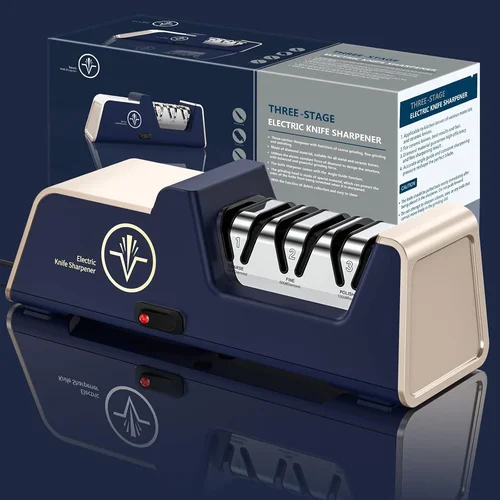
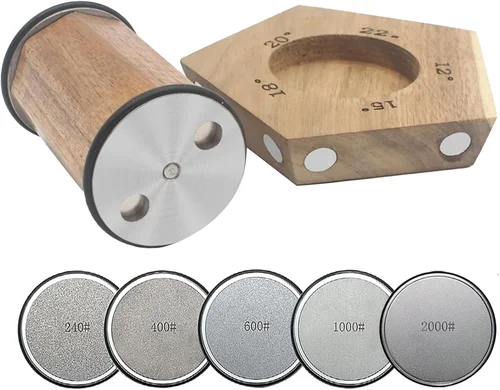
The tool you use to sharpen your knife must be capable of maintaining the desired angle consistently. Manual whetstones offer the most control and are ideal for fine-tuning angles, especially for Japanese knives. However, they require practice to maintain a steady angle. Guided sharpening systems—like those from Lansky or Work Sharp—use clamps and angle guides to ensure precision, making them excellent for beginners or those sharpening multiple knives. Electric sharpeners often come with preset angles (e.g., 15°, 20°), which can be convenient but may not suit all knives. Pull-through sharpeners are quick but often apply uneven pressure and can remove too much metal if used incorrectly. Choose a sharpening tool that matches your skill level and the angle precision your knives require.
5. Frequency of Use and Maintenance Routine
How often you use your knives—and how you maintain them—should influence your sharpening angle. Heavy daily use demands a more durable edge, which may mean opting for a slightly wider angle (18–20 degrees) to reduce the frequency of sharpening. Conversely, if you use your knives sparingly or primarily for light tasks, a finer angle (15–17 degrees) will give you that “paper-slicing” sharpness. Additionally, consider your honing routine. Regular honing with a steel realigns the edge between sharpenings and can extend the life of a fine edge. If you neglect honing, you may need to sharpen more often, which could lead to excessive metal removal if done at too narrow an angle. A balanced approach to angle selection and maintenance keeps your knives performing at their peak.
6. Skill Level and Consistency
Your ability to maintain a consistent angle during sharpening is just as important as the angle itself. Beginners often struggle with freehand sharpening on whetstones, leading to uneven edges or rounded bevels. In such cases, using a guided system or a sharpener with fixed angles can help achieve reliable results. As your skill improves, you can transition to freehand techniques and experiment with micro-bevels or compound angles. However, even experts should use angle guides when first establishing a new edge or working on high-value knives. Consistency prevents over-grinding one side, which can warp the blade over time. Start with tools that support your current skill level and gradually build confidence.
7. Blade Geometry and Bevel Type
Knives come with different bevel configurations—single bevel, double bevel, or convex—and each affects the ideal sharpening angle. Traditional Japanese knives like deba or usuba are often single-beveled, meaning only one side is sharpened. These require precise, asymmetrical sharpening and are typically honed at 12–15 degrees on the beveled side, with the flat side left unsharpened. Double-bevel knives, common in Western and modern Japanese designs, are sharpened on both sides and use inclusive angles (e.g., 20 degrees total = 10 per side). Some high-end knives feature a convex or hollow grind, which may require specialized techniques or tools. Understanding your knife’s bevel type ensures you’re sharpening correctly and not inadvertently damaging the edge.
8. Long-Term Blade Preservation
Sharpening isn’t just about sharpness—it’s also about preserving your investment. Removing too much metal during sharpening shortens a knife’s lifespan. Sharpening at too narrow an angle can lead to frequent touch-ups and accelerated wear, while too wide an angle may reduce cutting efficiency. The goal is to find the narrowest angle that still provides durability for your usage. For most home cooks, a 17–18 degree inclusive angle strikes the best balance between sharpness and longevity. Professionals or those using high-hardness steels may go finer, but should do so with care. Regular maintenance, proper storage, and avoiding cutting on hard surfaces also contribute to blade longevity.
Different Types of Buying Guide

Common Buying Mistakes to Avoid

❌ Mistake: Using the Same Angle for All Knives
Why it’s bad: Assuming every knife should be sharpened at 20 degrees ignores fundamental differences in design, steel, and purpose. Japanese knives sharpened at 20 degrees lose their precision advantage, while Western knives sharpened at 15 degrees may chip under heavy use. This one-size-fits-all approach leads to poor performance and premature wear.
What to do instead: Research your knife’s recommended angle based on origin and use. Start with 15–17 degrees for Japanese blades and 18–20 degrees for Western ones. Adjust based on performance and durability.
❌ Mistake: Over-Sharpening or Removing Too Much Metal
Why it’s bad: Frequent or aggressive sharpening, especially at narrow angles, removes excessive metal and shortens the knife’s lifespan. It can also weaken the blade spine and alter the balance.
What to do instead: Sharpen only when necessary—typically every 3–6 months for home use. Use a honing steel weekly to maintain the edge. Focus on consistency rather than frequency.
❌ Mistake: Ignoring Honing Between Sharpenings
Why it’s bad: Skipping regular honing causes the edge to roll and dull faster, requiring more frequent sharpening. This accelerates metal loss and increases the risk of accidents from slipping blades.
What to do instead: Hone your knives every 1–2 weeks using a steel rod. Hold the knife at the correct angle and draw it down the steel in a smooth, controlled motion. This realigns the edge without removing material.
❌ Mistree: Using Dull or Inappropriate Sharpening Tools
Why it’s bad: A worn-out whetstone or a low-quality sharpener won’t produce a consistent edge. Some tools, like cheap pull-through sharpeners, can create uneven bevels or overheat the edge, damaging the temper.
What to do instead: Invest in quality tools suited to your skill level. Use diamond or ceramic stones for hard steels, and replace worn stones regularly. Avoid tools that claim to “sharpen in seconds” without precision.
❌ Mistake: Sharpening on Hard or Inappropriate Surfaces
Why it’s bad: Cutting on glass, ceramic, or metal surfaces dulls knives quickly and can cause micro-fractures. Sharpening on unstable surfaces increases the risk of injury and inconsistent angles.
What to do instead: Always use a stable, non-slip surface when sharpening. Place a damp towel under your whetstone. For cutting, use wooden or plastic boards—never glass or stone.
❌ Mistake: Not Testing the Edge After Sharpening
Why it’s bad: Assuming a knife is sharp without testing can lead to frustration and unsafe cutting. A visually clean edge isn’t necessarily a sharp one.
What to do instead: Use simple tests like the paper test (slicing through printer paper), tomato test (cleanly cutting a ripe tomato), or fingernail test (feeling for burrs). These confirm edge effectiveness.
❌ Mistake: Neglecting to Clean and Dry Knives After Use
Why it’s bad: Food acids, moisture, and residue can corrode the blade, especially on high-carbon steels. Rust and pitting degrade the edge and require more aggressive sharpening to restore.
What to do instead: Wash knives by hand with mild soap and dry immediately. Store in a knife block, magnetic strip, or sheath—never loose in a drawer.
Budget Guidelines: How Much Should You Spend?
Entry-Level ($15 – $50): This range includes basic pull-through sharpeners and low-grit whetstones. While affordable, these tools often lack precision and can damage finer blades. Best for occasional use on inexpensive knives. Expect inconsistent results and limited angle control.
Mid-Range ($50 – $150): The sweet spot for most home cooks. Includes quality whetstone sets (1000/6000 grit), entry-level guided systems, and reliable electric sharpeners. Offers good balance of performance, durability, and ease of use. Ideal for maintaining both Western and Japanese knives at appropriate angles.
Premium ($150 – $400): For enthusiasts and serious home chefs. Features high-end guided systems (e.g., Tormek, KME), professional whetstone kits, and precision electric sharpeners. Provides exceptional angle control, repeatability, and edge quality. Worth the investment if you own high-value knives.
Luxury ($400+): Top-tier systems used by professionals and collectors. Includes water-cooled sharpeners, custom angle jigs, and artisan stone sets. Offers museum-grade edge refinement but is overkill for most users. Only recommended for those sharpening expensive or collectible blades regularly.
Expert Tips for Getting the Best Deal
- Buy during off-seasons: Look for sales in late winter or early spring, when kitchen gadget demand dips. Retailers often discount sharpening tools to clear inventory.
- Bundle purchases: Some brands offer whetstone sets with angle guides or storage cases at a discount. Buying a complete kit saves money and ensures compatibility.
- Check manufacturer warranties: High-end sharpeners often come with 2–5 year warranties. Register your product and keep receipts—some cover accidental damage.
- Read user reviews carefully: Look for feedback on angle consistency, ease of use, and long-term durability. Avoid products with complaints about overheating or uneven sharpening.
- Test before committing: If possible, try a friend’s sharpener or visit a store with demo units. Feel how it handles and whether it suits your knife type.
- Consider refurbished models: Brands like Work Sharp and Lansky offer certified refurbished units at 20–30% off. These are tested and often include full warranties.
- Invest in maintenance: A $10 stone flattener or $15 honing steel can extend the life of your sharpening tools and improve results over time.
- Learn the basics first: Watch tutorial videos or take a local class. Understanding the fundamentals makes any tool more effective and reduces the risk of damage.

Frequently Asked Questions
Q: What is the best sharpening angle for a chef’s knife?
A: For most Western chef’s knives, a 20-degree inclusive angle (10 per side) is ideal for durability and performance. Japanese chef’s knives (gyutos) perform best at 15–17 degrees inclusive. Adjust based on your cutting style and steel hardness.
Q: Can I sharpen my knife too finely?
A: Yes. While a finer angle increases sharpness, it also reduces edge durability. Knives sharpened below 15 degrees may chip easily, especially on hard vegetables or bones. Use fine angles only on high-hardness steels and for precision tasks.
Q: How often should I sharpen my knives?
A: Most home cooks need to sharpen every 3–6 months, depending on use. Honing weekly with a steel maintains the edge between sharpenings. Test sharpness regularly—don’t wait until the knife struggles with tomatoes.
Q: Do electric sharpeners ruin knives?
A: Not necessarily, but low-quality or aggressive electric sharpeners can remove too much metal or create uneven edges. Choose models with adjustable angles and ceramic or diamond wheels. Avoid those with fixed, coarse slots.
Q: Can I use a 20-degree guide on a 15-degree knife?
A: You can, but it will create a micro-bevel at 20 degrees, which may reduce the knife’s precision. It’s better to use the correct angle or establish a consistent micro-bevel intentionally.
Q: What’s the difference between inclusive and per-side angle?
A: Inclusive angle is the total angle of the edge (e.g., 20 degrees). Per-side angle is half that (e.g., 10 degrees per side). Most sharpening guides use inclusive angles, but some systems measure per side—be sure you’re using the right reference.
Q: Should I sharpen both sides of a single-bevel knife?
A: No. Single-bevel knives like deba or yanagiba are designed to be sharpened on one side only. Sharpening the flat side can ruin the geometry and performance. Use a guide or freehand carefully on the beveled side only.
Q: How do I know if my whetstone is worn out?
A: A worn stone will have uneven grooves, a concave surface, or fail to produce a burr. Use a stone flattener to restore the surface. Replace stones that no longer flatten properly or lose grit effectiveness.
Q: Can I sharpen serrated knives?
A: Yes, but only the flat side of each serration. Use a round sharpening rod or ceramic hone that fits into the scallops. Work one serration at a time, maintaining the original angle.
Q: Is it safe to sharpen knives at home?
A: Absolutely, with proper technique. Always secure your stone, use consistent pressure, and keep fingers clear of the edge. Start with guided systems if you’re nervous. Practice on an old knife first.
Our Final Recommendations
Best for Budget-Conscious Buyers: Sharpal 104N 3-Stage Knife Sharpener – At under $25, this pull-through sharpener offers decent results for Western knives at 20 degrees. Great for occasional use and emergency touch-ups.
Best Overall Value: Lansky Deluxe 5-Stone Sharpening System – Priced around $80, this guided system provides precise angle control from 17 to 20 degrees. Ideal for beginners and intermediate users sharpening multiple knives.
Best Premium Option: Tormek T-8 Water-Cooled Sharpener – At $400+, this is a professional-grade system with unmatched precision and edge quality. Perfect for enthusiasts with high-end Japanese or custom knives.
Best for Beginners: Work Sharp Guided Field Sharpener – Compact, affordable ($50), and easy to use. Offers preset angles and works well for outdoor and kitchen knives. Great for learning proper technique.
Best for Advanced Users: Shapton Pro 5000/8000 Grit Whetstone Set with Angle Guide – For those who want full control, this stone set delivers razor edges on hard steels. Pair with a freehand technique or angle guide for best results.
Conclusion: Making the Right Choice
Choosing the best sharpening angle for your kitchen knives isn’t just about numbers—it’s about understanding your tools, your habits, and your goals. A well-sharpened knife is safer, more efficient, and more enjoyable to use. By considering factors like knife origin, steel hardness, intended use, and your own skill level, you can select the ideal angle and maintain it with the right tools and techniques. Avoid common mistakes like over-sharpening or using incompatible tools, and invest in quality sharpening systems that match your needs and budget.
Remember, the sharpest knife is the one you can use confidently and consistently. Whether you’re slicing herbs with a 15-degree gyuto or chopping carrots with a 20-degree German chef’s knife, the right angle makes all the difference. Take the time to learn, practice, and refine your approach. Your knives—and your cooking—will thank you. Start today, and turn every meal prep into a precision performance.