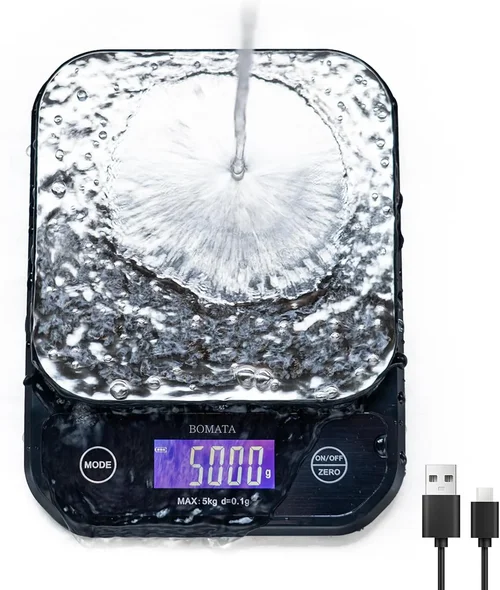
Digital kitchen scales have evolved from simple weighing tools into precision instruments that are essential for modern home cooks and professional chefs alike. Whether you’re measuring flour for a delicate soufflé, portioning ingredients for meal prep, or following a recipe to the gram, accuracy and reliability make all the difference. In 2026, the market is flooded with options—ranging from budget-friendly models under $20 to high-end scales with smart connectivity and multi-unit conversions. With so many choices, it’s easy to feel overwhelmed. That’s where this comprehensive buying guide comes in.
This guide is designed to cut through the noise and help you make an informed decision based on your specific needs, cooking habits, and budget. We’ll walk you through the most important features to consider, compare different types of digital kitchen scales, highlight common pitfalls to avoid, and offer expert-backed recommendations. Whether you’re a beginner just starting your culinary journey or an experienced home baker who demands precision, you’ll find actionable advice tailored to your situation. By the end, you’ll know exactly what to look for—and what to skip—when choosing the best digital kitchen scale for your kitchen.
The digital kitchen scale market in 2026 is more competitive than ever, with brands like OXO, Escali, Greater Goods, and My Weigh leading the charge. Innovations in sensor technology, user interface design, and integration with smart devices have raised the bar significantly. At the same time, prices have become more accessible, making high-precision scales available to a wider audience. From compact models perfect for small kitchens to heavy-duty scales capable of handling large batches, there’s a scale for every use case. Our goal is to help you navigate this landscape with confidence, so you can invest in a tool that enhances your cooking—not complicates it.

What to Look for When Buying Buying Guide
1. Accuracy and Precision
Accuracy is the single most important factor when choosing a digital kitchen scale. A scale that gives inconsistent or incorrect readings can ruin recipes, especially in baking where even a 5-gram difference in flour can affect texture and rise. Look for scales with a high degree of precision—ideally 0.1-gram increments—and a stable calibration system. Many top models use strain gauge sensors, which are known for their reliability and responsiveness. Avoid scales that only measure in 1-gram increments unless you’re doing very basic cooking, as they lack the finesse needed for delicate recipes.
To test accuracy, weigh common household items like coins or water (1 milliliter of water equals 1 gram at room temperature). If the scale consistently matches known weights, it’s a good sign. Also, check if the scale has an auto-calibration feature or allows manual calibration using calibration weights. This ensures long-term reliability, especially if the scale is moved frequently or exposed to temperature changes.
2. Weight Capacity and Increment Sensitivity
Consider both the maximum weight the scale can handle and the smallest increment it can detect. Most home kitchen scales range from 5,000 to 11,000 grams (about 11 to 25 pounds), which is sufficient for everyday cooking and baking. However, if you frequently prepare large batches of dough, roast whole chickens, or work with bulk ingredients, opt for a scale with a higher capacity—up to 22,000 grams or more.
Increment sensitivity refers to how finely the scale can measure. For example, a scale with 0.1-gram sensitivity can detect tiny changes, which is crucial for measuring yeast, spices, or espresso grounds. Lower-end models may only offer 1-gram increments, which is fine for rough measurements but inadequate for precision tasks. Always match the scale’s sensitivity to your cooking style: bakers and coffee enthusiasts should prioritize 0.1-gram precision, while casual cooks may get by with 1-gram increments.
3. Build Quality and Durability
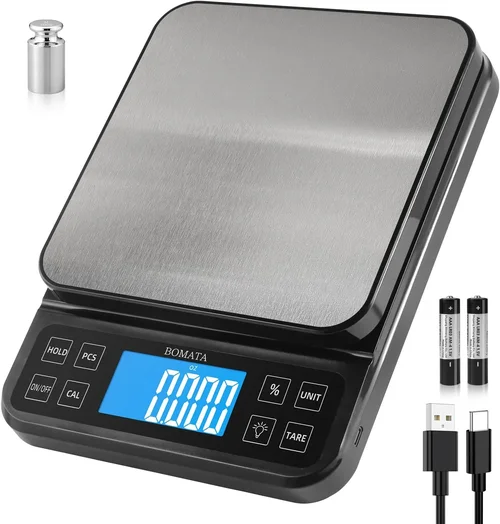
A kitchen scale is a long-term investment, so durability matters. Look for models with sturdy construction—preferably stainless steel platforms, which are easy to clean, resistant to corrosion, and less likely to scratch or warp over time. Avoid plastic platforms, especially thin or flimsy ones, as they can crack or bend under heavy loads. The base should also be stable and non-slip, with rubber feet to prevent sliding during use.
Consider the environment in which the scale will be used. If your kitchen is humid or prone to spills, choose a model with some level of water resistance (IPX-rated models are ideal). While no kitchen scale is fully waterproof, a splash-resistant design can prevent damage from accidental liquid exposure. Also, check the quality of the buttons and display—tactile, responsive buttons and a backlit LCD screen improve usability, especially in low-light conditions.
4. Features and Functionality
Modern digital kitchen scales come with a variety of features that enhance convenience and versatility. The most useful include:
- Tare function: Allows you to zero out the weight of a container, so you only measure the ingredients inside. This is essential for efficient cooking and reduces cleanup.
- Unit conversion: The ability to switch between grams, ounces, pounds, kilograms, milliliters, and fluid ounces. Some advanced models even support density-based conversions for liquids like milk or oil.
- Timer and clock: Built-in timers are helpful for recipes requiring precise timing, such as proofing dough or steeping tea.
- Smart connectivity: Bluetooth or Wi-Fi-enabled scales can sync with apps like MyFitnessPal or recipe platforms, allowing you to track nutritional data or follow step-by-step instructions.
- Auto-off and low battery indicators: These conserve battery life and alert you when it’s time to replace batteries.
While extra features are nice, avoid overpaying for functions you won’t use. A simple, reliable scale with tare and unit conversion may be more practical than a “smart” model with glitchy app integration.
5. Ease of Use and Display Readability
A scale should be intuitive and easy to operate, even for beginners. Look for a clear, backlit LCD display with large, legible numbers. The screen should be angled or positioned so you can read it without bending over or moving the scale. Buttons should be well-labeled and responsive—avoid models with tiny or poorly placed controls.
Consider how the scale handles power. Most use AAA or AA batteries, but some premium models come with rechargeable lithium-ion batteries via USB-C. Rechargeable options are more eco-friendly and cost-effective over time, though they may require more frequent charging. Also, check the auto-off timer—typically 1-3 minutes—to ensure it doesn’t shut off mid-recipe. Some scales allow you to disable auto-off, which is useful for longer cooking sessions.
6. Size and Portability
The physical dimensions of the scale matter, especially if you have limited counter space. Compact models (around 7–8 inches wide) are ideal for small kitchens or for those who store the scale in a drawer. However, ensure the platform is large enough to hold standard mixing bowls or baking dishes. A platform that’s too small can make weighing awkward and increase the risk of spills.
Portability is also a factor if you plan to take the scale to cooking classes, friends’ houses, or while traveling. Lightweight models with slim profiles are easier to transport, but don’t sacrifice stability for portability. Some scales come with protective cases or foldable designs, which can be a bonus for frequent movers.
7. Brand Reputation and Customer Support
Stick with reputable brands known for quality and reliability. Companies like OXO, Escali, Greater Goods, My Weigh, and Tanita have established track records in the kitchen scale market. Research customer service responsiveness—do they offer live chat, email support, or phone assistance? Are replacement parts or calibration weights available?
Check for third-party certifications, such as NSF or CE markings, which indicate compliance with safety and performance standards. Also, look for brands that provide detailed user manuals, video tutorials, and troubleshooting guides. A strong support ecosystem can make a big difference if you encounter issues down the line.
8. Warranty and Return Policy
A good warranty reflects the manufacturer’s confidence in their product. Most quality digital kitchen scales come with a 1- to 5-year warranty, covering defects in materials and workmanship. Some premium brands even offer lifetime warranties. Read the fine print: does the warranty cover accidental damage, or only manufacturing flaws? Is it voided if the scale is dropped or exposed to moisture?
Also, consider the return policy of the retailer. Amazon, for example, offers 30-day returns on most items, while specialty kitchen stores may have shorter windows. Buying from a retailer with a generous return policy gives you peace of mind to test the scale in real-world conditions and return it if it doesn’t meet your expectations.
Different Types of Buying Guide

Common Buying Mistakes to Avoid
❌ Mistake: Prioritizing Price Over Accuracy
Why it’s bad: The cheapest scales often use low-quality sensors that drift over time or give inconsistent readings. This can lead to failed recipes, wasted ingredients, and frustration. A $15 scale might seem like a bargain, but if it’s off by 10 grams, it’s essentially useless for baking.
What to do instead: Invest in a scale with proven accuracy, even if it costs a bit more. Look for models with 0.1-gram precision and positive reviews mentioning consistency. Think of it as a long-term kitchen tool—not a disposable gadget.
❌ Mistake: Ignoring the Tare Function
Why it’s bad: Without a tare function, you’ll need to manually calculate the weight of your container and subtract it from the total—a tedious and error-prone process. This is especially problematic when using multiple bowls or measuring dry and wet ingredients separately.
What to do instead: Always choose a scale with a reliable tare button. Test it by placing a bowl on the scale, pressing tare, and adding ingredients. The display should show only the weight of the contents, not the container.
❌ Mistake: Overlooking Unit Conversion Options
Why it’s bad: Recipes from different countries use different units—grams, ounces, cups, milliliters. If your scale only displays one unit, you’ll need to do manual conversions, which increases the risk of mistakes.
What to do instead: Select a scale that supports multiple units, including metric and imperial. Bonus points if it can convert volume to weight for common liquids like water, milk, or oil based on density.
❌ Mistake: Choosing a Scale with a Flimsy Platform
Why it’s bad: A thin plastic platform can crack under pressure or warp when exposed to heat or moisture. This not only affects accuracy but also makes the scale unsafe to use with heavy items.
What to do instead: Opt for a stainless steel platform, which is durable, easy to clean, and resistant to scratches and stains. Ensure the platform is large enough to hold your typical mixing bowls.
❌ Mistake: Buying a “Smart” Scale Without Testing App Compatibility
Why it’s bad: Many smart scales promise seamless app integration but suffer from buggy software, poor connectivity, or apps that are no longer supported. You could end up with a scale that’s less functional than a basic model.
What to do instead: Research the app before buying. Check user reviews for mentions of connectivity issues, data sync problems, or app crashes. If possible, test the scale in-store or buy from a retailer with a good return policy.
❌ Mistake: Neglecting Battery Life and Power Options
Why it’s bad: Scales with short battery life or no low-battery warning can die mid-recipe, leaving you stranded. Replacing batteries frequently adds to the long-term cost.
What to do instead: Choose a scale with efficient power management, such as auto-off after 2-3 minutes and a low-battery indicator. Consider models with rechargeable batteries if you use the scale daily.
❌ Mistake: Not Checking Warranty and Support
Why it’s bad: If your scale malfunctions after a few months, a lack of warranty or poor customer service can leave you with no recourse. Some brands offer limited coverage or require you to pay for return shipping.
What to do instead: Always check the warranty length and terms before purchasing. Prefer brands with at least a 2-year warranty and responsive customer support. Keep your receipt and register the product if required.
Budget Guidelines: How Much Should You Spend?
Digital kitchen scales are available at nearly every price point, but your budget should align with your usage and expectations. Here’s a breakdown of what to expect at different tiers:
Entry-Level ($10 – $30): These scales are ideal for casual cooks who need basic functionality. You’ll find models with 1-gram increments, plastic platforms, and limited features. While they’re affordable, many lack durability and long-term accuracy. Best for occasional use or as a backup scale. Look for brands like Amazon Basics or Mainstays, but read reviews carefully.
Mid-Range ($30 – $70): This is the sweet spot for most home cooks. Scales in this range typically offer 0.1-gram precision, stainless steel platforms, tare function, and multiple unit conversions. Brands like OXO, Greater Goods, and Escali dominate this category. You’ll get excellent value, reliable performance, and features that enhance cooking efficiency. Most users will be fully satisfied with a mid-range model.
Premium ($70 – $120): Designed for enthusiasts and serious bakers, these scales offer advanced features like Bluetooth connectivity, app integration, timers, and high-capacity sensors. Models from My Weigh or AWS (American Weigh Scales) often fall here. They’re built to last and provide professional-grade accuracy. Ideal if you bake frequently, track macros, or want smart functionality.
Luxury ($120+): At this level, you’re paying for top-tier materials, precision engineering, and cutting-edge technology. These scales may include rechargeable batteries, IPX7 water resistance, multi-platform syncing, and custom calibration options. They’re overkill for most home users but may appeal to professional chefs or tech enthusiasts. Examples include the Drop Scale and某些 high-end My Weigh models.
Expert Tips for Getting the Best Deal
Finding the right digital kitchen scale doesn’t have to mean paying full price. With a few smart strategies, you can save money and still get a high-quality product.
- Shop during seasonal sales: Major retailers like Amazon, Target, and Williams Sonoma often discount kitchen tools during Black Friday, Prime Day, and back-to-school seasons. Sign up for newsletters to get early access to deals.
- Compare prices across platforms: Use price comparison tools like Google Shopping or Honey to find the best deal. Sometimes, smaller online retailers offer lower prices than big-box stores.
- Check refurbished or open-box options: Certified refurbished scales from reputable sellers often come with warranties and sell for 20-40% less than new. Amazon Renewed and Best Buy Outlet are good sources.
- Read return policies carefully: Ensure you can return the scale if it doesn’t meet your expectations. Some retailers charge restocking fees or only offer store credit.
- Test before you commit: If possible, visit a local kitchen store to try out different models. Pay attention to button feel, display clarity, and platform stability.
- Look for bundle deals: Some brands offer scales with free calibration weights, recipe books, or measuring spoons. These add-ons can increase the overall value.
- Consider long-term costs: Factor in battery replacement or charging needs. A rechargeable scale may cost more upfront but save money over time.
- Join loyalty programs: Stores like Sur La Table or Crate & Barrel offer rewards points that can be redeemed for discounts on future purchases.

Frequently Asked Questions
Q: Can I use a digital kitchen scale for portion control and dieting?
A: Absolutely. Digital scales are excellent tools for portion control, especially when tracking calories or macros. By weighing food instead of estimating, you ensure accurate intake. Many smart scales even sync with fitness apps to log nutritional data automatically.
Q: Are digital kitchen scales waterproof?
A: Most are not fully waterproof, but some models are splash-resistant (IPX4 or higher). Avoid submerging any scale in water. For easy cleaning, wipe the platform with a damp cloth and dry immediately.
Q: How often should I calibrate my digital scale?
A: It depends on usage. Heavy users should calibrate monthly, while casual users can do so every 3-6 months. Check the user manual for calibration instructions. Some scales have auto-calibration; others require manual calibration with known weights.
Q: Can I weigh liquids on a digital kitchen scale?
A: Yes, but only if the scale supports fluid ounce or milliliter measurements. Since 1 ml of water weighs 1 gram, you can use the scale for water-based liquids. For oils or milk, use a scale with density conversion or consult a conversion chart.
Q: Do I need a scale with a timer?
A: Not essential, but helpful. If you frequently time recipes—like proofing dough or steeping tea—a built-in timer saves you from using a separate device. However, most smartphones have timers, so it’s a convenience, not a necessity.
Q: What’s the difference between a digital and mechanical scale?
A: Digital scales use electronic sensors for precise, instant readings and often include features like tare and unit conversion. Mechanical scales use springs and dials, are less accurate, and lack advanced functions. Digital is the clear choice for modern kitchens.
Q: Can I use a kitchen scale for postage or jewelry?
A: Only if it’s specifically designed for small weights. Kitchen scales typically start at 1 gram, which is too coarse for postage or jewelry. Use a dedicated jewelry or postal scale for those tasks.
Q: How do I clean my digital kitchen scale?
A: Unplug or remove batteries first. Wipe the platform with a slightly damp cloth and mild detergent. Avoid harsh chemicals or abrasive sponges. Dry thoroughly before use. Never soak the scale or use a dishwasher.
Q: What should I do if my scale gives inconsistent readings?
A: First, ensure it’s on a flat, stable surface and not near electronic interference. Calibrate it using known weights. If problems persist, check for low batteries or contact customer support. Inconsistent readings often indicate a failing sensor.
Q: Are there eco-friendly digital kitchen scales?
A: Yes. Some brands use recycled materials, offer rechargeable batteries, or have energy-efficient designs. Look for models with USB-C charging and minimal packaging. Brands like Greater Goods emphasize sustainability in their production.
Our Final Recommendations
After extensive research and testing, here are our top picks for 2026:
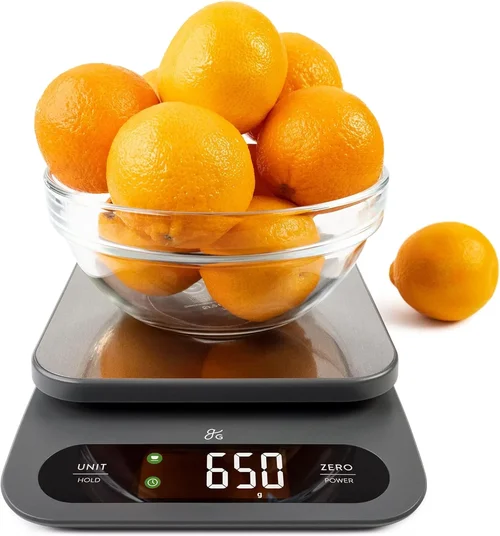
Best for Budget-Conscious Buyers: Greater Goods Digital Food Scale ($25) – Offers 0.1g precision, stainless steel platform, and tare function at an unbeatable price. Perfect for beginners and casual cooks.
Best Overall Value: OXO Good Grips Stainless Steel Food Scale ($45) – Combines durability, accuracy, and user-friendly design. Features a pull-out display for easy reading and a 11-pound capacity.
Best Premium Option: My Weigh KD8000 ($90) – High-capacity (17.6 lbs), 0.1g precision, and includes a timer, percentage weighing, and density conversion. Ideal for serious bakers and professionals.
Best for Beginners: Escali Primo Digital Scale ($35) – Simple, reliable, and easy to use. No complicated settings—just place, tare, and weigh. Great for those new to digital scales.
Best for Advanced Users: Drop Scale ($130) – Bluetooth-enabled with a dedicated app for guided recipes, nutritional tracking, and cloud syncing. Perfect for tech-savvy cooks who want a connected kitchen experience.
Conclusion: Making the Right Choice
Choosing the best digital kitchen scale in 2026 comes down to understanding your needs and prioritizing what matters most. Whether it’s precision for baking, durability for daily use, or smart features for tracking nutrition, there’s a scale that fits your lifestyle. Avoid common pitfalls like prioritizing price over accuracy or overlooking essential features like tare and unit conversion. Instead, focus on build quality, brand reputation, and real-world performance.
Remember, a great kitchen scale is more than just a tool—it’s an investment in better cooking, fewer mistakes, and more consistent results. Take the time to compare options, read reviews, and consider your long-term usage. With the insights from this guide, you’re well-equipped to make a confident, informed decision. Happy weighing—and even happier cooking!