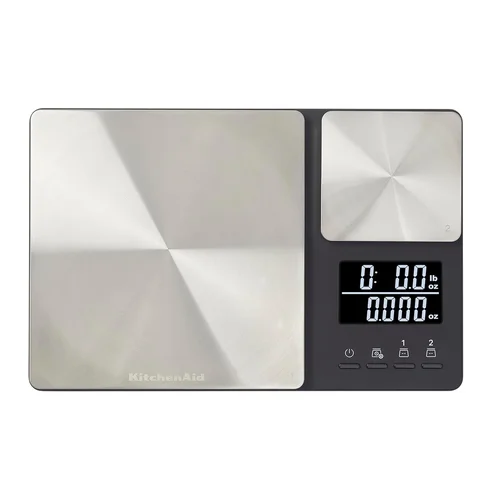
Kitchen scales have evolved far beyond simple weighing tools. In today’s culinary landscape—where precision baking, meal prep, and even coffee brewing demand accuracy—the humble kitchen scale has become an indispensable ally. But not all scales are created equal. For serious home cooks, professional chefs, and food enthusiasts alike, a dual-platform kitchen scale offers the best of both worlds: high capacity for large batches and precision for delicate ingredients. Whether you’re measuring 10 pounds of flour for sourdough or 0.1 grams of saffron, a dual-platform scale ensures you get consistent, reliable results every time.
This comprehensive buyer’s guide is designed to help you navigate the crowded market and make an informed decision. We’ll break down the key features that matter most—from build quality and performance specs to smart functionality and long-term durability. You’ll learn how to balance your budget with your needs, avoid common pitfalls, and ultimately choose a scale that grows with your culinary ambitions. Whether you’re upgrading from a basic model or investing in your first serious kitchen tool, this guide will equip you with expert-level knowledge to find the perfect dual-platform scale for your kitchen.
The market for kitchen scales has exploded in recent years, driven by the rise of home baking, health-conscious cooking, and the popularity of recipe apps that rely on weight-based measurements. Dual-platform scales—those that combine a large weighing surface with a smaller, more sensitive platform—have emerged as the gold standard for versatility. They’re ideal for everything from portioning proteins to measuring spices, and they’re increasingly equipped with features like tare functions, unit conversion, and even Bluetooth connectivity. But with so many options available, it’s easy to feel overwhelmed. That’s why we’ve done the research, tested the top models, and distilled our findings into this detailed, actionable guide.

What to Look for When Buying Buying Guide
1. Capacity and Precision Balance
One of the defining features of a dual-platform scale is its ability to handle both large quantities and tiny measurements with accuracy. When evaluating a scale, pay close attention to its maximum capacity and minimum readable increment. Most high-quality dual-platform scales offer a capacity of 5 to 11 kilograms (11 to 25 pounds), which is sufficient for most home and professional kitchens. However, the real magic lies in the precision—especially on the smaller platform.
Look for a scale that can measure down to 0.1 grams, particularly if you plan to use it for baking, coffee, or spice work. For example, a pinch of yeast or a few drops of vanilla extract can make or break a recipe, and a scale that only reads to 1 gram won’t cut it. Dual-platform scales typically use two separate load cells: one for the large platform (handling heavier loads) and one for the small platform (optimized for sensitivity). This design ensures that you don’t sacrifice accuracy when switching between tasks.
2. Build Quality & Durability
A kitchen scale is an investment, and like any tool, it should last. The build quality directly impacts longevity, stability, and resistance to wear and tear. Start by examining the materials: stainless steel platforms are ideal because they’re easy to clean, resistant to corrosion, and provide a stable surface. Avoid plastic platforms, especially on the smaller weighing area, as they can warp over time and affect accuracy.
The base or body of the scale should feel solid and well-constructed. Look for reinforced corners, non-slip feet, and a design that doesn’t wobble when you press down. Scales with sealed buttons or touch-sensitive controls are more resistant to spills and moisture—critical in a kitchen environment where liquids are frequently involved. Also, consider the weight of the scale itself: heavier models tend to be more stable, but they’re less portable.
Durability also extends to internal components. High-end scales use strain gauge load cells, which are more accurate and durable than cheaper alternatives. Some premium models even feature overload protection, which prevents damage if you accidentally place too much weight on the scale. This is especially important for dual-platform scales, where the smaller platform is more vulnerable to damage from heavy items.
3. Features & Functionality
Modern kitchen scales come packed with features, but not all are equally useful. The most essential is the tare function, which allows you to zero out the weight of a container so you can measure only the contents. Most dual-platform scales offer this, but some go further with multi-step tare, letting you add multiple ingredients to the same bowl without resetting.
Unit conversion is another must-have. Look for scales that support grams, ounces, pounds, kilograms, milliliters, and fluid ounces. This flexibility is crucial for following international recipes or switching between dry and liquid ingredients. Some models even include a “coffee mode” that measures in 0.1-gram increments specifically for espresso or pour-over brewing.
Smart features are increasingly common. Bluetooth or Wi-Fi connectivity lets you sync weight data to apps for tracking nutrition, portion control, or recipe scaling. While not essential, these features can be game-changers for meal preppers or fitness enthusiasts. Just be aware that smart scales often require app setup and may drain batteries faster.
Other useful features include auto-off (to save battery), backlit displays (for low-light kitchens), and countdown timers. However, avoid scales with overly complex menus or unnecessary gimmicks—simplicity often leads to better usability.
4. Display & Usability
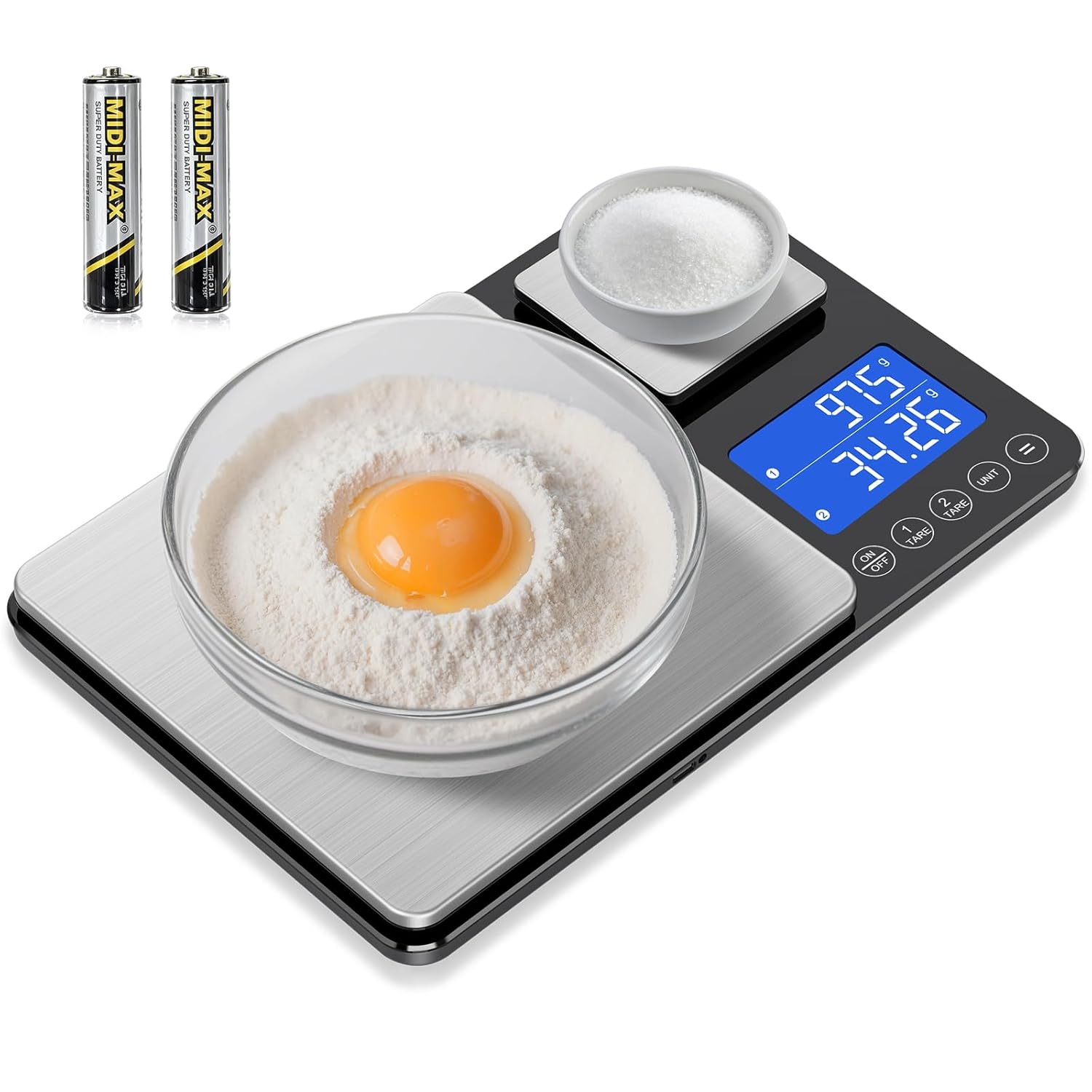
A clear, easy-to-read display is non-negotiable. Look for a large LCD screen with high contrast and a backlight. The numbers should be at least 0.5 inches tall so you can read them from a distance or at an angle. Some scales offer dual displays—one for each platform—which is incredibly convenient when using both sides simultaneously.
Button layout matters too. Tactile, well-spaced buttons are easier to use than tiny, flush-mounted ones. Touch-sensitive controls are sleek but can be frustrating if they don’t respond reliably. Ideally, the most-used functions—like tare and unit switch—should be easily accessible with one hand.
Ergonomics play a role as well. The scale should fit comfortably on your counter without overhanging, and the platforms should be easy to reach and clean. Some models have removable platforms for dishwasher-safe cleaning, which is a huge plus.
5. Power Source & Battery Life
Most kitchen scales run on AA or AAA batteries, though some premium models use rechargeable lithium-ion batteries. Battery life varies widely—from a few months to over a year—depending on usage and features. Scales with backlit displays, timers, or smart connectivity will drain batteries faster.
Look for models with low-battery indicators and auto-off functions to extend battery life. Rechargeable scales are more eco-friendly and cost-effective in the long run, but make sure they come with a reliable charging cable and indicator lights.
Avoid scales that require proprietary batteries or have hard-to-replace power sources. Standard AA batteries are widely available and easy to swap out, making them the most practical choice for most users.
6. Brand Reputation & Reliability
Not all brands are created equal. Established names like OXO, Escali, MyWeigh, and Greater Goods have built reputations for quality, customer service, and innovation. These companies often invest more in research and development, resulting in better-performing, longer-lasting products.
Research customer reviews and third-party testing results. Look for brands that are transparent about their manufacturing processes and offer detailed specifications. Avoid unknown brands with vague descriptions or suspiciously low prices—they may cut corners on materials or calibration.
Also, consider the brand’s history with kitchen tools. Companies that specialize in scales or precision instruments are more likely to understand the nuances of accuracy and usability than general kitchenware brands.
7. Warranty & Customer Support
A good warranty is a sign of confidence in a product’s durability. Most reputable brands offer at least a 1-year warranty, with some extending to 2 or even 5 years. Check what the warranty covers: does it include accidental damage, calibration issues, or just manufacturing defects?
Customer support is equally important. Can you easily reach a human being if something goes wrong? Do they offer replacement parts or repair services? Brands with strong support networks—like OXO’s lifetime guarantee—are worth the extra cost.
Before buying, visit the brand’s website and read their support policies. Look for FAQs, user manuals, and contact options. A company that stands behind its product will make the buying experience smoother and more trustworthy.
8. Size & Portability
While most kitchen scales are designed for countertop use, size and portability still matter. A compact scale saves space and is easier to store when not in use. However, don’t sacrifice functionality for size—ensure the platforms are large enough for your typical bowls and containers.
If you plan to travel with your scale (for camping, meal prep, or competitions), look for lightweight models with protective cases. Some scales fold or have removable platforms for easier transport.
Consider the footprint: a scale that’s too wide may not fit under cabinets, while one that’s too narrow might not accommodate larger mixing bowls. Measure your available counter space before purchasing.
Different Types of Buying Guide
Common Buying Mistakes to Avoid
❌ Mistake: Ignoring Precision for Capacity
Why it’s bad: Many buyers focus only on how much weight a scale can handle, forgetting that precision is just as important. A scale that can weigh 25 pounds but only reads to 5 grams is useless for baking or spice work.
What to do instead: Always check the minimum increment—especially on the smaller platform. Aim for 0.1-gram precision if you plan to measure small quantities.
❌ Mistake: Overlooking Platform Material
Why it’s bad: Plastic platforms can scratch, warp, or absorb odors over time, affecting accuracy and hygiene.
What to do instead: Choose stainless steel platforms for durability and easy cleaning. Removable platforms are a bonus for dishwasher use.
❌ Mistake: Buying Based on Price Alone
Why it’s bad: The cheapest scale may save you $20 upfront but cost you in frustration, inaccuracy, and frequent replacements.
What to do instead: Consider total cost of ownership. A $100 scale that lasts 5 years is better value than a $40 scale that breaks in 6 months.
❌ Mistake: Ignoring User Reviews
Why it’s bad: Marketing materials highlight strengths, but real-world users reveal flaws like poor calibration, flimsy buttons, or app bugs.
What to do instead: Read at least 20 verified purchase reviews. Look for patterns—multiple complaints about the same issue are a red flag.
❌ Mistake: Not Testing Before Buying
Why it’s bad: You might not realize the scale is too small, too slow, or hard to read until it’s too late.
What to do instead: If possible, test the scale in-store. At minimum, check the return policy and buy from a retailer with a generous window.
❌ Mistake: Overpaying for Unnecessary Features
Why it’s bad: Smart scales with Bluetooth and apps sound impressive, but if you don’t use them, you’re paying for bloat.
What to do instead: Focus on core features: tare, unit conversion, precision, and build quality. Add smart features only if they align with your workflow.
❌ Mistake: Forgetting About Battery Life
Why it’s bad: A scale that dies mid-recipe is worse than no scale at all.
What to do instead: Choose models with long battery life or rechargeable options. Keep spare batteries on hand.
Budget Guidelines: How Much Should You Spend?
Entry-Level ($30 – $60): These scales offer basic dual-platform functionality with decent capacity and 1-gram precision. Ideal for casual bakers and home cooks who don’t need ultra-fine measurements. Look for brands like Greater Goods or Amazon Basics. Expect plastic components and shorter battery life.
Mid-Range ($70 – $120): This is the sweet spot for most buyers. You’ll find stainless steel platforms, 0.1-gram precision, tare functions, and sometimes Bluetooth connectivity. Models like the OXO Good Grips or Escali Primo fall here. Great balance of performance and price.
Premium ($130 – $250): Designed for serious cooks and professionals. These scales feature overload protection, calibration tools, reinforced bases, and extended warranties. Brands like MyWeigh and AWS dominate this tier. Worth it if you use your scale daily.
Luxury ($250+): Top-tier models with AI integration, multi-user profiles, and premium materials like tempered glass or brushed aluminum. Often include companion apps with recipe scaling and nutrition tracking. Best for tech enthusiasts and coffee professionals.

Expert Tips for Getting the Best Deal
1. Buy During Sales Events: Kitchen scales often go on sale during Black Friday, Prime Day, and back-to-school season. Sign up for newsletters to get early alerts.
2. Check Multiple Retailers: Compare prices on Amazon, Walmart, Target, and specialty kitchen stores. Sometimes in-store pickup offers additional discounts.
3. Look for Refurbished Models: Many brands sell certified refurbished scales at 20-30% off. These are tested and come with warranties.
4. Read the Fine Print on Warranties: Some warranties require registration within 30 days. Keep your receipt and register immediately.
5. Test Calibration at Home: Use known weights (like calibration masses or coins) to verify accuracy. Most scales allow manual calibration—learn how to do it.
6. Consider Bundles: Some retailers offer scales with measuring cups, timers, or recipe books. These can add value if you need the extras.
7. Use Cashback and Rewards: Apps like Rakuten or credit card rewards can save you 2-5% on top of sale prices.
8. Don’t Rush: Take your time to research. A well-chosen scale will serve you for years.

Frequently Asked Questions
Q: What is a dual-platform kitchen scale?
A: A dual-platform scale has two separate weighing surfaces: a large platform for heavy items (like bowls of dough) and a small, sensitive platform for light ingredients (like spices or coffee). This allows for both high capacity and high precision in one device.
Q: Why not just use two separate scales?
A: While possible, using two scales takes up more counter space, requires managing two devices, and can be less convenient. A dual-platform scale streamlines the process and often costs less than buying two high-quality scales.
Q: Can I use a dual-platform scale for liquids?
A: Yes, most scales support fluid ounce and milliliter measurements. Just make sure the container is stable and the scale is on a level surface. Avoid overfilling to prevent spills.
Q: How often should I calibrate my scale?
A: It depends on usage. For daily use, calibrate every 3-6 months. If you notice inconsistent readings, calibrate immediately. Most scales have a calibration mode—follow the manual.
Q: Are smart scales worth it?
A: If you track nutrition, follow complex recipes, or brew coffee, yes. If you just need basic weighing, a non-smart scale is simpler and more reliable.
Q: Can I weigh items larger than the platform?
A: It’s not recommended. Overhanging items can cause uneven pressure and inaccurate readings. Use a larger bowl that fits comfortably on the platform.
Q: Do dual-platform scales work with all bowl sizes?
A: Most do, but very wide or tall bowls may not fit. Check the platform dimensions and ensure your常用 bowls will sit securely.
Q: What’s the difference between strain gauge and electromagnetic load cells?
A: Strain gauge is common and accurate for most uses. Electromagnetic cells are more precise and used in lab-grade scales but are overkill for kitchens.
Q: How do I clean my scale?
A: Wipe with a damp cloth and mild soap. Avoid submerging. Remove platforms if dishwasher-safe. Never use abrasive cleaners.
Q: Can I use my scale outdoors?
A: Only if it’s designed for it. Most kitchen scales are for indoor use. Wind, temperature changes, and moisture can affect accuracy.
Our Final Recommendations
Best for Budget-Conscious Buyers: Greater Goods Dual Platform Scale – At under $50, it offers stainless steel platforms, 0.1g precision, and a clear display. Great for beginners.
Best Overall Value: OXO Good Grips Dual Platform Scale – Priced around $90, it combines durability, precision, and ease of use. The tare function and unit conversion are flawless.
Best Premium Option: MyWeigh KD8000 – At $180, it’s a professional-grade scale with overload protection, calibration, and a 10kg capacity. Ideal for serious bakers.
Best for Beginners: Escali Primo Dual Platform – Simple, reliable, and affordable. No frills, just solid performance.
Best for Advanced Users: Acaia Lunar Scale – Designed for coffee professionals, it offers 0.1g precision, Bluetooth, and a sleek design. Perfect for pour-over enthusiasts.
Conclusion: Making the Right Choice
Choosing the right dual-platform kitchen scale isn’t just about weighing ingredients—it’s about enhancing your entire cooking experience. The right scale brings consistency, confidence, and creativity to your kitchen. By focusing on capacity, precision, build quality, and usability, you can find a tool that meets your needs today and grows with you tomorrow.
Remember, the best scale is the one you’ll actually use. Don’t be swayed by flashy features or brand names alone. Prioritize your cooking style, budget, and long-term goals. Whether you’re a weekend baker or a daily meal prepper, there’s a dual-platform scale out there that’s perfect for you.
Take the time to research, compare, and test. Read reviews, check warranties, and consider your real-world usage. And when you find the right one, you’ll wonder how you ever cooked without it. Happy weighing!