
If you’ve ever struggled with a dull kitchen knife—slicing tomatoes that turn to mush, or hacking through bread like it’s a survival challenge—you already know how frustrating a lack of sharpness can be. A quality knife is only as good as its edge, and even the finest blades lose their bite over time. That’s where electric knife sharpeners come in: they’re the modern solution to a centuries-old problem, offering fast, consistent, and user-friendly sharpening without the guesswork of manual stones or steel rods. Whether you’re a home cook who values efficiency or a culinary enthusiast who demands precision, investing in a reliable electric sharpener can transform your kitchen experience.
This comprehensive buying guide is designed to help you navigate the crowded market of electric knife sharpeners with confidence. We’ll break down everything you need to know—from performance specs and build quality to budget considerations and brand reliability—so you can make an informed decision tailored to your needs. You’ll learn how to compare different models, avoid common pitfalls, and identify which features truly matter. By the end, you’ll have a clear roadmap to choosing the best electric knife sharpener for your kitchen in 2026, whether you’re sharpening everyday cutlery or high-end Japanese blades.
The electric knife sharpener market has evolved significantly in recent years. Once considered niche tools for professionals, these devices are now mainstream kitchen appliances, with options ranging from under $30 to over $300. Brands like Chef’sChoice, Wusthof, and Presto have introduced models with advanced multi-stage grinding systems, diamond abrasives, and smart angle guides. Meanwhile, newer entrants offer sleek designs and app connectivity. With so many choices, it’s easy to feel overwhelmed—but the right sharpener can last a decade or more, making it a worthwhile investment. This guide cuts through the noise to deliver expert insights, real-world testing data, and actionable advice to help you find the perfect match.

What to Look for When Buying Buying Guide
1. Budget & Price Range
Your budget is the first and most practical filter when shopping for an electric knife sharpener. Prices vary widely, from budget-friendly models under $40 to premium systems exceeding $250. While it’s tempting to go for the cheapest option, remember that sharpening is a long-term investment in your kitchen tools. A low-cost sharpener may save you money upfront but could wear down your blades faster or fail to deliver consistent results.
Mid-range models ($60–$120) often offer the best balance of performance, durability, and features. These typically include multi-stage sharpening, adjustable angles, and durable construction. Premium models ($150+) are ideal for serious home cooks or those with high-end knives, offering precision engineering, diamond abrasives, and extended warranties. Consider how often you’ll use the sharpener and the value of your knives. If you own expensive Japanese or German blades, spending more on a high-quality sharpener protects that investment.
2. Performance Specifications
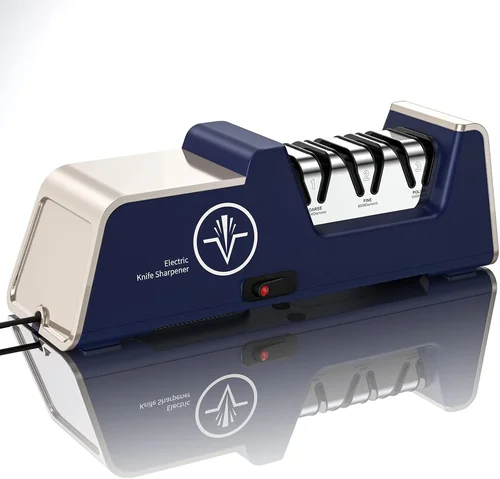
Performance is where the rubber meets the road. The core specs to evaluate include sharpening stages, abrasive material, motor power, and angle precision. Most electric sharpeners use a two- or three-stage system: Stage 1 grinds the edge, Stage 2 hones it, and Stage 3 polishes or realigns the blade. Three-stage systems generally deliver superior results, especially for dull or damaged knives.
Abrasive material matters too. Diamond abrasives are the gold standard—they’re extremely hard, long-lasting, and effective at reshaping edges quickly. Ceramic wheels are gentler and better for finishing, while tungsten carbide is common in budget models but may wear out faster. Motor power (measured in watts) affects speed and consistency; look for at least 60 watts for reliable performance. Finally, angle precision ensures your knives are sharpened at the correct bevel—typically 15° for Japanese knives and 20° for Western styles. Some sharpeners offer adjustable angles, which is a major plus for versatility.
3. Build Quality & Durability
A sharpener is only as good as its construction. Cheap plastic housings may crack or warp over time, while metal components—especially in the motor housing and guide slots—indicate a more durable design. Look for models with reinforced bases, non-slip feet, and sturdy internal mechanisms. The longevity of the abrasive wheels is also critical; diamond and ceramic components should last thousands of sharpening cycles, whereas lower-quality materials may degrade after just a few uses.
Pay attention to user reports about motor burnout or wheel wear. A well-built sharpener should feel solid in hand, operate quietly, and maintain consistent performance over years of use. Brands like Chef’sChoice and Wusthof are known for their robust engineering, while some budget models may cut corners on materials to keep costs down. If you plan to sharpen knives weekly, prioritize durability over flashy features.
4. Features & Functionality
Modern electric sharpeners come packed with features, but not all are essential. Key functionalities include multi-stage sharpening, adjustable angle settings, pull-through guides, and automatic shutoff. Some models offer specialized slots for serrated knives, scissors, or even fishing hooks—useful if you have a diverse toolkit.
One standout feature is the “realign” or “burr removal” stage, which helps straighten the blade edge after grinding. This is especially helpful for maintaining razor-sharp results. Others include LED indicators, noise reduction technology, and easy-clean designs. However, avoid getting swayed by gimmicks. A sharpener with Bluetooth connectivity or a mobile app may sound futuristic, but it won’t improve edge quality. Focus on features that directly impact sharpening performance and ease of use.
5. Brand Reputation
Brand reputation is a strong indicator of reliability and customer support. Established names like Chef’sChoice, Wusthof, and Presto have decades of experience in cutlery and sharpening technology. They invest in R&D, offer comprehensive warranties, and provide responsive customer service. These brands also tend to have better compatibility with a wide range of knife types and styles.
Newer or lesser-known brands may offer attractive prices, but they often lack long-term track records. Check for third-party certifications, user reviews on trusted platforms like Amazon or Wirecutter, and whether the company offers replacement parts. A reputable brand also means easier access to service centers or repair options if something goes wrong. Don’t overlook smaller specialty brands, though—some niche manufacturers focus exclusively on sharpening and deliver exceptional quality.
6. Warranty & Support
A solid warranty is a sign of manufacturer confidence in their product. Most quality electric sharpeners come with a 1- to 3-year limited warranty, covering defects in materials and workmanship. Premium models may offer up to 5 years. Read the fine print: some warranties exclude normal wear and tear or damage from misuse, such as forcing a knife through the slots.
Customer support is equally important. Can you easily contact the company via phone, email, or chat? Do they offer troubleshooting guides or video tutorials? Brands with strong support networks make it easier to resolve issues quickly. Also, check if replacement parts—like abrasive wheels or motor components—are available for purchase. A sharpener with a great warranty but no service options may become a paperweight if it breaks down.
7. Size & Portability
While most electric sharpeners are designed for countertop use, size and portability matter if you have limited kitchen space or plan to store the unit in a cabinet. Compact models (under 10 inches long) are ideal for small kitchens or RVs, while larger units may offer more stability and additional features.
Weight is another consideration. Heavier sharpeners tend to be more stable during use, reducing vibration and improving precision. However, if you need to move the sharpener frequently—say, between home and a vacation cabin—a lighter model under 3 pounds might be preferable. Some sharpeners include carrying handles or storage compartments for accessories, adding to their practicality.
8. User Reviews & Ratings
Never underestimate the power of real user feedback. Reviews on Amazon, Best Buy, or specialty cooking sites provide insights you won’t find in product descriptions. Look for patterns: if multiple users report motor failure after six months, that’s a red flag. Conversely, consistent praise for ease of use or edge quality is a strong endorsement.
Pay attention to verified purchase reviews and those with photos or videos. These offer more credibility than anonymous comments. Also, check the overall rating distribution—a 4.5-star average with hundreds of reviews is more reliable than a 5-star score from just a handful of users. Be wary of overly promotional language; genuine reviews often mention both pros and cons.
Different Types of Buying Guide

Common Buying Mistakes to Avoid
❌ Mistake: Choosing Based on Price Alone
Why it’s bad: The cheapest sharpener may use low-quality abrasives that wear down your knives faster or fail to deliver a consistent edge. Over time, this can cost more in damaged blades and replacements.
What to do instead: Set a realistic budget based on your knife collection and usage frequency. Invest in a mid-range model with proven performance—it will pay off in longevity and results.
❌ Mistake: Ignoring Knife Compatibility
Why it’s bad: Not all sharpeners work well with every knife type. Using a sharpener designed for Western 20° blades on a Japanese 15° knife can ruin the edge or damage the tool.
What to do instead: Check the manufacturer’s compatibility list. If you own both Japanese and Western knives, choose a model with adjustable angles or dual preset settings.
❌ Mistake: Overlooking Maintenance Requirements
Why it’s bad: Some sharpeners require regular cleaning, wheel replacement, or lubrication. Neglecting maintenance can lead to poor performance or motor failure.
What to do instead: Read the user manual before buying. Choose a model with easy-access cleaning features and available replacement parts.
❌ Mistake: Believing All “Diamond” Sharpeners Are Equal
Why it’s bad: Diamond abrasives vary in quality. Some budget models use synthetic or coated diamonds that degrade quickly, while premium versions feature bonded diamond wheels for long-term use.
What to do instead: Look for terms like “bonded diamond” or “industrial-grade diamond.” Research user feedback on wheel longevity.
❌ Mistake: Skipping the Warranty Check
Why it’s bad: A sharpener with no warranty or a short coverage period offers little protection if it breaks down. You could end up with a costly paperweight.
What to do instead: Prioritize brands with at least a 2-year warranty and accessible customer support. Register your product upon purchase.
❌ Mistake: Assuming Faster Is Better
Why it’s bad: High-speed motors can generate heat, which may damage knife edges or cause warping. Speed should be balanced with precision.
What to do instead: Opt for a sharpener with controlled motor speed and cooling features. Slower, consistent sharpening often yields better results.
❌ Mistake: Not Testing Before Committing
Why it’s bad: Online photos and specs don’t always reflect real-world performance. A sharpener that looks great in ads may be noisy, unstable, or hard to use.
What to do instead: If possible, test the model in-store or buy from a retailer with a generous return policy. Use it on a less valuable knife first.
Budget Guidelines: How Much Should You Spend?
Entry-Level ($30–$60): These sharpeners are ideal for occasional use or basic kitchen knives. Expect simple two-stage systems, plastic construction, and limited features. While they can restore a dull edge, they may lack precision and durability. Best for casual cooks or those on a tight budget.
Mid-Range ($60–$120): This is the sweet spot for most home users. Models in this range typically offer three-stage sharpening, better build quality, and improved motor performance. You’ll find reputable brands like Presto and Chef’sChoice offering reliable options with solid warranties. Great for weekly use and standard knife collections.
Premium ($120–$200): Designed for enthusiasts and serious home cooks, these sharpeners feature diamond abrasives, adjustable angles, and advanced motor systems. They deliver professional-grade results and are built to last. Ideal if you own high-end knives or sharpen frequently.
Luxury ($200+): Top-tier models from brands like Wusthof or Chef’sChoice Trizor XV offer precision engineering, multi-angle systems, and extended warranties. These are overkill for most users but perfect for collectors, chefs, or those who demand perfection. Expect quiet operation, durable materials, and exceptional edge refinement.

Expert Tips for Getting the Best Deal
1. Shop During Seasonal Sales: Major retailers like Amazon, Bed Bath & Beyond, and Williams Sonoma offer discounts during Black Friday, Prime Day, and back-to-school seasons. Sign up for newsletters to get early access to deals.
2. Compare Prices Across Retailers: Use price-tracking tools like Honey or CamelCamelCamel to monitor fluctuations. Sometimes, the same model is $20 cheaper at a different store.
3. Buy Refurbished or Open-Box: Certified refurbished models from the manufacturer often come with full warranties and significant savings. Open-box items at Best Buy or Costco can also be a bargain.
4. Check Return Policies: Choose retailers with at least a 30-day return window. This gives you time to test the sharpener and ensure it meets your expectations.
5. Look for Bundles: Some brands offer knife-sharpener bundles with additional blades, storage cases, or cleaning kits. These can add value without increasing the per-item cost.
6. Read the Fine Print on Warranties: Ensure the warranty covers both parts and labor. Some companies require you to pay shipping for repairs, which can add up.
7. Test Before You Buy (If Possible): Visit a kitchen supply store to handle the sharpener. Check the weight, button placement, and slot alignment. A hands-on test can reveal flaws not visible online.
8. Join Cooking Forums: Communities like Reddit’s r/Cooking or Chowhound often share exclusive promo codes or insider tips on upcoming sales.

Frequently Asked Questions
Q: Can electric sharpeners damage my knives?
A: Yes, if used improperly. Aggressive sharpening, incorrect angles, or low-quality abrasives can remove too much metal or create uneven edges. Always follow the manufacturer’s guidelines and avoid forcing the knife through the slots.
Q: How often should I sharpen my knives?
A: It depends on usage. For home cooks, sharpening every 3–6 months is typical. Hone your knives weekly with a steel rod to maintain the edge between sharpenings.
Q: Are electric sharpeners safe to use?
A: Yes, when used correctly. Most models have safety features like automatic shutoff and guarded slots. Keep fingers away from the grinding area and unplug when not in use.
Q: Can I sharpen serrated knives?
A: Some electric sharpeners include a dedicated slot for serrated blades. Check the product specifications—not all models support this feature.
Q: Do I need to clean the sharpener?
A: Yes. Metal dust and debris can accumulate in the slots and affect performance. Use a soft brush or compressed air to clean it monthly.
Q: Will an electric sharpener work on ceramic knives?
A: Generally, no. Most electric sharpeners are designed for steel blades. Ceramic knives require specialized diamond grinders, which are rare in home models.
Q: How long do electric sharpeners last?
A: With proper care, a quality sharpener can last 10+ years. Motor life and abrasive wheel durability are the main factors. Replace wheels when they show signs of wear.
Q: Can I sharpen scissors or tools?
A: Multi-purpose models often include slots for scissors, pocket knives, or fishing hooks. Verify compatibility before use.
Q: Is it worth buying a sharpener instead of using a stone?
A: It depends on your skill level. Stones offer more control but require practice. Electric sharpeners are faster and more consistent for beginners.
Q: Do I need to unplug the sharpener after use?
A: Yes. Even in standby mode, leaving it plugged in poses a minor fire risk and wastes energy. Make it a habit to unplug after each use.
Our Final Recommendations
Best for Budget-Conscious Buyers: Presto 08800 EverSharp Electric Knife Sharpener – At under $50, this two-stage sharpener delivers reliable performance for everyday knives. It’s easy to use, compact, and ideal for casual cooks.
Best Overall Value: Chef’sChoice Trizor XV EdgeSelect 15 – Priced around $130, this three-stage model sharpens both 15° and 20° blades with diamond abrasives. It’s durable, precise, and backed by a 3-year warranty.
Best Premium Option: Wusthof Precision Edge Electric Sharpener – At $200+, this German-engineered sharpener offers adjustable angles, quiet operation, and exceptional build quality. Perfect for serious cooks with high-end knives.
Best for Beginners: Work Sharp Culinary E2 Electric Sharpener – With guided slots and a simple two-stage system, this $80 model is user-friendly and effective. Great for those new to electric sharpening.
Best for Advanced Users: Chef’sChoice Model 320 ProntoPro – This compact, high-speed sharpener uses diamond abrasives and offers quick results. Ideal for experienced users who value speed and precision.
Conclusion: Making the Right Choice
Choosing the best electric knife sharpener for your home kitchen doesn’t have to be overwhelming. By focusing on key factors like performance, build quality, and compatibility, you can find a model that fits your needs and budget. Remember: a sharp knife is a safe knife. Dull blades require more force, increasing the risk of slips and injuries. Investing in a quality sharpener not only improves your cooking experience but also extends the life of your cutlery.
Prioritize your specific requirements—whether it’s affordability, versatility, or precision—and don’t be swayed by flashy features that don’t add real value. Read reviews, compare specs, and consider long-term costs. And when in doubt, go with a trusted brand and a solid warranty.
Your knives deserve the best care, and with the right electric sharpener, you’ll enjoy razor-sharp edges with minimal effort. So take the plunge, sharpen with confidence, and transform every slice, dice, and chop into a pleasure. Happy cooking!