
When it comes to maintaining a high-end kitchen, few tools are as essential—and as often overlooked—as the knife sharpener. For culinary enthusiasts, professional chefs, and discerning home cooks alike, a razor-sharp blade isn’t just a convenience; it’s a necessity. A dull knife compromises precision, increases the risk of injury, and diminishes the joy of cooking. Yet, not all sharpeners are created equal. In the world of luxury kitchen tools, where craftsmanship meets performance, the right sharpener can elevate your entire culinary experience.
This guide is designed for those who demand excellence—not just in their knives, but in every tool that supports them. Whether you’re investing in a full set of Japanese Damascus steel blades or a single heirloom-quality chef’s knife, you need a sharpener that matches that level of refinement. The market for high-end knife sharpeners has evolved dramatically in recent years, with innovations in materials, engineering, and user experience pushing the boundaries of what’s possible. From precision-engineered manual systems to whisper-quiet electric models with diamond-coated wheels, today’s luxury sharpeners blend artistry with science.
In this comprehensive buyer’s guide, you’ll learn how to navigate the crowded landscape of premium sharpening systems. We’ll break down the key factors that separate ordinary sharpeners from truly exceptional ones, compare different types and technologies, and help you avoid costly mistakes. You’ll discover which brands stand behind their products with ironclad warranties, which features deliver real-world performance gains, and how to match your sharpener to your specific needs—whether you’re a weekend cook or a Michelin-starred chef. By the end, you’ll have the knowledge and confidence to choose a luxury sharpener that not only restores your blades to peak condition but becomes a treasured part of your kitchen ritual.

What to Look for When Buying Buying Guide
1. Blade Compatibility & Angle Precision
One of the most critical factors in selecting a luxury knife sharpener is its ability to handle different blade types and maintain precise sharpening angles. High-end knives—especially Japanese-style blades like gyutos, santokus, or yanagibas—often feature acute edge angles (as low as 12–15 degrees per side), while Western-style knives typically use 18–22 degrees. A premium sharpener must offer adjustable angle guides or preset options that accommodate these variations without compromising accuracy.
Look for systems with micro-adjustable angle settings, laser-etched guides, or built-in angle indicators. Some top-tier models even include digital angle readouts or smartphone app integration for real-time feedback. Precision matters because even a 2-degree deviation can result in a less effective edge or accelerated wear. For example, a sharpener that defaults to 20 degrees will over-grind a delicate Japanese blade, shortening its lifespan and dulling its performance. Conversely, using too shallow an angle on a heavy Western knife may leave it too fragile for chopping tasks.
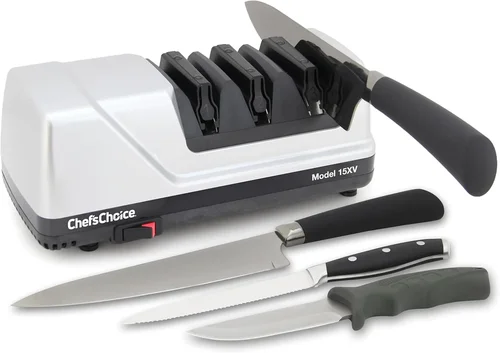
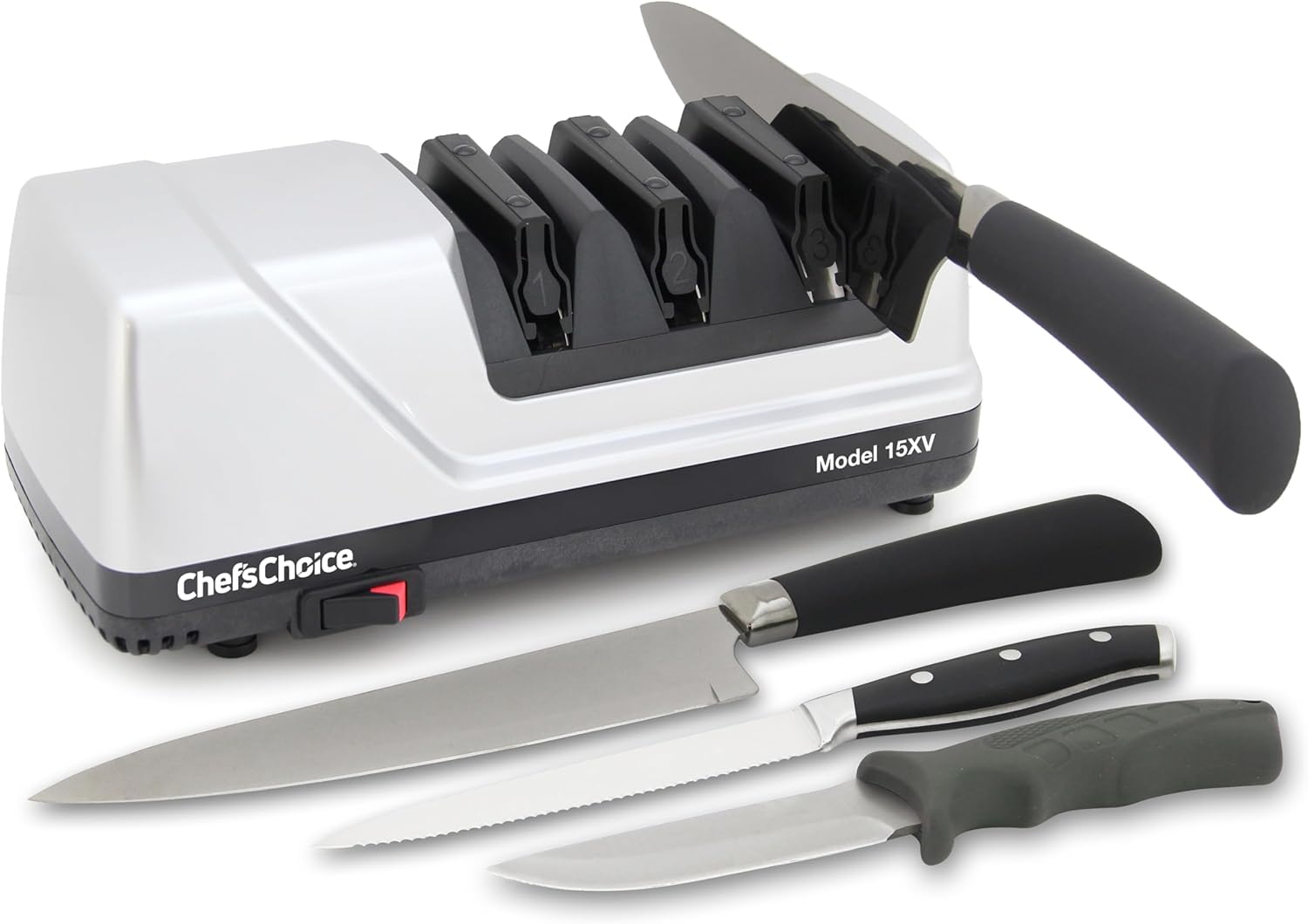
Additionally, consider whether the sharpener supports both straight and serrated edges. While most luxury sharpeners excel with straight blades, only a select few—like the Wüsthof Precision Edge Pro or the Chef’sChoice Trizor XV—offer specialized slots or attachments for serrated knives. If your collection includes bread knives or steak knives, this feature is non-negotiable.
2. Abrasive Material & Grit Progression
The quality and type of abrasive material directly impact how efficiently and cleanly a sharpener restores your blade. In the luxury segment, you’ll encounter three primary abrasives: diamond, ceramic, and tungsten carbide. Each has distinct advantages and ideal use cases.
Diamond abrasives—typically embedded in steel plates or rotating wheels—are the gold standard for speed and durability. They remove metal quickly and maintain their sharpness far longer than other materials. Brands like Work Sharp and Lansky use industrial-grade diamond coatings that can handle even the hardest high-carbon steels without degrading. However, diamond can be overly aggressive if not properly controlled, potentially removing too much material if used incorrectly.
Ceramic abrasives, often found in rod-style or pull-through systems, provide a finer, more controlled grind. They’re excellent for honing and refining an already-sharp edge, making them ideal for maintenance rather than heavy reprofiling. The Idahone Ceramic Honing Rod, for instance, is beloved by chefs for its ability to polish edges to a mirror finish without excessive metal removal.
Tungsten carbide systems, such as those in the Chef’sChoice manual sharpeners, use fixed-position carbide blocks that “bite” into the blade at precise angles. These are fast and effective for quick touch-ups but may struggle with severely damaged or heavily worn edges.
Equally important is grit progression. The best luxury sharpeners offer multi-stage systems: coarse (80–200 grit) for reshaping or repairing chips, medium (300–600 grit) for establishing the primary bevel, and fine (800–3000+ grit) for polishing and burr removal. Some advanced models, like the Tormek T-8, go further by integrating water-cooled grinding wheels that allow for ultra-fine finishes up to 10,000 grit—comparable to hand-stropping on a leather strop.
3. Build Quality & Durability
Luxury isn’t just about performance—it’s about longevity. A high-end sharpener should feel solid, stable, and built to last decades, not just years. Look for frames made from aircraft-grade aluminum, stainless steel, or reinforced polymers. Avoid plastic housings, especially in electric models, as they can warp under heat or stress and compromise alignment over time.
Precision-machined components are a hallmark of premium sharpeners. For example, the Edge Pro Apex 4 uses CNC-machined guide rods and a rigid base plate to ensure consistent pressure and angle control. Similarly, the Wüsthof Sharpener features a die-cast zinc alloy body with rubberized feet for stability on countertops.
Durability also extends to wear parts. Diamond plates should be bonded—not just coated—to prevent flaking. Ceramic rods must be glazed to resist chipping. And moving parts, like motor bearings or pivot joints, should be sealed and lubricated for silent, smooth operation. A sharpener that requires frequent recalibration or replacement parts quickly loses its luxury appeal.
4. Ease of Use & Learning Curve
Even the most technically advanced sharpener is useless if it’s too complicated to operate. Luxury doesn’t have to mean cumbersome. The best high-end models strike a balance between precision and user-friendliness.
Manual systems like the Lansky Deluxe or the Spyderco Sharpmaker require some practice to master, but they reward patience with unparalleled control. These are ideal for users who enjoy the meditative process of hand-sharpening and want to understand their knives intimately. On the other hand, electric sharpeners such as the Chef’sChoice Model 15 or the Wüsthof PEtec are nearly foolproof—insert the blade, pull through, and voilà: a sharp edge in seconds. They’re perfect for busy kitchens or those who prioritize convenience.
Consider your own comfort level. If you’re new to sharpening, an automatic or semi-automatic system with clear visual guides and minimal setup is wise. If you’re experienced and value craftsmanship, a manual system offers greater satisfaction and customization.
Also pay attention to ergonomics: comfortable handles, intuitive controls, and clear instructions matter. Some luxury sharpeners include video tutorials, QR codes linking to demo videos, or even augmented reality apps that guide your strokes in real time.
5. Brand Reputation & Heritage
In the world of luxury cutlery, brand trust is paramount. Established names like Wüsthof, Zwilling J.A. Henckels, Shun, and Global have decades—sometimes centuries—of expertise in blade manufacturing. It’s no surprise that their sharpeners are engineered to complement their knives perfectly.
But heritage isn’t just about age; it’s about innovation and consistency. Brands like Chef’sChoice (founded in 1985) have revolutionized home sharpening with patented technologies like the 3-stage Trizor XV system, which converts straight-edged knives to triple-bevel edges for longer-lasting sharpness. Similarly, Tormek, a Swedish company founded in 1958, is renowned for its water-cooled grinding systems used by professional knife makers worldwide.
When evaluating a brand, look beyond marketing claims. Check independent reviews, chef endorsements, and whether the company offers hands-on support. A true luxury brand stands behind its products with responsive customer service, detailed documentation, and sometimes even in-person sharpening workshops.
6. Warranty & Support
A luxury purchase should come with peace of mind. Most premium sharpeners include warranties ranging from 1 to 10 years, but the terms vary widely. Some cover only manufacturing defects, while others include accidental damage or wear-and-tear on consumables.
For example, the Tormek T-8 comes with a 7-year warranty and access to a global network of authorized service centers. Chef’sChoice offers a 3-year limited warranty with free replacement parts for the first year. Wüsthof provides a 2-year warranty but emphasizes lifetime serviceability—meaning they’ll repair or replace components indefinitely.
Also consider availability of spare parts. Can you easily buy new diamond plates, ceramic rods, or motor belts? Is there a local repair shop, or do you need to ship the unit across the country? A sharpener that’s difficult to maintain loses its luxury status quickly.
7. Size & Portability
While many luxury sharpeners are designed for stationary use on a kitchen counter, portability can be a deciding factor for travelers, campers, or those with small kitchens. Compact manual systems like the Work Sharp Guided Field Sharpener or the Lansky Turnbox are lightweight, foldable, and fit in a drawer or backpack.
Electric models tend to be bulkier, but some—like the Chef’sChoice Model 316—are surprisingly compact and cordless, running on rechargeable batteries. If you plan to use your sharpener in multiple locations (e.g., a vacation home or commercial kitchen), prioritize weight, footprint, and power source.
That said, don’t sacrifice stability for portability. A wobbly sharpener on a shaky table will never deliver professional results. Look for models with fold-out bases, suction cups, or magnetic mounts that secure them during use.
8. Noise Level & Aesthetics
Luxury is as much about experience as function. The sound of a sharpener matters—especially in open kitchens or quiet homes. High-end electric models like the Wüsthof PEtec operate at under 60 decibels, quieter than a normal conversation. Cheaper motors can whine, grind, or vibrate excessively, disrupting the cooking ambiance.
Aesthetics also play a role. A sharpener that looks like it belongs in a museum (like the sleek, minimalist design of the Idahone or the brushed steel finish of the Edge Pro) enhances your kitchen’s visual harmony. Some brands even offer custom finishes or wood accents to match your decor.
Remember: a luxury tool should inspire pride, not embarrassment. Choose one that reflects your taste and complements your space.
Different Types of Buying Guide

Common Buying Mistakes to Avoid
❌ Mistake: Prioritizing Price Over Performance
Why it’s bad: Opting for the cheapest “luxury” sharpener often means compromising on build quality, angle accuracy, or abrasive durability. A $90 electric sharpener may seem like a bargain, but if it removes too much metal or fails to maintain consistent angles, it will shorten your knife’s lifespan and cost you more in replacements.
What to do instead: Treat your sharpener as a long-term investment. Allocate at least 10–15% of your total knife budget to sharpening. A $300 sharpener that lasts 10 years is far more economical than a $100 model that needs replacing every two.
❌ Mistake: Ignoring Angle Requirements
Why it’s bad: Using a fixed-angle sharpener on knives with incompatible geometries leads to poor edges or damaged blades. For example, running a 15-degree Japanese knife through a 20-degree slot creates a weak, uneven edge prone to rolling.
What to do instead: Research your knives’ factory angles (often listed on the manufacturer’s website) and choose a sharpener with adjustable or matching presets. When in doubt, start with a guided system that lets you customize the angle.
❌ Mistake: Overlooking Maintenance Needs
Why it’s bad: Many buyers assume luxury sharpeners are maintenance-free. But diamond plates dull, ceramic rods chip, and motors accumulate metal dust. Neglecting upkeep reduces performance and voids warranties.
What to do instead: Read the manual thoroughly. Clean abrasives regularly with a nylon brush or compressed air. Store in a dry place. Replace wear parts as recommended—don’t wait until the sharpener stops working.
❌ Mistake: Buying Based on Hype Alone
Why it’s bad: Flashy ads and influencer endorsements can be misleading. A sharpener praised for “instant results” might sacrifice edge longevity for speed, or use low-quality abrasives disguised as premium.
What to do instead: Rely on independent reviews from trusted sources like America’s Test Kitchen, Wirecutter, or professional chefs. Look for long-term testing data, not just first impressions.
❌ Mistake: Neglecting Ergonomics and Safety
Why it’s bad: An uncomfortable or unstable sharpener increases the risk of slips, uneven edges, or hand fatigue—especially during extended use.
What to do instead: Choose models with non-slip bases, ergonomic handles, and clear safety guards. Test the grip and balance before purchasing, if possible.
❌ Mistake: Assuming All Electric Sharpeners Are Equal
Why it’s bad: Some electric models use cheap motors that overheat or vibrate excessively, damaging delicate blades. Others lack precision guides, resulting in inconsistent edges.
What to do instead: Stick to reputable brands with proven track records. Look for features like thermal protection, variable speed control, and multi-stage sharpening.
❌ Mistake: Forgetting About Serrated Knives
Why it’s bad: Most sharpeners can’t handle serrated edges, leaving your bread knife or tomato knife perpetually dull.
What to do instead: If you own serrated knives, ensure your sharpener includes a dedicated slot or attachment. Alternatively, keep a ceramic rod or specialized serrated sharpener on hand.
Budget Guidelines: How Much Should You Spend?
– Entry-Level ($80–$150): This tier includes basic pull-through sharpeners and entry-level guided systems. Expect decent performance for occasional use, but limited adjustability and shorter lifespans. Ideal for casual cooks with a few mid-range knives.
– Mid-Range ($150–$350): The sweet spot for most serious home cooks. These sharpeners offer adjustable angles, quality abrasives (diamond or ceramic), and solid build quality. Models like the Chef’sChoice Model 15 or the Lansky Deluxe fall here—providing professional results without breaking the bank.
– Premium ($350–$700): Designed for enthusiasts and semi-professionals. Features include multi-stage sharpening, precision machining, quiet operation, and robust warranties. The Wüsthof PEtec and Edge Pro Apex 4 exemplify this category, delivering museum-quality edges with minimal effort.
– Luxury ($700+): Reserved for collectors, professional chefs, and knife makers. These systems—like the Tormek T-8 or the Ken Onion Edition Work Sharp—offer water-cooled grinding, ultra-fine finishes, and modular accessories. They’re built to last generations and often double as workshop centerpieces.
Expert Tips for Getting the Best Deal
– Buy during off-seasons: Sharpeners see peak demand around holidays and back-to-school periods. Shop in late winter or early summer for discounts of 15–25%.
– Check manufacturer refurbished programs: Brands like Wüsthof and Chef’sChoice sell certified refurbished units at 30–40% off, often with full warranties.
– Bundle with knife purchases: Many retailers offer free or discounted sharpeners when you buy a knife set. This is especially common during Black Friday or brand anniversaries.
– Read return policies carefully: Some luxury sharpeners can’t be returned once used due to hygiene concerns. Ensure you have at least 30 days to test thoroughly.
– Join loyalty programs: Sign up for newsletters from Sur La Table, Williams Sonoma, or Cutlery and More. Members often get early access to sales and exclusive bundles.
– Consider used markets: Sites like eBay or Chef Knives To Go sometimes list barely-used high-end sharpeners at steep discounts—just verify condition and warranty status.
– Test before you buy: If shopping in-store, ask to try the sharpener on a demo knife. Feel the smoothness, check the noise level, and inspect the edge result.
– Negotiate with authorized dealers: Independent kitchen boutiques may offer price matching or free shipping if you ask politely.
Frequently Asked Questions
Q: Can a luxury sharpener damage my expensive knives?
A: Only if used incorrectly. High-quality sharpeners are designed to preserve blade geometry and remove minimal metal. However, aggressive use—especially with coarse abrasives—can shorten a knife’s lifespan. Always follow the manufacturer’s guidelines and avoid over-sharpening.
Q: How often should I sharpen my knives?
A: It depends on usage. Home cooks may need full sharpening every 3–6 months, while professionals might sharpen weekly. Use a honing rod daily or every few uses to maintain the edge between sharpenings.
Q: Are electric sharpeners safe for Japanese knives?
A: Some are, but not all. Look for models with adjustable angles and fine-grit stages. The Chef’sChoice Trizor XV and Wüsthof PEtec are safe for most Japanese blades when used properly. Avoid cheap electric sharpeners with fixed angles.
Q: Do I need both a sharpener and a honing rod?
A: Yes. A sharpener reshapes the edge; a honing rod realigns it. Think of sharpening as dental work and honing as flossing—both are essential for long-term health.
Q: Can I sharpen scissors or tools with a knife sharpener?
A: Only if the sharpener explicitly supports it. Some models, like the Work Sharp Ken Onion Edition, include attachments for scissors, axes, and even lawnmower blades. Most kitchen-specific sharpeners do not.
Q: What’s the difference between sharpening and honing?
A: Sharpening removes metal to create a new edge; honing straightens the existing edge without removing material. Honing maintains sharpness; sharpening restores it.
Q: How do I know if my sharpener is working correctly?
A: Perform a simple paper test: slice through a sheet of printer paper. A sharp knife should cut cleanly without tearing. If it snags, your edge needs attention.
Q: Are water-cooled sharpeners worth the extra cost?
A: For professionals or serious collectors, absolutely. Water cooling prevents heat buildup that can ruin temper in high-carbon steel, allowing for finer finishes and longer blade life. For casual users, it may be overkill.
Q: Can I sharpen ceramic knives?
A: Most standard sharpeners cannot. Ceramic blades require diamond abrasives and specialized equipment. Some high-end electric models offer ceramic-specific slots, but results vary.
Q: What’s the best way to clean my sharpener?
A: For manual systems, use a soft brush and mild soap. For electric models, wipe with a damp cloth and blow out dust with compressed air. Never submerge in water unless specified.
Our Final Recommendations
– Best for Budget-Conscious Buyers: Lansky Deluxe 5-Stone System – At under $150, it offers unmatched angle control and durability, perfect for learning proper technique.
– Best Overall Value: Chef’sChoice Trizor XV Model 15 – Combines speed, precision, and triple-bevel technology for edges that stay sharp 3x longer.
– Best Premium Option: Wüsthof PEtec Electric Sharpener – Seamlessly integrates with Wüsthof knives, delivers whisper-quiet operation, and includes a lifetime service promise.
– Best for Beginners: Idahone Ceramic Honing Rod + Chef’sChoice Manual Sharpener – A two-part system that teaches fundamentals while delivering reliable results.
– Best for Advanced Users: Tormek T-8 Water-Cooled Grinder – The ultimate tool for perfectionists, offering micron-level precision and finishes rivaling hand-stropped edges.
Conclusion: Making the Right Choice
Choosing a luxury knife sharpener isn’t just about restoring edges—it’s about honoring the craftsmanship of your knives and elevating your entire culinary practice. The right sharpener becomes an extension of your hand, a trusted partner in every chop, slice, and dice. By prioritizing precision, build quality, and compatibility, you ensure that your investment pays dividends in performance, safety, and satisfaction for years to come.
Remember, luxury isn’t defined by price alone—it’s defined by intention. Whether you’re drawn to the quiet hum of an electric sharpener or the meditative rhythm of a guided rod system, let your needs, skills, and knife collection guide your decision. Don’t rush. Test. Compare. Ask questions. And when you find the one that feels right, you’ll know: this isn’t just a tool. It’s a ritual.
Now go sharpen with confidence—and cook with joy.