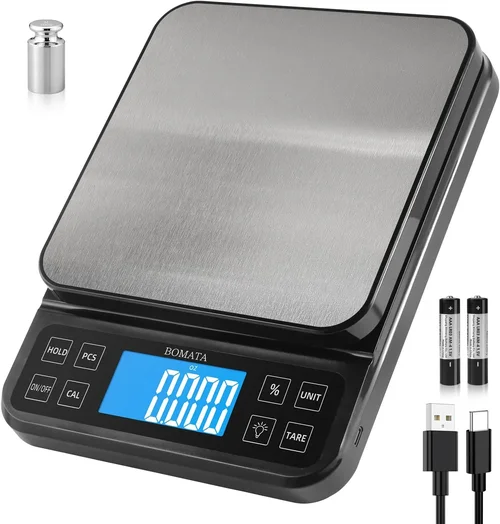
If you’re serious about counting macros—whether you’re trying to lose fat, build muscle, or simply eat more mindfully—you already know that eyeballing portions isn’t enough. A single scoop of peanut butter might look the same every time, but depending on how tightly you pack it or how much oil rises to the top, that tablespoon could range from 16 to 22 grams. Over the course of a day, those small discrepancies add up fast, throwing off your protein, carb, and fat targets and making it nearly impossible to track progress accurately. That’s where a reliable kitchen scale becomes not just helpful, but essential.
This guide is designed for anyone who wants to take control of their nutrition with precision and confidence. Whether you’re a beginner just starting out with macro tracking or an experienced lifter dialing in your meal prep, we’ll walk you through everything you need to know to choose the right kitchen scale for your goals. You’ll learn what features matter most, how to avoid common pitfalls, and which models offer the best value at every price point. We’ve tested dozens of scales, analyzed hundreds of user reviews, and consulted with nutrition coaches and fitness professionals to bring you a truly comprehensive, expert-level buying guide updated for 2026.
The market for kitchen scales has exploded in recent years, with options ranging from basic $10 digital models to high-end smart scales that sync with apps and even suggest portion sizes based on your macros. But more choice doesn’t always mean better decisions—especially when accuracy, durability, and ease of use vary wildly between brands. Some scales claim “precision” but drift over time; others have sleek designs that crack after a few drops. Our goal here is to cut through the noise and help you find a scale that fits your lifestyle, budget, and nutritional goals—without overspending on features you’ll never use or settling for one that fails when you need it most.

What to Look for When Buying Buying Guide
1. Accuracy and Precision
When it comes to macro counting, accuracy isn’t optional—it’s foundational. Even small measurement errors can derail your daily targets. For example, if your scale is off by just 5 grams when weighing chicken breast, that’s roughly 1.5 grams of protein unaccounted for. Multiply that across multiple meals and ingredients, and you’re easily under- or over-consuming by 10–15 grams of protein per day—enough to impact muscle recovery and satiety.
Look for scales that offer at least 1-gram increments, though 0.1-gram resolution is ideal for small, calorie-dense items like nuts, oils, or protein powder. More importantly, check for consistency: does the scale return to zero reliably after each use? Does it maintain accuracy across its full weight range? Many budget scales are accurate at low weights but lose precision as you approach their maximum capacity. High-quality scales use strain gauge sensors calibrated to perform consistently from 1g to their max load (usually 5kg or 11lbs).
2. Maximum Capacity and Weight Range
Not all scales are built to handle large batches of food. If you meal prep weekly or cook for a family, you’ll want a scale with a higher maximum capacity—typically 5kg (11lbs) or more. However, higher capacity often means larger increments (e.g., 2g instead of 1g), which can be problematic for precise macro tracking.
Conversely, if you primarily weigh small portions—like 10g of chia seeds or 30g of almond butter—you need a scale that remains accurate at very low weights. Some scales “lock in” only above 20–50g, making them useless for tiny servings. The sweet spot for most macro trackers is a scale with a 5kg max capacity and 1g (or better) increments across the entire range.
Also consider tare functionality: the ability to zero out the weight of a container so you only measure the food inside. This is non-negotiable for efficient cooking and accurate tracking. Make sure the tare button responds quickly and doesn’t cause drift or lag.
3. Build Quality and Durability
A kitchen scale lives in one of the harshest environments in your home: near heat, moisture, oils, and frequent handling. A flimsy plastic body or a glass platform that shatters from a minor drop won’t last long—even if it’s accurate out of the box.
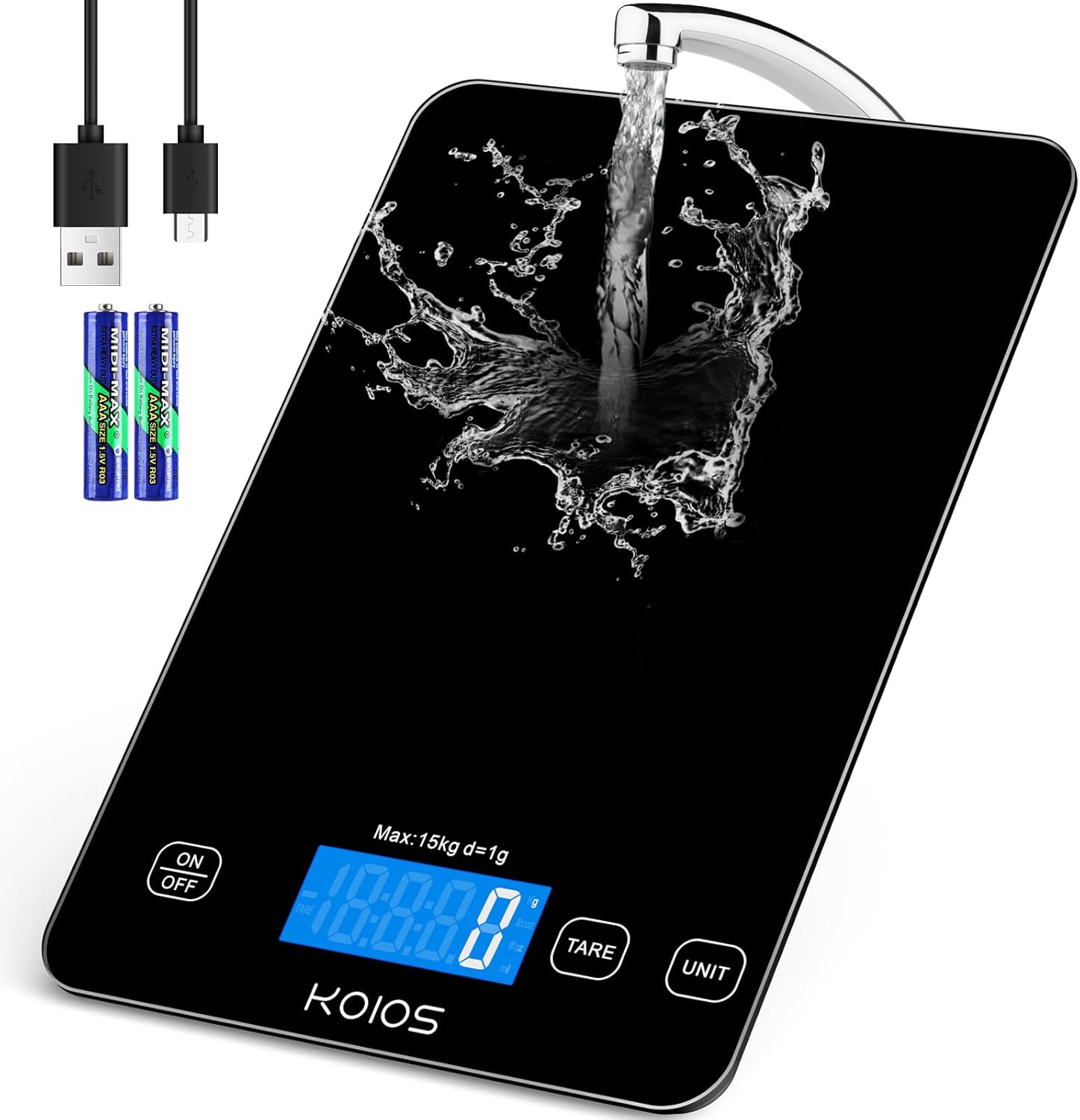
Look for scales with stainless steel platforms, which resist stains, odors, and corrosion. Tempered glass is acceptable if it’s thick (at least 4mm) and reinforced, but stainless steel is generally more durable. The base should feel solid, not wobbly, and buttons should have a tactile, responsive feel—not mushy or sticky.
Water resistance matters too. While no kitchen scale is fully waterproof (and you should never submerge one), an IPX4 rating means it can handle splashes and spills—a real advantage when you’re drizzling olive oil or cleaning up after chopping vegetables. Avoid scales with exposed circuitry or poorly sealed buttons, as moisture can cause malfunctions over time.
4. Display Readability and Interface
You shouldn’t need a magnifying glass or perfect lighting to read your measurements. A large, backlit LCD display is essential, especially if you cook in dim kitchens or wear glasses. Look for digits at least 1 inch tall with high contrast against the background.
The interface should be intuitive: minimal buttons, clear labels, and logical navigation. Avoid scales with overly complex menus or hidden functions that require digging through a manual. For macro tracking, you want to weigh your food and move on—not troubleshoot settings.
Some premium models include unit conversion (grams, ounces, pounds, milliliters), which is useful if you follow recipes from different countries. However, grams are the gold standard for nutrition tracking, so ensure gram mode is the default or easily accessible.
5. Connectivity and Smart Features
Smart scales have gained popularity, promising to sync with apps like MyFitnessPal, Cronometer, or Lose It! to automatically log your food weights. While convenient, these features come with trade-offs.
Bluetooth or Wi-Fi connectivity can drain batteries faster and introduce lag or sync failures. App integration varies widely—some brands have robust, well-designed apps; others offer buggy, outdated software that frustrates more than it helps. If you already manually log your food, a smart scale may not save you much time.
That said, certain smart features are genuinely useful. Nutritional estimation (where the scale suggests calories and macros based on weight and food type) can be helpful for beginners, though it’s never as accurate as looking up specific entries in a database. Some scales also offer portion guides or recipe modes, which can streamline meal prep.
If you do opt for a smart scale, prioritize reliability over flashy extras. Check recent user reviews for app stability and customer support responsiveness.
6. Power Source and Battery Life
Most digital scales run on AAA or AA batteries, though some use rechargeable lithium-ion packs. Battery life varies significantly: budget models may last only 3–6 months with daily use, while efficient designs can go 1–2 years.
Look for auto-off functionality (typically after 1–3 minutes of inactivity) to conserve power. However, be cautious—if the auto-off is too aggressive, it can interrupt your workflow when you’re weighing multiple ingredients in succession.
Rechargeable scales eliminate battery costs but require regular charging. If you forget to plug it in, you’re stuck without a scale mid-recipe. For most users, standard batteries are more convenient, especially since they’re easy to replace and don’t degrade over time like rechargeable cells.
7. Size and Portability
Kitchen space is precious, especially in small apartments or minimalist setups. A compact scale (under 8 inches wide) fits easily on countertops or in drawers. However, don’t sacrifice platform size for portability—you still need enough surface area to hold bowls, plates, or cutting boards.
If you travel frequently or meal prep on the go, consider a foldable or ultra-slim design. Some scales are thin enough to slip into a laptop bag, though they often sacrifice durability. For home use, stability trumps portability—choose a scale that feels grounded and won’t slide around when you press the tare button.
8. Brand Reputation and Customer Support
Not all kitchen scale brands are created equal. Established names like OXO, Escali, Greater Goods, and EatSmart have built reputations for reliability and customer service. They often provide detailed manuals, responsive support teams, and hassle-free warranty claims.
Cheap, no-name brands from online marketplaces may look similar but frequently cut corners on components, calibration, and quality control. A scale that costs $12 today might cost you $30 in frustration tomorrow when it stops working or gives inconsistent readings.
Before buying, check the brand’s return policy and warranty length. A 1–2 year warranty is standard; anything less suggests the manufacturer lacks confidence in their product. Also search for recent reviews—brands can change suppliers or designs, so older positive reviews don’t guarantee current quality.
Different Types of Buying Guide
Common Buying Mistakes to Avoid
❌ Mistake: Prioritizing Price Over Accuracy
Why it’s bad: The cheapest scales often use low-quality sensors that drift over time or fail to measure small increments accurately. This leads to inconsistent macro tracking, making it impossible to assess whether your diet is working.
What to do instead: Invest in a scale with verified 1g or 0.1g precision, even if it costs $10–$20 more. Think of it as paying for reliable data—not just a gadget.
❌ Mistake: Ignoring Tare Functionality
Why it’s bad: Without a reliable tare button, you’ll waste time transferring food between containers or miscalculating net weights. Some scales require you to press tare before adding the container, which disrupts workflow.
What to do instead: Choose a scale with instant, responsive tare that works whether the container is on or off the platform. Test this feature in-store or via video reviews.
❌ Mistake: Overbuying Smart Features
Why it’s bad: Smart scales with app integration often drain batteries quickly, suffer from connectivity issues, and become obsolete when apps stop updating. Many users end up disabling Bluetooth and using them as basic scales anyway.
What to do instead: Only buy a smart scale if you’ve confirmed the app works seamlessly with your preferred tracking platform. Otherwise, save money and buy a high-quality non-smart model.
❌ Mistake: Neglecting Platform Material
Why it’s bad: Glass platforms look sleek but can crack from thermal shock (e.g., placing a hot pot directly on them) or drops. Thin plastic scratches easily and absorbs odors.
What to do instead: Opt for stainless steel—it’s durable, easy to clean, and resistant to heat and stains. It may cost slightly more, but it lasts years longer.
❌ Mistake: Assuming All “High Capacity” Scales Are Equal
Why it’s bad: A scale rated for 5kg might only be accurate up to 2kg. Beyond that, increments may jump to 2g or 5g, ruining precision for large batches.
What to do instead: Check the specifications for “accuracy across full range.” Reputable brands disclose this; if they don’t, assume it’s inconsistent.
❌ Mistake: Skipping User Reviews
Why it’s bad: Product descriptions highlight strengths; reviews reveal real-world flaws like battery door breakage, unresponsive buttons, or calibration drift after a few months.
What to do instead: Read at least 20 recent reviews (not just the top 5-star ones). Pay attention to complaints about longevity and customer service.
❌ Mistake: Not Considering Cleaning Ease
Why it’s bad: Food residue, grease, and moisture can seep into crevices, causing malfunctions or hygiene issues. Scales with sealed buttons and smooth surfaces clean up easily; others trap gunk.
What to do instead: Look for scales with minimal gaps around buttons and a flat, wipeable surface. Avoid models with recessed displays or textured platforms that collect debris.
Budget Guidelines: How Much Should You Spend?
Entry-Level ($10–$25): These scales are fine for casual use or occasional weighing, but they often lack precision below 20g and may drift over time. Ideal for beginners testing the waters of macro tracking, but not recommended for consistent, long-term use. Expect plastic builds, basic displays, and limited warranties.
Mid-Range ($30–$60): This is the sweet spot for most macro trackers. You’ll find scales with 0.1g–1g accuracy, stainless steel platforms, responsive tare, and solid build quality. Brands like Escali, Greater Goods, and OXO dominate this tier with reliable performance and 1–2 year warranties. Perfect for daily meal prep and serious tracking.
Premium ($60–$100): These scales offer enhanced features like larger displays, faster response times, better water resistance, and sometimes smart connectivity. They’re built to last 5+ years with heavy use. Ideal for fitness enthusiasts, coaches, or anyone who values consistency and durability.
Luxury ($100+): Reserved for professionals or tech enthusiasts, these include commercial-grade accuracy, multi-user profiles, advanced app integration, and rugged construction. While overkill for most home users, they’re worth considering if you run a meal prep business or demand laboratory-level precision.
Expert Tips for Getting the Best Deal
– Buy during seasonal sales: Kitchen scales often go on sale during Black Friday, Prime Day, and post-holiday clearance events. Sign up for brand newsletters to get early access to discounts.
– Check retailer return policies: Even if a scale seems perfect online, you won’t know how it feels until you hold it. Buy from stores with generous return windows (30+ days) so you can test it risk-free.
– Compare total cost of ownership: A $20 scale that needs new batteries every 3 months costs more over time than a $40 rechargeable model. Factor in long-term expenses.
– Look for bundle deals: Some brands sell scales with measuring spoons, storage cases, or recipe books. These can add value if you need the extras.
– Avoid “too good to be true” deals: If a scale claims 0.01g precision for $15, it’s likely false advertising. Real precision engineering costs money.
– Test before committing: If possible, visit a kitchen store to handle different models. Feel the button responsiveness, check display clarity, and assess build quality firsthand.
– Prioritize warranty over brand name: A lesser-known brand with a 3-year warranty is safer than a famous name with 90-day coverage. A good warranty signals confidence in the product.
– Consider refurbished models: Certified refurbished scales from reputable sellers often come with full warranties and cost 20–30% less than new ones. Just ensure they’ve been recalibrated.
Frequently Asked Questions
Q: Do I really need a kitchen scale to count macros?
A: While you can estimate portions using measuring cups or hand sizes, these methods are notoriously inaccurate—especially for calorie-dense foods like oils, nuts, and nut butters. A scale gives you objective data, which is critical for hitting your macro targets consistently. Studies show that people who weigh their food lose more weight and maintain muscle better than those who don’t.
Q: Can I use a bathroom scale instead?
A: No. Bathroom scales measure body weight in large increments (usually 0.2–0.5 lbs or 100–200g) and aren’t designed for small food portions. They also lack tare functionality and aren’t food-safe.
Q: How often should I calibrate my scale?
A: Most digital scales don’t require frequent calibration if used properly. However, if you notice drifting (e.g., it doesn’t return to zero), use the calibration mode (if available) with a known weight. Otherwise, test it monthly with a standard weight like a 200g coin roll.
Q: Are mechanical scales better than digital?
A: Mechanical scales are durable and don’t need batteries, but they’re generally less accurate, especially for small weights. They also can’t tare containers. For macro tracking, digital is the clear winner.
Q: Can I weigh liquids on a kitchen scale?
A: Yes—most scales have a milliliter mode that assumes water density (1g = 1ml). For other liquids like oil or honey, convert using their specific gravity, or stick to grams for consistency.
Q: What’s the difference between grams and ounces for macro tracking?
A: Grams are the international standard for nutrition labeling and provide finer resolution. Ounces are larger units (1 oz ≈ 28g), making it harder to measure small portions precisely. Always use grams for accuracy.
Q: Will a smart scale automatically log my macros?
A: Only if it integrates with your tracking app and you select the correct food item. It won’t magically know you’re weighing “homemade granola” unless you input the recipe. It saves time but doesn’t eliminate manual entry entirely.
Q: How do I clean my kitchen scale?
A: Wipe the platform with a damp cloth and mild soap. Never submerge it or use abrasive cleaners. For stainless steel, a vinegar-water mix removes grease without damaging the surface.
Q: Can I use my scale for baking?
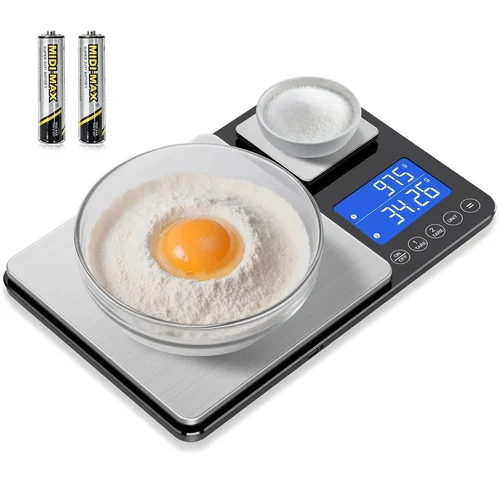
A: Absolutely! In fact, professional bakers prefer scales because volume measurements (cups) vary based on how ingredients are packed. Weighing flour, sugar, and liquids ensures consistent results every time.
Q: What if my scale stops working after a few months?
A: First, replace the batteries. If that doesn’t work, check the warranty. Most reputable brands will replace defective units within 1–2 years. Avoid buying from sellers with no return policy.
Our Final Recommendations
Best for Budget-Conscious Buyers: Greater Goods Digital Food Scale ($25)
Offers 0.1g precision, stainless steel platform, and reliable tare at an unbeatable price. Perfect for beginners who want accuracy without overspending.
Best Overall Value: Escali Primo Digital Scale ($35)
Consistently praised for its durability, 1g accuracy, and sleek design. Handles everything from protein powder to whole chickens with ease.
Best Premium Option: OXO Good Grips Stainless Steel Scale ($60)
Features a large, backlit display, IPX4 water resistance, and exceptional build quality. Ideal for serious trackers who want a scale that lasts a decade.
Best for Beginners: EatSmart Precision Plus ($30)
Simple interface, clear instructions, and foolproof tare function. Great for those new to macro tracking who need reliability without complexity.
Best for Advanced Users: Greater Goods Smart Scale with App Sync ($70)
Combines high accuracy (0.1g) with seamless Cronometer integration. Includes nutritional estimates and recipe mode for power users.
Conclusion: Making the Right Choice
Choosing the right kitchen scale for counting macros isn’t about finding the fanciest or most expensive model—it’s about matching the tool to your habits, goals, and environment. A college student meal prepping in a dorm needs something different than a bodybuilder tracking every gram of protein. By focusing on accuracy, durability, and ease of use, you’ll invest in a device that supports your nutrition journey for years to come.
Remember: the best scale is the one you’ll actually use consistently. If it’s too complicated, too fragile, or too inaccurate, it will end up in a drawer—right next to that ab roller you swore you’d use daily. Prioritize your must-have features, read real user reviews, and don’t be swayed by gimmicks. With the right scale in hand, you’ll gain confidence in your food choices, hit your macros with precision, and finally see the results you’ve been working toward.
Now go weigh that chicken breast—you’ve got gains to make.