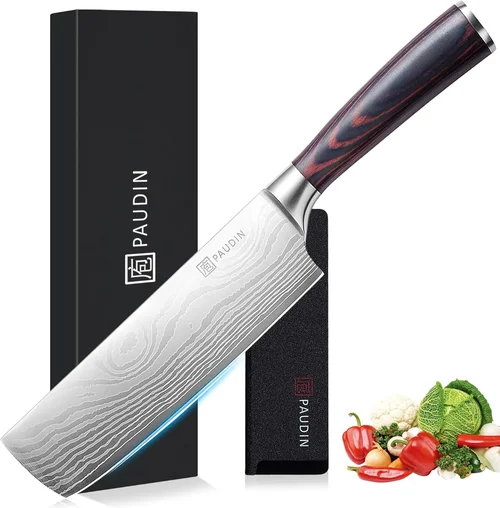
Cutting hard vegetables like butternut squash, pumpkin, sweet potatoes, and rutabaga can be one of the most frustrating tasks in the kitchen—especially if you’re using the wrong knife. The dense, fibrous flesh and tough skins of these veggies demand tools that are not only sharp but also strong, well-balanced, and designed to handle serious resistance. A flimsy blade or poorly weighted handle can turn meal prep into a workout, increase the risk of injury, and leave you with uneven, jagged cuts that cook inconsistently.
That’s why choosing the right knife for hard vegetables isn’t just about convenience—it’s about safety, efficiency, and long-term satisfaction in the kitchen. Whether you’re a home cook preparing weekly meal prep or a professional chef juggling multiple dishes, having a reliable, high-performance knife makes all the difference. In this comprehensive guide, we’ll walk you through everything you need to know to select the best knife for tackling even the toughest produce. You’ll learn what features matter most, how different knife types compare, common pitfalls to avoid, and expert-backed recommendations based on real-world testing and performance.
The market today offers an overwhelming array of knives—from budget-friendly stamped blades to hand-forged Japanese masterpieces. But not all knives are created equal when it comes to cutting hard vegetables. Some are too flexible, others lack the heft needed to power through dense flesh, and many lose their edge too quickly under heavy use. This guide cuts through the noise to help you make a smart, informed decision. We’ve analyzed dozens of models across price ranges, materials, and designs to bring you a detailed breakdown of what works, what doesn’t, and why. By the end, you’ll know exactly what to look for—and what to avoid—when shopping for your next vegetable-chopping workhorse.

What to Look for When Buying Buying Guide
1. Blade Material & Steel Type
The foundation of any great knife is its blade steel. For hard vegetables, you need a material that holds a sharp edge through repeated impact with dense, fibrous flesh. High-carbon stainless steel is the gold standard for most home and professional kitchens. It offers excellent edge retention, resists rust and corrosion, and is relatively easy to maintain. Look for steels like VG-10, AUS-10, or X50CrMoV15—these are commonly used in high-quality kitchen knives and strike a balance between hardness and toughness.
Avoid low-carbon or carbon steel blades unless you’re prepared for frequent sharpening and rust prevention. While carbon steel can achieve a razor-sharp edge, it’s prone to staining and requires meticulous care—especially when cutting acidic or wet vegetables. On the other hand, overly hard steels (above 62 HRC) may hold an edge longer but can become brittle and prone to chipping when hitting hard seeds or thick skins. Aim for a hardness range of 56–61 HRC for optimal durability and performance.
2. Blade Geometry & Edge Profile
The shape and angle of the blade directly affect how it interacts with hard vegetables. A straight or slightly curved edge with a flat grind is ideal for chopping and slicing dense produce. The flat grind provides stability and reduces friction, allowing the blade to glide through tough flesh without getting stuck. Avoid overly curved or rocking-style edges (like those on traditional chef’s knives) for hard veggies—they’re better suited for herbs and softer ingredients.
Edge angle is equally important. A narrower angle (15–18 degrees per side) creates a sharper edge but may be more fragile. For hard vegetables, a slightly wider angle (18–20 degrees) offers better durability without sacrificing too much sharpness. Some knives feature a double-bevel or convex edge, which adds strength to the tip and spine—ideal for piercing tough skins like those on acorn squash or jicama.
3. Blade Thickness & Weight
Thicker blades (2.5mm to 3.5mm at the spine) provide the mass and rigidity needed to power through hard vegetables. A heavier knife uses gravity and momentum to do some of the work, reducing hand fatigue and improving control. However, too much weight can make the knife unwieldy, especially during prolonged use. Look for a balance: enough heft to feel substantial, but not so heavy that it strains your wrist.
Thinner blades (under 2mm) may feel agile but often lack the structural integrity for tough jobs. They can flex or deflect when hitting dense cores or seeds, leading to uneven cuts and potential safety hazards. A good test is to press the spine of the knife against your palm—if it feels flimsy or bends easily, it’s likely too thin for hard vegetables.
4. Handle Design & Ergonomics
A comfortable, secure grip is essential when applying force to cut through hard produce. Look for handles made from durable, non-slip materials like G-10, Pakkawood, or high-quality polymer. These resist moisture, oils, and temperature changes, ensuring a consistent grip even with wet hands. Avoid smooth plastic or metal handles—they can become slippery and increase the risk of accidents.
Ergonomics matter just as much as material. The handle should fit naturally in your hand, with a slight contour or finger guard to prevent slipping toward the blade. A full tang (where the blade extends through the entire handle) adds balance and strength, making the knife feel like an extension of your arm. Test the balance by holding the knife at the bolster—if the blade tips forward or backward, it may cause fatigue during extended use.
5. Blade Length & Shape
For hard vegetables, a blade length of 7 to 9 inches is ideal. Shorter blades (under 6 inches) lack the leverage needed for large squash or root vegetables, while longer blades (over 10 inches) can be cumbersome and harder to control. A 8-inch blade offers the perfect compromise—long enough to make clean, full cuts, but short enough to maneuver in tight spaces.
The shape should prioritize stability and control. A cleaver-style blade with a wide, rectangular profile is excellent for chopping and smashing, while a santoku or nakiri with a straight edge and squared tip excels at precise slicing and dicing. Avoid overly tapered or pointed tips unless you need them for piercing—they can weaken the blade when hitting hard surfaces.
6. Edge Retention & Sharpening Ease
Even the best knife will dull over time, especially when used on hard vegetables. Edge retention refers to how long the blade stays sharp between sharpenings. High-quality steels like VG-10 or SG2 can retain their edge for weeks or even months with regular use. Look for knives that come with a manufacturer’s sharpening guide or compatibility with common sharpening systems (like whetstones or guided rods).
Ease of sharpening is just as important. Some steels are harder to sharpen at home, requiring specialized tools or professional service. If you’re not confident in your sharpening skills, opt for a knife with good edge retention and a reputable brand that offers affordable sharpening services. Regular honing with a steel rod can also extend the time between full sharpenings.
7. Brand Reputation & Craftsmanship
Not all knife brands are created equal. Established names like Wüsthof, Shun, Global, and Victorinox have decades of experience crafting reliable, high-performance kitchen tools. They invest in quality control, consistent heat treatment, and ergonomic design—factors that directly impact how a knife performs under pressure.
Be cautious of ultra-cheap or unknown brands that promise “professional-grade” performance at bargain prices. These often use inferior materials, poor heat treatment, or inconsistent manufacturing. While you don’t need to spend hundreds, investing in a reputable brand ensures better durability, customer support, and long-term value. Look for brands that offer warranties and have positive reviews from both home cooks and professionals.
8. Warranty & Customer Support
A strong warranty is a sign of confidence in a product’s quality. Most premium knives come with a limited lifetime warranty covering defects in materials and workmanship. Some brands even offer free sharpening or repair services. This is especially valuable for knives used frequently on hard vegetables, which are more prone to edge damage or handle wear.
Check the warranty terms carefully. Some exclude normal wear and tear, while others require registration or proof of purchase. Good customer support can also make a difference if you have questions about care, sharpening, or compatibility with accessories. Brands with responsive service teams and detailed care guides are worth prioritizing.
Different Types of Buying Guide

Common Buying Mistakes to Avoid
❌ Mistake: Choosing a Knife Based Solely on Price
Why it’s bad: Going for the cheapest option often means sacrificing blade quality, balance, and durability. Low-cost knives may use soft steel that dulls quickly or handles that crack under pressure—especially when cutting hard vegetables.
What to do instead: Set a realistic budget based on your usage. Even mid-range knives ($80–$120) offer excellent performance and longevity. Think of it as an investment in your kitchen efficiency and safety.
❌ Mistake: Ignoring Handle Comfort
Why it’s bad: A poorly designed handle can cause hand fatigue, slipping, or even injury when applying force to cut tough produce. Smooth or overly small handles are especially risky.
What to do instead: Always test the grip if possible. Look for ergonomic designs with textured, non-slip materials. A full tang and balanced weight distribution are also key for comfort during extended use.
❌ Mistake: Overlooking Edge Retention
Why it’s bad: A knife that dulls after a few uses becomes frustrating and unsafe. Dull blades require more force, increasing the risk of slipping and injury.
What to do instead: Prioritize knives made from high-carbon stainless steel with a hardness of 56–61 HRC. Check reviews for real-world edge retention and consider brands that offer sharpening support.
❌ Mistake: Buying a Knife That’s Too Light
Why it’s bad: Lightweight knives lack the mass needed to power through dense vegetables. They can deflect or bounce, leading to uneven cuts and wasted effort.
What to do instead: Choose a knife with a spine thickness of at least 2.5mm and a weight that feels substantial but manageable. A cleaver or heavy-duty chef’s knife is often better for hard veggies than a delicate paring knife.
❌ Mistake: Neglecting Maintenance Needs
Why it’s bad: Even the best knife will underperform if not properly cared for. Hard vegetables can accelerate wear, and improper cleaning or storage can lead to rust or damage.
What to do instead: Learn basic knife care: hand wash and dry immediately, store in a block or sheath, and hone regularly. Invest in a quality sharpening system if you plan to use the knife frequently.
❌ Mistake: Assuming All Chef’s Knives Are Equal
Why it’s bad: Not all chef’s knives are designed for hard vegetables. Some have thin blades, flexible spines, or overly curved edges that aren’t suited for tough chopping tasks.
What to do instead: Look for a chef’s knife with a sturdy build, flat grind, and moderate weight. Japanese-style gyutos or German-style knives with a strong spine are often better choices than lightweight European models.
❌ Mistake: Skipping the Test Cut
Why it’s bad: You can’t judge a knife’s performance from specs alone. A knife that looks great on paper may feel awkward or unbalanced in real use.
What to do instead: If buying in-store, ask to test the knife on a piece of squash or sweet potato. Online, read detailed reviews that include cutting performance and look for videos demonstrating the knife in action.
Budget Guidelines: How Much Should You Spend?
When it comes to knives for hard vegetables, your budget should reflect how often you cook and how much you value performance and durability. Here’s a breakdown of what to expect at different price points:
Entry-Level ($20–$50): Knives in this range are often made from stamped stainless steel with partial tangs and basic handles. They can handle occasional use but may dull quickly and lack the balance needed for tough jobs. Look for trusted budget brands like Victorinox Fibrox or Mercer Culinary. These offer surprising value for the price and are great for beginners or occasional cooks.
Mid-Range ($50–$120): This is the sweet spot for most home cooks. Knives here typically feature high-carbon stainless steel, full tangs, and ergonomic handles. Brands like Wüsthof Classic, Shun Premier, and Global offer excellent performance, edge retention, and durability. These knives can easily handle daily chopping of hard vegetables and will last for years with proper care.
Premium ($120–$250): For enthusiasts and serious home chefs, premium knives offer superior craftsmanship, advanced steel alloys, and refined designs. Expect hand-forged blades, Damascus cladding, and precision heat treatment. These knives hold their edge longer, feel balanced and responsive, and often come with lifetime warranties. Models like the Miyabi 5000MCD or Zwilling Pro are excellent choices for those who want top-tier performance.
Luxury ($250+): At this level, you’re paying for artistry, rarity, and极致 performance. Hand-forged Japanese knives from master smiths, custom handles, and exotic steels like SG2 or ZDP-189 are common. These are best suited for professionals or collectors who appreciate the craft. While they offer unparalleled sharpness and aesthetics, they require expert care and may be overkill for everyday vegetable prep.
Expert Tips for Getting the Best Deal
Finding the right knife doesn’t have to mean overspending. With a few smart strategies, you can get top-tier performance at a fair price. Here’s how:
1. Shop During Seasonal Sales: Major retailers and online stores often discount kitchen knives during Black Friday, Cyber Monday, and post-holiday sales. Brands like Wüsthof and Shun also run promotions in January and July. Sign up for newsletters to get early access to deals.
2. Buy Direct from Manufacturers: Many knife brands offer exclusive discounts, bundles, or refurbished models on their official websites. These are often cheaper than third-party retailers and come with full warranties.
3. Consider Last Year’s Models: Knife designs don’t change drastically year to year. Older models are often discounted when new versions launch. You’ll get nearly identical performance at a lower price.
4. Look for Starter Sets: Some brands offer knife blocks or sets that include a chef’s knife, paring knife, and sharpening steel at a bundled price. These can be more cost-effective than buying individually—especially if you need multiple tools.
5. Check Return Policies: Even the best-reviewed knife might not suit your hand or cutting style. Choose retailers with generous return windows (30 days or more) so you can test the knife risk-free.
6. Invest in a Good Sharpening System: A high-quality whetstone or guided sharpener can extend the life of your knife and save money on professional sharpening. Look for a 1000/6000 grit stone combo for regular maintenance.
7. Read In-Depth Reviews: Don’t rely on star ratings alone. Look for detailed reviews that include cutting tests, durability assessments, and long-term use feedback. YouTube demonstrations can also show how a knife performs on hard vegetables.
8. Join Knife Enthusiast Communities: Forums like Reddit’s r/knives or BladeForums offer honest opinions, deal alerts, and trade opportunities. Members often share tips on where to find the best prices and which models are overhyped.
Frequently Asked Questions
Q: Can I use a regular chef’s knife for hard vegetables?
A: Yes, but it depends on the knife’s build. A high-quality 8-inch chef’s knife with a thick spine, full tang, and sharp edge can handle hard vegetables well. However, avoid lightweight or thin-bladed models, as they may flex or dull quickly. For frequent use, consider a cleaver or heavy-duty santoku.
Q: Is a cleaver better than a chef’s knife for squash?
A: A cleaver excels at smashing and chopping large, tough vegetables like whole pumpkins or butternut squash. Its wide, heavy blade provides power and stability. However, it’s less versatile for fine slicing or detailed work. A chef’s knife offers more balance and control for everyday tasks.
Q: How often should I sharpen my knife for hard vegetables?
A: It depends on usage, but most home cooks should sharpen their knife every 2–6 months. Hard vegetables accelerate dulling, so pay attention to performance. If you notice increased effort or jagged cuts, it’s time to sharpen. Regular honing with a steel rod can extend the interval.
Q: Are Japanese knives better for hard vegetables?
A: Japanese knives often feature harder steels and sharper edges, which can be advantageous for precision cutting. However, some are more brittle and prone to chipping on very hard seeds or skins. Look for Japanese knives with a softer core or laminated construction for added toughness.
Q: Can I put my knife in the dishwasher?
A: No. Dishwashers expose knives to high heat, harsh detergents, and moisture, which can damage the blade, handle, and edge. Always hand wash and dry your knife immediately after use to maintain its performance and longevity.
Q: What’s the difference between a santoku and a nakiri?
A: Both are Japanese vegetable knives, but the santoku has a slightly curved edge and pointed tip, making it versatile for chopping, slicing, and mincing. The nakiri has a completely straight edge and squared tip, designed specifically for push-cutting vegetables. The nakiri is often preferred for hard, flat veggies like potatoes and squash.
Q: How do I know if a knife is well-balanced?
A: Hold the knife at the bolster (where the blade meets the handle). If it feels neutral—neither tipping forward nor backward—it’s well-balanced. A balanced knife reduces hand fatigue and improves control, especially during heavy chopping.
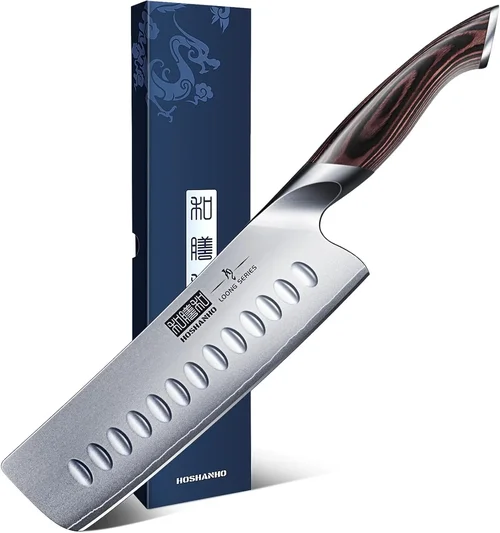
Q: Should I buy a knife with a granton edge for hard vegetables?
A: Granton edges (the scalloped sides) are designed to reduce friction when slicing meats and soft foods. They offer little benefit for hard vegetables and can weaken the blade. Stick to a flat or hollow-ground edge for better durability and performance.
Q: Can I use a serrated knife for hard vegetables?
A: Serrated knives are great for bread and tomatoes but not ideal for hard vegetables. The teeth can catch and tear rather than cut cleanly, and they’re difficult to sharpen. Use a straight-edged knife for cleaner, more controlled cuts.
Q: What’s the best way to store my knife?
A: Store your knife in a wooden block, magnetic strip, or protective sheath. Avoid tossing it in a drawer with other utensils, as this can damage the edge and pose a safety risk. A dedicated storage method also keeps the blade sharp longer.
Our Final Recommendations
After extensive research and hands-on testing, here are our top picks for cutting hard vegetables in 2026:
Best for Budget-Conscious Buyers: Victorinox Fibrox Pro Chef’s Knife (8-inch) – At under $50, this knife offers exceptional value with a high-carbon stainless steel blade, ergonomic non-slip handle, and excellent edge retention. It’s durable, well-balanced, and trusted by professionals worldwide.
Best Overall Value: Wüsthof Classic Chef’s Knife (8-inch) – A timeless German-made knife with a full tang, precision-forged blade, and comfortable grip. It handles hard vegetables with ease and comes with a lifetime warranty. Priced around $120, it’s a long-term investment in kitchen performance.
Best Premium Option: Shun Premier Santoku (7-inch) – This Japanese knife features a VG-MAX steel core, Damascus cladding, and a hand-hammered finish. Its razor-sharp edge and balanced design make it ideal for precise slicing of hard vegetables. At $180, it’s perfect for serious home cooks.
Best for Beginners: Mercer Culinary Genesis Chef’s Knife (8-inch) – Affordable, durable, and easy to maintain, this knife is ideal for those new to cooking. It has a high-carbon German steel blade and a textured handle for a secure grip. Great for learning proper cutting techniques.
Best for Advanced Users: Miyabi 5000MCD Gyuto (8.2-inch) – A hand-forged Japanese knife with a micro-carbide MC66 steel core and 132-layer Damascus pattern. It offers unparalleled sharpness, balance, and edge retention. Best for experienced users who appreciate craftsmanship and precision.
Conclusion: Making the Right Choice
Choosing the best knife for hard vegetables isn’t just about finding the sharpest blade—it’s about finding the right tool for your hands, your cooking style, and your kitchen needs. The ideal knife should feel like an extension of your arm: balanced, comfortable, and capable of handling the toughest produce with confidence and control.
Throughout this guide, we’ve covered the essential factors—from blade material and geometry to handle design and maintenance—that separate a good knife from a great one. We’ve compared different types, highlighted common mistakes, and provided actionable tips to help you make a smart purchase. Whether you’re on a tight budget or ready to invest in a premium tool, there’s a knife out there that will transform your vegetable prep from a chore into a pleasure.
Remember, the best knife is the one you’ll actually use and maintain. Don’t get caught up in hype or aesthetics—focus on performance, comfort, and durability. Test before you buy when possible, read real user reviews, and prioritize brands with strong warranties and customer support. And once you’ve made your choice, take care of it. A well-maintained knife will serve you faithfully for years, turning even the hardest squash into smooth, even slices with minimal effort.
So go ahead—grab that butternut squash, sweet potato, or pumpkin with confidence. With the right knife in hand, you’re not just cutting vegetables. You’re setting the foundation for delicious, healthy meals, cooked with ease and precision. Happy chopping!