[FEATURED_IMAGE_PLACEOLDER]
If you’ve ever tried to follow a recipe that calls for 150 grams of flour—only to eyeball it with a measuring cup and end up with dense, gummy cookies—you already know why a kitchen scale matters. Precision in cooking and baking isn’t just for professional chefs; it’s the secret weapon of home cooks who want consistent, reliable results every time. Whether you’re whipping up sourdough bread, crafting delicate pastries, or simply trying to portion out ingredients for a healthy meal, a good digital kitchen scale can make all the difference.
But with so many options on the market—ranging from ultra-cheap models under $15 to high-end scales costing over $100—it’s easy to feel overwhelmed. That’s where this guide comes in. We’ve spent months researching, testing, and comparing dozens of mid-range kitchen scales (priced between $30 and $80) to help you find the perfect balance of performance, durability, and value. You’ll learn exactly what features matter most, how to avoid common pitfalls, and which models deliver the best bang for your buck in 2026.
The mid-range scale market has evolved significantly in recent years. No longer are you forced to choose between flimsy plastic builds and overly complex smart scales with apps you’ll never use. Today’s best mid-tier scales offer impressive accuracy, sleek designs, intuitive interfaces, and thoughtful extras like tare functions, multiple units, and even waterproof surfaces—all without breaking the bank. Whether you’re a weekend baker, a meal prepper, or someone who just wants to cook with confidence, this guide will arm you with everything you need to make an informed decision.

What to Look for When Buying a Mid-Range Kitchen Scale
1. Accuracy and Precision
At its core, a kitchen scale exists to measure weight—so accuracy is non-negotiable. Look for scales that offer at least 1-gram increments (0.05 oz), especially if you plan to bake. Baking is unforgiving: too much flour can turn a light cake into a brick, while too little sugar can ruin caramelization. High-quality mid-range scales typically boast ±1g accuracy or better, which is more than sufficient for home use.
Precision also matters when weighing small quantities. If you’re measuring spices, yeast, or baking powder, you’ll want a scale that can reliably detect changes as small as 0.1g. Some models advertise “high precision” modes that allow for finer measurements, though these often come with trade-offs like slower response times or reduced max capacity.
To test accuracy at home, use calibrated weights (like coins or known-weight objects) or compare your scale against a trusted reference. Avoid scales that drift over time or give inconsistent readings with the same item.
2. Maximum Capacity and Increment Sensitivity
Most mid-range scales handle between 5 kg (11 lbs) and 11 kg (24 lbs). For typical home cooking—think large batches of dough, whole chickens, or big pots of soup—a 5 kg capacity is usually enough. However, if you regularly cook for large families or host dinner parties, consider stepping up to 7–11 kg models.
More important than raw capacity is how the scale behaves across its range. A good scale should maintain consistent accuracy whether you’re weighing 5 grams of salt or 4 kg of potatoes. Cheaper models often lose precision at higher weights, so check user reviews for notes like “inaccurate over 3 kg” or “drifts when full.”
Increment sensitivity refers to the smallest weight change the scale can detect. While 1g is standard, some premium mid-range scales offer 0.1g sensitivity—ideal for espresso dosing or delicate pastry work. Just remember: finer increments may slow down the display response, so balance your needs accordingly.
3. Build Quality and Durability
Your kitchen scale will likely sit on a countertop, get splashed with water, and possibly take a few knocks. That’s why build quality matters. Look for scales with stainless steel platforms—they’re easy to clean, resist corrosion, and feel solid under hand. Avoid all-plastic platforms, which can warp or crack over time.
The base should be sturdy and non-slip. Rubber feet or silicone pads prevent the scale from sliding during use, especially when you’re pressing the tare button or adding heavy items. Hinges (if the platform is removable) should feel smooth and secure—not wobbly or loose.
Water resistance is another key factor. While no kitchen scale is fully submersible, many mid-range models now feature IPX-rated splash resistance (usually IPX4 or IPX6). This means you can wipe them down safely without worrying about liquid seeping into the electronics. If you’re messy in the kitchen (and who isn’t?), this feature is worth prioritizing.
4. Display and User Interface
A clear, backlit LCD screen is essential—especially if you cook in dim lighting or have vision challenges. Look for large digits (at least 1 inch tall) and high contrast between text and background. Some scales include auto-off timers to save battery, but make sure it’s not too aggressive (e.g., shutting off after 30 seconds mid-recipe).
Button layout should be intuitive. The tare (zero) button is the most-used feature—it should be large, responsive, and ideally placed where your thumb naturally rests. Avoid scales with tiny, mushy buttons or overly complex menus. Simplicity wins here.
Unit switching is another usability consideration. Most scales offer grams, ounces, pounds, and sometimes milliliters (for liquids). Make sure switching between units is quick—ideally with a single button press. Some models remember your last-used unit, which is a nice touch.
5. Power Source and Battery Life
Nearly all mid-range digital scales run on AAA or AA batteries. Rechargeable USB models are becoming more common but are still rare in this price bracket. Stick with replaceable batteries unless you strongly prefer eco-friendly charging.
Battery life varies widely—from 6 months to over 2 years—depending on usage and auto-off settings. Scales with aggressive power-saving modes (like turning off after 10 seconds of inactivity) drain batteries faster. Look for models that use efficient processors and low-power displays.
Always keep spare batteries on hand. There’s nothing worse than being mid-recipe and seeing that low-battery icon flash. Some scales include a battery indicator on the display—a small but useful feature.
6. Additional Features and Smart Capabilities
Beyond basic weighing, many mid-range scales offer helpful extras. The tare function (which resets the display to zero after placing a container) is standard and indispensable. Nutritional tracking—where the scale calculates calories, protein, or carbs based on weight—is increasingly common but often requires a companion app.
Be cautious with “smart” features. Bluetooth connectivity and recipe apps sound appealing, but they add cost, complexity, and potential reliability issues. Unless you’re deeply invested in digital meal planning, a simple, reliable scale often outperforms a glitchy smart one.
Other nice-to-haves include:
– Overload protection: Prevents damage if you accidentally exceed max weight.
– Low battery warning: Gives you time to swap batteries before failure.
– Removable platform: Makes cleaning easier (just wipe or rinse).
– Compact footprint: Saves counter space—important in small kitchens.
7. Brand Reputation and Customer Support
Stick with brands known for kitchen tools: OXO, Escali, Greater Goods, MyWeigh, and Amazon Basics all have solid track records. These companies stand behind their products with responsive customer service and clear warranty policies.
Avoid no-name brands sold exclusively through third-party Amazon sellers. While they might look identical to name-brand models, they often cut corners on components and offer little to no support. Check the manufacturer’s website—if there isn’t one, or if contact info is vague, steer clear.
Read recent reviews (within the last 6–12 months) to spot trends. A scale might have great specs on paper but suffer from premature battery drain or flimsy buttons in real-world use. Authentic user feedback is invaluable.
8. Warranty and Return Policy
Most reputable mid-range scales come with a 1–2 year warranty. OXO, for example, offers a 2-year warranty with U.S.-based support. Escali provides a limited lifetime warranty on many models—a strong sign of confidence in their build quality.
Before buying, check the retailer’s return policy. Amazon typically allows 30-day returns, but smaller online stores may have stricter rules. If possible, buy from a seller with free returns—you don’t want to be stuck with a dud scale.
Keep your receipt and register the product if required. Many warranties are void if the scale shows signs of misuse (like submersion in water), so follow care instructions carefully.
Different Types of Mid-Range Kitchen Scales

Common Buying Mistakes to Avoid
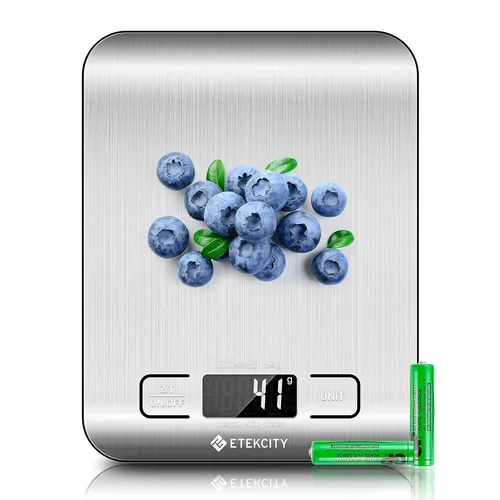
❌ Mistake: Prioritizing Price Over Build Quality
Why it’s bad: The cheapest scales often use thin plastic, imprecise sensors, and flimsy buttons. They may work fine for a month—then suddenly give erratic readings or stop working altogether. Replacing a $20 scale every year costs more long-term than buying a $50 durable one.
What to do instead: Set a minimum budget of $35–$40 and focus on brands with proven reliability. Read hands-on reviews that mention longevity, not just specs.
❌ Mistake: Ignoring Unit Preferences
Why it’s bad: If you primarily cook with metric measurements (common in baking), a scale that defaults to ounces or lacks gram precision will frustrate you. Conversely, American cooks using cups and ounces may find constant unit-switching annoying.
What to do instead: Choose a scale that supports your preferred units and allows quick switching. Test the interface if possible—some scales require holding buttons for seconds to change units.
❌ Mistake: Overlooking Counter Space
Why it’s bad: A bulky scale can dominate a small kitchen, forcing you to store it in a drawer. If it’s inconvenient to access, you’re less likely to use it regularly.
What to do instead: Measure your available counter space. Look for compact models (under 9″ x 7″) or ones with foldable platforms. Some scales even mount under cabinets.
❌ Mistake: Falling for “Smart” Gimmicks
Why it’s bad: Bluetooth scales with apps often suffer from connectivity issues, slow updates, and short battery life. Many users end up disabling the smart features and using them as basic scales anyway.
What to do instead: Only buy a smart scale if you’ll actually use the app integration. For most home cooks, a reliable analog-digital hybrid or simple digital scale is far more practical.
❌ Mistake: Not Checking Return Policies
Why it’s bad: Defective scales are more common than you think—especially with imported models. Without a clear return window, you could be stuck with a non-functional unit.
What to do instead: Buy from retailers with generous return windows (30 days minimum). Avoid marketplace sellers with unclear policies.
❌ Mistake: Assuming All Stainless Steel Is Equal
Why it’s bad: Some “stainless steel” platforms are actually coated plastic or thin metal that dents easily. True food-grade stainless steel (like 304 grade) resists rust and scratches.
What to do instead: Check product descriptions for material specifics. If it just says “stainless steel platform” without details, assume it’s lower quality.
❌ Mistake: Neglecting Tare Function Usability
Why it’s bad: A poorly placed or unresponsive tare button makes weighing ingredients tedious. You might skip using the scale altogether rather than fight with it.
What to do instead: Look for scales with large, centrally located tare buttons. Test responsiveness in videos or reviews—some require multiple presses to register.
Budget Guidelines: How Much Should You Spend?
– Entry-Level ($20–$30): These scales are functional but often compromise on build quality, accuracy, or battery life. Suitable for occasional use or as a backup, but not recommended for serious bakers. Expect plastic platforms, minimal splash resistance, and basic displays.
– Mid-Range ($35–$70): This is the sweet spot for most home cooks. You’ll find stainless steel platforms, 1g precision, reliable tare functions, and thoughtful design details. Many include splash resistance, auto-off timers, and clear backlit displays. Brands like OXO, Escali, and Greater Goods dominate this tier with excellent value.
– Premium ($70–$100): Ideal for enthusiasts and frequent bakers. These scales often offer 0.1g sensitivity, larger capacities (up to 11 kg), advanced nutrition tracking, and superior durability. Some include rechargeable batteries or companion apps—though these features aren’t always necessary.
– Luxury ($100+): Reserved for professionals or obsessive home cooks. Think laboratory-grade precision, multi-point calibration, and industrial build quality. Unless you’re running a home bakery or need scientific accuracy, this tier is overkill.
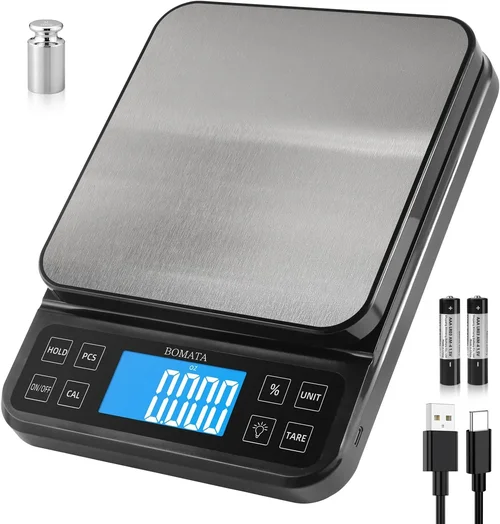
For 2026, we recommend allocating $50–$65 for a mid-range scale. This range consistently delivers the best balance of performance, longevity, and features without unnecessary extras.
Expert Tips for Getting the Best Deal
– Shop during seasonal sales: Kitchen scales often go on sale during Black Friday, Prime Day, and back-to-school periods. Sign up for brand newsletters (OXO, Escali) to get early access to discounts.
– Buy directly from manufacturers when possible: OXO and Escali frequently offer exclusive bundles or extended warranties on their websites that aren’t available on Amazon.
– Check refurbished or open-box options: Reputable retailers like Amazon Renewed or manufacturer-certified refurbished programs sell tested, like-new scales at 20–30% off.
– Compare total cost of ownership: Factor in battery replacement frequency. A $40 scale that uses batteries monthly may cost more long-term than a $60 model with a 2-year lifespan.
– Read the fine print on warranties: Some brands require product registration within 30 days to activate coverage. Keep your receipt and follow instructions precisely.
– Test before committing: If buying in-store, place a known weight (like a 1kg bag of sugar) on the scale to verify accuracy. Check button responsiveness and display clarity.
– Consider multi-purpose use: Some scales double as postage scales or jewelry scales. If you need those functions, look for models with dual modes—but ensure kitchen performance isn’t sacrificed.
– Don’t rush: Take time to read recent reviews. A scale that was great in 2023 might have quality control issues in 2026 due to supply chain changes.

Frequently Asked Questions
Q: Can I use a kitchen scale for weighing letters or packages?
A: Yes—most mid-range scales with 5–11 kg capacity can handle light postal items. However, for frequent shipping, consider a dedicated postal scale, which often includes shipping cost calculators and holds-to-weigh features.
Q: Are digital scales more accurate than mechanical ones?
A: Absolutely. Digital scales use load cells and microprocessors to deliver precise, repeatable readings. Mechanical scales (with springs) drift over time and are harder to calibrate. For cooking and baking, digital is the clear winner.
Q: How do I clean my kitchen scale?
A: Wipe the platform with a damp cloth and mild detergent. Never submerge the unit. For splash-resistant models, you can rinse the platform under running water—just dry thoroughly before use. Avoid abrasive cleaners that scratch stainless steel.
Q: Why does my scale show “Err” or “OL”?
A: “Err” usually means the scale is unstable (e.g., on an uneven surface) or the battery is low. “OL” (overload) appears when you exceed the maximum weight. Remove the item, wait 10 seconds, and try again on a flat surface.
Q: Do I really need 0.1g precision?
A: Only if you’re doing espresso extraction, working with small spice blends, or baking very delicate pastries (like macarons). For everyday cooking and most baking, 1g precision is perfectly adequate.
Q: Can I weigh liquids on a kitchen scale?
A: Yes—but only if the scale has a milliliter (mL) mode. This assumes water-like density (1g = 1mL). For oils, milk, or syrups, conversion isn’t exact, so stick to weight measurements for accuracy.
Q: How often should I calibrate my scale?
A: Most consumer scales don’t require user calibration. However, if readings seem off, test with known weights. Some high-end models include calibration modes—check your manual.
Q: Are rechargeable scales worth it?
A: In the mid-range category, rarely. Rechargeable models often have shorter lifespans and aren’t easily repairable. Replaceable batteries are more practical for most users.
Q: What’s the difference between IPX4 and IPX6?
A: IPX4 protects against splashes from any direction (good for spills). IPX6 resists powerful water jets (better for rinsing). For kitchen use, IPX4 is usually sufficient.
Q: Can I leave my scale on the counter permanently?
A: Yes—as long as it’s in a dry, cool spot away from direct heat sources (ovens, stovetops). Avoid stacking heavy items on top, which can damage the load cell.
Our Final Recommendations
– Best for Budget-Conscious Buyers: Greater Goods Digital Food Scale ($39)
Offers stainless steel platform, 1g precision, and a clean interface—all under $40. Great for beginners who want reliability without frills.
– Best Overall Value: OXO Good Grips Stainless Steel Food Scale ($59)
Combines OXO’s legendary ergonomics with a splash-resistant design, large backlit display, and consistent accuracy. The removable platform makes cleaning a breeze.
– Best Premium Option: Escali Primo P115C ($69)
Features 0.1g precision, a 11 kg capacity, and Escali’s lifetime warranty. Ideal for serious bakers and those who want room to grow.
– Best for Beginners: Amazon Basics Stainless Steel Digital Scale ($35)
Simple, intuitive, and surprisingly durable for the price. Perfect for anyone new to weighing ingredients.
– Best for Advanced Users: MyWeigh KD8000 ($79)
Packed with features: 0.1g sensitivity, 8 kg capacity, built-in calculator, and even a clock. Great for meal preppers and tech-savvy cooks.
Conclusion: Making the Right Choice
Choosing the right mid-range kitchen scale doesn’t have to be complicated. Focus on what matters most: accuracy, build quality, ease of use, and features that match your cooking style. Avoid the trap of overspending on smart gimmicks or underspending on flimsy construction. Remember, a great scale isn’t just a tool—it’s an investment in better, more consistent meals.
Take stock of your needs. Are you a weekend baker who values precision? A busy parent portioning meals? Or a minimalist who just wants something reliable and easy to clean? Once you know your priorities, the decision becomes clear.
Don’t settle for guesswork in the kitchen. With the right scale, you’ll bake lighter cakes, cook more evenly, and gain confidence in every recipe. Use this guide to find your perfect match—and start weighing your way to culinary success today.