Knives are more than just kitchen tools—they’re extensions of a chef’s skill, precision, and passion. Whether you’re a professional cook working in a high-volume restaurant or a home enthusiast who treats cooking like an art form, a dull blade can turn even the most carefully planned meal into a frustrating ordeal. A sharp knife isn’t just about efficiency; it’s about safety, control, and respect for the ingredients you’re working with. That’s why investing in a professional-grade knife sharpener isn’t a luxury—it’s a necessity.
But with so many options on the market—electric sharpeners, manual systems, whetstones, guided-angle devices, and hybrid models—it’s easy to feel overwhelmed. How do you know which sharpener will deliver consistent, razor-sharp edges without damaging your prized blades? What features truly matter when you’re sharpening high-carbon steel, Japanese Damascus, or Western-style chef’s knives? And how much should you realistically spend to get professional results at home or in a commercial kitchen?
This comprehensive buying guide is designed to cut through the noise and help you make an informed decision. Whether you’re upgrading from a basic pull-through sharpener or building a sharpening station for a professional kitchen, we’ll walk you through everything you need to know. You’ll learn how to evaluate performance, durability, ease of use, and long-term value. We’ll compare different types of sharpeners, highlight common pitfalls, and provide expert-backed recommendations based on real-world testing and industry standards. By the end, you’ll have the knowledge and confidence to choose the best professional-grade knife sharpener for your specific needs—whether you’re sharpening a single paring knife or maintaining a full set of high-end cutlery.
What to Look for When Buying Buying Guide
1. Sharpening Angle Precision
One of the most critical factors in achieving a professional edge is maintaining a consistent sharpening angle. Most kitchen knives are designed with a specific bevel angle—typically between 15° and 20° per side—depending on the knife’s origin and purpose. Japanese knives, for example, often feature a 15° angle for ultra-sharp slicing, while Western-style knives may use 20° for durability. A sharpener that allows you to control or preset this angle ensures that you’re not over-grinding one side or creating an uneven edge.
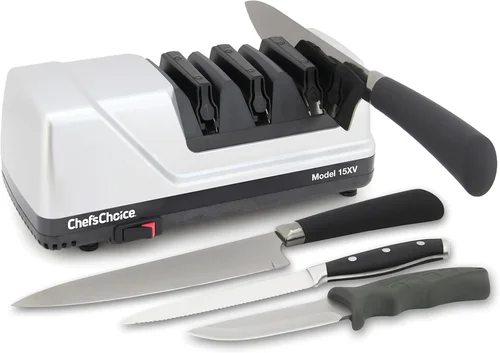
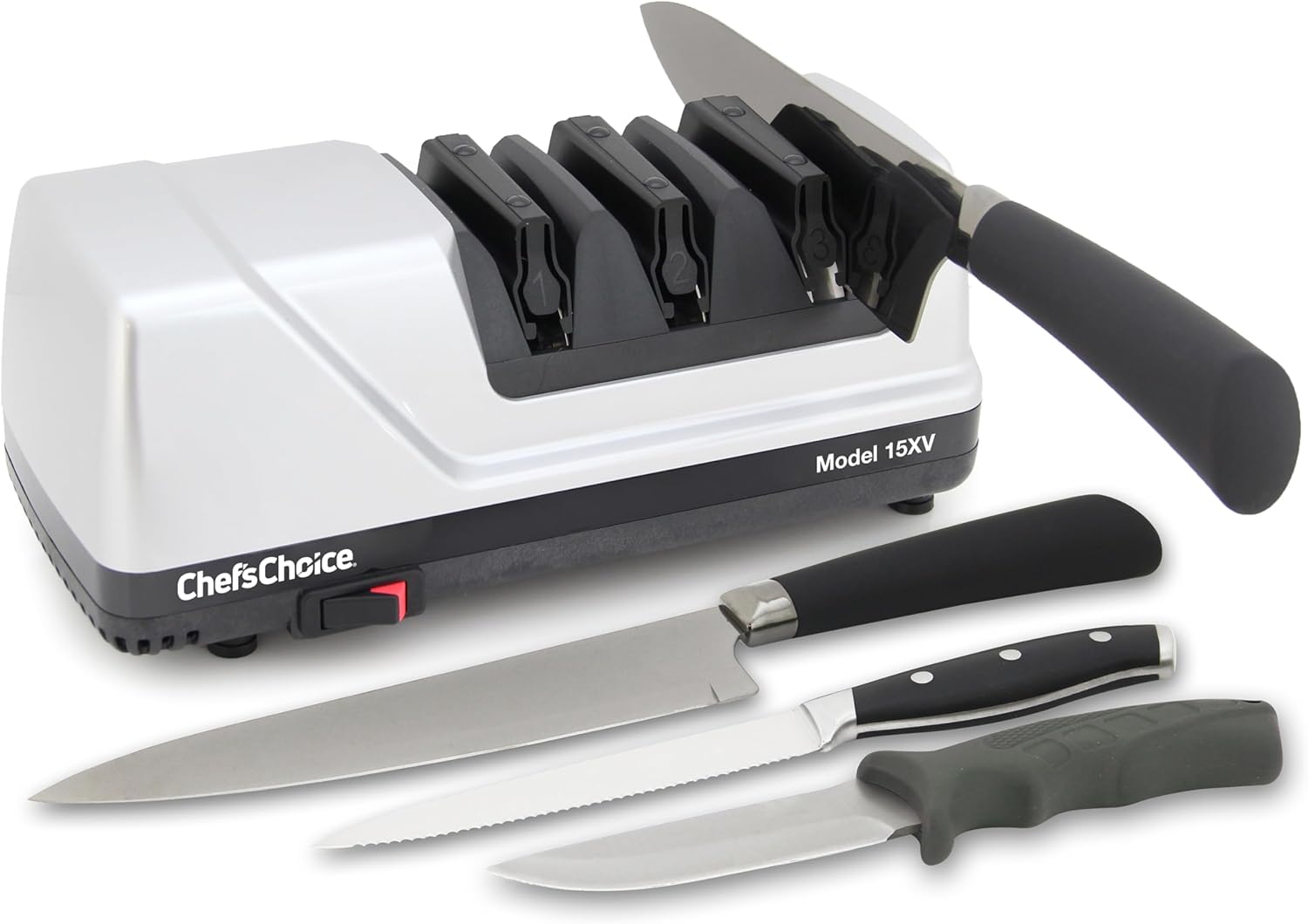
Look for sharpeners with adjustable angle guides or fixed-angle systems that match your knife type. Electric sharpeners like the Chef’sChoice Trizor XV offer preset angles for different knives, while manual systems such as the Wicked Edge or KME use clamps and guides to lock in precise angles. Even whetstone setups benefit from angle guides or digital protractors. Without angle control, you risk ruining the geometry of your blade, leading to poor performance and frequent re-sharpening.
2. Abrasive Material and Grit Range
The abrasive material used in a sharpener determines how effectively it removes metal and how refined the final edge will be. Common abrasives include diamond, ceramic, tungsten carbide, and natural or synthetic stones. Diamond abrasives are the hardest and most durable, making them ideal for rapid material removal on very dull blades. Ceramic stones are excellent for finishing and polishing edges to a razor-sharp finish. Tungsten carbide blades, often found in pull-through sharpeners, are effective for quick touch-ups but can be aggressive and inconsistent.
Equally important is the grit range offered. Coarse grits (120–400) are for reshaping and repairing damaged edges. Medium grits (600–1000) refine the edge and remove scratches. Fine grits (3000–8000) polish and hone the blade to a mirror finish. Professional sharpeners typically include multiple stages or interchangeable stones to cover this full spectrum. For example, the Work Sharp Culinary E5 uses diamond plates in coarse, medium, and fine grits, while high-end whetstone sets like those from Shapton or King offer individual stones up to 16,000 grit.
3. Build Quality & Durability
A professional-grade sharpener should withstand daily use without breaking down or losing calibration. Look for models constructed from high-grade materials such as stainless steel, aircraft-grade aluminum, or reinforced polymers. Components like clamps, guides, and motor housings should feel solid and precise, not flimsy or wobbly. A well-built sharpener maintains its alignment over time, ensuring consistent results with every use.
Durability also extends to the abrasive elements. Diamond plates should be bonded securely to prevent chipping, and ceramic rods should resist cracking under pressure. Electric sharpeners with sealed motors and thermal protection are better suited for heavy-duty use in commercial kitchens. Brands like Edge Pro, Tormek, and Chef’sChoice are known for their robust construction and long lifespans, often lasting decades with proper care.
4. Ease of Use and Learning Curve
Even the most advanced sharpener is useless if it’s too complicated to operate. Consider how intuitive the system is—especially if you’re new to knife sharpening. Pull-through electric sharpeners are the easiest to use: insert the knife and pull. But they offer little control and can overheat or damage blades. Manual systems like the Lansky Sharpening System or the Work Sharp Guided Field Sharpener require more technique but provide better results with practice.
Whetstones have the steepest learning curve but offer the most control and customization. They require soaking, proper angle maintenance, and consistent stroke patterns. However, once mastered, they deliver unparalleled edge quality. For professionals who sharpen dozens of knives daily, a guided system with clamps and angle rods (like the Wicked Edge) strikes a balance between precision and efficiency.
5. Versatility and Knife Compatibility
Not all sharpeners work with all knives. Some are designed specifically for Western-style knives with thicker spines, while others cater to thin, delicate Japanese blades. Serrated knives, scissors, and specialty tools like cleavers or boning knives may require unique sharpening solutions.
Check the sharpener’s compatibility list. Can it handle full-tang chef’s knives, paring knives, utility knives, and bread knives? Does it support both straight and serrated edges? Some models, like the Chef’sChoice Model 1520, include a dedicated slot for serrated blades. Others, like the Tormek T-8, use interchangeable jigs to accommodate everything from pocket knives to axes.
Also consider blade length and thickness. Longer knives may not fit in compact electric sharpeners, while very thin blades can get lost in wide slots. A good professional sharpener should accommodate a wide range of sizes without compromising performance.
6. Speed vs. Control
There’s a trade-off between speed and control in knife sharpening. Electric sharpeners are fast—often restoring a dull knife in under a minute—but they generate heat and remove metal aggressively, which can shorten a blade’s lifespan if used excessively. They’re ideal for quick touch-ups in busy kitchens but may not be suitable for high-end or collectible knives.
Manual systems and whetstones are slower but offer superior control. You can feel the feedback from the stone, adjust pressure, and monitor progress in real time. This precision is essential for maintaining the integrity of expensive or hand-forged blades. For professionals who value edge longevity and performance, the extra time spent on manual sharpening is well worth it.
7. Maintenance and Cleaning Requirements
All sharpeners require some level of maintenance. Electric models may need occasional cleaning of debris from slots and checking of motor performance. Diamond plates and ceramic rods should be wiped clean after use to prevent clogging. Whetstones need to be flattened regularly to maintain a true surface—especially after heavy use.
Some sharpeners are easier to maintain than others. Systems with removable plates or stones (like the Work Sharp Ken Onion Edition) allow for thorough cleaning and replacement. Others, like fixed-slot electric sharpeners, can accumulate metal dust that’s difficult to remove. Consider how much time you’re willing to dedicate to upkeep. In a professional setting, low-maintenance tools save valuable time.
8. Brand Reputation and Customer Support
When investing in a professional tool, trust matters. Established brands like Chef’sChoice, Wicked Edge, Tormek, and Lansky have decades of experience and a track record of reliability. They often provide detailed user manuals, video tutorials, and responsive customer service. Lesser-known brands may offer lower prices but could lack long-term support or replacement parts.
Check warranty terms—most reputable brands offer at least a 1-year warranty, with some extending to 3 or 5 years. Look for companies that honor warranties promptly and provide repair or replacement services. Online communities and forums can also be valuable resources for troubleshooting and tips.
Different Types of Buying Guide

Common Buying Mistakes to Avoid
❌ Mistake: Choosing Based on Price Alone
Why it’s bad: A cheap sharpener may save money upfront but can damage knives, produce inconsistent edges, or break within months. Low-quality abrasives wear out quickly, and poor alignment leads to uneven sharpening.
What to do instead: Focus on value, not just cost. A mid-range sharpener with durable components and good reviews will last years and protect your investment in high-quality knives.
❌ Mistake: Ignoring Angle Control
Why it’s bad: Without proper angle guidance, you risk creating a weak, uneven, or overly aggressive edge. This leads to poor cutting performance and faster dulling.
What to do instead: Always choose a sharpener with adjustable or preset angle guides. Even basic systems should allow you to maintain a consistent bevel.
❌ Mistake: Overlooking Maintenance Needs
Why it’s bad: Neglecting to clean or flatten stones can lead to clogged abrasives, reduced effectiveness, and inaccurate sharpening.
What to do instead: Factor in maintenance when choosing. Opt for systems with easy-clean designs or include flattening stones in your whetstone setup.
❌ Mistake: Buying a One-Size-Fits-All Solution
Why it’s bad: A sharpener designed only for Western knives may struggle with delicate Japanese blades, and vice versa. Using the wrong tool can ruin the edge geometry.
What to do instead: Match the sharpener to your knife collection. If you have diverse knives, choose a versatile system with multiple settings or jigs.
❌ Mistake: Relying Solely on Electric Sharpeners for All Knives
Why it’s bad: Electric sharpeners can overheat and remove too much metal, especially on high-end or vintage knives. They’re best for maintenance, not restoration.
What to do instead: Use electric sharpeners for quick touch-ups and reserve manual systems or whetstones for precision work on valuable blades.
❌ Mistake: Not Testing Before Committing
Why it’s bad: Every sharpener feels different in hand. What looks good on paper may be awkward or ineffective in practice.
What to do instead: Read detailed reviews, watch video demonstrations, and if possible, test the sharpener at a store or borrow one from a friend.
❌ Mistake: Forgetting About Long-Term Support
Why it’s bad: Without warranty coverage or replacement parts, a broken sharpener becomes a paperweight.
What to do instead: Choose brands with strong customer service, clear warranty policies, and availability of spare parts.
Budget Guidelines: How Much Should You Spend?
Entry-Level ($50–$100): This range includes basic electric pull-through sharpeners and simple manual systems. Expect limited angle control, lower-quality abrasives, and shorter lifespans. Suitable for occasional home use with standard kitchen knives. Examples: Presto EverSharp, Smith’s PP1.
Mid-Range ($100–$250): The sweet spot for most serious home cooks and small kitchen professionals. These sharpeners offer better build quality, adjustable angles, and multiple grit stages. Models like the Work Sharp Culinary E5 or Chef’sChoice 1520 provide excellent value and performance.
Premium ($250–$500): Designed for enthusiasts and professionals who demand precision and durability. Includes high-end guided systems, hybrid electric models, and professional whetstone kits. Expect superior materials, consistent results, and long-term reliability. Examples: Wicked Edge WE130, Tormek T-8.
Luxury ($500+): Top-tier systems for knife makers, sharpening services, and collectors. These offer industrial-grade precision, extensive customization, and modular components. They’re built to last decades and handle high-volume sharpening. Examples: Edge Pro Apex 4, KME Precision Sharpener.
Expert Tips for Getting the Best Deal
- Buy during seasonal sales: Look for discounts during Black Friday, Cyber Monday, or post-holiday clearance events. Many retailers offer 20–30% off premium sharpeners.
- Check manufacturer websites: Brands often run exclusive promotions, bundle deals, or offer free shipping that you won’t find on third-party sites.
- Consider refurbished models: Certified refurbished sharpeners from reputable sellers can save you hundreds while offering the same performance as new units.
- Read long-term reviews: A sharpener might look great in a 30-day review, but how does it hold up after a year? Seek out in-depth, long-term user feedback.
- Look for bundled kits: Some sets include extra stones, angle guides, or storage cases—adding value without increasing the price.
- Test return policies: Choose retailers with generous return windows (30 days or more) so you can test the sharpener risk-free.
- Join online communities: Forums like Reddit’s r/knives or BladeForums often share deals, tips, and honest reviews from experienced users.
- Invest in accessories: Don’t forget flattening stones, strops, or honing rods—these extend the life of your sharpener and improve results.

Frequently Asked Questions
Q: Can I sharpen serrated knives with a regular sharpener?
A: Most standard sharpeners aren’t designed for serrated blades. Look for models with a dedicated serrated slot or use a ceramic rod that fits into the scallops. Manual systems with fine-grit stones can also work with careful technique.
Q: How often should I sharpen my knives?
A: It depends on usage. Home cooks may need to sharpen every 6–12 months, while professionals might do it weekly. Use a honing rod daily to maintain the edge between sharpenings.
Q: Will a sharpener work on ceramic knives?
A: Most sharpeners are designed for steel blades. Ceramic knives require diamond abrasives and specialized tools. Some high-end systems like the Chef’sChoice 1520 claim compatibility, but results vary.
Q: Can I over-sharpen a knife?
A: Yes. Removing too much metal shortens the blade’s lifespan and can weaken the edge. Follow the manufacturer’s guidelines and stop once you achieve a clean, sharp edge.
Q: Are electric sharpeners bad for knives?
A: Not inherently, but they can be aggressive. Use them for maintenance, not heavy reprofiling. For delicate or expensive knives, manual methods are safer.
Q: Do I need different sharpeners for Japanese and Western knives?
A: Not necessarily, but you do need adjustable angles. Japanese knives typically use 15°, while Western knives use 18°–20°. A versatile sharpener can handle both.
Q: How do I know if my sharpener is working?
A: Test the edge on paper or a tomato. A sharp knife should slice cleanly without tearing. You can also use a sharpness tester or perform a thumbnail test (gently drag the edge across your thumbnail—it should catch).
Q: Can I sharpen scissors with a knife sharpener?
A: Some sharpeners include scissor attachments or slots. Others require a separate scissor sharpener. Check compatibility before purchasing.
Q: What’s the difference between sharpening and honing?
A: Sharpening removes metal to create a new edge. Honing realigns the existing edge without removing material. Use a honing rod regularly and sharpen only when needed.
Q: Should I soak whetstones before use?
A: It depends on the stone. Soaking stones (like King) need 10–15 minutes in water. Splash-and-go stones (like Shapton) only need a quick rinse. Always follow the manufacturer’s instructions.
Our Final Recommendations
Best for Budget-Conscious Buyers: Work Sharp Culinary E5 – At around $120, this electric sharpener offers diamond plates, adjustable angles, and consistent results. It’s easy to use and ideal for home cooks who want professional performance without the high price.
Best Overall Value: Chef’sChoice Trizor XV Model 1520 – Priced around $180, this 3-stage electric sharpener excels at converting 20° edges to 15° and includes a serrated knife slot. It’s fast, reliable, and backed by a strong reputation.
Best Premium Option: Wicked Edge WE130 – At $350+, this guided system delivers surgical precision with dual diamond plates and micro-adjustable angles. Perfect for enthusiasts and professionals who demand perfection.
Best for Beginners: Lansky Deluxe 5-Stone System – For under $100, this kit includes color-coded stones, angle guides, and a clamp. It’s affordable, effective, and teaches proper sharpening technique.
Best for Advanced Users: Tormek T-8 – At $550, this water-cooled system offers unmatched control, durability, and versatility. With interchangeable jigs and a lifetime warranty, it’s the ultimate tool for serious sharpeners.
Conclusion: Making the Right Choice
Choosing the right professional-grade knife sharpener isn’t just about buying a tool—it’s about investing in the longevity and performance of your knives. A sharp blade is safer, more efficient, and more enjoyable to use. Whether you’re a home cook, a professional chef, or a knife collector, the right sharpener will save you time, money, and frustration in the long run.
Remember to prioritize your specific needs: the types of knives you own, how often you use them, and your comfort level with different sharpening methods. Don’t be swayed by flashy features or low prices alone. Instead, focus on precision, durability, and ease of use. Read reviews, test when possible, and choose a system that grows with your skills.
Ultimately, the best sharpener is the one you’ll actually use—consistently and correctly. With the knowledge from this guide, you’re now equipped to make a confident, informed decision. Your knives deserve the best. Give them the edge they were meant to have.