Kitchen scales have evolved from simple mechanical tools to precision digital instruments that can make or break your culinary success. Whether you’re a home baker striving for consistent sourdough loaves, a meal prepper tracking macros, or a professional chef scaling recipes for a restaurant kitchen, the right scale is more than just a convenience—it’s a necessity. In recent years, the market has flooded with options, making it harder than ever to choose between models that look similar but perform vastly differently. Among the most debated design choices is the shape of the scale itself: round versus square. While this might seem like a minor aesthetic preference, the form factor actually impacts usability, stability, compatibility with containers, and even accuracy in real-world kitchen environments.
This comprehensive buying guide is designed to cut through the noise and help you make an informed decision based on your specific needs, budget, and cooking habits. You’ll learn not only how to evaluate key performance metrics like accuracy, capacity, and tare functionality, but also how to weigh the practical differences between round and square kitchen scales. We’ll explore build quality, feature sets, brand reliability, and even common pitfalls that lead buyers to regret their purchase. By the end, you’ll have a clear roadmap to selecting the best kitchen scale for your kitchen—whether you prioritize precision, portability, or price.
The kitchen scale market today spans everything from ultra-basic $10 models to high-end $200+ smart scales with Bluetooth connectivity and app integration. Brands like OXO, Escali, GreaterGoods, My Weigh, and Amazon Basics dominate the space, each offering unique strengths. Round scales often appeal to minimalists and those with limited counter space, while square models tend to offer larger platforms and better compatibility with bowls and mixing containers. Understanding these nuances—and how they align with your cooking style—is essential. This guide will walk you through every critical factor, compare top categories side by side, and deliver expert-backed recommendations so you can buy with confidence.
What to Look for When Buying Buying Guide
1. Accuracy and Precision
Accuracy is the single most important factor when choosing a kitchen scale. A scale that’s off by even a few grams can ruin delicate recipes like macarons, bread dough, or spice blends. Look for scales with a readability (smallest increment) of 0.1 grams for baking and 1 gram for general cooking. High-end models often feature strain gauge sensors or electromagnetic force restoration (EMFR) technology for superior precision. Always check if the scale maintains accuracy across its full weight range—some cheaper models drift at higher weights. For example, a scale accurate at 100g might be off by 5–10g at 5kg. If you bake frequently or follow international recipes (which often use metric measurements), prioritize scales with 0.1g resolution.
2. Capacity and Weight Range
Kitchen scales typically range from 5kg (11 lbs) to 10kg (22 lbs). Most home cooks will find a 5kg capacity sufficient for everyday tasks like measuring flour, sugar, or meat. However, if you regularly prepare large batches of soup, bake multi-loaf breads, or weigh whole poultry, consider a 7–10kg model. Keep in mind that higher capacity often comes with reduced precision—some 10kg scales only measure in 2g increments. Also, check the minimum weight threshold: some scales won’t register anything under 10–20g, which can be problematic for small ingredients like yeast or spices. Choose a scale whose capacity matches your typical usage without sacrificing the precision you need.
3. Build Quality and Durability
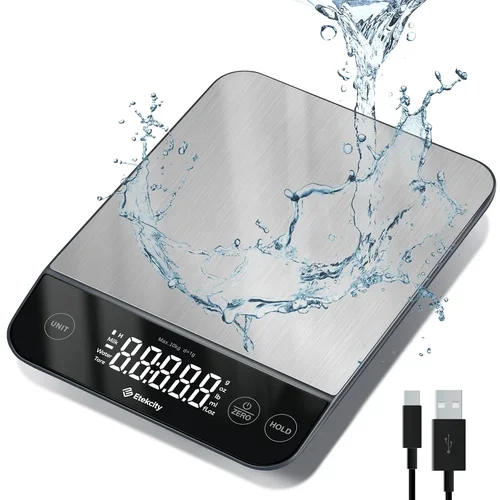
A kitchen scale is an investment, and flimsy construction leads to premature failure. Look for scales with sturdy materials like stainless steel platforms (which resist stains and corrosion), reinforced plastic bases, and sealed buttons to prevent liquid damage. Avoid models with thin, wobbly platforms or loose hinges. The load cell—the internal sensor—should be well-protected against overloading. Many premium scales include overload protection that prevents damage if you accidentally place too much weight. Additionally, consider where you’ll place the scale: if it lives on a cluttered countertop, a more robust build will withstand bumps and spills better than a delicate unit.
4. Features and Functionality
Modern kitchen scales offer a range of features beyond basic weighing. The tare function (zeroing out the weight of a container) is essential—look for one-touch tare buttons that respond quickly. Some scales offer dual units (grams, ounces, pounds, milliliters), which is helpful for international recipes or liquid ingredients. Advanced models include timers, nutritional calculators, portion control guides, or even Bluetooth connectivity to sync with apps like MyFitnessPal or Yummly. While these extras can be convenient, they also increase cost and complexity. Ask yourself: do you really need a scale that tracks calories, or will a simple, reliable model suffice? For most home users, core functionality—accuracy, tare, and unit conversion—is more valuable than gimmicks.
5. Platform Size and Shape (Round vs. Square)
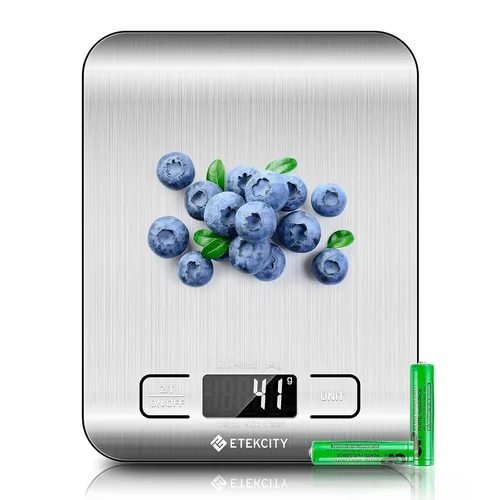
This is where the round versus square debate truly matters. Round scales typically have smaller footprints, making them ideal for compact kitchens or drawers with limited space. Their curved edges can also make cleaning slightly easier. However, round platforms may not accommodate larger bowls or rectangular containers as well, potentially requiring you to use smaller vessels or weigh ingredients in batches. Square scales, on the other hand, offer more usable surface area and better stability for bowls, mixing trays, or cutting boards. They’re especially useful for meal preppers who weigh entire meals in containers. Consider your typical workflow: if you often use wide mixing bowls, a square scale is likely more practical. If counter space is tight and you use small bowls or directly weigh ingredients on the platform, a round model could be perfect.
6. Power Source and Battery Life
Most digital kitchen scales run on AAA or AA batteries, though some premium models include rechargeable lithium-ion batteries via USB-C. Battery life varies widely—from 50 hours on basic models to over 2,000 hours on energy-efficient units. Look for auto-off features that conserve power when the scale is idle. Avoid scales that drain batteries quickly or lack low-battery indicators, as this can lead to mid-recipe failures. Rechargeable models are eco-friendly and cost-effective long-term but may require more upfront investment. If you use your scale daily, a rechargeable option with a long-lasting battery is worth considering.
7. Ease of Use and Display Readability
A scale’s interface should be intuitive and its display easy to read under various lighting conditions. Backlit LCD screens are essential for dim kitchens or early-morning baking sessions. Large digits (at least 0.5 inches tall) reduce eye strain, especially for older users. Buttons should be responsive and clearly labeled—avoid scales with tiny, poorly marked controls. Some models feature touch-sensitive panels, which look sleek but can be frustrating if they don’t respond reliably. Test the layout: can you operate it with flour-dusted hands? Is the tare button easily accessible? User experience matters just as much as technical specs.
8. Brand Reputation and Customer Support
Stick with established brands known for quality and reliability. OXO, Escali, and GreaterGoods consistently receive high marks for customer service and product longevity. Check warranty terms—most reputable brands offer at least a 1–2 year warranty, with some extending to 5 years. Read user reviews on multiple platforms (Amazon, Best Buy, Reddit) to spot recurring issues like calibration drift, button failure, or poor售后 support. A brand that stands behind its products will replace defective units promptly and provide troubleshooting guidance. Avoid unknown brands with no verifiable track record, even if they appear cheaper.
Different Types of Buying Guide

Common Buying Mistakes to Avoid
❌ Mistake: Prioritizing Price Over Accuracy
Why it’s bad: The cheapest scales often sacrifice sensor quality, leading to inconsistent readings that ruin recipes. A $12 scale might seem like a bargain until your cake collapses because the flour was off by 20 grams.
What to do instead: Invest in a mid-range scale ($30–$50) from a reputable brand. The slight upfront cost pays off in reliability and longevity.
❌ Mistake: Ignoring Platform Shape for Your Cooking Style
Why it’s bad: Choosing a round scale when you regularly use large mixing bowls forces you to weigh in batches or transfer ingredients, increasing mess and error.
What to do instead: Match the scale shape to your typical containers. Square for bowls, round for direct weighing or small spaces.
❌ Mistake: Overlooking Tare Functionality
Why it’s bad: Without a reliable tare button, you’ll constantly subtract container weights manually, which is time-consuming and prone to math errors.
What to do instead: Ensure the scale has a responsive, one-touch tare function that works instantly—even with heavy bowls.
❌ Mistake: Buying Based Solely on Aesthetics
Why it’s bad: A sleek, colorful scale might look great on your counter, but if it lacks durability or accurate sensors, it becomes a decorative paperweight.
What to do instead: Focus on performance specs first, then choose a design that complements your kitchen.
❌ Mistake: Neglecting Unit Conversion Options
Why it’s bad: Recipes from different countries use different units. A scale that only displays ounces will frustrate anyone following European baking guides.
What to do instead: Choose a scale with multiple units (grams, oz, lbs, ml) and easy switching between them.
❌ Mistake: Assuming All “Digital” Scales Are Equal
Why it’s bad: Digital just means it has an electronic display—not that it’s accurate or well-built. Many budget digital scales use low-quality sensors.
What to do instead: Research the sensor type and read real-user reviews about consistency over time.
❌ Mistake: Skipping the Warranty Check
Why it’s bad: Scales can fail due to power surges, drops, or manufacturing defects. Without a warranty, you’re stuck with a broken tool.
What to do instead: Always verify warranty length and coverage before purchasing. Aim for at least 1–2 years.
Budget Guidelines: How Much Should You Spend?
Entry-Level ($10–$25): These scales are fine for occasional use—think measuring pasta or checking package weights. Expect basic accuracy (1–2g increments), plastic builds, and limited features. Brands like Amazon Basics or generic imports dominate this tier. Avoid if you bake regularly.
Mid-Range ($26–$60): This is the sweet spot for most home cooks. You’ll find reliable 0.1g precision, stainless steel platforms, strong tare functions, and decent battery life. Models from OXO, Escali, and GreaterGoods excel here. Ideal for baking, meal prep, and everyday cooking.
Premium ($61–$120): Designed for enthusiasts and semi-professionals, these scales offer enhanced durability, faster response times, larger displays, and sometimes smart features like timers or app connectivity. Great for serious bakers, keto dieters, or small catering operations.
Luxury ($120+): Top-tier scales boast commercial-grade components, 10kg+ capacity, IP-rated water resistance, and advanced tech like Bluetooth syncing or ingredient databases. These are overkill for most households but invaluable in professional kitchens or for tech-forward users who want seamless integration with nutrition apps.
Expert Tips for Getting the Best Deal
- Buy during seasonal sales: Kitchen scales often go on sale during Black Friday, Prime Day, and post-holiday clearance events. Sign up for retailer newsletters to get early alerts.
- Check refurbished or open-box deals: Reputable sellers like Amazon Renewed or Best Buy Outlet offer certified pre-owned scales at 20–40% off, often with full warranties.
- Compare across retailers: Prices vary significantly between Amazon, Target, Walmart, and specialty kitchen stores. Use price-tracking tools like Honey or CamelCamelCamel to spot drops.
- Read the fine print on returns: Ensure the retailer offers at least a 30-day return window. Some stores charge restocking fees for electronics.
- Test in-store if possible: Visit a local kitchen supply store to feel the build quality, test button responsiveness, and check display clarity under different lights.
- Consider long-term value: A $50 scale that lasts 5 years is a better deal than a $20 model that fails in 6 months.
- Look for bundle deals: Some brands include calibration weights, protective covers, or recipe books—adding extra value.
- Verify compatibility with your workflow: If you use specific bowl sizes or meal prep containers, bring them to the store or measure them beforehand to ensure fit.

Frequently Asked Questions
Q: Are round kitchen scales less accurate than square ones?
A: No—accuracy depends on the internal sensor, not the shape. Both round and square scales can be highly precise. However, square scales may offer better stability for larger containers, which can indirectly improve measurement consistency.
Q: Can I weigh liquids on a kitchen scale?
A: Yes, most digital scales include a milliliter (ml) mode that converts weight to volume based on water’s density (1g = 1ml). For other liquids like oil or honey, check their specific gravity or use a conversion chart.
Q: How often should I calibrate my kitchen scale?
A: High-quality scales rarely need manual calibration. However, if readings seem off, use known weights (like coins or calibration weights) to test accuracy. Some premium models have auto-calibration features.
Q: Do I really need a 0.1g scale for home cooking?
A: It depends. For baking bread, cakes, or pastries—yes. Small discrepancies in flour, yeast, or leavening agents can affect texture and rise. For general cooking (meat, vegetables), 1g precision is usually sufficient.
Q: Can kitchen scales measure in fractions of ounces?
A: Most digital scales display decimals (e.g., 0.2 oz), not fractions. If you prefer fractions, look for models with dedicated fraction displays—though these are rare and often less precise.
Q: Are smart scales worth the extra cost?
A: Only if you actively use nutrition tracking apps or follow complex recipes with ingredient databases. For most users, the added cost and potential app bugs aren’t justified.
Q: How do I clean my kitchen scale?
A: Wipe the platform with a damp cloth and mild detergent. Avoid submerging the unit or using harsh chemicals. For sticky residues, use a soft brush. Never spray liquid directly onto the scale.
Q: Will a kitchen scale work on a wooden table?
A: Yes, but ensure the surface is flat and stable. Uneven or soft surfaces can cause inaccurate readings. Avoid placing scales on silicone mats or textured counters unless specified as compatible.
Q: Can I use a kitchen scale for postage?
A: Only if it’s specifically designed for mail and has high precision at very low weights (under 100g). Most kitchen scales aren’t calibrated for postal accuracy and may violate shipping regulations if used improperly.
Q: What’s the difference between a strain gauge and EMFR sensor?
A: Strain gauges are common in mid-range scales—they’re reliable and affordable. EMFR (electromagnetic force restoration) sensors, found in premium models, offer faster response and higher precision but cost more. For home use, strain gauges are usually sufficient.
Our Final Recommendations
Best for Budget-Conscious Buyers: GreaterGoods Digital Food Scale ($25) – Offers 0.1g precision, stainless steel platform, and excellent tare function at an unbeatable price. Perfect for beginners and casual cooks.
Best Overall Value: OXO Good Grips Stainless Steel Food Scale ($45) – Combines durability, accuracy, and user-friendly design. Its square platform accommodates bowls well, and the pull-out display prevents shadowing.
Best Premium Option: Escali Primo P115C ($60) – Renowned for consistency, this scale features a sleek round design, 0.1g resolution, and a 5kg capacity. Ideal for bakers who value precision and minimalist aesthetics.
Best for Beginners: Amazon Basics Stainless Steel Digital Scale ($18) – Simple, reliable, and affordable. Great for those new to weighing ingredients who want to try it without a big investment.
Best for Advanced Users: My Weigh KD8000 ($120) – A commercial-grade scale with 8kg capacity, 0.1g precision, and a large square platform. Includes a removable stainless steel bowl and overload protection—perfect for serious cooks and small businesses.
Conclusion: Making the Right Choice
Choosing the best kitchen scale isn’t just about picking the shiniest gadget or the cheapest option—it’s about aligning the tool’s capabilities with your real-world needs. Whether you lean toward a round or square design depends less on aesthetics and more on how you cook: do you need space for big bowls, or do you value a compact footprint? Accuracy, build quality, and ease of use should always trump flashy features. Remember, the right scale doesn’t just measure ingredients—it builds confidence in your cooking, ensures consistency in your results, and saves you time and frustration in the long run.
Take stock of your habits. Are you a weekend baker or a daily meal prepper? Do you follow metric recipes or stick to cups and spoons? Once you understand your priorities, use this guide’s framework to compare models objectively. Don’t rush the decision—read reviews, check warranties, and consider where and how you’ll use the scale. And when you do find the right one, treat it well: keep it clean, store it safely, and it will serve you faithfully for years.
Ultimately, the best kitchen scale is the one you’ll actually use—not the one that looks impressive in a catalog. So prioritize function over form, invest in quality within your budget, and let precision become your secret ingredient. Happy weighing!