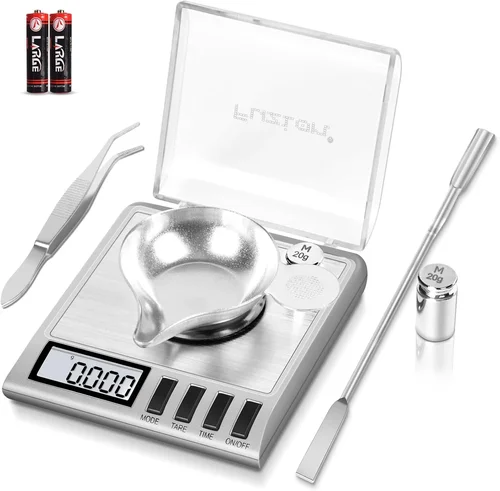
When it comes to baking, precision isn’t just a preference—it’s a requirement. Whether you’re crafting artisan sourdough, delicate pastries, or perfectly seasoned bread, the difference between success and failure often comes down to fractions of a gram. Two of the most critical ingredients in any baker’s arsenal—yeast and salt—are used in such small quantities that measuring them accurately with standard kitchen tools is nearly impossible. A pinch too much salt can ruin an entire batch, while insufficient yeast can leave your dough flat and lifeless. This is where a high-precision scale designed for micro-measurements becomes not just helpful, but essential.
In recent years, the demand for accurate, reliable kitchen scales capable of measuring minute amounts has surged. Home bakers, culinary students, and even professional pastry chefs are turning to digital microscales that can detect changes as small as 0.01 grams. These devices have evolved far beyond basic weighing functions, incorporating features like tare capability, multiple units, auto-calibration, and even smartphone connectivity. Yet, with so many options flooding the market—ranging from budget-friendly models to high-end laboratory-grade instruments—it’s easy to feel overwhelmed. That’s exactly why this guide exists: to cut through the noise and help you find the best scale for measuring yeast and salt, tailored to your specific needs, skill level, and budget.
By the end of this comprehensive guide, you’ll have a crystal-clear understanding of what makes a scale truly effective for micro-ingredient measurement. You’ll learn how to evaluate key performance metrics like readability, repeatability, and linearity, and understand why build quality matters more than you might think. We’ll walk you through the different types of scales available, compare popular models, and highlight common pitfalls to avoid. Whether you’re a weekend baker looking to improve consistency or a serious home chef aiming for professional-level results, this guide will equip you with the knowledge to make a confident, informed purchase.
—

What to Look for When Buying a Scale for Measuring Yeast and Salt
1. Readability and Precision
When measuring ingredients like yeast and salt, precision is non-negotiable. Readability refers to the smallest increment a scale can display—typically measured in grams or ounces. For micro-ingredients, you’ll want a scale with a readability of at least 0.01g (10 milligrams). Anything less precise, such as 0.1g increments, may not capture the subtle differences needed for consistent results.
But precision isn’t just about the smallest number on the display. It also involves how consistently the scale returns the same reading when the same weight is measured multiple times—a concept known as repeatability. A scale might claim 0.01g readability, but if it fluctuates between 0.02g and 0.04g when measuring the same 0.03g of yeast, it’s unreliable. Look for models that emphasize both high readability and excellent repeatability in their specifications.
2. Capacity and Range
While precision is crucial, you also need a scale that can handle the full range of your baking needs. Most micro-ingredient scales offer a maximum capacity between 50g and 500g. For yeast and salt, even 50g is more than enough—most recipes call for less than 10g total. However, if you plan to use the scale for other ingredients like flour, sugar, or butter, a higher capacity becomes valuable.
The ideal range balances precision at low weights with usability at higher weights. Some scales use dual-range technology, offering high precision (e.g., 0.01g) up to a certain weight (say, 100g), then switching to lower precision (0.1g) beyond that. This design ensures accuracy where it matters most—for micro-ingredients—while still allowing you to weigh larger quantities when needed.
3. Build Quality and Durability
A scale’s construction directly impacts its longevity and performance. Cheap plastic housings, flimsy buttons, and thin glass platforms may save money upfront but often lead to premature failure. Look for scales made with reinforced ABS plastic, stainless steel platforms, and sealed keypads to resist moisture and flour dust—common hazards in any kitchen.
Durability also extends to internal components. High-quality load cells (the sensors that detect weight) are essential for consistent performance over time. Scales with metal load cells tend to outperform those with plastic or ceramic alternatives. Additionally, check for features like overload protection, which prevents damage if you accidentally place too much weight on the platform.
4. Features and Functionality
Modern microscales come packed with features that enhance usability and accuracy. Here are the most important ones to consider:
– Tare Function: Allows you to zero out the weight of a container, so you only measure the ingredient inside. Essential for measuring yeast or salt directly into a mixing bowl.
– Unit Conversion: Look for scales that switch between grams, ounces, pounds, and even specialized units like grains or carats (useful for jewelers or lab work).
– Auto-Off and Low Battery Indicator: Helps conserve battery life and alerts you before the scale dies mid-recipe.
– Calibration Mode: Enables you to recalibrate the scale using certified calibration weights, ensuring long-term accuracy.
– Backlit Display: Improves visibility in dimly lit kitchens or early morning baking sessions.
– Smart Connectivity (Bluetooth/Wi-Fi): Some premium models sync with apps to log measurements, track recipes, or provide real-time feedback.
While advanced features are nice, avoid overpaying for functions you’ll never use. Focus on core capabilities that directly support your baking workflow.
5. Brand Reputation and Reliability
Not all scale manufacturers are created equal. Established brands like American Weigh, MyWeigh, Ozeri, and Escali have built reputations for producing reliable, accurate scales over many years. They often invest more in R&D, quality control, and customer support.
Research brand history and customer service policies. Do they offer responsive technical support? Are replacement parts available? Have there been recalls or widespread complaints about drift or failure? A reputable brand may cost slightly more, but the peace of mind and long-term reliability are worth it.
6. Warranty and Customer Support
A solid warranty is a strong indicator of a manufacturer’s confidence in their product. Most quality microscales come with a 1- to 3-year warranty, covering defects in materials and workmanship. Some premium brands even offer lifetime warranties or free recalibration services.
Customer support matters too. If your scale starts drifting after six months, can you easily contact someone for help? Check online reviews for mentions of support responsiveness. Brands with dedicated support teams (phone, email, live chat) tend to resolve issues faster than those relying solely on automated systems.
7. Size and Portability
Even in a home kitchen, space is precious. A compact scale that fits easily on a countertop or stores in a drawer is ideal. However, don’t sacrifice stability for size—larger platforms provide better balance for small containers and reduce the risk of tipping.
Portability becomes more important if you plan to use the scale in multiple locations (e.g., at a friend’s house, in a classroom, or during travel). Lightweight designs with protective cases are great for on-the-go use, but ensure they don’t compromise accuracy due to vibration or movement.
8. User Reviews and Real-World Performance
Spec sheets tell part of the story, but user reviews reveal the rest. Look for feedback on long-term accuracy, ease of use, and durability. Pay attention to comments about drift (when readings change over time without input), calibration issues, or problems with the tare function.
Sites like Amazon, Best Buy, and specialty baking forums often contain detailed, honest reviews from people who’ve used the scale in real baking scenarios. Watch out for fake or incentivized reviews—focus on verified purchases and detailed experiences.
—
Different Types of Scales for Measuring Yeast and Salt

Each type serves a distinct purpose. Basic pocket scales are great for occasional use but lack durability and advanced features. High-precision kitchen scales strike the best balance for most home bakers, offering professional-level accuracy at a reasonable price. Smart scales appeal to those who love technology and data tracking, while lab-grade models are overkill for everyday use but indispensable in commercial or scientific settings. Multi-function scales offer flexibility, making them ideal for bakers who weigh everything from yeast to flour in one session.
—
Common Buying Mistakes to Avoid
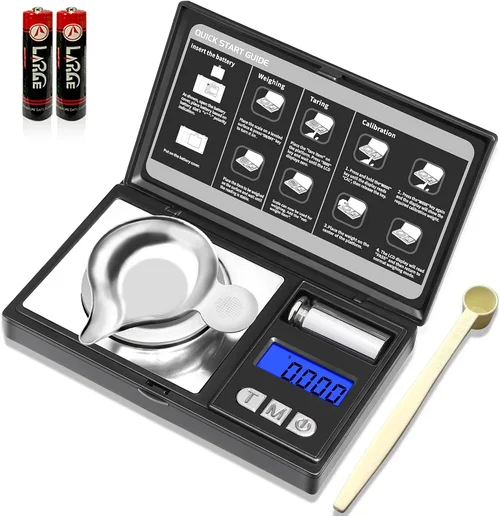
❌ Mistake: Prioritizing Price Over Precision
Why it’s bad: The cheapest scales often cut corners on sensor quality and calibration, leading to inconsistent readings. A $10 scale might seem like a bargain, but if it can’t reliably measure 0.05g of yeast, it’s essentially useless for serious baking.
What to do instead: Invest in a scale with proven accuracy, even if it costs a bit more. Think of it as a long-term tool—not a disposable gadget. A $50 scale that lasts five years and delivers perfect results is far more cost-effective than replacing three $15 models that fail within months.
❌ Mistake: Ignoring Calibration Requirements
Why it’s bad: Over time, all scales drift due to temperature changes, humidity, or mechanical stress. Without regular calibration, your measurements become increasingly inaccurate, leading to failed recipes.
What to do instead: Choose a scale that supports manual calibration and invest in a set of certified calibration weights (typically 10g, 50g, and 100g). Calibrate your scale monthly or after moving it to a new environment.
❌ Mistake: Overlooking Platform Material
Why it’s bad: Plastic platforms can warp or absorb moisture, affecting stability and accuracy. They’re also harder to clean and more prone to static, which can cause fine powders like yeast to cling unevenly.
What to do instead: Opt for stainless steel platforms. They’re non-porous, easy to wipe clean, resist corrosion, and provide a stable, non-static surface ideal for micro-ingredients.
❌ Mistake: Buying Without Testing Tare Function
Why it’s bad: Some scales have slow or inconsistent tare responses, making it difficult to measure small amounts accurately. If the tare doesn’t reset instantly or drifts after activation, you risk adding too much ingredient.
What to do instead: Test the tare function before buying—either in-store or via video reviews. Place a small bowl on the scale, press tare, then add a pinch of salt. The display should show only the salt’s weight immediately.
❌ Mistake: Choosing a Scale with Poor Battery Life
Why it’s bad: Frequent battery changes interrupt your workflow and increase long-term costs. Scales that drain batteries quickly may also indicate inefficient circuitry.
What to do instead: Look for models with auto-off timers (30–60 seconds of inactivity) and low-battery warnings. Rechargeable lithium-ion batteries are a plus, but ensure they don’t compromise portability.
❌ Mistake: Assuming All 0.01g Scales Are Equal
Why it’s bad: Readability alone doesn’t guarantee accuracy. Two scales with 0.01g readability can differ significantly in real-world performance due to sensor quality, firmware, and environmental sensitivity.
What to do instead: Read detailed reviews that test accuracy across multiple weights. Look for mentions of linearity (how well the scale performs at different points in its range) and stability in varying conditions.
❌ Mistake: Neglecting Return Policies
Why it’s bad: Even the best-reviewed scale might not meet your expectations. Without a flexible return policy, you could be stuck with a device that doesn’t suit your needs.
What to do instead: Buy from retailers with generous return windows (30 days or more) and clear policies. Avoid third-party sellers with restrictive terms unless verified and trusted.
—
Budget Guidelines: How Much Should You Spend?
– Entry-Level ($15–$30): These scales are suitable for casual bakers who only occasionally need micro-measurements. Expect basic 0.01g readability, plastic construction, and limited features. Models like the American Weigh Blade Series fall here. While usable, they may lack durability and long-term accuracy.
– Mid-Range ($40–$80): This is the sweet spot for most home bakers. Scales in this range offer reliable 0.01g precision, stainless steel platforms, tare function, and solid build quality. Brands like MyWeigh and Ozeri dominate this category. You’ll get excellent value without overspending.
– Premium ($90–$150): Ideal for enthusiasts and frequent bakers. These scales include advanced features like Bluetooth connectivity, app integration, dual-range weighing, and enhanced calibration options. The Escali Primo or MyWeigh iBalance i200 are strong contenders here.
– Luxury ($200+): Reserved for professionals or serious hobbyists who demand laboratory-level precision. These scales often include environmental sensors (temperature, humidity), anti-vibration bases, and full calibration suites. They’re overkill for most home kitchens but invaluable in commercial bakeries or food labs.
—
Expert Tips for Getting the Best Deal
– Buy During Seasonal Sales: Look for discounts during Black Friday, Cyber Monday, or post-holiday clearance events. Many retailers offer 20–30% off kitchen gadgets in January.
– Check Manufacturer Websites: Brands like MyWeigh and American Weigh often run exclusive promotions or bundle deals (e.g., scale + calibration weights) not available elsewhere.
– Consider Refurbished Models: Certified refurbished scales from reputable sellers come with warranties and can save you 20–40%. Ensure they include full calibration and testing.
– Read the Fine Print on Warranties: Some warranties only cover manufacturing defects, not wear and tear. Others require registration within 30 days of purchase.
– Test Before Committing: If possible, try the scale in person. Place a known weight (like a US penny, which weighs 2.5g) and check consistency across multiple readings.
– Bundle with Calibration Weights: Buying a calibration set separately can cost $20–$40. Some kits include them for free—look for these deals.
– Avoid Overpaying for Brand Names: While brand reputation matters, don’t pay a premium just for the logo. Compare specs side-by-side and prioritize performance over prestige.
– Monitor Price Drops: Use tools like CamelCamelCamel (for Amazon) or Honey to track price history and get alerts when your desired scale goes on sale.
—

Frequently Asked Questions
Q: Can I use a regular kitchen scale for yeast and salt?
A: Most standard kitchen scales have a readability of 1g or 0.1g, which is insufficient for measuring yeast and salt accurately. Since these ingredients are used in amounts as small as 0.5g to 5g, even a 0.1g error can significantly impact your recipe. A microscale with 0.01g precision is strongly recommended.
Q: How often should I calibrate my scale?
A: For home use, calibrate your scale every 1–3 months, or whenever you notice inconsistent readings. If you move the scale frequently or use it in varying temperatures, calibrate more often. Always recalibrate after dropping or jarring the device.
Q: Are digital scales affected by temperature and humidity?
A: Yes. Extreme temperatures can cause metal components to expand or contract, affecting sensor accuracy. High humidity may lead to condensation inside the scale or on the platform. Store your scale in a cool, dry place and allow it to acclimate to room temperature before use.
Q: What’s the difference between readability and accuracy?
A: Readability is the smallest increment the scale can display (e.g., 0.01g). Accuracy refers to how close the reading is to the true weight. A scale can have high readability but poor accuracy if it’s not properly calibrated or has a faulty sensor.
Q: Can I measure yeast directly on the scale platform?
A: It’s not recommended. Yeast is hygroscopic (absorbs moisture) and can stick to surfaces, leading to inaccurate readings and contamination. Always use a small dish or piece of parchment paper and tare the weight.
Q: Do I need a scale with multiple units?
A: While grams are standard in baking, having options like ounces or grains can be helpful for international recipes or specialized applications. However, if you only bake with metric measurements, this feature is less critical.
Q: How long do microscales typically last?
A: With proper care and regular calibration, a quality microscale can last 5–10 years. Cheaper models may fail within 1–2 years due to sensor degradation or mechanical wear.
Q: Are rechargeable scales worth it?
A: Rechargeable models eliminate the need for constant battery replacements and are more eco-friendly. However, ensure the charging port is protected from flour and moisture. USB-C charging is a modern convenience worth seeking.
Q: Can I use a jewelry scale for baking?
A: Jewelry scales often have high precision (0.01g or better) and can work in a pinch, but they’re not designed for kitchen environments. They lack tare functions, have small platforms, and may not withstand moisture or frequent use. A dedicated kitchen microscale is a better long-term investment.
Q: What should I do if my scale starts drifting?
A: First, recalibrate using certified weights. If the problem persists, check for environmental factors (vibrations, drafts, temperature changes). If none resolve the issue, contact the manufacturer—it may be a sign of sensor failure.
—
Our Final Recommendations
– Best for Budget-Conscious Buyers: American Weigh Blade 200 – At under $25, this compact scale offers 0.01g readability, a stainless steel platform, and reliable performance for occasional use. Ideal for beginners or those on a tight budget.
– Best Overall Value: MyWeigh iBalance i200 – Priced around $60, this scale delivers professional-grade accuracy, dual-range weighing (0.01g up to 200g), and a durable build. It’s the top choice for serious home bakers who want precision without overspending.
– Best Premium Option: Escali Primo Digital Scale – With a sleek design, 0.05g readability (slightly less than others but highly accurate), and a 10-year warranty, this scale is perfect for those who value longevity and brand trust. Great for all-around kitchen use.
– Best for Beginners: Ozeri Pronto Digital Kitchen Scale – Simple to use, affordable ($35), and equipped with tare and unit conversion. Its large display and intuitive buttons make it ideal for first-time scale users.
– Best for Advanced Users: American Weigh AWS-100-BLK – This high-precision scale features 0.01g readability, a backlit display, and includes calibration weights. It’s built for bakers who demand consistency and are willing to invest in top-tier performance.
—
Conclusion: Making the Right Choice
Choosing the right scale for measuring yeast and salt isn’t just about finding the most precise device—it’s about finding the one that fits your baking style, budget, and long-term goals. Precision matters, but so do durability, ease of use, and support. A scale that delivers consistent 0.01g readings today is worthless if it breaks in six months or becomes inaccurate due to poor calibration.
As you weigh your options, remember that the best scale is the one you’ll actually use. Don’t fall for flashy features you don’t need, and don’t compromise on core performance for a lower price. Invest in a tool that empowers your creativity, ensures consistency, and grows with your skills.
Whether you’re kneading your first loaf of sourdough or fine-tuning a complex pastry recipe, the right microscale will be your silent partner in the kitchen—helping you turn intention into perfection, one gram at a time. So take the time to research, compare, and choose wisely. Your future baked goods will thank you.