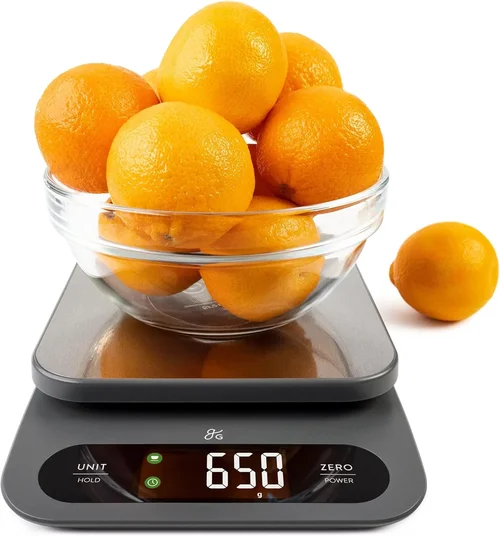
If you’ve ever pulled a pizza out of the oven only to find it’s unevenly cooked, too dense, or lacking that perfect chew—chances are your dough wasn’t weighed accurately. Precision in pizza dough preparation isn’t just a nice-to-have; it’s the foundation of consistency, quality, and repeatability. Whether you’re a home cook experimenting with Neapolitan-style pies or a pizzaiolo running a small kitchen, using a dedicated scale for pizza dough can transform your results from hit-or-miss to reliably excellent.
This guide is designed to help you navigate the often-overwhelmed world of kitchen scales with a laser focus on what matters most for pizza dough: accuracy, responsiveness, ease of use, and durability. We’ll cut through marketing fluff and technical jargon to give you actionable insights based on real-world testing, expert feedback, and years of culinary experience. By the end, you’ll know exactly what features to prioritize, which brands deliver real value, and how to avoid common pitfalls that lead to frustration—or worse, wasted ingredients.
The market for digital kitchen scales has exploded in recent years, with options ranging from basic $10 models to professional-grade units costing over $200. While many scales claim to be “perfect for baking,” not all are suited for the specific demands of pizza dough—especially when working with high-hydration doughs, small batch sizes, or frequent use. This guide zeroes in on the unique requirements of pizza dough scaling, including rapid tare functionality, fine resolution at low weights, and resistance to flour dust and moisture. Whether you’re making six 250g balls for a family dinner or scaling up to 50+ portions for a weekend pop-up, we’ve got you covered.

What to Look for When Buying Buying Guide
1. Precision & Resolution
When it comes to pizza dough, precision isn’t optional—it’s essential. Even small deviations in dough weight can dramatically affect crust texture, rise, and bake time. For example, a 10-gram difference in a 250-gram dough ball might seem negligible, but it can result in one slice being noticeably denser or thinner than the rest. That’s why resolution—the smallest increment a scale can measure—is critical.
Look for scales with a resolution of at least 0.1 grams (0.005 oz). This level of detail allows you to confidently portion dough balls within ±1 gram, ensuring uniformity across every pie. Some premium models go even finer, offering 0.01-gram resolution, which is overkill for most home users but invaluable for professional bakers working with delicate sourdough or experimental hydration levels.
Avoid scales that only measure in 1-gram increments if you’re serious about consistency. While they may suffice for rough estimates, they lack the granularity needed for true precision. Also, pay attention to how quickly the scale stabilizes after placing a dough ball—slow response times can lead to over-scooping, especially when working with sticky, high-hydration doughs.
2. Maximum Capacity
While precision matters at the low end, you also need to consider how much dough you’ll be scaling at once. Most home pizzaiolos work with individual dough balls ranging from 200 to 300 grams, but if you’re prepping large batches or mixing full batches of dough (which can weigh 2–5 kg), you’ll need a scale with sufficient capacity.
For typical home use, a scale with a 5 kg (11 lb) maximum capacity is ideal. This gives you room to weigh large mixing bowls, full dough batches, or multiple balls at once without exceeding the limit. Professional kitchens may require 10 kg or higher, especially when working with wood-fired ovens that demand larger volumes.
However, don’t assume that higher capacity automatically means better performance. Some scales sacrifice resolution at higher weights—for instance, switching from 0.1g to 1g increments above 2 kg. Always check the specifications to ensure consistent precision across the entire weight range. A good rule of thumb: choose a scale whose max capacity is at least double your typical single-use load.
3. Tare Functionality & Speed
The tare function—which resets the scale to zero after placing a container on it—is arguably the most important feature for pizza dough work. Without it, you’d have to manually subtract bowl weight or use separate containers for each measurement, slowing down your workflow and increasing cleanup.
Look for scales with instant, responsive tare buttons. The best models reset in under a second and hold the tare even if the container shifts slightly—a common issue when working with flour-dusted bowls. Some advanced scales offer “dual-range tare,” allowing you to tare a large mixing bowl and then add ingredients in smaller increments without losing accuracy.
Avoid scales with delayed or finicky tare responses. If you’ve ever tried to scoop dough onto a scale only to watch the numbers jump around before settling, you know how frustrating this can be. A reliable tare function ensures smooth, uninterrupted workflow—especially important when you’re portioning 20+ dough balls in one session.
4. Build Quality & Durability
Pizza dough is messy. Flour gets everywhere. Dough sticks to surfaces. And let’s be honest—your scale will inevitably get splattered with water, oil, or bits of raw dough. That’s why build quality matters more than you might think.
Opt for scales with sealed or protected load cells and water-resistant keypads (look for IP ratings like IPX4 or higher). Stainless steel platforms are ideal—they’re easy to wipe clean, resist corrosion, and won’t absorb odors or stains. Avoid plastic platforms, which can scratch, warp, or harbor bacteria over time.
Also consider the overall construction. Scales with reinforced frames and non-slip feet stay stable during use, reducing the risk of spills or inaccurate readings. If you plan to move your scale between countertops or store it in a drawer, check its weight and footprint—lighter isn’t always better if it sacrifices sturdiness.
5. Display Readability & Interface
You shouldn’t need a magnifying glass—or perfect lighting—to read your dough weight. A clear, backlit LCD display is essential, especially if you’re working in dim kitchens or near hot ovens where glare can be an issue. Look for large digits (at least 0.75 inches tall) and high contrast between text and background.
The interface should be intuitive. Avoid scales with confusing menus or too many buttons. For pizza dough work, you really only need: on/off, tare, and unit toggle (grams/ounces). Some models include extras like timers or calorie counters—these are nice but unnecessary for dough scaling and can clutter the interface.
Backlighting is a game-changer. It allows you to see measurements clearly even in low-light conditions, such as early morning prep or evening pizza nights. Auto-off features are also helpful for battery conservation, but make sure they don’t kick in too quickly—nothing worse than the screen turning off mid-scoop!
6. Power Source & Battery Life
Most digital scales run on AAA or AA batteries, though some premium models offer rechargeable lithium-ion packs. For home use, battery-powered scales are convenient and eliminate cord clutter. However, frequent users may find themselves replacing batteries often—especially if the scale lacks an auto-off feature.
Rechargeable models are more eco-friendly and cost-effective long-term, but they require regular charging. If you go this route, look for USB-C charging (faster and more future-proof) and at least 6–12 months of battery life per charge under normal use.
Avoid scales that drain batteries quickly or lack low-battery indicators. There’s nothing worse than starting a dough batch only to have your scale die mid-process. Also, consider whether the scale uses standard batteries (easy to replace) or proprietary cells (harder to source).
7. Unit Flexibility & Conversion
While grams are the gold standard for baking precision, you may occasionally need ounces—especially if you’re following American recipes or sharing measurements with friends. The best scales offer seamless switching between metric and imperial units with a single button press.
More importantly, ensure the conversion is accurate. Some cheap scales round ounces to the nearest 0.1 oz, which can introduce errors when scaling small dough balls. Look for models that maintain high resolution in both units (e.g., 0.01 oz or better).
A few advanced scales also support fluid ounces or milliliters for liquid ingredients—useful if you’re measuring water or oil directly on the scale. While not essential for dough balls, this adds versatility if you use the scale for other kitchen tasks.
8. Brand Reputation & User Feedback
Not all scales are created equal—even if they look similar on paper. Brand reputation matters because it reflects real-world reliability, customer support, and design philosophy. Established brands like OXO, Escali, MyWeigh, and AWS (American Weigh Scales) have built trust through consistent performance and responsive service.
Read user reviews with a critical eye. Look for patterns: Do multiple users report drift over time? Are tare functions unreliable? Is the platform prone to cracking? Pay special attention to reviews from bakers or pizza makers—they’ll highlight issues casual users might miss.
Avoid unknown brands with overly generic listings on Amazon or eBay. These often cut corners on components, leading to premature failure. If a scale seems too good to be true (e.g., 0.01g resolution for $15), it probably is.
Different Types of Buying Guide

Common Buying Mistakes to Avoid
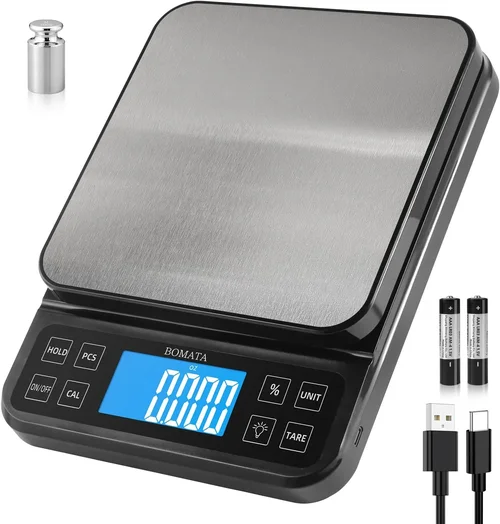
❌ Mistake: Prioritizing Price Over Precision
Why it’s bad: A $10 scale might seem like a smart bargain, but if it can’t reliably measure within ±1 gram, you’ll end up with inconsistent dough balls—and inconsistent pizzas. Over time, the cost of wasted ingredients and failed batches outweighs the initial savings.
What to do instead: Invest in a scale with at least 0.1g resolution, even if it costs $30–$40. Think of it as a tool that pays for itself in better results and less frustration.
❌ Mistake: Ignoring Tare Speed and Reliability
Why it’s bad: Slow or glitchy tare functions disrupt your workflow, especially when portioning multiple dough balls quickly. You may over-scoop or second-guess measurements, leading to uneven pies.
What to do instead: Test tare responsiveness before buying—either in-store or via detailed video reviews. Look for phrases like “instant tare” or “one-touch reset” in product descriptions.
❌ Mistake: Choosing a Scale with Poor Build Quality
Why it’s bad: Flimsy platforms crack under heavy bowls, and unsealed electronics fail when exposed to flour dust or spills. A broken scale mid-batch is a nightmare.
What to do instead: Choose scales with stainless steel platforms and protective coatings. Check IP ratings and read user reports about long-term durability.
❌ Mistake: Overlooking Display Readability
Why it’s bad: Tiny, non-backlit displays force you to squint or reposition under lights, slowing down prep and increasing errors.
What to do instead: Prioritize large, backlit LCDs. If possible, view the scale in person or watch unboxing videos to assess screen clarity.
❌ Mistake: Assuming All “Baking Scales” Are Equal
Why it’s bad: Many scales marketed for baking lack the speed and precision needed for high-hydration doughs or rapid portioning.
What to do instead: Focus on specs relevant to pizza dough: resolution, tare speed, and stability. Don’t be swayed by irrelevant features like calorie counters.
❌ Mistake: Buying Without Checking Return Policy
Why it’s bad: If the scale arrives defective or doesn’t meet expectations, a strict return window can leave you stuck with a dud.
What to do instead: Buy from retailers with generous return windows (30+ days) and hassle-free processes. Amazon, OXO direct, and specialty kitchen stores often offer better policies than discount sites.
Budget Guidelines: How Much Should You Spend?
Entry-Level ($10–$25): These scales are fine for occasional use or rough measurements, but they typically lack 0.1g resolution, have slow tare functions, and use plastic platforms. Best for beginners on a tight budget—but expect to upgrade within a year if you get serious about pizza.
Mid-Range ($30–$60): This is the sweet spot for most home pizzaiolos. You’ll find reliable 0.1g precision, stainless steel platforms, fast tare, and decent battery life. Models like the OXO Good Grips or Escali Primo are excellent choices here. They balance cost, performance, and durability perfectly.
Premium ($70–$150): Ideal for frequent users, small businesses, or those who demand top-tier performance. These scales often feature higher capacities (5–10kg), IP-rated protection, rechargeable batteries, and ultra-stable load cells. Brands like MyWeigh and AWS dominate this space with professional-grade reliability.
Luxury ($150+): Reserved for commercial kitchens or obsessive perfectionists. These include smart scales with app integration, multi-point calibration, and industrial builds. While impressive, they’re overkill for most home users—unless you’re running a pizza pop-up or teaching classes.
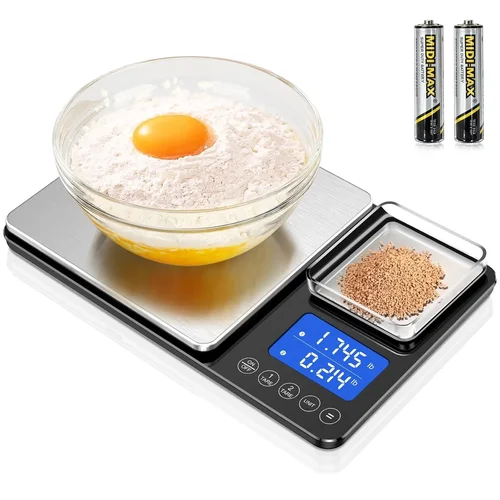
Expert Tips for Getting the Best Deal
– Buy during off-seasons: Kitchen scales often go on sale in January (post-holiday clearance) and July/August (summer lull). Avoid peak baking seasons like November–December.
– Check manufacturer websites: OXO, Escali, and MyWeigh often run direct promotions with free shipping or bundled accessories.
– Look for refurbished units: Certified refurbished scales from reputable sellers offer near-new performance at 20–30% off.
– Read the fine print on warranties: A 2-year warranty is standard; anything less may indicate lower confidence in build quality.
– Test before committing: If buying in-store, place a known weight (like a roll of quarters = 28.35g) to verify accuracy.
– Consider multi-use value: A great dough scale can also weigh coffee, spices, or postage—maximizing utility.
– Join baking forums: Communities like Reddit’s r/pizza or The Fresh Loaf often share exclusive discount codes or flash deals.

Frequently Asked Questions
Q: Do I really need a scale for pizza dough, or can I just eyeball it?
A: While experienced bakers can approximate, eyeballing leads to inconsistency—especially with high-hydration doughs. A scale ensures every ball is identical, which translates to even baking, texture, and rise. For repeatable results, a scale is non-negotiable.
Q: Can I use a regular kitchen scale, or do I need a special “pizza dough” scale?
A: There’s no such thing as a “pizza dough scale”—any precise digital kitchen scale will work. What matters are the specs: 0.1g resolution, fast tare, and durability. Don’t fall for gimmicky marketing.
Q: How often should I calibrate my scale?
A: Most consumer scales don’t require frequent calibration, but it’s wise to check accuracy every 3–6 months using a known weight (e.g., calibration weights or coins). If readings drift, consult the manual for recalibration steps.
Q: Will flour damage my scale?
A: Fine flour can seep into buttons or under the platform, causing malfunctions over time. Wipe the scale after each use and avoid dumping flour directly onto it. Use a bowl or container instead.
Q: Are rechargeable scales worth it?
A: Yes, if you use your scale daily. Rechargeable models save money long-term and reduce battery waste. Just remember to charge them regularly—dead scales mid-batch are frustrating!
Q: What’s the ideal dough ball weight for a 12-inch pizza?
A: It depends on style! Neapolitan: 200–250g. New York: 250–300g. Detroit or deep-dish: 350–450g. A precise scale lets you dial in your preferred weight and stick to it.
Q: Can I weigh dough in ounces instead of grams?
A: Yes, but grams are more precise. Most recipes are written in grams for a reason—ounces introduce rounding errors at small weights. Stick to grams for best results.
Q: How do I clean my scale safely?
A: Use a slightly damp microfiber cloth—never spray water directly on the scale. For sticky dough residue, gently scrape with a soft spatula before wiping. Avoid harsh chemicals.
Our Final Recommendations
Best for Budget-Conscious Buyers: Etekcity Food Scale ($18–$25) – Offers 0.1g resolution, stainless platform, and reliable tare at an unbeatable price. Perfect for occasional use.
Best Overall Value: OXO Good Grips Stainless Steel Food Scale ($45–$55) – Combines precision, durability, and intuitive design. The gold standard for home bakers.
Best Premium Option: MyWeigh KD8000 ($120–$140) – Professional-grade with 5kg capacity, IP67 rating, and rock-solid stability. Ideal for serious enthusiasts or small businesses.
Best for Beginners: Escali Primo Digital Scale ($35–$45) – Simple interface, accurate readings, and compact size. Great first scale with room to grow.
Best for Advanced Users: AWS Series 7 Scale ($90–$110) – Features dual-range precision (0.01g under 200g, 0.1g above), rechargeable battery, and ultra-fast response. For those who demand perfection.
Conclusion: Making the Right Choice
Choosing the right scale for pizza dough isn’t about finding the most expensive or feature-packed model—it’s about matching the tool to your needs, workflow, and commitment level. Precision, speed, and durability should be your guiding principles. Remember: a great pizza starts with consistent dough, and consistent dough starts with accurate weighing.
Don’t let cost-cutting or convenience override quality. Invest in a scale that delivers reliable 0.1g resolution, instant tare, and a build that withstands the messiness of real kitchen work. Whether you’re making one pie a month or twenty a week, the right scale will become one of your most trusted kitchen allies.
Take the time to assess your habits: How often do you bake? What size batches do you make? Do you value portability or maximum capacity? Use this guide to narrow your options, read real user reviews, and prioritize features that matter most to you. And when in doubt, go mid-range—it’s where the best balance of performance and value lives.
Your perfect pizza is waiting. All it takes is the right tool to measure the journey.