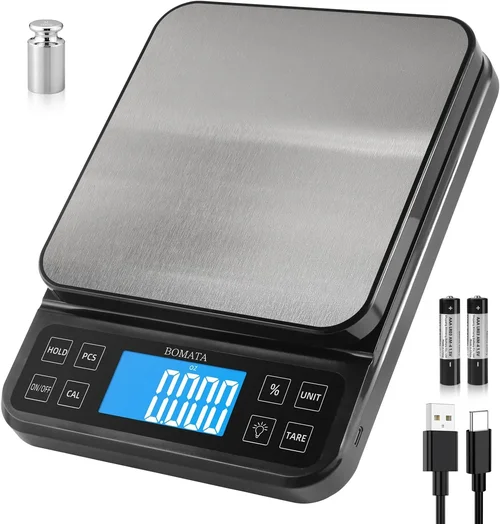
When it comes to baking, precision isn’t just a nice-to-have—it’s essential. Whether you’re whipping up a delicate French macaron, a fluffy sourdough loaf, or a batch of chewy chocolate chip cookies, the difference between success and failure often comes down to accurate measurements. While measuring cups and spoons have their place, they simply can’t match the consistency and accuracy of a digital baking scale. That’s why investing in a reliable, value-driven baking scale is one of the smartest moves any home baker can make.
But with so many options flooding the market—ranging from ultra-cheap models under $15 to high-end scales costing over $100—it’s easy to feel overwhelmed. How do you know which scale offers the best balance of performance, durability, and price? What features actually matter in real-world baking scenarios? And how do you avoid spending more than necessary while still getting a tool that will last for years? This comprehensive buying guide is designed to answer all those questions and more. We’ve tested, researched, and analyzed dozens of baking scales to bring you an expert-level breakdown of what truly delivers the best value for money in 2026.
In this guide, you’ll learn how to identify the key factors that separate a good scale from a great one—from accuracy and build quality to smart features and long-term reliability. We’ll walk you through different types of scales, highlight common purchasing pitfalls, provide budget-friendly recommendations across multiple price tiers, and share insider tips to help you get the most bang for your buck. Whether you’re a casual weekend baker or a serious pastry enthusiast, this guide will equip you with everything you need to choose the perfect baking scale without overspending or compromising on performance.

What to Look for When Buying Buying Guide
1. Accuracy and Precision
Accuracy is the cornerstone of any great baking scale. Even small deviations in ingredient weight—especially with flour, sugar, or leavening agents—can dramatically alter your results. A high-quality scale should measure within ±0.1 grams for small quantities (under 500g) and maintain consistency across its full capacity. Look for scales that use high-precision strain gauge sensors, which are more reliable than older mechanical or low-end digital mechanisms.
Precision also matters when working with delicate recipes. For example, yeast is often used in amounts as small as 2–5 grams. If your scale only measures in 1-gram increments, you risk over- or under-proofing your dough. Scales with 0.1g resolution give you the control needed for professional-level results. Additionally, check if the scale offers tare functionality—this allows you to zero out the weight of your mixing bowl so you can measure ingredients directly into it, streamlining your workflow and reducing cleanup.
2. Maximum Capacity and Increment Sensitivity
Baking scales come with varying weight limits, typically ranging from 2 kg (4.4 lbs) to 10 kg (22 lbs). For most home bakers, a 5 kg capacity is more than sufficient—it handles large batches of cookie dough, multiple loaves of bread, or holiday baking with ease. However, if you regularly bake in bulk or work with heavy doughs (like bagels or pizza), consider a scale with at least 7–10 kg capacity.
Equally important is increment sensitivity—the smallest weight change the scale can detect. While 1g increments may seem adequate, they fall short for recipes requiring fine measurements. Opt for scales that measure in 0.1g increments, especially if you bake bread, pastries, or anything involving yeast, baking powder, or salt. This level of detail ensures consistency across multiple batches and helps you follow international recipes (which often use metric units) without conversion errors.
3. Build Quality and Durability
A baking scale isn’t something you want to replace every year. Look for models made from sturdy materials like stainless steel platforms, reinforced plastic housings, and scratch-resistant surfaces. The weighing platform should be large enough to accommodate standard mixing bowls (at least 12–14 cm in diameter) and easy to clean—non-porous surfaces prevent food buildup and bacterial growth.
Pay attention to button quality and display visibility. Tactile, responsive buttons are easier to use with flour-dusted hands, while backlit LCD screens improve readability in dim kitchens. Water resistance is another underrated feature: while no scale should be submerged, spills happen. IPX4-rated scales (splash-resistant) offer peace of mind during messy baking sessions.
4. Features and Functionality
Beyond basic weighing, modern baking scales offer a range of features that enhance usability. The most valuable is the tare function, which lets you reset the display to zero after placing a container on the scale—essential for measuring multiple ingredients in one bowl. Some scales also include unit conversion (grams, ounces, pounds, milliliters), which is helpful when switching between recipes from different countries.
Timer functions are surprisingly useful: instead of juggling a separate kitchen timer, you can start the countdown directly from the scale while adding ingredients. Auto-off saves battery life but can be annoying if it kicks in mid-recipe—look for models with adjustable auto-off timers or manual override. A few premium scales even offer Bluetooth connectivity to sync with baking apps, though this is more gimmick than necessity for most users.
5. Ease of Use and Cleaning
A scale should simplify your workflow, not complicate it. Intuitive controls, clear labeling, and a logical layout make a big difference during busy baking sessions. Avoid scales with tiny buttons, confusing menus, or non-intuitive navigation. The display should be large enough to read at a glance, with bold numerals and minimal clutter.
Cleaning is another practical concern. Removable platforms are ideal—they allow you to wash the surface separately without risking water damage to internal electronics. Even non-removable platforms should be wipeable with a damp cloth. Steer clear of scales with crevices or grooves where flour and sugar can accumulate.
6. Power Source and Battery Life
Most digital baking scales run on AA or AAA batteries, though some premium models include rechargeable lithium-ion batteries. Battery life varies widely—from 50 hours to over 2,000 hours—depending on usage and display brightness. Scales with auto-off typically last longer. If you bake frequently, consider models with low-battery indicators so you’re never caught off guard mid-recipe.
Rechargeable scales are eco-friendly and cost-effective long-term, but ensure they include a USB-C or micro-USB charging port (not proprietary cables). Avoid scales that require constant battery changes—they become expensive and inconvenient over time.
7. Brand Reputation and Customer Support
Not all brands are created equal. Established names like OXO, Escali, MyWeigh, and Greater Goods have built reputations for reliability, customer service, and consistent product quality. Check whether the company offers responsive support, clear user manuals, and accessible replacement parts. User forums and Reddit communities often reveal which brands stand behind their products when issues arise.
Be wary of unknown brands selling suspiciously cheap scales on Amazon or eBay. While some offer decent performance, many cut corners on components, leading to premature failure or inaccurate readings. Reading verified purchase reviews (not just star ratings) can uncover hidden flaws like drifting calibration or fragile buttons.
8. Warranty and Return Policy
A solid warranty reflects manufacturer confidence in their product. Look for at least a 1–2 year limited warranty, with coverage for defects in materials and workmanship. Some brands, like Escali, offer lifetime warranties on certain models—a strong indicator of durability. Always check the fine print: does the warranty cover accidental damage? Is it valid only with proof of purchase?
Return policies are equally important. Reputable retailers (and manufacturers) typically allow 30-day returns, giving you time to test the scale in real baking conditions. If a scale feels flimsy, behaves erratically, or fails basic accuracy tests, you shouldn’t be stuck with it.
Different Types of Buying Guide

Common Buying Mistakes to Avoid
❌ Mistake: Prioritizing Price Over Accuracy
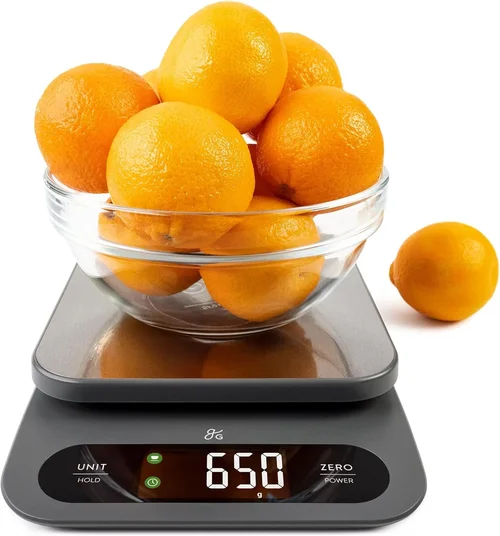
Why it’s bad: The cheapest scales often use low-quality sensors that drift over time or fail to detect small weight changes. This leads to inconsistent baking results—your cookies might spread too much one day and stay dense the next, all because your flour measurement was off by 10 grams.
What to do instead: Invest in a scale that offers at least 0.1g precision, even if it costs a bit more. Think of it as a long-term tool—spending $35 on a reliable scale is better than replacing three $12 models over two years.
❌ Mistake: Ignoring Tare Functionality
Why it’s bad: Without tare, you’re forced to use separate bowls for each ingredient or do mental math to subtract container weight. This increases cleanup, clutter, and the chance of measurement errors.
What to do instead: Always choose a scale with a dedicated tare button. It’s one of the most useful features in baking and standard on nearly all decent models today.
❌ Mistake: Overlooking Platform Size
Why it’s bad: A small platform forces you to use tiny bowls or balance large containers precariously. This not only makes measuring awkward but can also cause spills or uneven weight distribution, affecting accuracy.
What to do instead: Measure your most-used mixing bowls and ensure the scale platform is at least 2–3 cm larger in diameter. A 14 cm platform comfortably fits standard 12 cm bowls with room to spare.
❌ Mistake: Buying Based Solely on Star Ratings
Why it’s bad: High ratings can be misleading—some products have inflated scores from incentivized reviews or fake feedback. Others may perform well initially but degrade quickly.
What to do instead: Read recent, detailed reviews from verified purchasers. Look for comments about long-term durability, calibration stability, and customer service experiences.
❌ Mistake: Choosing a Scale Without Unit Conversion
Why it’s bad: Recipes from Europe, Australia, or professional sources often use grams and milliliters. If your scale only displays ounces and pounds, you’ll constantly need to convert—increasing the risk of mistakes.
What to do instead: Select a scale that supports multiple units (g, oz, lb, ml). Most mid-range and premium models include this feature at no extra cost.
❌ Mistake: Neglecting Water Resistance
Why it’s bad: Kitchen spills are inevitable. A non-resistant scale may short-circuit or malfunction after a simple splash, rendering it useless.
What to do instead: Opt for scales with at least IPX4 splash resistance. It’s a small feature that significantly extends lifespan.
❌ Mistake: Assuming All “Baking Scales” Are Equal
Why it’s bad: Some scales marketed as “kitchen scales” are designed for general food weighing (like produce or meat) and lack the precision needed for baking. Others have high capacity but poor resolution at low weights.
What to do instead: Focus on scales explicitly designed for baking or precision cooking. Check specs for 0.1g increments and baking-friendly features like tare and timers.
Budget Guidelines: How Much Should You Spend?
Entry-Level ($10 – $25): These scales are fine for occasional bakers who don’t need extreme precision. Expect basic functionality—1g increments, plastic platforms, and limited durability. Brands like Amazon Basics or generic Chinese imports dominate this space. While usable, they’re best suited for measuring large quantities (like sugar for jam) rather than delicate pastries.
Mid-Range ($25 – $50): This is the sweet spot for most home bakers. You’ll find scales with 0.1g precision, stainless steel platforms, tare functions, and solid build quality. Models from OXO, Escali, and MyWeigh excel here. They offer excellent value, lasting 3–5 years with regular use. If you bake weekly or follow complex recipes, this tier delivers the best balance of cost and performance.
Premium ($50 – $80): Ideal for serious bakers, bread makers, or those who value extras like timers, backlit displays, or rechargeable batteries. These scales often come from trusted brands with strong warranties and superior materials. They’re built to handle daily use and maintain calibration over time.
Luxury ($80+): Reserved for professionals or tech enthusiasts. Features may include Bluetooth connectivity, app integration, multi-point calibration, and industrial-grade components. While impressive, most home bakers won’t need these advanced capabilities—unless you’re running a home bakery or experimenting with molecular gastronomy.
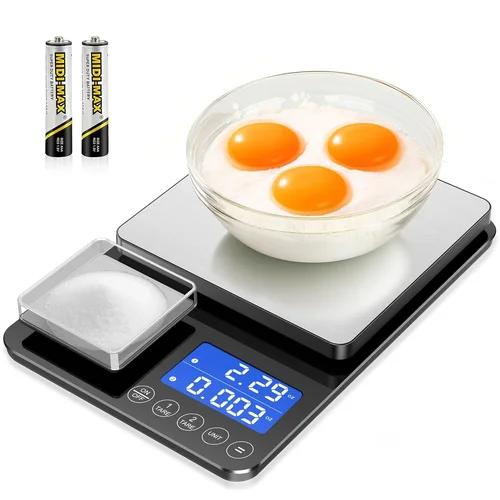
Expert Tips for Getting the Best Deal
– Shop during seasonal sales: Black Friday, Prime Day, and post-holiday clearances often feature deep discounts on kitchen tools. Sign up for brand newsletters to get early access.
– Buy directly from manufacturers: Companies like Escali and MyWeigh frequently offer exclusive deals, extended warranties, or free shipping on their websites.
– Check refurbished or open-box options: Retailers like Amazon Renewed or Best Buy sell tested, like-new scales at 20–30% off retail price with full warranties.
– Compare total cost of ownership: Factor in battery replacement costs. A $30 scale that uses 4 AAA batteries every month will cost more long-term than a $45 rechargeable model.
– Read the return policy carefully: Ensure you can return the scale if it doesn’t meet your needs—some sellers charge restocking fees or limit returns to 14 days.
– Test before committing: If buying in-store, ask to see a demo unit. Check button responsiveness, display clarity, and platform stability.
– Look for bundle deals: Some brands offer scales with measuring spoons, silicone mats, or recipe books—great for beginners.
– Join baking communities: Reddit’s r/Baking and Facebook groups often share discount codes, flash sales, and honest reviews you won’t find elsewhere.

Frequently Asked Questions
Q: Do I really need a baking scale, or can I just use measuring cups?
A: While measuring cups work for rough estimates, they’re inconsistent—scooping flour compacts it, leading to up to 25% more flour than intended. A scale ensures every batch turns out the same, especially critical for bread, cakes, and pastries.
Q: Can I use a regular kitchen scale for baking?
A: Yes, as long as it offers 0.1g precision and has a tare function. Many “kitchen scales” are perfectly suitable for baking—just avoid those designed solely for portion control or postage.
Q: How often should I calibrate my scale?
A: Most digital scales don’t require frequent calibration, but it’s wise to test accuracy every few months using known weights. If readings drift, consult your manual—some models allow manual calibration.
Q: Are mechanical scales better than digital ones?
A: Mechanical scales don’t need batteries and have a classic look, but they’re less precise (typically 5–10g increments) and can lose accuracy if dropped. Digital scales are more reliable for baking.
Q: Can I weigh liquids on a baking scale?
A: Yes! Most scales include a milliliter (ml) mode, which assumes water density (1g = 1ml). For oils or milk, slight variations occur, but the difference is negligible for home baking.
Q: What’s the difference between “precision” and “accuracy” in scales?
A: Precision refers to the smallest increment a scale can measure (e.g., 0.1g). Accuracy means how close that measurement is to the true value. A scale can be precise but inaccurate if it’s not calibrated properly.
Q: Will a more expensive scale last longer?
A: Generally, yes—premium scales use higher-quality components and undergo stricter quality control. However, a well-made mid-range scale ($30–$50) can easily last 5+ years with proper care.
Q: Can I put hot bowls directly on the scale?
A: Avoid it. Extreme heat can damage sensors or warp the platform. Let bowls cool slightly, or use a trivet.
Q: Do smart scales improve baking results?
A: Not necessarily. While app integration can guide you through recipes, the core benefit—accurate weighing—is achieved just as well by a non-smart scale. Save the extra cost unless you love tech features.
Q: What should I do if my scale stops working?
A: First, replace the batteries. If that doesn’t help, check for loose connections or debris under the platform. If under warranty, contact the manufacturer—many will repair or replace defective units.
Our Final Recommendations
Best for Budget-Conscious Buyers: OXO Good Grips Stainless Steel Food Scale ($35)
Offers 0.1g precision, a large stainless platform, tare function, and intuitive controls—all at a price that won’t break the bank. Reliable, durable, and backed by OXO’s excellent customer service.
Best Overall Value: Escali Primo Digital Scale ($40)
A favorite among professional bakers, the Primo delivers consistent accuracy, a sleek design, and a lifetime warranty. Its 5kg capacity and 0.1g resolution make it ideal for everything from cookies to ciabatta.
Best Premium Option: MyWeigh KD8000 ($70)
Built like a tank with a 8kg capacity, rechargeable battery, and multi-point calibration. Perfect for serious bakers who demand top-tier performance and don’t mind paying for it.
Best for Beginners: Greater Goods Digital Food Scale ($25)
Simple, affordable, and surprisingly accurate. Great for those new to baking who want to try weighing ingredients without a big investment.
Best for Advanced Users: Greater Goods Nourish Smart Scale ($90)
Combines precision weighing with Bluetooth connectivity to nutrition apps. Ideal for bakers tracking macros or experimenting with complex formulations.
Conclusion: Making the Right Choice
Choosing the right baking scale doesn’t have to be complicated—but it does require thoughtful consideration of your baking habits, budget, and long-term needs. The best value isn’t always the cheapest option; it’s the one that delivers consistent performance, durability, and ease of use over years of service. By focusing on accuracy, build quality, and essential features like tare and unit conversion, you’ll avoid common pitfalls and invest wisely.
Remember, a great baking scale is more than a tool—it’s a partner in your culinary journey. It helps you replicate successes, troubleshoot failures, and explore new recipes with confidence. Whether you’re measuring a teaspoon of vanilla or five pounds of sourdough starter, precision matters. So take the time to evaluate your options, read real user reviews, and prioritize what truly enhances your baking experience.
Don’t let inconsistent measurements hold back your creativity. With the right scale in your kitchen, every bake can be a masterpiece. Happy weighing—and even happier baking!