Yes, an electric kettle can boil milk—but it’s not always recommended. While some modern kettles handle milk well, most are designed for water, and boiling milk can cause scorching, spills, and damage. Learn how to do it safely or choose better alternatives.
Key Takeaways
- Most electric kettles are designed for water, not milk: Milk contains proteins and fats that can burn, stick, and damage heating elements.
- Boiling milk can cause overflow and mess: Milk foams and expands when heated, increasing the risk of spills and potential burns.
- Some kettles have milk-specific settings: High-end models with temperature control and non-stick interiors are safer for heating milk.
- Cleaning is more difficult after milk use: Residue can harden and smell, requiring deep cleaning to prevent buildup and odors.
- Alternative methods are often safer: Use a saucepan, microwave, or dedicated milk frother for better results and less risk.
- Check your kettle’s manual: Manufacturers often specify whether milk heating is supported—always follow guidelines.
- Prevent scorch by stirring and monitoring: If you must use your kettle, stay nearby, stir occasionally, and avoid high heat.
📑 Table of Contents
- Can Electric Kettle Boil Milk? The Truth You Need to Know
- How Electric Kettles Work—And Why Milk Is Different
- The Risks of Boiling Milk in an Electric Kettle
- When Is It Safe to Boil Milk in an Electric Kettle?
- Step-by-Step: How to Safely Boil Milk in an Electric Kettle
- Safer Alternatives to Boiling Milk in an Electric Kettle
- Expert Tips for Maintaining Your Electric Kettle
- Final Thoughts: Should You Boil Milk in Your Electric Kettle?
Can Electric Kettle Boil Milk? The Truth You Need to Know
So, you’re standing in your kitchen, craving a warm cup of hot chocolate or a creamy latte. You’ve got your electric kettle humming on the counter, and a thought pops into your head: Can I just boil milk in this thing? It seems logical—after all, it boils water in seconds, so why not milk?
Well, the short answer is: yes, you can boil milk in an electric kettle—but it’s not always a good idea. While some modern kettles are built to handle milk, most standard models are designed exclusively for water. Using them for milk can lead to burnt residue, unpleasant odors, malfunctioning sensors, and even permanent damage.
In this guide, we’ll dive deep into whether your electric kettle can safely boil milk, what risks you should watch out for, and how to do it properly—if you choose to at all. We’ll also explore safer alternatives and share expert tips to keep your kettle in top shape. Whether you’re a busy parent making warm milk for your kids or a coffee lover chasing the perfect froth, this article will help you make the right choice.
How Electric Kettles Work—And Why Milk Is Different
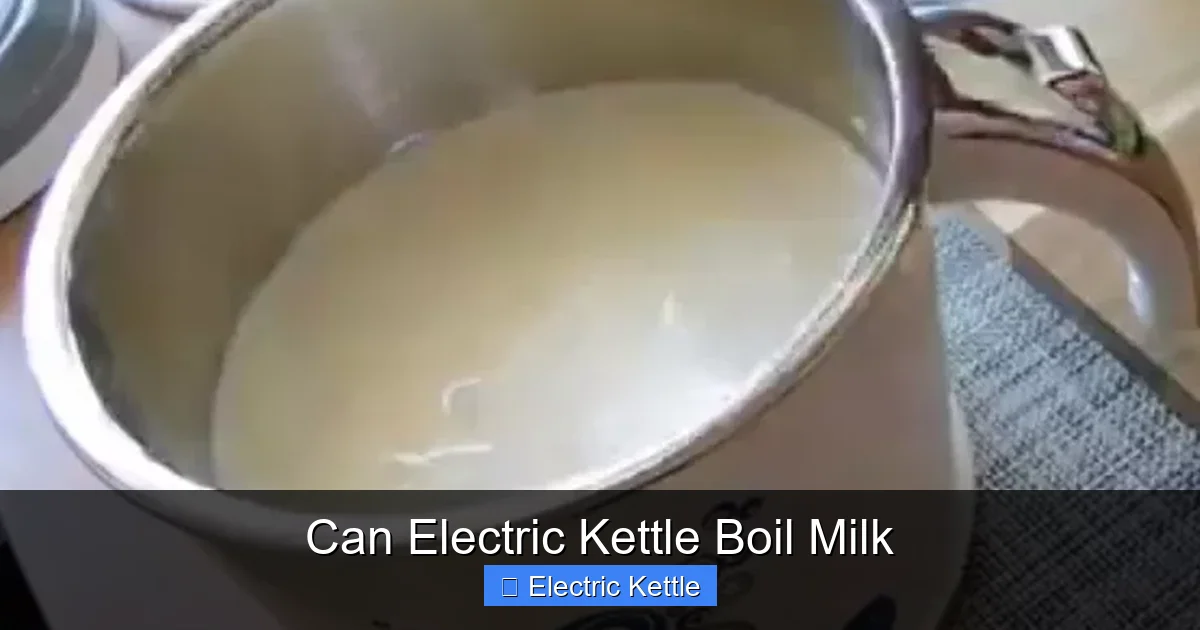
Visual guide about Can Electric Kettle Boil Milk
Image source: irrorwxhiqijjr5q.ldycdn.com
To understand why boiling milk in an electric kettle can be tricky, let’s first look at how these appliances function.
Most electric kettles use a heating element—either exposed or concealed beneath a stainless steel or glass base—to rapidly heat water. When you flip the switch, electricity flows through the element, generating heat that transfers to the liquid. A thermostat monitors the temperature and automatically shuts off the kettle once the water reaches boiling point (usually around 212°F or 100°C).
Now, here’s the problem: milk behaves very differently from water when heated.
Milk is a complex liquid made up of water, fats, proteins (like casein and whey), and sugars (like lactose). When heated, these components react in ways that water doesn’t. For example:
– Proteins denature and coagulate: As milk heats up, proteins unfold and stick together, forming a skin on the surface. If overheated, they can burn and stick to the kettle’s interior.
– Fats separate and can scorch: Milk fat doesn’t dissolve in water and tends to rise to the top. When heated too quickly or unevenly, it can burn onto the heating element.
– Lactose caramelizes: The natural sugar in milk can brown and stick to surfaces, creating a sticky, hard-to-clean residue.
Additionally, milk tends to foam and expand when boiled. This can cause it to overflow from the spout, creating a messy—and potentially dangerous—situation. Unlike water, which evaporates cleanly, spilled milk can harden, smell sour, and attract pests if not cleaned immediately.
So while your kettle might technically be able to boil milk, its design isn’t optimized for it. Most kettles lack the precision temperature control, stirring mechanisms, or non-stick coatings needed to handle milk safely.
The Risks of Boiling Milk in an Electric Kettle
If you’re still considering boiling milk in your electric kettle, it’s important to understand the potential downsides. Here are the most common risks:
1. Scorching and Burned Residue
One of the biggest issues with boiling milk in a kettle is scorching. Because milk contains proteins and sugars, it can easily burn onto the heating element or the bottom of the kettle—especially if the heat is too high or the milk isn’t stirred.
This burnt layer not only affects the taste of future brews (yes, your tea might start tasting like burnt milk!), but it can also damage the kettle over time. In severe cases, the heating element may become coated in a hard, crusty layer that reduces efficiency or causes malfunctions.
2. Overflow and Mess
Milk expands and foams when heated, much more so than water. This can cause it to bubble up and spill out of the spout, especially if the kettle is filled too high. The result? A sticky, sour-smelling mess on your countertop, and possibly even damage to the kettle’s electrical components if liquid seeps into the base.
Some kettles have automatic shut-off features that detect boiling, but these are calibrated for water. Milk’s different boiling behavior can confuse the sensor, leading to delayed shut-off—or worse, no shut-off at all.
3. Difficult Cleaning and Odor Buildup
Cleaning a kettle after boiling milk is no walk in the park. Unlike water, which leaves no residue, milk can leave behind a film that hardens and smells over time. If not cleaned thoroughly, this can lead to:
– Persistent sour or burnt odors
– Bacterial growth inside the kettle
– Staining of the interior (especially in plastic or glass kettles)
Even with regular cleaning, some residue may remain in hard-to-reach areas, like around the heating element or under the lid. Over time, this can affect performance and hygiene.
4. Voiding the Warranty
Many electric kettle manufacturers explicitly state in their user manuals that the appliance is intended for water only. Using it to boil milk—or any other liquid—can void your warranty. If your kettle breaks down after you’ve used it for milk, you may be out of luck when it comes to repairs or replacements.
For example, brands like Breville, Cuisinart, and Hamilton Beach often include warnings against using their kettles for anything other than water. Always check your manual before experimenting.
5. Inconsistent Heating and Temperature Control
Most standard electric kettles heat liquids to a single boiling point—usually around 212°F. But milk doesn’t need to reach a full boil to be warm or frothy. In fact, overheating can destroy nutrients and alter flavor.
Some high-end kettles offer variable temperature settings (e.g., 160°F for delicate teas, 185°F for green tea), but even these may not be ideal for milk. Heating milk too quickly or to too high a temperature can cause it to scald, form a skin, or separate.
When Is It Safe to Boil Milk in an Electric Kettle?
Despite the risks, there are situations where boiling milk in an electric kettle can be done safely—especially if you have the right equipment and follow best practices.
1. You Have a Kettle Designed for Milk
Some modern electric kettles are specifically built to handle milk. These models often feature:
– Non-stick interiors: Coatings like ceramic or PTFE prevent milk from sticking and burning.
– Precise temperature control: Settings for low, medium, and high heat allow gentle warming without scorching.
– Stirring mechanisms or slow-heat modes: Some kettles include built-in stirrers or pulse heating to distribute heat evenly.
– Milk-specific presets: Programs labeled “milk,” “hot chocolate,” or “froth” adjust heating time and temperature automatically.
Brands like Smeg, De’Longhi, and某些 Japanese manufacturers (e.g., Tiger) offer kettles with these features. If you frequently heat milk, investing in one of these models can save you time and hassle.
2. You’re Using a High-Quality Stainless Steel or Glass Kettle
If your kettle has a smooth, non-porous interior (like stainless steel or borosilicate glass), it’s easier to clean and less likely to retain odors. Avoid plastic kettles, as they can absorb smells and are more prone to staining.
Also, kettles with a concealed heating element (where the coil is hidden under a flat base) are generally safer for milk than those with exposed elements. The flat surface allows for more even heating and reduces hot spots that can cause scorching.
3. You Follow Safe Practices
Even with the right kettle, you still need to be careful. Here’s how to minimize risks:
– Don’t fill it to the top: Leave at least 1–2 inches of space to prevent overflow.
– Use low or medium heat: If your kettle has temperature settings, choose a lower option (around 160–180°F) to avoid boiling.
– Stir occasionally: Use a long-handled spoon to gently stir the milk while it heats. This prevents skin formation and ensures even warming.
– Stay nearby: Never leave the kettle unattended. Milk can foam up quickly and spill over in seconds.
– Clean immediately after use: Rinse the kettle with warm water right away, then wash with mild soap and a soft sponge. For stubborn residue, use a mixture of vinegar and water or a specialized kettle cleaner.
Step-by-Step: How to Safely Boil Milk in an Electric Kettle
If you’ve decided to go ahead and boil milk in your electric kettle, here’s a safe, step-by-step method to follow:
Step 1: Check Your Kettle’s Compatibility
Before you begin, consult your user manual. Look for any warnings about using liquids other than water. If it says “water only,” it’s best to avoid milk.
If your kettle has milk-specific settings or is marketed as “multi-liquid compatible,” you’re in better shape.
Step 2: Choose the Right Milk
Not all milk behaves the same when heated. Whole milk and full-fat dairy tend to foam more and are richer, making them better for frothing but also more prone to overflow. Skim or low-fat milk heats more evenly but may not froth as well.
Plant-based milks (like almond, oat, or soy) can be even trickier—some separate when heated, while others foam excessively. Oat milk, for example, is popular in lattes but can be very foamy.
Step 3: Fill the Kettle Properly
Pour the milk into the kettle, but don’t exceed the minimum fill line. Ideally, fill it to about halfway to allow room for expansion. Never overfill—milk can double in volume when boiling.
Step 4: Select the Right Temperature
If your kettle has temperature control, choose a setting between 160°F and 180°F (71°C–82°C). This is hot enough to warm the milk without causing it to boil vigorously.
If your kettle only has an “on/off” switch, use it in short bursts. Turn it on for 10–15 seconds, then off to check the temperature. Repeat until the milk is warm—never let it reach a full boil.
Step 5: Stir Gently
Use a long, heat-resistant spoon to stir the milk every 10–15 seconds. This prevents a skin from forming on top and ensures even heating.
Step 6: Monitor Closely
Stay in the kitchen the entire time. Milk can go from warm to overflowing in just a few seconds. If you see foam rising rapidly, turn off the kettle immediately.
Step 7: Pour and Clean
Once the milk is heated to your liking, pour it out carefully. Then, rinse the kettle with warm water right away. Wash with mild dish soap and a soft cloth. For tough residue, soak the interior in a 50/50 mix of white vinegar and water for 15–20 minutes, then rinse thoroughly.
Safer Alternatives to Boiling Milk in an Electric Kettle
Given the risks, many experts recommend using alternative methods to heat milk. Here are some safer, more effective options:
1. Use a Saucepan on the Stovetop
This is the most traditional and reliable method. Simply pour milk into a small saucepan, heat over low to medium heat, and stir frequently. Use a thermometer if you want precision—most recipes call for milk to be heated to around 150–160°F.
Pros: Full control over temperature, easy to stir, no risk of overflow.
Cons: Takes longer than an electric kettle.
2. Heat Milk in the Microwave
For quick warming, the microwave is a great option. Pour milk into a microwave-safe cup, heat in 15–30 second intervals, and stir between each. This prevents hot spots and ensures even heating.
Tip: Cover the cup with a microwave-safe lid or paper towel to reduce splattering.
Pros: Fast, convenient, no extra dishes.
Cons: Harder to control temperature, risk of overheating.
3. Use a Dedicated Milk Frother or Steamer
If you’re making lattes, cappuccinos, or hot chocolate, a milk frother is ideal. These devices heat and froth milk simultaneously, giving you creamy, barista-quality results.
Options include handheld frothers, electric frothers, and steam wands on espresso machines.
Pros: Perfect texture, precise temperature control, designed for milk.
Cons: Additional appliance to store and clean.
4. Try a Gooseneck Kettle with Temperature Control
If you’re a coffee or tea enthusiast, a gooseneck kettle with variable temperature settings can double as a milk warmer. Pour milk into a separate cup and use the kettle to heat water, then combine.
Some gooseneck kettles even have milk presets.
Pros: Versatile, precise, great for pour-over drinks.
Cons: Not designed for direct milk heating—use with caution.
Expert Tips for Maintaining Your Electric Kettle
Whether you use your kettle for water, milk, or both, proper maintenance is key to longevity and performance. Here are some expert tips:
– Descale regularly: Mineral buildup from hard water can affect heating efficiency. Use a descaling solution or a 50/50 mix of vinegar and water once a month.
– Wipe the exterior: Clean the outside with a damp cloth to prevent dust and grease buildup.
– Check the filter: Many kettles have a mesh filter in the spout to catch limescale. Remove and clean it periodically.
– Avoid overfilling: Always stay within the min/max fill lines to prevent damage and spills.
– Store properly: Keep the kettle unplugged and dry when not in use. Avoid storing it with water inside.
Final Thoughts: Should You Boil Milk in Your Electric Kettle?
So, can electric kettle boil milk? The answer is yes—but with caveats.
If your kettle is designed for it, and you follow safe practices, you can heat milk without major issues. However, for most people, the risks outweigh the convenience. Scorching, overflow, difficult cleaning, and potential damage make it a less-than-ideal choice.
Instead, consider using a saucepan, microwave, or dedicated milk frother for better results and peace of mind. These methods give you more control, reduce mess, and protect your kettle from wear and tear.
If you do decide to use your electric kettle for milk, choose a high-quality model with temperature control, stir frequently, and clean immediately. And always—always—check the manufacturer’s guidelines first.
At the end of the day, your electric kettle is a powerful tool for boiling water quickly and efficiently. While it might be tempting to push its limits, respecting its design will keep it working well for years to come.
So go ahead, enjoy your warm milk—just maybe not in the same appliance you use for your morning tea.
Frequently Asked Questions
Can I boil milk in any electric kettle?
Not all electric kettles are safe for boiling milk. Most are designed for water only, and using milk can cause scorching, overflow, and damage. Always check your user manual first.
What happens if I boil milk in my electric kettle?
Milk can burn onto the heating element, create a sticky residue, foam over, and leave a sour smell. It may also void your warranty and reduce the kettle’s lifespan.
Are there electric kettles made for milk?
Yes, some high-end models have non-stick interiors, temperature control, and milk-specific settings. Brands like Smeg and De’Longhi offer kettles designed for heating milk safely.
How do I clean my kettle after boiling milk?
Rinse immediately with warm water, then wash with mild soap. For tough residue, soak in a vinegar-water solution for 15–20 minutes before rinsing thoroughly.
Can I use plant-based milk in an electric kettle?
It’s possible, but plant-based milks like oat or almond can foam excessively or separate when heated. Use caution, stir often, and clean promptly to avoid damage.
Is it safe to leave milk heating in an electric kettle unattended?
No. Milk can foam and overflow very quickly. Always stay nearby and monitor the process to prevent spills, burns, or damage to the kettle.