An electric kettle can boil water faster and more efficiently than stovetop methods. Designed for convenience and energy savings, it’s perfect for tea, coffee, instant meals, and more—just plug in, fill, and press start.
Key Takeaways
- Electric kettles boil water quickly: Most models heat water in 3–5 minutes, making them faster than stovetops or microwaves.
- They are energy-efficient: Electric kettles use less electricity than boiling water on a stove or in a microwave.
- Built-in safety features: Auto shut-off, boil-dry protection, and cool-touch handles prevent accidents.
- Ideal for precise temperatures: Variable temperature settings help brew different teas and coffees perfectly.
- Easy to use and maintain: Simple one-touch operation and removable filters make cleaning hassle-free.
- Great for small spaces: Compact and cordless designs fit well in apartments, dorms, or offices.
- Versatile beyond boiling: Use for instant noodles, oatmeal, baby formula, or even sterilizing bottles.
📑 Table of Contents
- Can Electric Kettle Boil Water? The Simple Answer
- How Does an Electric Kettle Work?
- Benefits of Using an Electric Kettle to Boil Water
- Safety Features That Make Electric Kettles Reliable
- Choosing the Right Electric Kettle for Your Needs
- Maintenance and Cleaning Tips
- Common Misconceptions About Electric Kettles
- Conclusion: Yes, Electric Kettles Boil Water—and They Do It Well
Can Electric Kettle Boil Water? The Simple Answer
If you’ve ever stood over a whistling stovetop kettle, waiting impatiently for your morning tea, you’ve probably wondered: is there a faster way? Enter the electric kettle—a sleek, modern appliance that’s become a kitchen staple in homes, offices, and dorm rooms worldwide. But the real question is: can an electric kettle boil water? The short answer is a resounding yes. In fact, it does it better, faster, and safer than most traditional methods.
Electric kettles are specifically designed to heat water to its boiling point—100°C or 212°F at sea level—using an internal heating element. Unlike stovetop kettles that rely on conduction from a burner, electric kettles transfer heat directly to the water through a submerged or concealed heating coil. This direct transfer makes them incredibly efficient. Most electric kettles can bring a full liter of water to a boil in under five minutes, sometimes even faster. That’s a huge time-saver, especially during busy mornings or when you’re craving a quick cup of coffee.
But speed isn’t the only advantage. Electric kettles are also more energy-efficient. Because they heat water directly and don’t lose much heat to the surrounding air, they use less electricity than boiling water on a gas or electric stove. Plus, many modern models come with smart features like temperature control, keep-warm functions, and automatic shut-off, which not only improve convenience but also enhance safety. So whether you’re brewing delicate green tea or making instant ramen, an electric kettle gives you consistent, reliable results every time.
How Does an Electric Kettle Work?
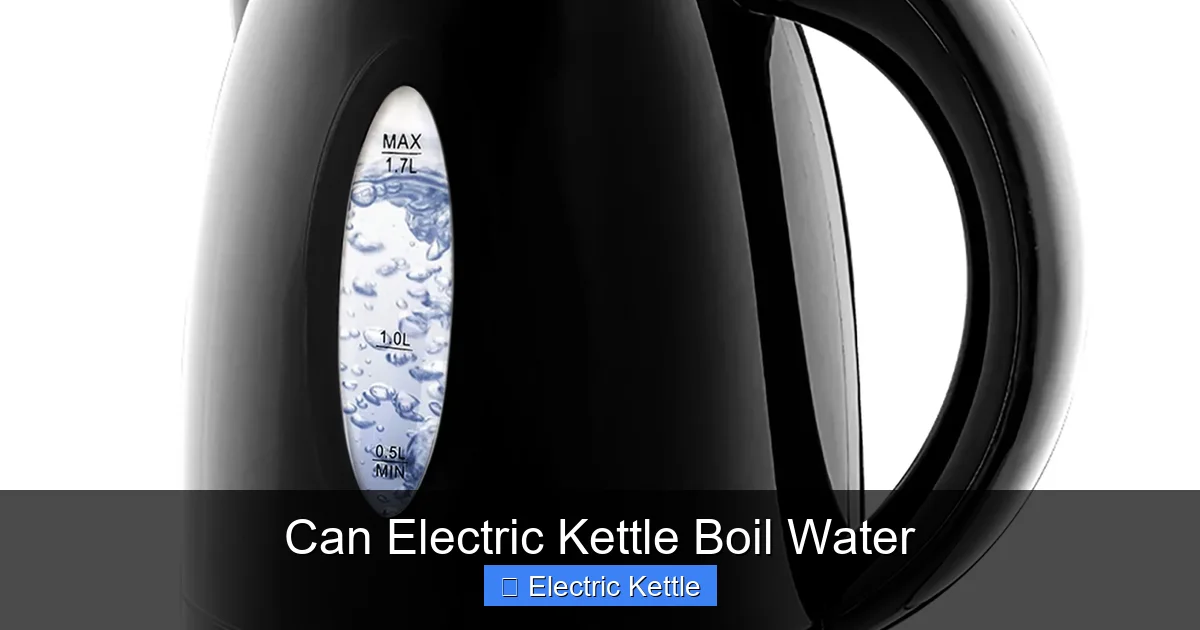
Visual guide about Can Electric Kettle Boil Water
Image source: i5.walmartimages.com
Understanding how an electric kettle boils water helps explain why it’s such an effective tool. At its core, an electric kettle is a simple device powered by electricity and basic thermodynamics. When you plug it in and press the switch, electrical energy flows through a heating element—usually located at the base of the kettle. This element, often made of stainless steel or another heat-conductive metal, rapidly heats up.
As the heating element warms, it transfers that heat directly to the water surrounding it. Because the element is submerged or closely integrated into the kettle’s base, nearly all the heat goes into the water, minimizing waste. This is a key reason electric kettles are more efficient than stovetops, where heat can escape into the air or be absorbed by the pot itself.
Most electric kettles use a thermostat to monitor the water temperature. Once the water reaches boiling point, the thermostat triggers an automatic shut-off mechanism, turning off the heating element. This prevents overheating and saves energy. Some advanced models go a step further with variable temperature controls, allowing you to select specific heat levels—like 80°C for green tea or 90°C for white tea—instead of just boiling.
Another important component is the lid and spout design. A well-sealed lid keeps heat in and speeds up boiling, while a smooth spout ensures a clean, drip-free pour. Many kettles also include a removable mesh filter at the spout to catch limescale and impurities, especially in areas with hard water.
The Science Behind the Boil
Boiling water is all about reaching the point where liquid turns to vapor. At standard atmospheric pressure (sea level), this happens at 100°C (212°F). Electric kettles are engineered to reach this temperature quickly and safely. The heating element generates heat through resistance—when electricity passes through it, the material resists the flow, producing thermal energy.
The rate at which water boils depends on several factors: the power of the kettle (measured in watts), the volume of water, and the starting temperature of the water. A typical 1500-watt electric kettle will boil 1 liter of room-temperature water in about 3 to 4 minutes. That’s significantly faster than a stovetop kettle, which might take 6 to 8 minutes, depending on the burner size and efficiency.
It’s also worth noting that electric kettles are less affected by external conditions. Unlike gas stoves, which can be influenced by flame size or wind, electric kettles operate independently once plugged in. This consistency makes them reliable in any environment.
Types of Electric Kettles and Their Heating Mechanisms
Not all electric kettles are built the same. There are two main types based on how the heating element is designed:
1. **Immersed Heating Element:** In older or more basic models, the heating coil is directly inside the water. While effective, this design can lead to mineral buildup (limescale) on the element, which may reduce efficiency over time. Cleaning can be tricky since you can’t easily access the coil.
2. **Concealed Heating Element:** Most modern electric kettles use a concealed element—a flat, disk-shaped plate at the base that heats up but doesn’t come into direct contact with the water. This design is easier to clean, reduces limescale buildup, and improves safety by preventing accidental contact with live parts.
Some high-end models even use induction heating, where an electromagnetic field heats the kettle’s base without a traditional element. These are less common but offer even greater efficiency and precision.
Benefits of Using an Electric Kettle to Boil Water
Switching to an electric kettle isn’t just about speed—it comes with a host of practical benefits that make daily life easier and more efficient. Whether you’re a tea enthusiast, a busy parent, or someone who just wants hot water fast, an electric kettle delivers.
One of the biggest advantages is **time savings**. Imagine needing hot water for oatmeal at 7 a.m. With a stovetop kettle, you’re waiting 6–8 minutes. With an electric kettle, it’s ready in half the time. That extra few minutes can make a big difference when you’re rushing out the door.
Another major benefit is **energy efficiency**. Electric kettles convert nearly 80–90% of the electricity they use into heat, compared to stovetops, which may only be 40–55% efficient. This means less wasted energy and lower electricity bills over time. If you boil water multiple times a day, those savings add up.
**Safety** is another strong point. Electric kettles are designed with multiple safety features. Auto shut-off turns the kettle off as soon as the water boils, preventing dry boiling and potential fire hazards. Boil-dry protection ensures the kettle won’t operate if there’s no water inside. Many models also have cool-touch exteriors and secure lids to prevent burns.
Then there’s **convenience**. Most electric kettles are cordless—you lift the kettle off its base to pour, making it easy to use at the table or carry to another room. Some even have keep-warm functions that maintain the water temperature for up to an hour, so your tea stays hot without reheating.
Precision for Tea and Coffee Lovers
If you’re serious about your beverages, an electric kettle with temperature control is a game-changer. Different drinks require different water temperatures for optimal flavor:
– **Green tea:** 70–80°C (158–176°F) – Boiling water can scorch delicate leaves, making tea bitter.
– **White tea:** 80–85°C (176–185°F) – Slightly hotter than green, but still gentle.
– **Oolong tea:** 85–90°C (185–194°F) – Needs more heat to unlock complex flavors.
– **Black tea:** 95–100°C (203–212°F) – Can handle full boiling.
– **Coffee (pour-over):** 90–96°C (194–205°F) – Hot but not boiling, to avoid over-extraction.
Variable temperature kettles let you select the perfect setting for each drink. No more guessing or waiting for water to cool. Just press a button, and you’re ready to brew.
Perfect for Small Spaces and On-the-Go Use
Electric kettles are ideal for compact living. Dorm rooms, small apartments, RVs, and offices often lack full kitchens, but an electric kettle takes up minimal counter space and plugs into any standard outlet. Many models are lightweight and portable, making them great for travel or camping (as long as you have access to electricity).
They’re also a lifesaver for parents. Need to sterilize baby bottles? Boil water in the kettle, then pour it into the bottles. Preparing formula? Heat water to the exact temperature recommended by your pediatrician. No need to wait for a pot to boil on the stove.
Safety Features That Make Electric Kettles Reliable
When it comes to appliances that heat water to boiling temperatures, safety is paramount. Fortunately, electric kettles are engineered with multiple layers of protection to keep users safe.
The most important feature is **automatic shut-off**. Once the water reaches boiling point, the kettle turns itself off. This prevents the water from evaporating completely, which could damage the heating element or start a fire. It also means you don’t have to stand by the kettle waiting for it to finish—just set it and forget it.
**Boil-dry protection** is another critical safety mechanism. If you accidentally turn on the kettle without water, this feature detects the lack of liquid and cuts power before the element overheats. This protects both the appliance and your home.
Many electric kettles also have **cool-touch exteriors**. Even when the water inside is boiling, the handle and outer body stay cool to the touch, reducing the risk of burns. This is especially helpful if you have kids or pets at home.
**Secure lids and spouts** prevent spills and splashes. A tight-fitting lid keeps steam contained, while a drip-free spout ensures a clean pour. Some models even have a locking lid that only opens when the kettle is off, adding an extra layer of safety.
What to Look for in a Safe Electric Kettle
When shopping for an electric kettle, prioritize safety certifications. Look for models that meet standards like UL (Underwriters Laboratories) or ETL (Intertek), which indicate the product has been tested for electrical and fire safety.
Also, check the material. Stainless steel and BPA-free plastic are safe, durable options. Avoid kettles with exposed heating elements or flimsy plastic parts that could melt or crack.
Finally, read the user manual. It will explain how to use the kettle safely, how to clean it, and what to do if something goes wrong. Regular maintenance—like descaling and checking the power cord—also helps keep your kettle safe and functional.
Choosing the Right Electric Kettle for Your Needs
With so many electric kettles on the market, finding the right one can feel overwhelming. But by focusing on your needs and lifestyle, you can narrow down the options quickly.
Start with **capacity**. How much water do you typically boil? A 1-liter kettle is great for individuals or small households. If you’re making coffee for a family or hosting guests, consider a 1.7-liter model. Just remember: larger kettles take longer to boil and use more energy.
Next, consider **power**. Kettles range from 1200 to 3000 watts. Higher wattage means faster boiling. A 1500-watt kettle is a good balance of speed and efficiency for most homes.
**Material** matters too. Stainless steel kettles are durable, easy to clean, and don’t retain odors. Glass kettles let you see the water boiling—fun to watch, but more fragile. Plastic kettles are lightweight and affordable, but make sure they’re BPA-free.
Must-Have Features to Look For
– **Variable temperature control:** Essential for tea and coffee lovers.
– **Keep-warm function:** Keeps water hot for up to an hour.
– **Cordless design:** Makes pouring easier and safer.
– **Removable filter:** Catches limescale and debris.
– **Water level indicator:** Helps you measure the right amount.
– **Quiet operation:** Some kettles boil almost silently—great for early mornings.
Top Brands to Consider
Some of the most trusted electric kettle brands include:
– **Breville:** Known for precision and stylish designs.
– **Cuisinart:** Offers reliable, mid-range models with great features.
– **Hamilton Beach:** Budget-friendly and durable.
– **OXO:** Focuses on user-friendly designs and safety.
– **Aicok:** Popular for fast-boiling, affordable kettles.
Read reviews and compare prices, but don’t sacrifice safety or quality for a lower cost.
Maintenance and Cleaning Tips
To keep your electric kettle working efficiently and safely, regular maintenance is key. Over time, minerals from hard water can build up inside the kettle, forming limescale. This not only affects taste but can also reduce heating efficiency and shorten the kettle’s lifespan.
How to Clean Your Electric Kettle
The best way to remove limescale is with a vinegar solution:
1. Fill the kettle halfway with equal parts water and white vinegar.
2. Boil the mixture, then let it sit for 15–30 minutes.
3. Pour out the solution and scrub the inside with a soft brush or sponge.
4. Rinse thoroughly with clean water and boil fresh water once or twice to remove any vinegar taste.
For daily cleaning, simply wipe the exterior with a damp cloth. Avoid submerging the base or electrical components in water.
Preventing Limescale Buildup
If you live in an area with hard water, consider using filtered water in your kettle. You can also descale your kettle every 1–2 months, depending on usage. Some kettles have a “descale” indicator light that reminds you when it’s time.
Never use harsh chemicals or abrasive scrubbers, as they can damage the interior. Stick to natural cleaners like vinegar or citric acid.
Common Misconceptions About Electric Kettles
Despite their popularity, electric kettles are sometimes misunderstood. Let’s clear up a few common myths.
**Myth 1: Electric kettles are dangerous.**
Reality: Modern electric kettles are among the safest kitchen appliances. With auto shut-off, boil-dry protection, and cool-touch handles, they’re designed to prevent accidents.
**Myth 2: They use too much electricity.**
Reality: Electric kettles are actually more energy-efficient than stovetops. They heat water faster and lose less heat to the environment.
**Myth 3: Boiling water in an electric kettle changes its taste.**
Reality: As long as the kettle is clean and made of safe materials, boiling water won’t affect its taste. In fact, it may taste better than water boiled in a metallic stovetop pot.
**Myth 4: You can only use them for tea and coffee.**
Reality: Electric kettles are incredibly versatile. Use them for instant soups, oatmeal, pasta, sterilizing tools, or even warming baby bottles.
Conclusion: Yes, Electric Kettles Boil Water—and They Do It Well
So, can an electric kettle boil water? Absolutely. In fact, it’s one of the fastest, safest, and most efficient ways to do so. Whether you’re making your morning coffee, brewing a soothing cup of tea, or preparing a quick meal, an electric kettle delivers hot water on demand with minimal effort.
From their energy-efficient design to built-in safety features and smart temperature controls, electric kettles offer a level of convenience that stovetop methods simply can’t match. They’re perfect for busy households, small spaces, and anyone who values speed and precision in the kitchen.
When choosing an electric kettle, focus on your needs—capacity, power, material, and features—and don’t forget regular maintenance to keep it running smoothly. With the right model, you’ll wonder how you ever lived without one.
So go ahead—plug it in, fill it up, and enjoy perfectly boiled water in minutes. Your future self will thank you.
Frequently Asked Questions
Can an electric kettle boil water faster than a stovetop?
Yes, electric kettles typically boil water in 3–5 minutes, while stovetop kettles can take 6–8 minutes or longer. The direct heating element in electric kettles makes them more efficient.
Is it safe to leave an electric kettle unattended?
Yes, most electric kettles have auto shut-off and boil-dry protection, so they turn off automatically when the water boils or if there’s no water inside. This makes them safe to use without constant supervision.
Can I boil water in an electric kettle more than once?
Yes, you can boil water multiple times. However, repeatedly boiling the same water can concentrate impurities. For best taste, use fresh water each time.
Do electric kettles use a lot of electricity?
No, electric kettles are energy-efficient. They use less electricity than boiling water on a stove or in a microwave because they transfer heat directly to the water with minimal waste.
Can I use an electric kettle for purposes other than tea and coffee?
Absolutely. Electric kettles are great for making instant noodles, oatmeal, baby formula, sterilizing bottles, and even warming towels or heating small containers of food.
How often should I clean my electric kettle?
Clean your kettle every 1–2 months to remove limescale, especially if you have hard water. Use a vinegar solution for deep cleaning and rinse thoroughly afterward.