Bringing an electric kettle to college can be a game-changer for quick meals, coffee, or tea—but only if your dorm allows it. Many colleges restrict high-wattage appliances due to fire safety, so always check your school’s housing policy first. With the right compact, low-wattage model and proper usage, you can enjoy hot drinks and simple meals safely in your dorm room.
So, you’re packing for college, and you’re wondering: *Can I bring an electric kettle to college?* It’s a fair question. After all, who doesn’t want a hot cup of tea after a long lecture or a quick bowl of ramen at 2 a.m.? An electric kettle seems like the perfect dorm room companion—compact, convenient, and fast. But before you toss it into your suitcase, there’s one big thing you need to consider: your college’s rules.
Many students assume that because an electric kettle is small and common at home, it’s automatically allowed in the dorms. But that’s not always the case. College housing offices often have strict policies about appliances, especially those that generate heat. The reason? Fire safety. Dorm rooms are tightly packed, with limited electrical capacity and shared walls. A malfunctioning or misused appliance can pose a serious risk. That’s why schools often ban or restrict items like space heaters, hot plates, and yes—electric kettles.
But don’t panic just yet. In many cases, you *can* bring an electric kettle to college—especially if it’s a low-wattage, safety-certified model. The key is doing your homework. Before you buy or pack, check your college’s housing website or contact your residence life office. Look for a list of approved or prohibited appliances. Some schools allow kettles under 1000 watts, while others ban all heating elements outright. Knowing the rules upfront can save you from a surprise confiscation—or worse, a fine.
Key Takeaways
- Check your college’s appliance policy first: Most dorms ban high-wattage devices, but some allow low-wattage electric kettles under 1000W.
- Safety is the top concern: Electric kettles with auto shut-off, boil-dry protection, and cool-touch exteriors are safest for dorm use.
- Look for compact and quiet models: Space is limited in dorm rooms, so choose a small, lightweight kettle that won’t disturb roommates.
- Use it responsibly: Never leave it unattended, keep it away from beds or curtains, and use it only on stable, heat-resistant surfaces.
- Great for more than just tea: Electric kettles can heat water for instant noodles, oatmeal, coffee, and even sterilizing small items.
- Consider alternatives if banned: If kettles aren’t allowed, look into microwave-safe options or campus dining perks.
- Invest in quality: A reliable, well-reviewed kettle lasts longer and performs better, saving money and hassle over time.
📑 Table of Contents
- Why Students Want Electric Kettles in College
- College Dorm Rules and Appliance Policies
- Safety Features to Look for in a Dorm-Friendly Kettle
- Best Electric Kettles for College Students
- How to Use Your Electric Kettle Safely in the Dorm
- Alternatives If Electric Kettles Are Banned
- Final Thoughts: Is It Worth It?
Why Students Want Electric Kettles in College
Let’s be real: college life is busy. Between classes, studying, socializing, and trying to sleep, there’s little time for elaborate meals. That’s where the electric kettle shines. It’s not just for tea lovers—it’s a multitasking powerhouse for any student looking to simplify their routine.
One of the biggest draws is convenience. Boiling water takes just a few minutes, and you don’t need a stove or microwave. This is especially helpful if your dorm doesn’t have a kitchen or if the shared kitchen is always crowded. With an electric kettle, you can make hot water anytime, right at your desk or nightstand.
But it’s not just about speed. An electric kettle gives you control. You can heat water to the perfect temperature for different drinks—like 175°F for green tea or 200°F for black tea—without guessing. Many modern kettles even have temperature settings, so you don’t have to worry about over-boiling or under-heating.
And let’s talk about cost. Eating out or buying coffee every day adds up fast. With an electric kettle, you can make your own instant coffee, tea, or hot chocolate for pennies. You can also prepare affordable meals like instant oatmeal, cup noodles, or even steamed vegetables using just hot water. Over a semester, that can mean serious savings.
Another perk? It’s eco-friendly. Reusable mugs and homemade drinks mean less waste from disposable cups and bottles. Plus, you’re not relying on the campus coffee shop’s single-use packaging.
Of course, there’s also the comfort factor. There’s something soothing about wrapping your hands around a warm mug, especially during those long winter study sessions. Whether it’s herbal tea to help you sleep or a strong brew to power through an all-nighter, having hot water on demand can make dorm life feel a little more like home.
College Dorm Rules and Appliance Policies
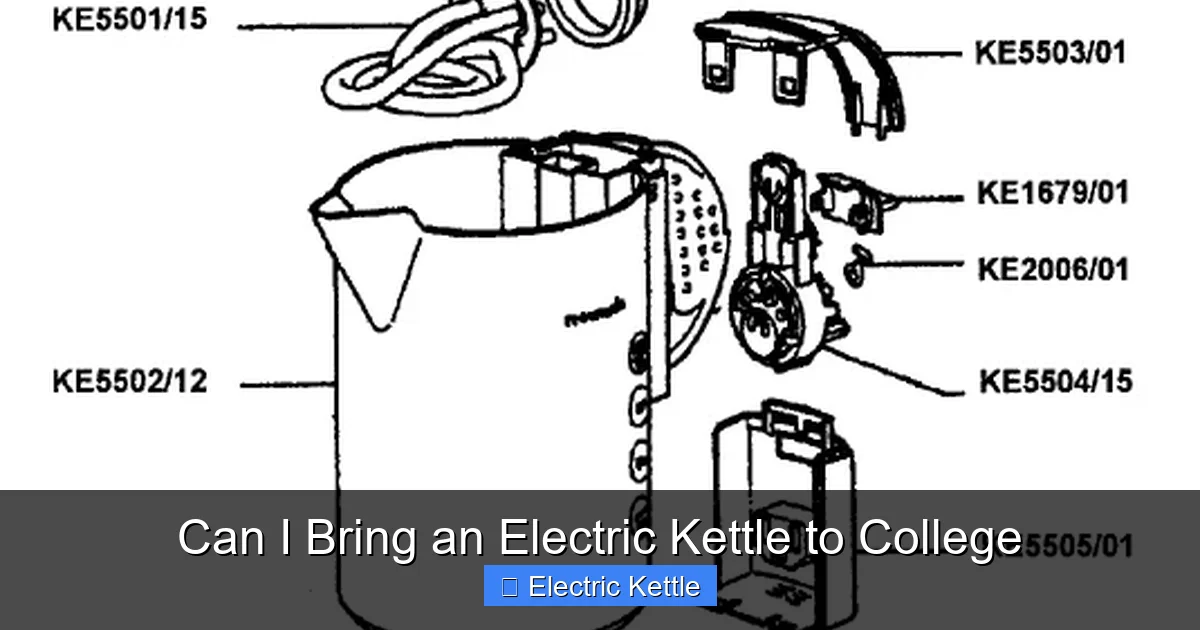
Visual guide about Can I Bring an Electric Kettle to College
Image source: buyspares.co.uk
Now that you’re excited about the possibilities, let’s get back to reality: the rules. Every college is different, and their policies on appliances can vary widely. Some schools are lenient, allowing small kitchen gadgets as long as they’re used safely. Others have a strict “no heating elements” policy.
Start by visiting your college’s housing or residence life website. Look for a section on “approved appliances” or “dorm room guidelines.” These pages usually list what’s allowed and what’s banned. Common restrictions include:
– No open flames or heating coils
– No appliances over a certain wattage (often 1000W or less)
– No devices without automatic shut-off features
Electric kettles often fall into a gray area. Because they heat water quickly and have built-in safety features, some schools allow them—especially if they’re under 1000 watts. Others ban them outright, grouping them with hot plates and toaster ovens.
For example, a university might say: “Small electric kettles under 1000W with automatic shut-off are permitted.” That’s your green light. But if the policy says, “No heating appliances allowed,” you’ll need to leave it at home.
Don’t assume that because a friend brought one last year, it’s okay. Policies can change, and enforcement varies by dorm and RA. When in doubt, email your housing office or ask during orientation. It’s better to ask than to risk getting your kettle confiscated.
Also, be aware that some dorms have older wiring or limited electrical capacity. Even if a kettle is allowed, using too many devices at once could trip a circuit breaker. This is another reason schools are cautious—overloaded circuits can cause fires.
How to Find Your College’s Policy
Finding your school’s appliance policy doesn’t have to be hard. Here’s how to do it:
1. **Check the housing website:** Most colleges have a dedicated page for residence hall guidelines. Look for terms like “allowed appliances,” “prohibited items,” or “safety regulations.”
2. **Search for “dorm room rules”:** Use the search bar on your college’s site and type in keywords like “electric kettle” or “appliance policy.”
3. **Contact your RA or housing office:** If you can’t find clear info, send a quick email. Ask specifically about electric kettles and whether low-wattage models are allowed.
4. **Ask upperclassmen:** Current students often know the real deal. They can tell you which RAs are strict and which dorms are more relaxed.
Remember, policies are there for a reason—mainly safety. But they’re also meant to be followed. Even if you think your kettle is safe, breaking the rules can lead to warnings, fines, or even eviction from the dorm.
Safety Features to Look for in a Dorm-Friendly Kettle
If your college allows electric kettles, great! But not all kettles are created equal. To stay safe and avoid trouble, choose a model with the right safety features.
First and foremost, look for **automatic shut-off**. This feature turns the kettle off as soon as the water reaches boiling point. It prevents overheating, reduces fire risk, and saves energy. Most modern kettles have this, but it’s worth double-checking.
Next, **boil-dry protection** is essential. This means the kettle won’t turn on if there’s no water inside. It’s a simple but crucial safety net that prevents damage to the heating element and reduces the risk of fire.
A **cool-touch exterior** is another smart feature. Even when the water inside is boiling, the outside of the kettle stays cool to the touch. This prevents burns, especially if you’re rushing between classes and not paying full attention.
Also, consider **cordless design**. A kettle that detaches from its base is easier to pour and store. Just make sure the base is stable and won’t tip over easily.
Finally, check for **certifications**. Look for labels like UL (Underwriters Laboratories) or ETL (Intertek), which mean the product has been tested for safety. Avoid cheap, uncertified kettles from unknown brands—they may not meet safety standards.
Wattage Matters
Wattage is a big deal in dorms. High-wattage appliances draw more power, which can overload circuits. Most colleges limit appliances to 1000 watts or less. So, when shopping for an electric kettle, aim for one under 1000W.
For example, a 700W or 800W kettle will boil water quickly but safely. It’s powerful enough for daily use but gentle on your dorm’s electrical system. Avoid models over 1200W—they’re more likely to be banned and could trip breakers.
Best Electric Kettles for College Students
Now that you know what to look for, here are a few top picks for dorm-friendly electric kettles. These models are compact, safe, and designed with students in mind.
**1. Mueller Ultra Kettle (700W)**
This sleek, stainless steel kettle is a favorite among students. It boils water in under 5 minutes, has auto shut-off and boil-dry protection, and features a cool-touch handle. At just 700W, it’s well under most college limits. Plus, it’s quiet—perfect for late-night study sessions.
**2. COSORI Electric Gooseneck Kettle (850W)**
If you’re into pour-over coffee, this is your go-to. The narrow spout gives you precise control, and the temperature settings let you brew at the ideal heat. It’s a bit pricier, but worth it for coffee lovers.
**3. Hamilton Beach 40880 (800W)**
Affordable and reliable, this kettle is great for beginners. It has a simple design, auto shut-off, and a 1-liter capacity—enough for 2–3 cups. The plastic exterior stays cool, and it’s lightweight for easy storage.
**4. Breville BKE820XL (1000W)**
This premium model offers five temperature settings and a keep-warm function. It’s on the higher end of the wattage spectrum, so check your school’s policy first. But if allowed, it’s a top performer.
When choosing a kettle, think about your needs. Do you want temperature control? How much water do you need at once? Do you care about noise level? Answering these questions will help you pick the right one.
How to Use Your Electric Kettle Safely in the Dorm
Even with a safe kettle, how you use it matters. Follow these tips to stay safe and avoid trouble:
– **Never leave it unattended.** Always stay in the room while it’s heating.
– **Use it on a stable, flat surface.** Avoid placing it on beds, couches, or near curtains.
– **Keep it away from water sources.** Don’t place it near sinks or wet areas to prevent electrical hazards.
– **Don’t overfill it.** Follow the max fill line to avoid spills and steam burns.
– **Unplug it when not in use.** This reduces fire risk and saves energy.
– **Clean it regularly.** Mineral buildup can affect performance and safety.
Also, be mindful of your roommate. If they’re sensitive to noise, use the kettle during reasonable hours. And if they’re not comfortable with it, have an open conversation. Compromise is key in shared spaces.
Alternatives If Electric Kettles Are Banned
If your college says no to electric kettles, don’t despair. There are still ways to enjoy hot drinks and quick meals.
**Microwave-safe kettles:** These are designed to heat water in the microwave. They’re slower than electric kettles but still convenient. Just make sure your dorm has a microwave.
**Thermal carafes:** Fill a thermos with hot water from the dining hall or communal kitchen. It stays hot for hours, perfect for tea or instant meals.
**Campus perks:** Many colleges offer free coffee or tea in common areas. Take advantage of these to save money and avoid appliance issues.
**Portable immersion heaters:** These small devices heat water directly in a cup. They’re low-wattage and often allowed, but check your policy first.
While not as fast as an electric kettle, these options can still make dorm life more comfortable.
Final Thoughts: Is It Worth It?
So, can you bring an electric kettle to college? The answer is: *maybe*. It depends on your school’s rules, your dorm’s setup, and how responsibly you use it.
If allowed, an electric kettle can be a small but mighty addition to your dorm room. It saves time, money, and stress. It lets you enjoy hot drinks, quick meals, and a touch of home—all without leaving your room.
But safety and rules come first. Always check your college’s policy, choose a safe, low-wattage model, and use it wisely. With the right approach, your electric kettle can be a helpful, hassle-free part of college life.
Frequently Asked Questions
Can I bring an electric kettle to college if it’s under 1000 watts?
Yes, many colleges allow electric kettles under 1000 watts, especially if they have safety features like auto shut-off. Always check your school’s specific policy to be sure.
Will my RA confiscate my electric kettle?
It depends on your college’s rules and how strictly they’re enforced. If kettles are banned, your RA may ask you to remove it. If allowed, just use it safely and responsibly.
What’s the safest electric kettle for a dorm room?
Look for models with auto shut-off, boil-dry protection, cool-touch exteriors, and safety certifications like UL or ETL. Brands like Mueller, COSORI, and Hamilton Beach offer reliable options.
Can I use an electric kettle to cook food in my dorm?
Yes, you can use it to heat water for instant noodles, oatmeal, or steamed vegetables. But don’t use it as a substitute for a stove—only heat water, not food directly.
What if my college doesn’t allow electric kettles?
Consider alternatives like microwave-safe kettles, thermal carafes, or portable immersion heaters. You can also use campus dining services for hot drinks and meals.
How do I clean my electric kettle?
Mix equal parts water and white vinegar, boil it, let it sit for 15 minutes, then rinse thoroughly. Do this monthly to remove mineral buildup and keep it working well.