You can plug an electric kettle into a surge protector, but only if the protector is designed for high-power devices and matches your kettle’s wattage. Using the wrong type can cause overheating, tripped circuits, or even fire hazards. Always check ratings and follow safety guidelines to protect your home and appliances.
Key Takeaways
- Check the wattage rating: Most electric kettles use 1500–3000 watts, so your surge protector must support at least that much to avoid overloading.
- Use a heavy-duty surge protector: Standard power strips aren’t built for high-wattage appliances—opt for industrial-grade or appliance-specific models with clear wattage labels.
- Avoid daisy-chaining: Never plug a surge protector into another surge protector or extension cord when using a kettle—this increases fire risk.
- Look for safety certifications: Choose surge protectors with UL, ETL, or CSA marks to ensure they meet electrical safety standards.
- Monitor for overheating: If the surge protector feels warm or smells odd during use, unplug immediately—it may be overloaded or faulty.
- Consider direct outlet use: For maximum safety, plug your kettle directly into a wall outlet when possible, especially during initial use or high-demand situations.
- Know your home’s circuit limits: Running a kettle on a circuit shared with other high-power devices (like microwaves) can trip breakers—plan accordingly.
📑 Table of Contents
Can I Connect an Electric Kettle to a Surge Protector?
So, you’ve just bought a sleek new electric kettle—maybe it’s stainless steel, maybe it has a temperature control feature, or maybe it just boils water faster than your old one ever did. You’re excited to use it, but then you notice your kitchen outlets are already packed with chargers, a coffee maker, and a toaster. Your first thought? “Can I plug this into a surge protector?”
It’s a smart question—and one that many people overlook. After all, surge protectors are everywhere. They’re convenient, they offer extra outlets, and they promise protection from power spikes. But not all surge protectors are created equal, especially when it comes to high-wattage appliances like electric kettles. The short answer is: yes, you *can* connect an electric kettle to a surge protector—but only under the right conditions. Doing it wrong could lead to overheating, tripped breakers, or even electrical fires.
In this guide, we’ll walk you through everything you need to know about safely using a surge protector with your electric kettle. From understanding wattage and circuit limits to choosing the right kind of surge protector, we’ll cover the essentials so you can enjoy your morning tea without worrying about blowing a fuse—or worse.
Understanding Electric Kettle Power Requirements
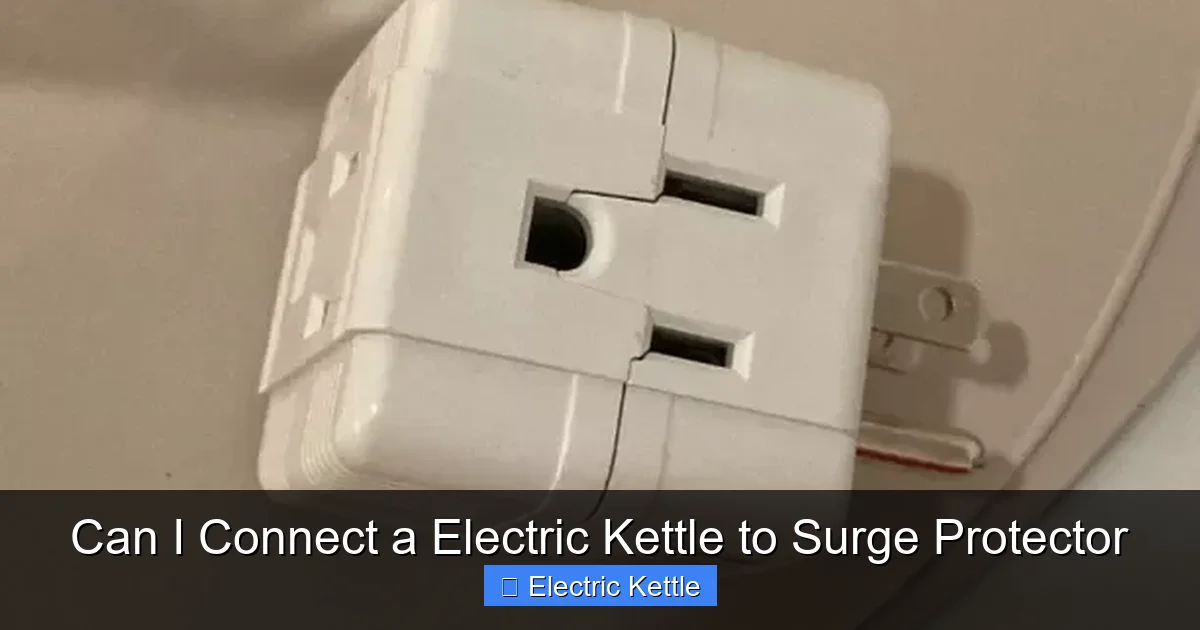
Visual guide about Can I Connect a Electric Kettle to Surge Protector
Image source: irrorwxhiqijjr5q.ldycdn.com
Before we dive into surge protectors, let’s talk about what your electric kettle actually needs to run safely. Most modern electric kettles are designed for speed and efficiency, which means they draw a lot of power—typically between 1500 and 3000 watts. That’s significantly more than your phone charger (which might use 10–20 watts) or even your laptop (around 60–100 watts).
To put this in perspective, imagine your home’s electrical system as a highway. Low-wattage devices are like bicycles—they take up little space and move slowly. But an electric kettle? That’s a semi-truck. It needs a wide lane and strong support to operate without causing traffic jams (or in this case, tripped circuits).
The key number to look for on your kettle is its **wattage rating**, usually printed on a label near the base or in the user manual. For example, a common 1.7-liter kettle might list 1500 watts, while a high-performance model could go up to 3000 watts. This number tells you how much electrical power the kettle consumes when it’s boiling water.
Now, here’s the catch: your surge protector must be able to handle that load. If your kettle uses 1800 watts and your surge protector is only rated for 1000 watts, you’re asking for trouble. The protector wasn’t built to manage that kind of energy flow, and it could overheat, melt, or fail entirely.
Why Wattage Matters More Than Voltage
You might also see voltage listed on your kettle—usually 120V in North America or 230V in Europe and other regions. While voltage is important for compatibility (you don’t want to plug a 230V kettle into a 120V outlet without a converter), it’s wattage that determines whether your surge protector can safely handle the load.
Think of it this way: voltage is like water pressure in a hose, while wattage is the total amount of water flowing through it. Even if the pressure (voltage) is right, if the hose (surge protector) can’t handle the volume (wattage), it will burst.
So always prioritize wattage when deciding whether to use a surge protector. A quick rule of thumb: if your kettle uses more than 1500 watts, only use a surge protector that’s explicitly rated for 1800 watts or higher.
Types of Surge Protectors: Which Ones Are Safe for Kettles?
Not all surge protectors are built the same. In fact, many of the cheap power strips you find at discount stores are designed for low-power devices like lamps, clocks, or phone chargers—not heavy-duty kitchen appliances.
When it comes to electric kettles, you need a **heavy-duty surge protector** or a **power strip rated for high-wattage appliances**. These models are built with thicker internal wiring, better heat dissipation, and higher joule ratings (which measure how much surge energy they can absorb).
Heavy-Duty vs. Standard Surge Protectors
Standard surge protectors often have a maximum load rating of 10–15 amps and 1200–1800 watts. That might *seem* enough for a 1500-watt kettle, but it leaves no room for error. If your kettle draws slightly more power during startup (a common phenomenon called “inrush current”), or if you plug in another device simultaneously, you risk overloading the circuit.
Heavy-duty surge protectors, on the other hand, are built for demanding tasks. They typically feature:
– **Higher wattage ratings** (1800–2000+ watts)
– **Thicker gauge wires** (14-gauge or lower, compared to 16-gauge in standard models)
– **Robust housing** made from flame-retardant materials
– **Individual switches** for each outlet, allowing you to control power flow
Look for labels like “For Appliances,” “Industrial Grade,” or “High-Power Use” on the packaging. Brands like Tripp Lite, Belkin, and APC often offer models specifically designed for microwaves, space heaters, and yes—electric kettles.
Smart Surge Protectors: A Modern Option
Some newer surge protectors come with smart features like USB ports, app control, or automatic shutoff when a device is fully charged. While these can be convenient, be cautious. Many smart models are optimized for low-power electronics and may not handle the sudden surge of a boiling kettle.
If you do choose a smart surge protector, double-check the wattage rating and ensure it’s compatible with high-draw appliances. Also, avoid models that rely on Wi-Fi or Bluetooth for critical safety functions—mechanical overload protection is always more reliable.
Safety Risks of Using the Wrong Surge Protector
Using an undersized or low-quality surge protector with your electric kettle isn’t just inefficient—it’s dangerous. Here are the most common risks you could face:
Overheating and Melting
When a surge protector is overloaded, the internal components can’t dissipate heat fast enough. This leads to overheating, which may cause the plastic casing to warp, melt, or even catch fire. You might notice a burning smell, discoloration around the outlets, or the protector feeling unusually warm to the touch.
In extreme cases, melted plastic can expose live wires, creating a serious shock hazard. This is especially risky in kitchens, where water and electricity don’t mix.
Tripped Circuit Breakers
Even if your surge protector doesn’t fail, overloading it can cause your home’s circuit breaker to trip. This is actually a good thing—it means your home’s electrical system is working as intended to prevent fires. But frequent tripping is a sign that you’re pushing your circuit too hard.
For example, if your kitchen circuit is rated for 15 amps (about 1800 watts at 120V), and you’re running a 1500-watt kettle plus a 600-watt toaster on the same circuit, you’ve already exceeded the limit. The breaker will shut off to protect the wiring—but it’s better to avoid this situation altogether.
Reduced Lifespan of Your Kettle
Surge protectors that can’t handle the load may deliver inconsistent power to your kettle. This can cause the heating element to work harder than necessary, leading to premature wear and shorter lifespan. Over time, you might notice slower boiling times, strange noises, or even complete failure.
Fire Hazard
The most serious risk is fire. According to the National Fire Protection Association (NFPA), electrical failures or malfunctions are a leading cause of home fires in the U.S. Overloaded power strips and surge protectors contribute to many of these incidents.
A 2020 report found that nearly 40% of electrical fires involved misuse of extension cords or power strips—often with high-wattage appliances like space heaters, microwaves, and yes, electric kettles.
Best Practices for Safe Use
Now that you know the risks, let’s talk about how to use your electric kettle safely with a surge protector. These best practices will help you avoid problems and extend the life of both your kettle and your electrical setup.
1. Match Wattage Ratings
Always check the wattage rating on both your kettle and your surge protector. The protector should be rated for at least 20–30% higher than your kettle’s maximum draw. For example, if your kettle uses 1800 watts, choose a surge protector rated for 2200–2500 watts.
This buffer accounts for inrush current and ensures the protector isn’t running at 100% capacity, which can cause overheating over time.
2. Plug Directly When Possible
The safest option is to plug your electric kettle directly into a wall outlet. This eliminates any risk of overloading a surge protector and ensures maximum power delivery. If your outlet is behind a counter or hard to reach, consider installing a new one or using a short, high-quality extension cord rated for appliances.
3. Avoid Daisy-Chaining
Never plug a surge protector into another surge protector, extension cord, or power strip. This practice, known as “daisy-chaining,” increases resistance and heat buildup, significantly raising the risk of fire. It also makes it harder to identify which device is causing a problem if something goes wrong.
4. Use One Appliance Per Outlet
Even with a high-wattage surge protector, avoid plugging multiple high-power devices into the same strip. Your kettle alone can use nearly the entire capacity of a 15-amp circuit. Adding a toaster, coffee maker, or microwave could easily overload the system.
If you must use multiple appliances, spread them across different outlets on separate circuits.
5. Inspect Regularly
Check your surge protector regularly for signs of wear: frayed cords, loose outlets, discoloration, or a burning smell. Replace it immediately if you notice any damage. Most surge protectors have a limited lifespan—typically 3 to 5 years—even if they look fine.
Also, look for a “protected” indicator light. If it’s off, the surge protection has failed and the unit should be replaced.
6. Choose Certified Products
Only buy surge protectors that are certified by reputable organizations like UL (Underwriters Laboratories), ETL (Intertek), or CSA (Canadian Standards Association). These marks indicate the product has been tested for safety and performance.
Avoid no-name brands or products sold without clear labeling—they may not meet basic electrical standards.
Real-World Examples and Scenarios
Let’s look at a few common situations to see how these guidelines apply in practice.
Scenario 1: Small Apartment Kitchen
Maria lives in a studio apartment with only one kitchen outlet. She uses it for her microwave, coffee maker, and electric kettle. She recently bought a 1500-watt kettle and wants to plug it into a surge protector to free up space.
**What she should do:**
Maria should invest in a heavy-duty surge protector rated for at least 2000 watts. She should plug only the kettle into it and avoid using the microwave or coffee maker at the same time. Better yet, she could install a second outlet or use a smart power strip that automatically cuts power to lower-priority devices when the kettle is on.
Scenario 2: Office Break Room
At work, the break room has a single power strip shared by five employees. Everyone plugs in their kettles, phones, and laptops. One day, the strip starts smoking when two people boil water at once.
**What went wrong:**
The power strip was likely a low-wattage model not designed for multiple high-draw devices. The combined load exceeded its capacity, causing overheating.
**Solution:**
Replace the strip with an industrial-grade model rated for 2500+ watts. Limit kettle use to one at a time, or install additional outlets.
Scenario 3: Older Home with Outdated Wiring
John lives in a 1950s house with original wiring. His circuit breaker trips every time he boils water while the refrigerator is running.
**What’s happening:**
Older homes often have 15-amp circuits that can’t handle modern appliances. The fridge and kettle together exceed the circuit’s capacity.
**Fix:**
John should avoid using high-wattage appliances simultaneously. He could also consult an electrician about upgrading his kitchen circuit to 20 amps.
Conclusion
So, can you connect an electric kettle to a surge protector? The answer is a cautious yes—but only if you follow the right safety steps. Your kettle’s high wattage demands a surge protector that’s built for the job, not a cheap power strip meant for lamps and chargers.
Always check the wattage ratings, choose certified heavy-duty models, and avoid overloading circuits. When in doubt, plug your kettle directly into the wall. It’s the simplest, safest option.
Remember, electrical safety isn’t just about convenience—it’s about protecting your home, your appliances, and your family. A little caution goes a long way. So enjoy that perfectly brewed cup of tea, knowing you’ve made the smart choice.
Frequently Asked Questions
Can I plug a 3000-watt electric kettle into a standard surge protector?
No, a standard surge protector typically can’t handle 3000 watts. You’ll need an industrial-grade model rated for at least 3000–3500 watts to avoid overloading and fire risks.
Is it safe to use a surge protector with any electric kettle?
Only if the surge protector is rated for high-wattage appliances and matches or exceeds your kettle’s power draw. Always check the labels before plugging in.
What happens if I overload a surge protector with my kettle?
Overloading can cause overheating, melting, tripped breakers, or even electrical fires. The surge protector may fail silently or emit smoke and a burning smell.
Can I use a smart surge protector for my electric kettle?
Yes, but only if it’s specifically rated for high-wattage devices. Many smart models are designed for low-power electronics and may not handle the load safely.
Should I unplug my kettle after each use?
It’s a good safety practice, especially if you’re using a surge protector. Unplugging reduces standby power use and eliminates any risk of electrical issues when the kettle isn’t in use.
How often should I replace my surge protector?
Replace your surge protector every 3 to 5 years, or immediately if you notice damage, overheating, or if the “protected” light goes out. Surge protection degrades over time.