Heating milk in an electric kettle is possible but not recommended due to risks like scorching, burning, and damage to the kettle’s interior. While some modern kettles have milk settings, most are designed for water only—using them for milk can lead to clogs, odors, and costly repairs.
Key Takeaways
- Most electric kettles are not designed for milk: They lack the temperature control and non-stick surfaces needed to safely heat dairy without burning or sticking.
- Milk can scorch and leave stubborn residue: Proteins and fats in milk burn easily, creating a burnt smell and difficult-to-clean buildup inside the kettle.
- Using milk may void your warranty: Many manufacturers explicitly warn against heating anything other than water, and doing so could cancel your product guarantee.
- Some newer models have milk modes: High-end kettles with variable temperature settings and stainless steel interiors may safely warm milk—check your user manual.
- Safer alternatives exist: Use a saucepan, microwave, or dedicated milk frother to heat milk without risking your kettle.
- Cleaning is critical if you do use milk: Rinse immediately after use and soak with warm soapy water to prevent permanent staining or odor.
- Taste and safety matter: Overheated milk develops a skin, alters flavor, and may harbor bacteria if not handled properly.
📑 Table of Contents
- Can I Heat Milk in Electric Kettle? The Truth You Need to Know
- Why Most Electric Kettles Aren’t Designed for Milk
- When Is It Safe to Heat Milk in an Electric Kettle?
- The Risks of Heating Milk in a Standard Electric Kettle
- Safer Alternatives to Heating Milk
- How to Clean Your Kettle After Heating Milk (If You Must)
- Final Thoughts: Should You Heat Milk in an Electric Kettle?
Can I Heat Milk in Electric Kettle? The Truth You Need to Know
You’re craving a warm cup of hot chocolate or a creamy latte, and your electric kettle is right there—humming with convenience. It heats water in under three minutes, so why not use it for milk too? After all, it’s just a liquid, right? Well, not exactly. While it might seem like a time-saving hack, heating milk in an electric kettle comes with a host of potential problems that could cost you more than just a ruined drink.
Electric kettles are engineered primarily for one task: boiling water. Their heating elements, thermostats, and interior coatings are optimized for H₂O—not dairy. Milk behaves very differently when heated. It contains proteins, fats, and sugars that react under high heat, often leading to scorching, boiling over, or leaving behind a sticky residue. Even if your kettle survives the first use, repeated exposure to milk can degrade its performance, shorten its lifespan, and leave behind unpleasant odors that are hard to remove.
But don’t panic just yet. The answer isn’t a hard “no” across the board. Some modern electric kettles—especially those with advanced temperature controls and stainless steel interiors—are built to handle milk safely. However, these are the exception, not the rule. Before you pour that carton of whole milk into your kettle, it’s essential to understand the risks, the exceptions, and the smarter ways to warm your dairy.
Why Most Electric Kettles Aren’t Designed for Milk
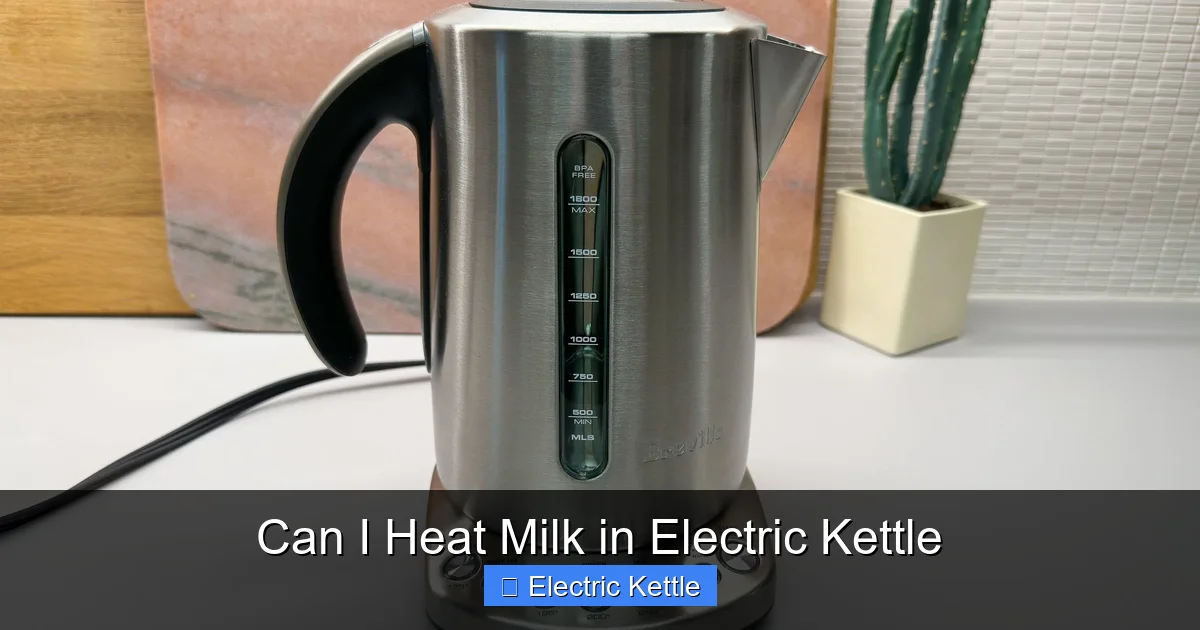
Visual guide about Can I Heat Milk in Electric Kettle
Image source: cdn.thewirecutter.com
To understand why heating milk in an electric kettle is risky, it helps to know how these appliances work. Most standard electric kettles use a concealed heating element at the base that rapidly heats water to boiling point—usually around 212°F (100°C). They rely on a thermostat to shut off automatically once the water reaches boiling temperature. This system is fast, efficient, and safe for water, but it’s not built for the complexities of milk.
Milk Burns Easily
Unlike water, milk contains proteins like casein and whey, as well as natural sugars such as lactose. When exposed to high heat, these components can denature and caramelize, leading to a burnt taste and a sticky film on the kettle’s interior. This is especially true near the heating element, where temperatures can spike well above boiling point before the thermostat kicks in. The result? A layer of scorched milk that’s not only unappetizing but also difficult to clean.
Boil-Over Risk
Milk has a lower surface tension than water and tends to foam when heated. This foam can rapidly expand and overflow from the kettle, creating a mess on your countertop and potentially damaging the electrical components underneath. Unlike water, which evaporates cleanly, milk spills leave behind a sticky, yellowish residue that can attract pests and emit a sour smell if not cleaned immediately.
Interior Coating Damage
Many budget and mid-range electric kettles feature non-stick coatings or plastic interiors to prevent limescale buildup and make cleaning easier. However, these materials aren’t designed to withstand the chemical changes that occur when milk is heated. The proteins and fats in milk can bond to non-stick surfaces, leading to discoloration, pitting, or even peeling over time. Once the coating is compromised, the kettle becomes harder to clean and may start to impart off-flavors to future batches of water.
Thermostat Inaccuracy
Most kettles are calibrated to detect the steam produced when water boils. Milk, however, doesn’t produce the same steam signature—especially when it forms a skin on the surface. This can confuse the thermostat, causing the kettle to overheat or fail to shut off at the right time. In extreme cases, this could lead to overheating, damage to the kettle, or even a fire hazard.
When Is It Safe to Heat Milk in an Electric Kettle?
Despite the risks, there are scenarios where heating milk in an electric kettle is not only possible but perfectly safe—provided you have the right appliance and follow proper guidelines.
Kettles with Milk or Variable Temperature Settings
Some premium electric kettles come equipped with specialized modes for heating milk, baby formula, or delicate teas. These models often feature:
– **Variable temperature control:** Allows you to set precise temperatures (e.g., 140°F to 185°F), which is ideal for warming milk without scalding.
– **Stainless steel interiors:** Resistant to staining and easier to clean than plastic or non-stick surfaces.
– **Slow-heat technology:** Gradually warms the liquid to prevent hot spots and boiling over.
– **Auto shut-off with milk detection:** Some advanced models use sensors to detect foam or viscosity changes and adjust heating accordingly.
Brands like Breville, Cuisinart, and Fellow offer kettles with these features. For example, the Breville BKE820XL Smart Kettle has a “Milk” setting that heats to 160°F (71°C)—perfect for frothing or warming without burning.
User Manual Verification
Before attempting to heat milk, always consult your kettle’s user manual. Manufacturers will clearly state whether the appliance is suitable for dairy. If the manual says “water only,” it’s best to respect that warning. Even if your kettle appears to handle milk fine the first few times, long-term use can still cause hidden damage that isn’t immediately visible.
Short-Term, Low-Temperature Use
If your kettle lacks a milk mode but has a keep-warm function or adjustable temperature, you might be able to warm milk gently—say, to 120°F (49°C) for a toddler’s bottle. However, this should be done sparingly and with caution. Never let the milk sit in the kettle for extended periods, and always rinse immediately after use.
The Risks of Heating Milk in a Standard Electric Kettle
Even if you’re careful, using a standard electric kettle for milk introduces several risks that go beyond mere inconvenience.
Residue and Odor Buildup
One of the most common complaints from people who’ve tried heating milk in their kettle is the lingering smell. Milk proteins and fats can seep into tiny crevices in the heating element or interior walls, creating a sour, burnt odor that’s hard to eliminate. Over time, this buildup can affect the taste of future beverages—even plain water may take on a faintly milky or burnt flavor.
Cleaning helps, but it’s not always enough. Scrubbing with vinegar or baking soda can remove surface residue, but deep-seated odors may persist. In severe cases, the only solution is to replace the kettle.
Voided Warranty
Most electric kettle manufacturers explicitly prohibit using their products for anything other than water. For instance, Hamilton Beach, OXO, and KitchenAid all state in their warranties that damage caused by heating milk, oil, or other liquids is not covered. If your kettle malfunctions after you’ve used it for milk, you’ll likely be on the hook for repairs or replacement—even if the damage seems unrelated.
Reduced Lifespan
Repeated exposure to milk can degrade internal components. The heating element may become coated with a insulating layer of burnt milk, reducing efficiency and increasing energy consumption. Thermostats and sensors can also become less accurate over time, leading to inconsistent heating or failure to shut off.
Health and Safety Concerns
Overheated milk can develop a skin on the surface, which some people find unappealing. More importantly, if milk is heated unevenly or left to sit, it can become a breeding ground for bacteria—especially if it’s not consumed immediately. Additionally, burning milk releases compounds that may irritate the respiratory system or trigger allergies in sensitive individuals.
Safer Alternatives to Heating Milk
Given the risks, it’s wise to explore safer, more effective ways to warm milk—especially if you don’t own a kettle with a milk mode.
Stovetop Method (Saucepan)
The classic and most reliable way to heat milk is on the stovetop. Here’s how:
1. Pour milk into a small saucepan.
2. Heat over low to medium heat, stirring constantly with a wooden or silicone spoon.
3. Watch for small bubbles around the edges—this indicates the milk is nearing 150°F (65°C).
4. Remove from heat just before it boils to prevent scorching.
This method gives you full control over temperature and prevents hot spots. It’s ideal for making hot chocolate, lattes, or warm milk for babies.
Microwave Method
For quick warming, the microwave is a convenient option:
1. Pour milk into a microwave-safe cup or mug.
2. Heat in 15- to 30-second intervals, stirring between each.
3. Check temperature with a food thermometer—aim for 120°F to 140°F (49°C to 60°C).
Be cautious: milk can superheat in the microwave, meaning it appears calm but erupts when disturbed. Always stir thoroughly before drinking.
Milk Frother or Steamer
If you’re a coffee lover, consider investing in a standalone milk frother or steam wand (often included with espresso machines). These devices are specifically designed to heat and aerate milk, producing creamy foam for cappuccinos and lattes. They’re safer, more efficient, and deliver better results than improvising with a kettle.
Electric Milk Warmer
For parents or frequent milk drinkers, an electric milk warmer is a worthwhile investment. These compact appliances gently heat bottles or cups of milk to the perfect temperature without the risk of burning. Some models even include timers and auto shut-off features for added safety.
How to Clean Your Kettle After Heating Milk (If You Must)
If you’ve already used your electric kettle for milk—or decide to try it once—proper cleaning is essential to minimize damage.
Immediate Rinse
As soon as you’re done, pour out any remaining milk and rinse the kettle with warm water. Don’t let it sit—dried milk is much harder to remove.
Soak and Scrub
Fill the kettle with warm water and a few drops of dish soap. Let it soak for 15–30 minutes. Use a soft sponge or bottle brush to gently scrub the interior, paying special attention to the heating element and spout.
Vinegar or Baking Soda Treatment
For stubborn residue or odors, try a natural cleaner:
– **Vinegar method:** Fill the kettle halfway with equal parts water and white vinegar. Boil, let sit for 15 minutes, then rinse thoroughly.
– **Baking soda method:** Mix 1–2 tablespoons of baking soda with water to form a paste. Apply to affected areas, scrub gently, then rinse.
Avoid abrasive scrubbers or harsh chemicals, as they can damage the interior coating.
Run a Water Cycle
After cleaning, fill the kettle with fresh water and boil it once or twice to flush out any lingering odors or cleaning agents. Discard the water—don’t drink it.
Final Thoughts: Should You Heat Milk in an Electric Kettle?
So, can you heat milk in an electric kettle? Technically, yes—but should you? For most people, the answer is no. Unless you own a high-end kettle with a dedicated milk setting, the risks far outweigh the convenience. Scorched milk, ruined interiors, voided warranties, and lingering odors are common consequences that can turn a simple kitchen hack into a costly mistake.
That said, if your kettle is specifically designed for milk and you follow the manufacturer’s instructions, it can be a safe and efficient option. Always prioritize safety, cleanliness, and long-term appliance care.
When in doubt, opt for a saucepan, microwave, or dedicated milk warmer. These methods are not only safer but often yield better-tasting results. Your kettle—and your taste buds—will thank you.
Frequently Asked Questions
Can I heat milk in any electric kettle?
No, most standard electric kettles are designed for water only. Heating milk can cause scorching, residue buildup, and damage to the interior. Only kettles with a milk mode or variable temperature settings should be used for dairy.
What happens if I boil milk in my electric kettle?
Boiling milk can cause it to scorch, foam over, and leave a sticky residue inside the kettle. This can lead to unpleasant odors, damage to the heating element, and potentially void your warranty.
How do I clean milk residue from my electric kettle?
Rinse immediately after use, then soak with warm soapy water. For tough stains, use a vinegar or baking soda solution. Avoid abrasive scrubbers to prevent damaging the interior.
Can I use my kettle for water after heating milk?
Yes, but only if you clean it thoroughly. Lingering milk residue can affect the taste of future drinks. Run a few cycles of boiling water to flush out any odors.
Are there electric kettles made for heating milk?
Yes, some premium models from brands like Breville and Cuisinart include milk settings, stainless steel interiors, and precise temperature controls designed for safe dairy heating.
Is it safe to heat breast milk or formula in an electric kettle?
It’s not recommended unless the kettle has a dedicated milk or formula mode. Overheating can destroy nutrients and create hot spots. Use a bottle warmer or stovetop method for safer results.