
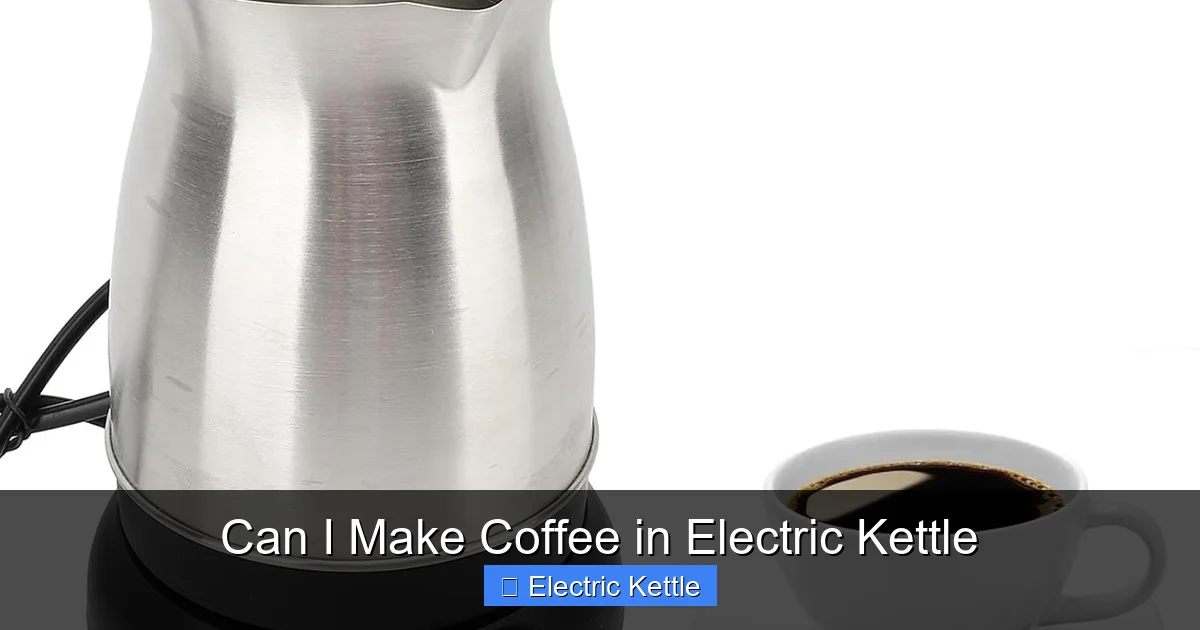
You can make coffee in an electric kettle, but it’s not ideal for every type of coffee or kettle. While it works in a pinch, doing so regularly may damage your appliance or affect taste. This guide covers safe methods, risks, and better alternatives so you can enjoy your brew without harming your kettle.
Key Takeaways
- Yes, you can make coffee in an electric kettle—but only with certain methods like instant coffee or French press-style brewing using a filter.
- Never add ground coffee directly into the kettle, as it can clog the heating element, damage the interior, and ruin the taste.
- Instant coffee is the safest option for electric kettles—just add hot water to the granules after boiling.
- Use a mesh infuser or tea ball if you want to steep coarse grounds, mimicking a pour-over method safely.
- Avoid frequent coffee brewing in your kettle to prevent residue buildup, odors, and potential long-term damage.
- Clean your kettle thoroughly after each coffee use to maintain performance and prevent cross-contamination with tea or other beverages.
- Consider a dedicated coffee maker for better flavor, consistency, and to protect your electric kettle’s lifespan.
📑 Table of Contents
- Can I Make Coffee in an Electric Kettle? The Truth Explained
- Why People Want to Make Coffee in an Electric Kettle
- Safe Ways to Make Coffee in an Electric Kettle
- What NOT to Do When Making Coffee in an Electric Kettle
- How to Clean Your Kettle After Making Coffee
- When to Use a Dedicated Coffee Maker Instead
- Final Thoughts: Is It Worth It?
Can I Make Coffee in an Electric Kettle? The Truth Explained
You’re in a rush. The coffee maker’s broken. Or maybe you’re camping and only have an electric kettle. The question pops into your head: Can I make coffee in an electric kettle? The short answer is yes—but with important caveats. While it’s technically possible, how you do it matters a lot. Doing it the wrong way can damage your kettle, ruin your coffee’s flavor, or even create a safety hazard.
Electric kettles are designed to heat water quickly and efficiently. They’re not built to brew coffee like a drip machine or French press. But that doesn’t mean you can’t use one in a pinch. With the right method and precautions, you can enjoy a decent cup of coffee using just your kettle. This guide will walk you through safe techniques, common mistakes to avoid, and when it’s better to reach for a proper coffee maker instead.
Why People Want to Make Coffee in an Electric Kettle
It’s not just about convenience—though that’s a big part of it. Many people turn to their electric kettle for coffee because they’re traveling, living in a small space, or simply don’t own a traditional coffee maker. College students in dorms, office workers with limited kitchen access, and backpackers with portable kettles all find themselves in situations where the kettle is the only heating appliance available.
Another reason? Speed. Electric kettles boil water faster than stovetop pots or microwaves. If you’re using instant coffee, you can go from cold water to hot brew in under five minutes. That’s a huge win when you’re running late or craving caffeine fast. Plus, some people prefer the simplicity—no filters, no machines, just water and coffee. But while the idea is appealing, it’s important to understand the limitations and risks before you start pouring grounds into your kettle.
The Convenience Factor
Let’s be honest—electric kettles are incredibly convenient. They heat water in minutes, often with temperature control for different beverages. If you’re already using yours for tea or hot chocolate, why not coffee? The logic makes sense. And for instant coffee lovers, it’s a no-brainer: boil water, pour over granules, stir, and enjoy. No extra equipment needed.
But convenience shouldn’t come at the cost of appliance longevity or coffee quality. Even if you’re in a hurry, taking a few extra seconds to use the right method can save you from a clogged kettle or a bitter, gritty cup of joe.
Common Scenarios Where Kettles Are Used for Coffee
Imagine this: You’re staying in a hotel room with no coffee maker, just a small electric kettle. You packed instant coffee, but your friend brought ground beans. Can you still make a decent cup? Yes—but not by dumping the grounds directly into the kettle. Instead, you could use a portable French press, a pour-over cone, or even a reusable tea infuser.
Or maybe you’re at work, and the office coffee machine is on the fritz. Your kettle is the only thing that heats water. In that case, instant coffee or a single-serve pour-over setup (using the kettle to heat water) is your best bet. The key is knowing what works and what doesn’t.
Safe Ways to Make Coffee in an Electric Kettle
The golden rule: never add loose coffee grounds directly into your electric kettle. Doing so can lead to clogs, burnt flavors, and permanent damage. But there are safe, effective methods that let you brew coffee using your kettle as the heat source.
The safest approach is to use your kettle to boil water, then transfer that hot water to another vessel for brewing. This keeps your kettle clean and protects its internal components. Here are the best methods to try:
Method 1: Instant Coffee (The Easiest Option)
Instant coffee is the most kettle-friendly option. It dissolves quickly in hot water and doesn’t leave residue. Here’s how to do it right:
- Add 1–2 teaspoons of instant coffee to your mug.
- Boil water in your electric kettle.
- Pour the hot water over the coffee granules.
- Stir well until fully dissolved.
- Add milk, sugar, or creamer if desired.
This method is fast, clean, and won’t harm your kettle. It’s perfect for travel, office use, or when you’re in a hurry. Just remember: instant coffee won’t taste as rich as freshly brewed, but it’s a solid backup.
Method 2: Using a Mesh Infuser or Tea Ball
If you prefer ground coffee over instant, a mesh infuser or tea ball can be a game-changer. These small, reusable filters hold your coffee grounds while allowing water to flow through—similar to a tea infuser.
- Fill the infuser with coarse-ground coffee (about 1 tablespoon per cup).
- Boil water in your kettle.
- Pour the hot water into a heat-safe mug or carafe.
- Place the infuser in the hot water and let it steep for 3–4 minutes.
- Remove the infuser and enjoy.
This method mimics a French press or pour-over and produces a cleaner cup than instant coffee. Just make sure the infuser is made of heat-resistant material and fits comfortably in your mug.
Method 3: French Press-Style Brewing (With a Twist)
You can simulate French press brewing using your kettle and a separate container. Here’s how:
- Add coarse-ground coffee to a heat-safe pitcher or large mug (1 tablespoon per 8 oz of water).
- Boil water in your electric kettle.
- Pour the hot water over the grounds.
- Stir gently and let steep for 4 minutes.
- Use a fine mesh strainer or cheesecloth to filter out the grounds before drinking.
This method gives you more control over strength and flavor. The key is using coarse grounds—they’re easier to strain and less likely to slip through filters.
Method 4: Pour-Over with a Cone (Kettle as Water Source)
If you have a pour-over cone (like a Hario V60 or Chemex), your electric kettle can be the perfect water heater. Simply:
- Place the cone over your mug or carafe.
- Add a paper or metal filter and rinse it with hot water.
- Add ground coffee (medium-fine grind).
- Boil water in your kettle.
- Slowly pour hot water over the grounds in a circular motion.
- Let it drip through and enjoy.
This method produces a clean, flavorful cup and is ideal if you already own a pour-over setup. Your kettle just provides the hot water—no direct contact with coffee.
What NOT to Do When Making Coffee in an Electric Kettle
Now that you know the safe methods, let’s talk about what to avoid. Some well-meaning coffee lovers make mistakes that can damage their kettle or ruin their brew. Here are the top no-nos:
Never Add Loose Grounds Directly to the Kettle
This is the biggest mistake. Pouring ground coffee into your kettle might seem like a shortcut, but it’s a recipe for disaster. The fine particles can:
- Clog the spout or heating element.
- Burn onto the bottom, creating a bitter taste.
- Leave oily residue that’s hard to clean.
- Void your warranty if damage occurs.
Even if you strain the coffee afterward, the grounds will still interact with the kettle’s interior. Over time, this can lead to permanent staining, odors, and reduced performance.
Don’t Use Fine Grinds in Infusers
If you’re using a mesh infuser, stick to coarse grounds. Fine grinds can slip through the mesh, ending up in your cup—and possibly in your kettle if you’re not careful. Coarse grounds are easier to contain and produce a smoother brew.
Avoid Repeated Coffee Use Without Cleaning
Even if you’re using safe methods, coffee oils and residue can build up over time. If you make coffee in your kettle regularly, clean it after every use. Otherwise, you might notice:
- A lingering coffee smell when boiling water for tea.
- Discoloration inside the kettle.
- Reduced heating efficiency.
Regular cleaning keeps your kettle in top shape and prevents cross-contamination between beverages.
How to Clean Your Kettle After Making Coffee
Cleaning is essential if you’ve used your kettle for coffee—even indirectly. Coffee oils are sticky and can cling to surfaces, affecting taste and performance. Here’s how to keep your kettle fresh:
Daily Rinse
After each use, rinse the kettle with warm water. If you used it to heat water for coffee, wipe the interior with a soft cloth to remove any residue.
Weekly Deep Clean
Once a week, give your kettle a deeper clean:
- Fill the kettle halfway with equal parts water and white vinegar.
- Boil the solution, then let it sit for 15–20 minutes.
- Pour out the mixture and rinse thoroughly with clean water.
- Boil fresh water 1–2 times to remove any vinegar taste.
This removes mineral buildup and coffee oils. For stubborn stains, add a tablespoon of baking soda to the vinegar solution.
Use a Bottle Brush for Hard-to-Reach Spots
If your kettle has a narrow opening, use a bottle brush to scrub the interior. Pay special attention to the heating element (if visible) and the spout.
Prevent Odors with Lemon
If your kettle smells like coffee, boil a mixture of water and lemon slices for 5–10 minutes. The citric acid neutralizes odors and leaves a fresh scent.
When to Use a Dedicated Coffee Maker Instead
While electric kettles can work in a pinch, they’re not designed for coffee brewing. For the best flavor, consistency, and appliance longevity, consider using a dedicated coffee maker. Here’s when it’s worth the switch:
You Drink Coffee Daily
If coffee is part of your daily routine, investing in a drip machine, French press, or pour-over setup is smart. These devices are built to handle coffee oils and grounds, and they deliver better taste.
You Prefer Freshly Brewed Coffee
Instant coffee and steeped methods can’t match the richness of freshly ground beans. If flavor is a priority, a proper coffee maker is the way to go.
You Want Consistency
Coffee makers offer precise water-to-coffee ratios, temperature control, and brewing times. Your kettle can’t replicate that level of control, especially for different roast levels or brew styles.
You Care About Appliance Lifespan
Using your kettle for coffee regularly increases wear and tear. A dedicated coffee maker protects your kettle and ensures both appliances last longer.
You Have the Space and Budget
Even basic coffee makers are affordable and take up minimal counter space. If you can make the investment, it’s worth it for the upgrade in quality and convenience.
Final Thoughts: Is It Worth It?
So, can you make coffee in an electric kettle? Absolutely—but with limits. It’s a great backup method for instant coffee or when using a separate brewing device. However, it’s not ideal for daily use or for brewing with loose grounds directly in the kettle.
The key is to use your kettle as a water heater, not a brewer. Keep your grounds contained, clean your kettle regularly, and know when to switch to a proper coffee maker. That way, you’ll enjoy great coffee without sacrificing your appliance—or your taste buds.
Whether you’re traveling, in a dorm, or just out of coffee makers, your electric kettle can be a helpful ally. Just remember: a little caution goes a long way. Brew smart, clean often, and savor every sip.
Frequently Asked Questions
Can I put coffee grounds directly in my electric kettle?
No, you should never put loose coffee grounds directly into your electric kettle. This can clog the spout, damage the heating element, and leave behind oily residue that’s hard to clean. Always use a filter, infuser, or brew the coffee separately.
What’s the best way to make coffee with an electric kettle?
The best method is to use your kettle to boil water, then pour it over instant coffee or use it with a French press, pour-over cone, or mesh infuser. This keeps your kettle clean and protects its performance.
Can I use my electric kettle for both coffee and tea?
Yes, but you must clean the kettle thoroughly between uses. Coffee oils can linger and affect the taste of tea. Rinse after each use and deep clean weekly with vinegar to prevent cross-contamination.
Will making coffee in my kettle void the warranty?
It depends on the manufacturer, but using your kettle for purposes other than heating water (like brewing coffee with grounds) could void the warranty if damage occurs. Check your user manual to be sure.
How do I remove coffee smell from my electric kettle?
Boil a mixture of water and lemon slices for 5–10 minutes, then rinse thoroughly. You can also use a vinegar solution (equal parts water and vinegar) to neutralize odors and remove residue.
Is instant coffee the only safe option for electric kettles?
Instant coffee is the safest and easiest option, but you can also use coarse grounds with a mesh infuser or brew coffee separately using the kettle’s hot water. Just avoid putting grounds directly into the kettle.