Using a moka pot with an electric kettle is not recommended and can be unsafe. Moka pots require direct, consistent heat from a stovetop or induction burner—electric kettles don’t provide the right kind of heat or control. Learn why this combo fails and what alternatives work best for great coffee at home.
If you’re a coffee lover, you’ve probably heard of the moka pot—that iconic stovetop brewer that makes rich, espresso-like coffee without an expensive machine. It’s simple, affordable, and delivers a bold cup that rivals café quality. But what if you don’t have a stovetop? Maybe you live in a dorm, rent a tiny apartment, or just rely on your trusty electric kettle for all your hot water needs. You might be wondering: *Can I use a moka pot with an electric kettle?*
It’s a fair question. After all, both devices involve hot water and brewing coffee. But here’s the truth: **no, you shouldn’t use a moka pot with an electric kettle—and here’s why.** While it might seem like a clever workaround, the two appliances aren’t compatible in the way you’d hope. The moka pot’s design depends on specific heat conditions that an electric kettle simply can’t provide. Attempting to use them together can lead to poor coffee, damaged equipment, and even safety hazards.
In this guide, we’ll break down exactly why this combo doesn’t work, what happens when you try it, and—most importantly—what you *should* do instead. Whether you’re a moka pot newbie or a seasoned brewer looking for alternatives, we’ve got practical tips, safety advice, and better brewing methods to help you get that perfect cup—no stove required.
Key Takeaways
- Moka pots need direct stovetop heat: They rely on steady, controlled heat to build pressure and brew coffee—electric kettles can’t deliver this.
- Electric kettles aren’t designed for moka pots: Their heating elements and flat bases don’t transfer heat efficiently to the moka pot’s bottom chamber.
- Safety risks include burns and damage: Placing a moka pot on an electric kettle can cause overheating, cracking, or even fire hazards.
- No proper pressure buildup: Without consistent heat, steam won’t build correctly, resulting in weak, under-extracted coffee.
- Better alternatives exist: Use a gas, electric coil, or induction stovetop—or try a French press or AeroPress for similar results without a stove.
- Preheating water helps—but not with an electric kettle: You can boil water separately, but the moka pot still needs direct heat to brew.
- Know your equipment’s limits: Always follow manufacturer guidelines to avoid damage and ensure safe, delicious coffee.
📑 Table of Contents
- How a Moka Pot Works (And Why Heat Matters)
- The Risks of Using a Moka Pot with an Electric Kettle
- What Happens When You Try It (Real-World Examples)
- Better Alternatives to Using an Electric Kettle with a Moka Pot
- Tips for Safe and Effective Moka Pot Brewing
- Conclusion: Stick to the Right Tools for the Job
How a Moka Pot Works (And Why Heat Matters)
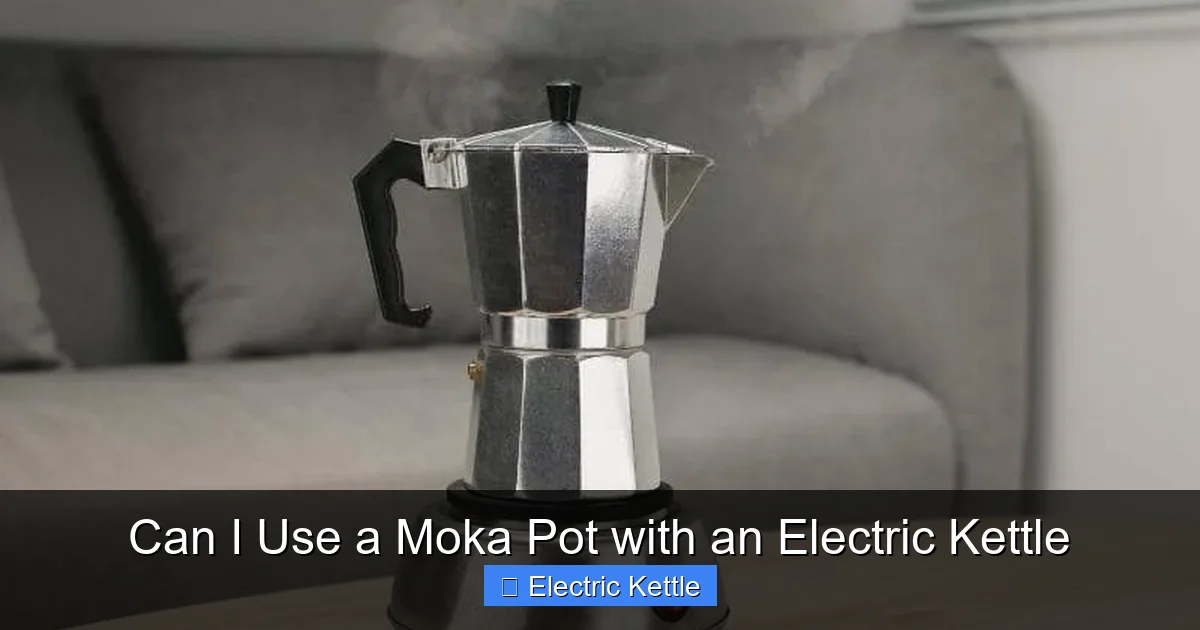
To understand why an electric kettle won’t cut it, let’s first look at how a moka pot actually brews coffee. The moka pot—also known as a stovetop espresso maker—has three main parts: a bottom chamber for water, a middle filter basket for ground coffee, and a top chamber where the brewed coffee collects.
When placed on a heat source, the water in the bottom chamber heats up and turns into steam. This steam creates pressure, which forces the hot water up through the coffee grounds and into the top chamber. The result? A strong, concentrated coffee that’s richer than drip but not quite as intense as true espresso.
The Role of Consistent, Direct Heat
The entire brewing process hinges on **steady, controlled heat**. The water needs to reach boiling point gradually, creating enough pressure to push through the coffee without overheating or burning the grounds. This is why moka pots are designed for stovetops—gas, electric coil, or induction. These heat sources provide direct contact and even distribution, allowing the pot to heat uniformly.
If the heat is too low, the water won’t generate enough steam, and the coffee will be weak and under-extracted. If the heat is too high, the water boils too quickly, leading to bitter, over-extracted coffee—or worse, the pot could crack or the safety valve could fail.
Why Electric Kettles Don’t Fit the Bill
Electric kettles, on the other hand, are built for one job: boiling water quickly and efficiently. They heat water internally using an immersed or concealed heating element. Once the water reaches boiling point, the kettle automatically shuts off. There’s no ongoing heat source, no flame, and no way to maintain a steady temperature.
Even if you try to place a moka pot on top of an electric kettle (which we strongly advise against), the kettle’s base isn’t designed to transfer heat to another object. It’s made to heat water, not to act as a stovetop. The flat, often plastic or insulated surface won’t conduct heat effectively to the moka pot’s metal bottom.
In short: **an electric kettle can’t provide the sustained, direct heat a moka pot needs to brew properly.**
The Risks of Using a Moka Pot with an Electric Kettle
Visual guide about Can I Use a Moka Pot with an Electric Kettle
Image source: homeapricot.com
Now that we know why the two devices aren’t compatible, let’s talk about the real dangers of trying to force them together. While it might seem harmless to place a moka pot on an electric kettle just to see what happens, the risks far outweigh any potential benefit.
1. Ineffective Heat Transfer
Electric kettles are not designed to heat other objects. Their heating elements are optimized for water, not metal pots. When you place a moka pot on top, the heat transfer is minimal and uneven. The bottom of the moka pot may not get hot enough to boil the water inside, meaning no steam, no pressure, and no coffee.
Even if some heat does transfer, it’s unlikely to be consistent. The kettle might shut off before the water reaches boiling point, or the heat could be too weak to generate the necessary pressure. The result? A half-brewed, lukewarm mess that tastes like disappointment.
2. Damage to Your Equipment
Both your electric kettle and your moka pot could be damaged in the process. Electric kettles aren’t built to support the weight or heat demands of another appliance. Placing a heavy moka pot on top can warp the kettle’s base, crack the housing, or damage the internal components.
Similarly, the moka pot’s aluminum or stainless steel body may not respond well to indirect or inconsistent heat. Over time, this can lead to warping, discoloration, or even cracks—especially if the pot overheats in one spot while staying cool in another.
3. Safety Hazards
This is the biggest concern. Electric kettles are electrical appliances with heating elements that can overheat if misused. Placing a metal object like a moka pot on top can trap heat, cause the kettle to overwork, or even lead to electrical shorts.
There’s also the risk of burns. If the moka pot does get hot—even partially—it can become dangerously hot to the touch. Steam escaping from the sides or the safety valve can cause scalding. And if the kettle malfunctions or the moka pot cracks under pressure, you could be dealing with hot water, steam, and broken glass or metal.
4. Fire Risk
In extreme cases, the combination of electrical components, metal, and trapped heat can create a fire hazard. If the kettle’s thermostat fails or the moka pot blocks ventilation, the internal temperature could rise to dangerous levels. This is especially risky if the kettle is left unattended—something many people do when brewing coffee.
5. Voided Warranties
Using your electric kettle in a way it wasn’t designed for—like heating another appliance—will almost certainly void the manufacturer’s warranty. If something goes wrong, you’re on your own. The same goes for the moka pot. Most manufacturers specify that the pot should only be used on stovetops. Deviating from these instructions removes any protection or support you might have had.
What Happens When You Try It (Real-World Examples)
You might be thinking, “But what if I just try it once? How bad could it be?” Let’s look at what actually happens when people attempt to use a moka pot with an electric kettle.
Case Study: The Lukewarm Attempt
Sarah, a college student living in a dorm with only an electric kettle, decided to try brewing coffee with her new moka pot. She filled the bottom chamber with water, added finely ground coffee to the filter, and placed the pot on top of her kettle. She turned the kettle on and waited.
After five minutes, the kettle shut off—water had boiled, but the moka pot hadn’t heated up enough to brew. The water inside was warm, not boiling. She tried again, leaving the kettle on longer, but the pot still didn’t get hot. The result? A weak, sour cup that tasted like hot water with a hint of coffee.
Case Study: The Overheated Fiasco
Mark, another moka pot enthusiast, tried a different approach. He placed his moka pot on the kettle and let it run longer, hoping the heat would build. This time, the bottom of the moka pot did get hot—but unevenly. One side was scorching while the other stayed cool.
The coffee came out bitter and burnt, with a metallic aftertaste. Worse, the kettle’s base was warped from the heat, and the moka pot’s handle had started to loosen. He had to replace both appliances.
Case Study: The Near-Miss
Lisa tried using her electric kettle to preheat water, then poured it into the moka pot and placed it on a hot plate. While this worked better, she realized she could have just used the hot plate directly. The kettle added an extra step without improving the brew.
These examples show a clear pattern: **trying to use a moka pot with an electric kettle leads to frustration, wasted coffee, and potential damage.** It’s not worth the risk.
Better Alternatives to Using an Electric Kettle with a Moka Pot
So, if you can’t use your electric kettle to brew with a moka pot, what *can* you do? The good news is there are several safe, effective alternatives—even if you don’t have a traditional stovetop.
Option 1: Use a Portable Induction Hot Plate
If you don’t have a stovetop, a portable induction hot plate is your best bet. These compact devices plug into any outlet and provide the direct, controlled heat a moka pot needs. They’re affordable (often under $30), energy-efficient, and safe to use in dorms or small spaces.
Just make sure your moka pot is compatible with induction (most stainless steel models are; aluminum ones are not). Place the pot on the hot plate, set the temperature to medium, and brew as usual. You’ll get the same rich, full-bodied coffee you’d get from a stovetop.
Option 2: Try a French Press
If you’re looking for a strong, full-bodied coffee without a stove, the French press is a great alternative. It uses immersion brewing—steeping coarse coffee grounds in hot water—and produces a rich, robust cup similar to a moka pot.
All you need is hot water (which your electric kettle can provide) and a French press. Simply add coffee, pour in hot water, wait 4 minutes, press down the plunger, and pour. It’s simple, mess-free, and delivers excellent flavor.
Option 3: Use an AeroPress
The AeroPress is another excellent option for stove-free brewing. It uses pressure to extract coffee quickly, resulting in a smooth, concentrated brew that’s similar to espresso.
Like the French press, it only requires hot water—perfect for your electric kettle. Add coffee, pour water, stir, wait 1–2 minutes, then press. You can even make iced coffee or cold brew with it. It’s portable, easy to clean, and great for travel.
Option 4: Preheat Water, Then Use a Hot Plate or Camping Stove
If you already have a moka pot and want to use it, consider preheating the water in your electric kettle, then transferring it to the moka pot and placing the pot on a safe heat source.
For example, you could use a small camping stove (many are designed for indoor use) or a portable electric burner. This way, you’re using the kettle for what it’s good at—heating water—while still getting the proper brewing conditions for your moka pot.
Option 5: Upgrade to a Stovetop-Compatible Setup
If you’re serious about moka pot brewing, consider investing in a small electric coil or gas burner. Many are designed for small spaces and can be used in apartments, offices, or RVs. They provide the consistent heat your moka pot needs and are safer than improvising with an electric kettle.
Tips for Safe and Effective Moka Pot Brewing
Whether you’re using a stovetop or a hot plate, here are some tips to get the best results from your moka pot:
Use Fresh, Medium-Fine Ground Coffee
Moka pots work best with a grind size between medium and fine—similar to table salt. Too fine, and the coffee will be bitter; too coarse, and it will be weak. Use freshly ground beans for the best flavor.
Fill the Water to the Safety Valve
Never fill the water above the safety valve in the bottom chamber. This ensures proper pressure buildup and prevents overheating.
Heat on Medium, Not High
High heat can cause the coffee to brew too quickly, leading to bitterness. Medium heat allows for a slower, more controlled extraction.
Listen for the Gurgle
When the coffee starts to flow into the top chamber, you’ll hear a gurgling sound. Once it becomes a steady stream, remove the pot from the heat. Don’t let it boil dry.
Clean After Every Use
Rinse the pot with warm water (no soap, unless specified by the manufacturer). Let it air dry completely to prevent rust or residue buildup.
Conclusion: Stick to the Right Tools for the Job
So, can you use a moka pot with an electric kettle? The answer is a firm **no**—not safely, not effectively, and not without risk. While it’s tempting to improvise, the moka pot’s design requires direct, consistent heat that an electric kettle simply can’t provide.
Instead of risking damage to your equipment or your safety, explore better alternatives. A portable hot plate, French press, or AeroPress can deliver excellent coffee without a stovetop. And if you’re committed to the moka pot experience, invest in a proper heat source.
Remember: great coffee starts with the right tools. Don’t compromise on safety or quality just to save a step. With the right setup, you can enjoy rich, bold coffee anytime—even without a stove.
Frequently Asked Questions
Can I use a moka pot with an electric kettle if I preheat the water?
Preheating water in an electric kettle helps, but the moka pot still needs direct heat to brew. You’d need a separate heat source like a hot plate to complete the process.
What happens if I place a moka pot on an electric kettle?
The kettle won’t transfer enough heat, the coffee will be weak, and you risk damaging both appliances or causing a safety hazard.
Can I use an electric kettle to make espresso-like coffee?
Not with a moka pot. But you can use it to heat water for a French press, AeroPress, or pour-over, which can make strong, espresso-style coffee.
Is it safe to put metal on an electric kettle?
No. Electric kettles aren’t designed to heat other objects. Placing metal on top can cause overheating, damage, or fire.
What’s the best alternative to a moka pot without a stove?
A French press or AeroPress are excellent stove-free options that use hot water from your electric kettle to make rich, full-bodied coffee.
Can I use a moka pot on an induction cooktop?
Yes, as long as the moka pot is made of induction-compatible material (like stainless steel). Aluminum moka pots won’t work on induction.