Yes, you can use an electric kettle on a car power converter—but only if your setup matches the kettle’s high wattage demands. Most standard car inverters aren’t powerful enough, so choosing the right converter and kettle is crucial. With proper planning, you can enjoy hot coffee or tea anywhere your vehicle goes.
Have you ever been on a long road trip, camping in the wilderness, or working remotely from your van, and suddenly craved a steaming cup of tea or instant coffee? You reach for your trusty electric kettle—only to remember you’re not near an outlet. That’s when the question hits: *Can I use an electric kettle on a car power converter?*
It’s a common dilemma for travelers, digital nomads, campers, and even busy professionals who spend hours in their vehicles. The idea of brewing hot water using your car’s battery sounds convenient—and technically possible—but it’s not as simple as plugging in and pressing start. Electric kettles are power-hungry appliances, and your car’s electrical system wasn’t designed to handle such high loads without the right equipment.
In this guide, we’ll break down everything you need to know about using an electric kettle with a car power converter. We’ll explore how these devices work, what kind of inverter you’ll need, the risks involved, and smarter alternatives if your setup isn’t up to the task. By the end, you’ll know exactly whether your dream of roadside tea is realistic—or if it’s time to rethink your strategy.
Key Takeaways
- Power Requirements Matter: Electric kettles typically need 1000–1800 watts, far exceeding what most basic car inverters provide.
- Inverter Capacity Is Key: You’ll need a pure sine wave inverter rated at least 2000 watts continuous (and 3000+ surge) to safely run most kettles.
- Vehicle Electrical System Limits: Your car’s alternator and battery must support the load—older or smaller vehicles may struggle.
- Kettle Type Affects Feasibility: Low-wattage travel kettles (under 600W) are more realistic for car use than full-sized models.
- Safety First: Overloading circuits can cause blown fuses, dead batteries, or even fire hazards—always monitor usage.
- Alternative Options Exist: Portable butane stoves, thermos flasks, or 12V heating elements offer safer, simpler hot water solutions on the road.
- Plan Ahead: Test your setup at home before relying on it during travel to avoid disappointment or damage.
📑 Table of Contents
- Understanding How Electric Kettles and Car Power Converters Work
- Power Requirements: Why Most Car Inverters Fall Short
- Choosing the Right Inverter for Your Electric Kettle
- Vehicle Compatibility and Electrical System Considerations
- Safer and More Practical Alternatives to Using a Kettle in Your Car
- Real-World Tips for Safe and Successful Use
Understanding How Electric Kettles and Car Power Converters Work
To answer whether you can use an electric kettle on a car power converter, you first need to understand how both devices function—and why they don’t always play nicely together.
An electric kettle heats water using an internal heating element, usually powered by standard household AC electricity (120V in the U.S., 230V in Europe). Most countertop kettles draw between 1200 and 1800 watts of power—that’s enough to boil a liter of water in just a few minutes. This high wattage is what makes them efficient at home but challenging in a vehicle.
On the other hand, your car runs on a 12-volt DC electrical system. The battery stores energy, and the alternator recharges it while the engine runs. To power AC appliances like kettles, you need a device called a power inverter—or car power converter. This gadget converts your car’s 12V DC power into 120V or 230V AC power, mimicking a wall outlet.
However, not all inverters are created equal. Basic models found in gas stations or big-box stores often cap out at 300–500 watts—nowhere near enough for a typical kettle. Even if the inverter claims to handle higher loads, many can’t sustain peak power for more than a few seconds without overheating or shutting down.
So while the concept seems straightforward—plug kettle into inverter, inverter into cigarette lighter—the reality involves matching power demands, understanding electrical limits, and ensuring safety. It’s not impossible, but it requires careful planning.
Power Requirements: Why Most Car Inverters Fall Short
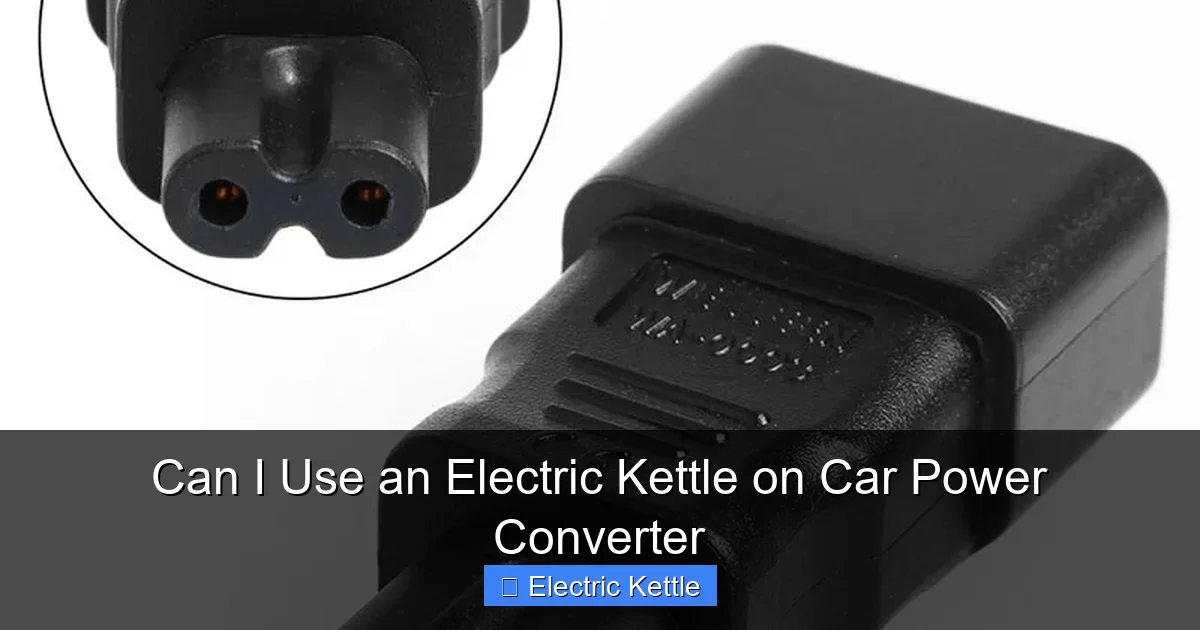
Visual guide about Can I Use an Electric Kettle on Car Power Converter
Image source: images.nexusapp.co
Let’s talk numbers—because when it comes to power, details matter.
A standard electric kettle uses anywhere from 1000 to 1800 watts. For comparison, a laptop might use 60 watts, a phone charger 10 watts, and a small cooler 50 watts. Your kettle is essentially a space heater disguised as a kitchen appliance—it needs serious juice to work quickly.
Now consider your car’s electrical output. The average car battery delivers around 400–600 cold cranking amps (CCA), but that’s for starting the engine, not running appliances. The alternator typically produces 70–150 amps at 12 volts, which translates to roughly 840–1800 watts of continuous power—*if* everything else in the car is off.
But here’s the catch: most inverters plugged into the cigarette lighter socket are limited to 150–200 watts due to fuse and wiring constraints. Even if you buy a 1000-watt inverter, plugging it into the lighter socket may still max out at 150 watts because the circuit isn’t designed for heavier loads.
That’s why serious users hardwire their inverters directly to the car battery using thick gauge cables and appropriate fuses. This bypasses the lighter socket’s limitations and allows the inverter to draw more current safely.
Even then, running a 1500-watt kettle for 5 minutes consumes about 125 watt-hours of energy. If your car battery has a capacity of 50 amp-hours (common in sedans), that’s over 20% of its total charge—just for one boil! Without the engine running, you could drain the battery enough to prevent starting the car.
This is why experts recommend only using high-wattage appliances like kettles while the engine is running. The alternator can replenish some of the lost charge, though prolonged use still strains the system.
Choosing the Right Inverter for Your Electric Kettle
If you’re serious about using an electric kettle in your car, your inverter choice is make-or-break.
Not all inverters are suitable for resistive loads like kettles, which draw high surge currents when first turned on. Cheap modified sine wave inverters may struggle with these spikes, causing the kettle to underperform or the inverter to shut off unexpectedly.
Instead, opt for a **pure sine wave inverter**. These deliver clean, stable AC power identical to grid electricity, making them ideal for sensitive or high-demand devices. They’re more expensive than modified sine wave models, but worth it for reliability and safety.
Next, check the wattage rating. Look for an inverter with:
– **Continuous power rating**: At least 2000 watts (to handle 1500W kettles with headroom)
– **Surge/peak rating**: 3000+ watts (to manage startup surges)
– **Input voltage**: 12V DC (standard for most cars)
– **Output voltage**: Matches your kettle (120V or 230V)
For example, a 2500W pure sine wave inverter like the Renogy 2000W or Krieger KR2000 can comfortably run a 1500W kettle while leaving room for other devices.
Installation matters too. As mentioned earlier, avoid the cigarette lighter for anything over 200W. Instead, mount the inverter securely in your vehicle and connect it directly to the battery terminals using 4-gauge or thicker cables (check manufacturer specs). Include an inline fuse within 12 inches of the battery to protect against short circuits.
Also, ensure your vehicle’s alternator can keep up. Older cars or those with high electrical demands (lights, AC, infotainment) may not generate enough surplus power. Consider upgrading to a high-output alternator if you plan frequent kettle use.
Finally, never run the inverter for extended periods with the engine off. Always monitor battery voltage—if it drops below 12.2V, stop using high-wattage devices to avoid a dead battery.
Vehicle Compatibility and Electrical System Considerations
Your car isn’t just a box on wheels—it’s a complex electrical ecosystem. And whether your kettle works depends heavily on your vehicle’s capabilities.
Start with the battery. A healthy car battery should read around 12.6V when fully charged (engine off). Under load, voltage drops. If it falls below 11.8V while running the kettle, your battery is struggling—and may not restart the car.
Larger vehicles like SUVs, trucks, and RVs often have bigger batteries (70–100Ah) and higher-output alternators (150–200A), giving them more headroom for power-hungry devices. Compact cars, hybrids, or older models may lack this buffer.
Hybrid and electric vehicles (EVs) present unique challenges. Many EVs have separate 12V auxiliary batteries that aren’t recharged by driving alone—they rely on the main traction battery. Running a kettle could drain the 12V system, triggering warning lights or even disabling key functions.
Even in traditional ICE (internal combustion engine) vehicles, prolonged kettle use can strain the alternator. Alternators aren’t designed to run at full capacity for long—they’re meant to recharge the battery and power essentials. Overworking one can lead to overheating, premature failure, or blown fuses.
Another factor: cabin accessories. If your car’s AC, heated seats, radio, and lights are all on, you’re already drawing significant power. Adding a kettle pushes the system toward its limit.
To test compatibility, try this simple experiment at home:
1. Start your car and let it idle.
2. Turn off all non-essential electronics.
3. Plug in your inverter and kettle.
4. Turn on the kettle and monitor the dashboard voltage gauge (or use a multimeter).
If voltage stays above 13.5V, your system is handling the load well. If it dips below 12.5V, reconsider your plan.
Remember: safety first. Never ignore warning signs like dimming lights, slow engine cranking, or burning smells. These indicate electrical stress that could escalate into bigger problems.
Safer and More Practical Alternatives to Using a Kettle in Your Car
Let’s be honest: while it’s *possible* to use an electric kettle with a car power converter, it’s often more trouble than it’s worth. The risk of draining your battery, damaging your inverter, or straining your vehicle isn’t trivial—especially when simpler, safer alternatives exist.
Here are five better options for getting hot water on the go:
**1. 12V Travel Kettles**
These compact kettles plug directly into your cigarette lighter and draw only 200–600 watts. Brands like Secura, Ovente, and Cuisinart offer models that boil 0.5–1 liter in 8–15 minutes. They’re slower than home kettles but far gentler on your car’s system. Perfect for tea, instant coffee, or oatmeal.
**2. Portable Butane Stoves**
Lightweight, affordable, and widely available, butane stoves heat water in a small pot or mug. They’re ideal for camping or roadside stops. Just remember to use them in well-ventilated areas and never inside an enclosed vehicle.
**3. Insulated Thermos Flasks**
Boil water at home or at a rest stop, then pour it into a high-quality thermos (like Hydro Flask or Zojirushi). It’ll stay hot for 6–12 hours—no electricity needed. Great for multi-day trips or when outlets are scarce.
**4. USB or Battery-Powered Heating Cups**
Newer gadgets like the Ember Mug or USB heating coasters let you reheat beverages slowly. They won’t boil water, but they’ll keep your coffee warm for hours using minimal power.
**5. Camping-Specific Water Heaters**
Devices like the Jetboil or portable immersion heaters (e.g., Hot Sticks) are designed for outdoor use. They’re efficient, safe, and often integrate fuel and heating elements in one unit.
Each of these options reduces strain on your vehicle, eliminates the need for a heavy-duty inverter, and offers reliable performance without risking a dead battery. Plus, many are cheaper than a high-wattage inverter setup.
Real-World Tips for Safe and Successful Use
If you’ve weighed the risks and still want to try using your electric kettle with a car power converter, follow these practical tips to maximize safety and success:
– **Test at home first**: Set up your inverter and kettle in your driveway with the engine running. Time how long it takes to boil and check voltage stability.
– **Use the kettle sparingly**: Limit use to once or twice per trip to avoid excessive drain.
– **Keep the engine running**: Never boil water with the engine off—even with a large battery.
– **Monitor battery health**: Invest in a digital voltmeter or battery monitor to track voltage in real time.
– **Choose a low-wattage kettle**: If possible, use a 1000W kettle instead of a 1800W model to reduce demand.
– **Avoid peak hours**: Don’t run the kettle while using other high-draw devices (AC, defroster, etc.).
– **Carry jumper cables or a portable jump starter**: Just in case you accidentally drain the battery.
– **Follow inverter instructions**: Never exceed the rated wattage or run the inverter in enclosed spaces without ventilation.
And remember: convenience shouldn’t compromise safety. If your setup feels unreliable or risky, switch to one of the alternatives above. Your car—and your peace of mind—will thank you.
Using an electric kettle on a car power converter is technically feasible, but it demands careful consideration of power needs, equipment quality, and vehicle limitations. While high-wattage pure sine wave inverters can make it work, the risks often outweigh the rewards. For most travelers, simpler, safer solutions like 12V kettles, thermoses, or portable stoves deliver hot water without the hassle. Ultimately, the best approach depends on your specific vehicle, travel style, and how much you truly need that roadside brew. With the right knowledge and tools, you can stay caffeinated—and safe—wherever the road takes you.
Frequently Asked Questions
Can I plug my electric kettle into my car’s cigarette lighter?
No, not safely. Most cigarette lighter sockets are fused for 10–15 amps (120–180 watts), far below what a typical electric kettle requires (1000+ watts). Attempting to do so can blow fuses, damage wiring, or cause a fire.
What size inverter do I need for a 1500W electric kettle?
You need a pure sine wave inverter rated for at least 2000 watts continuous power and 3000+ watts surge capacity. This ensures it can handle the kettle’s startup spike and sustain boiling without overheating.
Will using a kettle drain my car battery?
Yes, especially if the engine is off. A 1500W kettle running for 5 minutes uses about 125 watt-hours—enough to significantly drain a standard car battery. Always run the engine while using high-wattage devices.
Can I use a modified sine wave inverter with my kettle?
It’s not recommended. Modified sine wave inverters can cause kettles to underperform, overheat, or trigger shutdowns due to inconsistent power delivery. Pure sine wave inverters provide cleaner, safer power.
Are there electric kettles made specifically for cars?
Yes! 12V travel kettles plug directly into the cigarette lighter and use 200–600 watts. They’re slower than home kettles but much safer and more practical for vehicle use.
Is it safe to boil water in a car while driving?
No—never operate any heating device while actively driving. Pull over to a safe location, engage the parking brake, and keep the engine running. Hot water can splash or spill, creating a burn hazard or distraction.