Yes, you can use CLR in your electric kettle—but only if you follow the right steps and safety precautions. CLR (Calcium, Lime, and Rust remover) is a powerful descaling agent that effectively removes mineral buildup, but improper use can damage your kettle or leave harmful residues. This guide walks you through everything you need to know to safely clean your electric kettle with CLR and keep it running smoothly.
If you’ve ever noticed a chalky white film inside your electric kettle or noticed it taking longer to heat water, you’re not alone. Mineral buildup—especially from hard water—is one of the most common issues electric kettle owners face. Over time, calcium and lime deposits accumulate on the heating element and interior surfaces, reducing efficiency and potentially affecting the taste of your tea or coffee. That’s where cleaners like CLR come into play. But the big question on many people’s minds is: Can I use CLR in my electric kettle?
The short answer is yes—but with important caveats. CLR, which stands for Calcium, Lime, and Rust remover, is a commercial-grade cleaner designed to tackle tough mineral deposits. It’s widely used in bathrooms, kitchens, and appliances to dissolve stubborn scale. However, because it’s a chemical-based product, using it incorrectly can damage your kettle or leave behind residues that aren’t safe to ingest. That’s why it’s crucial to understand not just if you can use CLR, but how to use it safely and effectively.
In this comprehensive guide, we’ll explore everything you need to know about using CLR in your electric kettle. From understanding what CLR is and how it works, to step-by-step cleaning instructions, safety tips, and alternative solutions, we’ve got you covered. Whether you’re dealing with light scaling or a seriously crusted heating element, this article will help you restore your kettle to peak performance—without risking damage or health concerns.
Key Takeaways
- CLR is effective for descaling: It dissolves calcium, lime, and rust deposits that build up inside electric kettles over time.
- Not all kettles are compatible: Avoid using CLR on kettles with non-stick coatings, aluminum interiors, or delicate components unless specified safe by the manufacturer.
- Dilution is key: Always dilute CLR with water (typically 1 part CLR to 4 parts water) to prevent damage and ensure safety.
- Rinse thoroughly: After cleaning, rinse the kettle multiple times and run several cycles with clean water to remove any chemical residue.
- Use gloves and ventilation: CLR is a chemical cleaner—protect your skin and work in a well-ventilated area.
- Regular maintenance prevents buildup: Clean your kettle every 1–2 months depending on water hardness to avoid heavy scaling.
- Alternative cleaners exist: Vinegar and citric acid are natural, gentler options if you prefer chemical-free cleaning.
📑 Table of Contents
What Is CLR and How Does It Work?
CLR is a popular household cleaner known for its ability to dissolve mineral deposits like calcium, lime, and rust. It’s commonly used to clean showerheads, coffee makers, dishwashers, and yes—electric kettles. The active ingredients in CLR typically include lactic acid, gluconic acid, and other organic acids that react with mineral buildup, breaking it down into soluble compounds that can be rinsed away.
Unlike abrasive scrubbers or harsh alkaline cleaners, CLR works through a chemical reaction rather than physical scrubbing. This makes it especially effective for reaching tight spaces and crevices inside your kettle where scale tends to accumulate—like around the heating coil or under the lid. Because it’s liquid-based, it can flow into areas that brushes or cloths can’t easily access.
One of the reasons CLR is so effective is its fast-acting formula. In many cases, you’ll see results within 5 to 10 minutes of application. However, this strength also means it must be handled carefully. The acids in CLR can corrode certain metals, damage non-stick surfaces, or irritate skin and eyes if not used properly. That’s why understanding your kettle’s materials and following dilution guidelines is essential before using CLR.
Common Uses for CLR in the Kitchen
While CLR is often associated with bathroom cleaning, it’s also a go-to solution for kitchen appliances plagued by hard water. Here are some typical kitchen uses:
- Coffee makers and espresso machines: Scale buildup can clog water lines and affect brew quality. CLR helps restore flow and flavor.
- <>Dishwashers: Mineral deposits on spray arms and heating elements reduce cleaning efficiency. A CLR soak can rejuvenate performance.
- Electric kettles: One of the most common uses—especially in areas with hard water—where scale forms quickly on the heating element.
- Teapots and thermoses: Over time, these can develop stubborn stains and odors that CLR helps eliminate.
Despite its effectiveness, CLR isn’t always the first choice for every household. Some people prefer natural alternatives like vinegar due to concerns about chemicals. But when used correctly, CLR is safe, efficient, and widely recommended by appliance manufacturers—including some kettle brands.
Is It Safe to Use CLR in Your Electric Kettle?
Visual guide about Can I Use Clr in My Electric Kettle
Image source: irrorwxhiqijjr5q.ldycdn.com
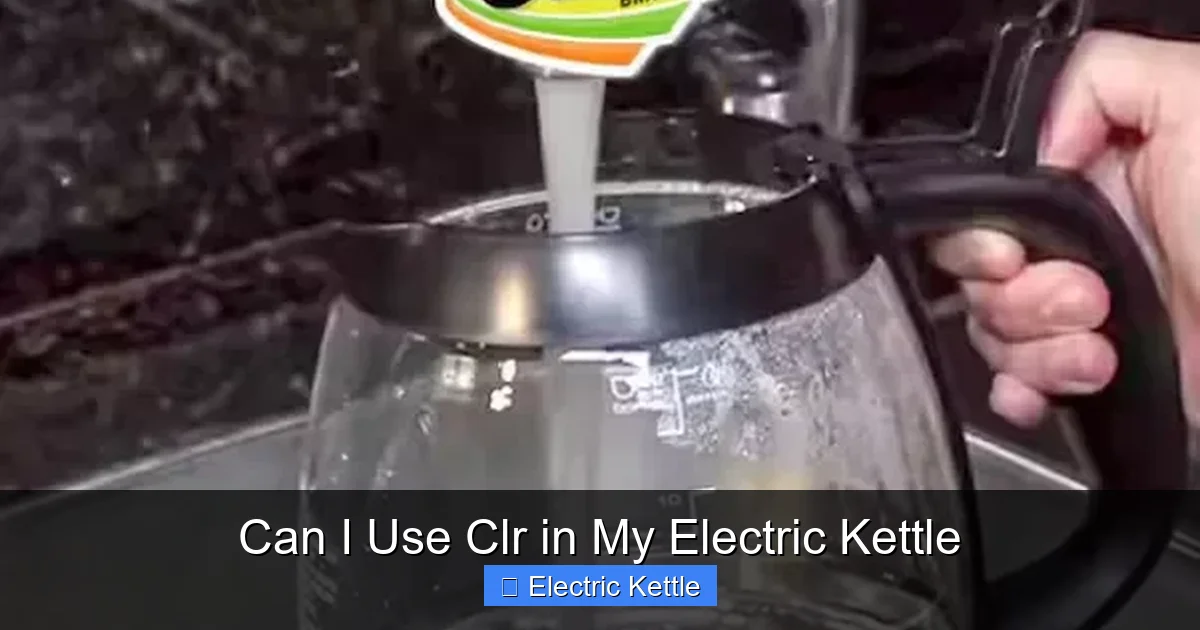
This is the million-dollar question: Can I use CLR in my electric kettle without damaging it or making my water unsafe to drink? The answer depends on several factors, including your kettle’s material, the type of CLR product you’re using, and how you apply it.
First, let’s talk about kettle materials. Most modern electric kettles are made from stainless steel, glass, or plastic (often BPA-free). Stainless steel kettles are generally the most compatible with CLR, as stainless steel resists corrosion from mild acids. Glass kettles are also typically safe, provided they don’t have special coatings. However, plastic kettles—especially those with non-stick interiors or delicate components—can be damaged by strong acids. Always check your kettle’s user manual or manufacturer guidelines before using CLR.
Another important consideration is the type of CLR product. CLR offers several formulations, including:
- CLR Bath & Kitchen Cleaner: A ready-to-use spray, less concentrated but convenient for light cleaning.
- CLR Calcium, Lime & Rust Remover (liquid concentrate): The most potent form, ideal for heavy descaling but requires dilution.
- CLR Foaming Spray: Designed for vertical surfaces, less suitable for immersion cleaning.
For electric kettles, the liquid concentrate is usually the best choice because it can be diluted and poured directly into the kettle. However, never use undiluted CLR—it’s too strong and can damage surfaces or leave toxic residues.
Manufacturer Guidelines and Warnings
Some kettle manufacturers explicitly approve the use of CLR for descaling. For example, brands like Breville and Cuisinart often recommend CLR or similar acidic cleaners in their care instructions. Others may warn against using harsh chemicals, especially on kettles with non-stick coatings or aluminum parts.
Aluminum, in particular, reacts poorly with acids. If your kettle has an aluminum heating element or interior (less common in modern models), using CLR can cause pitting, corrosion, or even leaks. Similarly, non-stick coatings—often found in cheaper kettles—can degrade when exposed to strong acids, leading to flaking or off-gassing.
To be safe, always:
- Check your kettle’s user manual.
- Look for material specifications (e.g., “18/8 stainless steel” or “BPA-free plastic”).
- Avoid CLR if your kettle has a non-stick or coated interior unless the manufacturer confirms it’s safe.
If you’re unsure, it’s better to err on the side of caution and use a gentler alternative like white vinegar.
Step-by-Step Guide: How to Clean Your Electric Kettle with CLR
Now that we’ve covered the safety basics, let’s walk through the proper way to use CLR in your electric kettle. Follow these steps carefully to ensure effective cleaning without damage.
What You’ll Need
- CLR Calcium, Lime & Rust Remover (liquid concentrate)
- Measuring cup or spoon
- Water
- Soft cloth or sponge (non-abrasive)
- Gloves (nitrile or rubber)
- Well-ventilated area
Step 1: Prepare the Solution
Never use CLR full strength. The recommended dilution ratio is 1 part CLR to 4 parts water. For a standard 1-liter kettle, this means mixing 200ml of CLR with 800ml of water. Adjust the amounts proportionally for larger or smaller kettles.
Pour the water into the kettle first, then add the CLR. This helps prevent splashing and ensures even mixing. Always add acid to water—not the other way around—to avoid a violent reaction.
Step 2: Let It Soak
Fill the kettle with the CLR solution, making sure the liquid covers the heating element and any visible scale. If your kettle has a removable limescale filter, take it out and soak it separately in a small bowl of the same solution.
Let the solution sit for 5 to 10 minutes. For heavy buildup, you can extend this to 15–20 minutes, but don’t let it sit overnight—prolonged exposure can damage certain materials.
During this time, you may notice fizzing or bubbling. This is normal—it’s the acid reacting with the mineral deposits.
Step 3: Gently Agitate (Optional)
If there’s stubborn scale, you can gently swirl the solution around or use a soft sponge to wipe the interior. Avoid using steel wool or abrasive scrubbers, as they can scratch stainless steel or damage coatings.
For the heating element, avoid direct contact with brushes or tools. The CLR solution should dissolve the scale without scrubbing.
Step 4: Rinse Thoroughly
After soaking, pour out the CLR solution. Rinse the kettle at least 3–4 times with clean water. Fill it, swish it around, and pour it out. Repeat until there’s no trace of the CLR smell or taste.
To be extra safe, run 2–3 full cycles of boiling water after rinsing. This helps flush out any remaining residue and ensures your next cup of tea tastes clean.
Step 5: Dry and Reassemble
Wipe the exterior and interior with a soft, dry cloth. Reinsert any removable parts, like the limescale filter. Your kettle is now ready to use.
Pro Tips for Best Results
- Clean regularly: Don’t wait until scale is thick. Clean every 1–2 months to prevent buildup.
- Use filtered water: This reduces mineral content and extends time between cleanings.
- Never boil CLR solution: Heating the cleaner can release harmful fumes and increase corrosion risk.
- Label your measuring tools: Don’t use the same cup or spoon for food after measuring CLR.
Risks and Precautions When Using CLR
While CLR is effective, it’s not without risks. Understanding these can help you avoid accidents and protect your health and appliance.
Chemical Exposure
CLR contains acids that can irritate skin, eyes, and respiratory passages. Always wear gloves when handling the concentrate, and work in a well-ventilated area. If you get CLR on your skin, rinse immediately with plenty of water. If it gets in your eyes, flush with water for at least 15 minutes and seek medical help.
Never mix CLR with other cleaners—especially bleach or ammonia. This can create toxic gases like chlorine or chloramine, which are dangerous to inhale.
Appliance Damage
Using undiluted CLR or leaving it in the kettle too long can damage seals, gaskets, or electronic components. Over time, repeated use on incompatible materials (like aluminum or non-stick coatings) can lead to leaks, malfunctions, or reduced lifespan.
If your kettle starts making strange noises, leaking, or heating unevenly after cleaning, stop using it and inspect for damage. In severe cases, it may need professional repair or replacement.
Residue Concerns
Even after rinsing, trace amounts of CLR can remain in hard-to-reach areas. If you notice a chemical taste or smell in your water, rinse again and run additional boiling cycles. Some people prefer to use a baking soda rinse (1 tsp per liter) after CLR to neutralize any remaining acidity.
Alternatives to CLR for Descaling Your Kettle
If you’re hesitant to use a chemical cleaner, there are several natural and effective alternatives.
White Vinegar
One of the most popular options, white vinegar is a mild acid that dissolves scale without harsh chemicals. Use a 1:1 ratio of vinegar to water, soak for 30–60 minutes, then rinse thoroughly. Vinegar has a strong smell, but it dissipates after rinsing and boiling.
Citric Acid
Available in powder form, citric acid is food-safe and highly effective. Use 1–2 tablespoons per liter of water, soak for 30 minutes, then rinse. It’s odorless and leaves no aftertaste.
Baking Soda (for light cleaning)
While not as strong as vinegar or CLR, baking soda can help with light stains and odors. Make a paste with water, scrub gently, then rinse. Best used in combination with vinegar for a fizzing reaction.
Commercial Descalers
Products like Durgol, Urnex, or De’Longhi Descaler are formulated specifically for kettles and coffee makers. They’re often gentler than CLR and come with clear instructions.
Each alternative has pros and cons. Vinegar is cheap and accessible but strong-smelling. Citric acid is clean and effective but requires purchase. CLR is powerful and fast but requires caution. Choose based on your comfort level, kettle type, and water hardness.
How Often Should You Clean Your Electric Kettle?
The frequency of cleaning depends on how hard your water is and how often you use your kettle.
- Soft water (low mineral content): Clean every 2–3 months.
- Moderate hard water: Clean every 4–6 weeks.
- Very hard water: Clean every 2–4 weeks.
Signs it’s time to clean include:
- White or chalky deposits inside the kettle
- Slower heating times
- Unusual noises during boiling
- Off tastes or odors in water
Regular maintenance not only improves performance but also extends the life of your kettle. A clean heating element heats faster and uses less energy, saving you money on electricity.
Conclusion
So, can you use CLR in your electric kettle? Absolutely—if you follow the right steps and safety guidelines. CLR is a powerful, effective solution for removing stubborn mineral buildup that can affect your kettle’s performance and the taste of your beverages. When diluted properly and used on compatible materials, it’s a safe and reliable cleaning method.
However, it’s not a one-size-fits-all solution. Always check your kettle’s materials, avoid undiluted use, and rinse thoroughly to prevent damage and ensure safety. If you’re unsure or prefer a gentler approach, natural alternatives like vinegar or citric acid are excellent options.
By incorporating regular descaling into your routine, you’ll keep your electric kettle running efficiently, extend its lifespan, and enjoy better-tasting tea, coffee, and hot water every time. Whether you choose CLR or another cleaner, the key is consistency and care. Your kettle—and your taste buds—will thank you.
Frequently Asked Questions
Can I use CLR in my electric kettle if it has a non-stick coating?
It’s not recommended. CLR’s acidic formula can degrade non-stick coatings over time, leading to flaking or off-gassing. Check your manufacturer’s guidelines or use a gentler alternative like vinegar.
How long should I let CLR sit in my kettle?
For most kettles, 5 to 10 minutes is sufficient. For heavy buildup, you can extend it to 15–20 minutes, but avoid leaving it overnight to prevent damage.
Do I need to boil the CLR solution?
No, never boil CLR. Heating it can release harmful fumes and increase the risk of corrosion. Simply soak, rinse, and run clean water cycles.
Can I use CLR in a glass electric kettle?
Yes, glass kettles are generally safe for CLR use, as long as they don’t have special coatings. Always dilute the solution and rinse thoroughly.
Will CLR leave a taste in my water?
If rinsed properly, no. However, if you notice a chemical taste, rinse again and run 2–3 boiling cycles with clean water to flush out any residue.
Is CLR safe for stainless steel kettles?
Yes, stainless steel is highly resistant to the mild acids in diluted CLR. It’s one of the safest materials for using CLR, provided you follow dilution and rinsing guidelines.