Yes, you can use an electric kettle for milk—but it’s not always recommended. While some modern kettles handle milk well, others can suffer from scorching, residue buildup, or malfunction. With proper precautions, you can safely heat milk in certain electric kettles, but it’s essential to choose the right model and follow best practices.
Key Takeaways
- Not all electric kettles are designed for milk: Most standard kettles are made for water only, and using milk can lead to damage or poor performance.
- Milk can scorch and burn: Due to its protein and fat content, milk tends to stick to heating elements and burn, creating unpleasant odors and flavors.
- Residue buildup is a common issue: Leftover milk solids can clog filters and affect the kettle’s efficiency over time.
- Look for milk-specific features: Some kettles have non-stick interiors, temperature control, or dedicated milk modes to prevent burning.
- Clean immediately after use: Prompt cleaning is crucial to prevent milk from hardening and becoming difficult to remove.
- Alternative methods may be safer: Using a saucepan or microwave is often a better option for heating milk unless your kettle is specifically designed for it.
- Check the manufacturer’s guidelines: Always refer to your kettle’s user manual before using it with milk to avoid voiding the warranty.
📑 Table of Contents
- Can I Use Electric Kettle for Milk? The Truth Explained
- Why Most Electric Kettles Aren’t Ideal for Milk
- When Is It Safe to Use an Electric Kettle for Milk?
- Step-by-Step Guide: How to Safely Heat Milk in an Electric Kettle
- Cleaning and Maintenance After Using Milk
- Alternatives to Using an Electric Kettle for Milk
- Final Thoughts: Should You Use an Electric Kettle for Milk?
Can I Use Electric Kettle for Milk? The Truth Explained
If you’ve ever stood in your kitchen with a carton of milk in one hand and an electric kettle in the other, wondering, “Can I use an electric kettle for milk?”—you’re not alone. Many people assume that because an electric kettle heats liquids quickly and efficiently, it should work just as well for milk as it does for water. After all, milk is mostly water, right?
Well, not exactly. While milk does contain about 87% water, it also has proteins, fats, and sugars that behave very differently when heated. These components can stick to the heating element, burn, and leave behind stubborn residue. That’s why using a standard electric kettle for milk can lead to a range of problems—from unpleasant smells and flavors to permanent damage to your appliance.
But here’s the good news: with the right kettle and the right approach, you *can* safely heat milk in an electric kettle. It’s not a universal yes or no answer. The key lies in understanding how milk behaves when heated, what features to look for in a kettle, and how to maintain your appliance afterward. In this guide, we’ll walk you through everything you need to know—so you can enjoy your morning latte or hot chocolate without risking your kettle.
Why Most Electric Kettles Aren’t Ideal for Milk
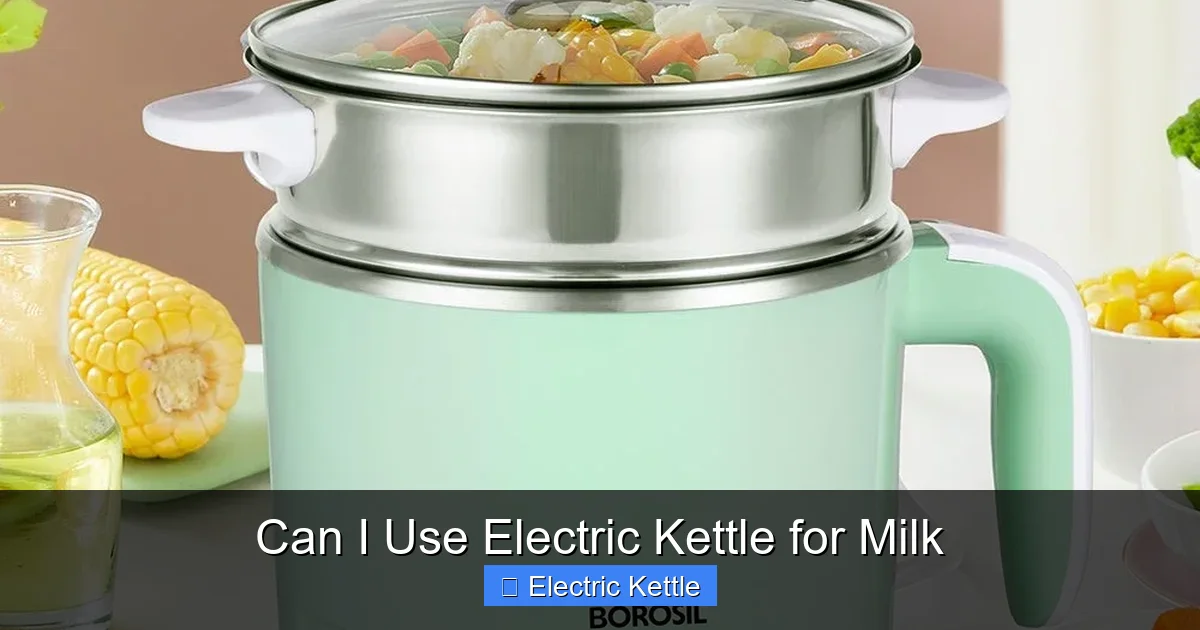
Visual guide about Can I Use Electric Kettle for Milk
Image source: 5.imimg.com
Let’s start with the basics: why is milk such a tricky liquid to heat in an electric kettle?
The Science Behind Milk and Heat
Milk is a complex emulsion of water, fats, proteins (like casein and whey), and lactose (milk sugar). When you heat milk, these components react differently than water does. Water simply heats up, reaches boiling point, and turns to steam. Milk, on the other hand, undergoes chemical changes.
As milk heats, the proteins begin to denature—meaning their structure unfolds. This can cause them to coagulate and stick to surfaces, especially near the heating element. The fats can separate and form a skin on the surface, while the lactose can caramelize if overheated, leading to a burnt taste.
These reactions are why milk often “scalds” or “boils over” when heated too quickly or at too high a temperature. In an electric kettle, where the heating is concentrated at the base, this risk is even higher. The intense, localized heat can cause milk to burn before it even reaches a boil, leaving behind a sticky, browned layer that’s hard to clean.
Design Limitations of Standard Kettles
Most electric kettles are designed with one purpose in mind: boiling water quickly and efficiently. They typically feature a concealed or exposed heating element at the bottom, a thermostat that shuts off when water reaches boiling point, and a spout for pouring.
These features work great for water—but not so much for milk. Here’s why:
– **No temperature control:** Many basic kettles only have an on/off switch and boil to 100°C (212°F). Milk, however, should ideally be heated to around 60–70°C (140–160°F) to preserve its flavor and nutrients. Boiling milk can destroy some of its beneficial enzymes and create a “cooked” taste.
– **Lack of milk-specific settings:** Unlike water, milk doesn’t need to reach a rolling boil. Some advanced kettles now include “milk” or “baby formula” modes that heat to lower temperatures, but most standard models don’t offer this.
– **Difficult to clean:** Milk residue can cling to the heating element, interior walls, and filter. Over time, this buildup can affect performance, cause odors, and even lead to mold if not cleaned properly.
– **Risk of boiling over:** Milk expands when heated and can foam up, leading to overflow. This not only makes a mess but can also damage the kettle’s electrical components if liquid seeps into the base.
Real-World Consequences
Let’s say you decide to heat milk in your regular electric kettle anyway. What could go wrong?
Imagine you pour in a cup of milk, press the button, and walk away. A few minutes later, you return to a burnt smell, a brown film coating the bottom of the kettle, and a sticky mess that’s nearly impossible to scrub off. Worse, your kettle starts making strange noises or fails to turn on the next time you use it.
This scenario isn’t uncommon. Many users report that after using their kettle for milk just once or twice, they notice a decline in performance. The thermostat may malfunction, the heating element could become less efficient, or the kettle might stop working altogether.
Even if your kettle survives, you might end up with off-flavors in your drinks. Burnt milk can leave a bitter, unpleasant taste that lingers in the kettle and affects future brews—even when you’re making plain tea or coffee.
When Is It Safe to Use an Electric Kettle for Milk?
So, does that mean you should never use an electric kettle for milk? Not necessarily. There are situations where it’s safe—and even convenient—to do so.
Kettles Designed for Milk
The first and most important factor is the type of kettle you have. Some electric kettles are specifically engineered to handle milk. These models often include features like:
– **Temperature control:** You can set the kettle to heat to a specific temperature, such as 65°C for milk, preventing overheating.
– **Non-stick interior:** A coated surface reduces the chance of milk sticking and burning.
– **Milk or baby formula mode:** These preset programs heat milk gently and shut off at the right time.
– **Stainless steel or glass construction:** These materials are easier to clean and less likely to retain odors.
Brands like Breville, Cuisinart, and Smeg offer kettles with these advanced features. If you frequently heat milk—whether for coffee, hot chocolate, or baby bottles—investing in one of these models can save you time and hassle.
Using a Kettle with a Removable Lid and Wide Opening
Even if your kettle isn’t specifically designed for milk, you can still use it safely—if it has a few key design elements.
A **removable lid** or **wide opening** makes it easier to pour milk in and clean the interior afterward. This is crucial because milk residue can harden quickly, and if you can’t reach all the nooks and crannies, it will build up over time.
Similarly, a **transparent window** or **water level indicator** helps you measure the right amount of milk. Overfilling increases the risk of boiling over, while underfilling can cause the heating element to overheat.
Heating Small Quantities
Another way to reduce risk is to heat only small amounts of milk—say, one cup or less. Larger volumes take longer to heat and are more likely to scorch or overflow. Smaller quantities heat more evenly and are easier to monitor.
Also, avoid using the kettle for milk if it’s already been used for water with strong flavors (like herbal teas with oils or spices). Residual flavors can transfer to the milk, affecting its taste.
Stirring and Monitoring
Unlike water, milk benefits from occasional stirring while heating. This helps distribute heat evenly and prevents a skin from forming on the surface. If your kettle has a glass or transparent body, you can watch the milk as it heats and stir it with a long spoon or chopstick.
Never leave the kettle unattended when heating milk. Stay nearby so you can turn it off as soon as it reaches the desired temperature—usually when small bubbles form around the edges.
Step-by-Step Guide: How to Safely Heat Milk in an Electric Kettle
If you’ve determined that your kettle is suitable for milk, here’s how to do it safely and effectively.
Step 1: Check the Manual
Before you even think about pouring milk into your kettle, consult the user manual. Look for any warnings about using liquids other than water. Some manufacturers explicitly state that using milk voids the warranty.
If the manual says “water only,” it’s best to follow that advice. But if it mentions milk or allows for other liquids, you’re likely in the clear.
Step 2: Choose the Right Milk
Not all milk behaves the same when heated. Whole milk, with its higher fat content, is more stable and less likely to scorch than skim milk. However, it can still form a skin.
Plant-based milks like almond, oat, or soy can be even trickier. They often contain stabilizers and thickeners that may break down when heated, leading to separation or clumping. If you’re using non-dairy milk, start with small amounts and monitor closely.
Step 3: Measure the Milk
Use a measuring cup to pour the exact amount you need. Avoid overfilling—leave at least an inch of space at the top to prevent overflow.
For most kettles, one cup (240 ml) is a safe starting point. You can always heat more if needed.
Step 4: Heat Gradually
If your kettle has temperature control, set it to 65–70°C (150–160°F). This is the ideal range for heating milk without scalding.
If your kettle only boils to 100°C, use it with caution. Pour the milk in, turn it on, and watch it closely. As soon as you see small bubbles forming around the edges—don’t wait for a full boil—turn it off immediately.
Step 5: Stir Gently
Use a long-handled spoon or silicone spatula to stir the milk occasionally. This prevents a skin from forming and ensures even heating.
Avoid metal utensils if your kettle has a non-stick coating, as they can scratch the surface.
Step 6: Pour and Enjoy
Once the milk is heated, pour it carefully into your cup or mug. If you’re making coffee or tea, add it to your drink right away.
If you’re heating milk for a baby bottle, always test the temperature on your wrist before feeding.
Step 7: Clean Immediately
This is the most important step. As soon as you’re done, rinse the kettle with warm water. Use a soft sponge or brush to remove any residue.
For stubborn buildup, soak the kettle in warm, soapy water for 10–15 minutes. Avoid abrasive cleaners or steel wool, which can damage the interior.
If your kettle has a removable filter, take it out and clean it separately. Milk particles can clog the filter and affect future performance.
Cleaning and Maintenance After Using Milk
Proper cleaning is essential to keep your kettle in good condition after using it for milk.
Immediate Rinse
Don’t let milk sit in the kettle. The longer it remains, the harder it will be to clean. Rinse it out as soon as possible with warm water.
Deep Cleaning Weekly
Even with regular rinsing, milk residue can accumulate over time. Once a week, give your kettle a deep clean.
Fill it halfway with equal parts water and white vinegar. Let it sit for 30 minutes, then boil the solution. Turn off the kettle, let it cool, and rinse thoroughly.
This helps dissolve mineral deposits and any lingering milk solids.
Descaling for Hard Water Areas
If you live in an area with hard water, mineral buildup can combine with milk residue, making cleaning even harder. Use a descaling solution or a mixture of lemon juice and water to remove limescale.
Check for Odors
If your kettle starts to smell like burnt milk, it’s a sign that residue is building up. Run a cycle with baking soda and water to neutralize odors.
Alternatives to Using an Electric Kettle for Milk
If you’re not confident about using your kettle for milk, or if your model isn’t designed for it, there are safer alternatives.
Stovetop Saucepan
The most traditional method is heating milk in a small saucepan over low to medium heat. Stir frequently to prevent scorching and use a thermometer to monitor the temperature.
This method gives you full control and is ideal for larger quantities.
Microwave
For quick heating, use a microwave-safe mug. Heat the milk in 30-second intervals, stirring in between, until it reaches the desired temperature.
Be careful not to overheat—milk can boil over in the microwave too.
Milk Frother or Steamer
If you’re making lattes or cappuccinos, consider a standalone milk frother. These devices heat and froth milk simultaneously, giving you café-quality results at home.
Electric Milk Warmer
For parents, an electric milk warmer is a safe, dedicated appliance for heating baby bottles. It heats gently and evenly, reducing the risk of hot spots.
Final Thoughts: Should You Use an Electric Kettle for Milk?
So, can you use an electric kettle for milk? The answer is: **it depends**.
If your kettle is designed for it—with temperature control, a non-stick interior, and milk-specific settings—then yes, go ahead. It’s a convenient and efficient way to heat milk, especially for coffee drinks or quick snacks.
But if you have a standard kettle made for water only, it’s best to avoid using it for milk. The risks of scorching, residue buildup, and appliance damage outweigh the convenience.
When in doubt, stick to safer methods like a saucepan or microwave. And if you find yourself heating milk frequently, consider investing in a kettle that’s built for the job.
Remember: your kettle is a valuable kitchen tool. Treat it well, and it will serve you for years. But push it beyond its limits, and you might end up with a burnt mess—and a replacement bill.
By following the tips in this guide, you can make informed decisions and enjoy your milk-based drinks without worry.
Frequently Asked Questions
Can I use any electric kettle for milk?
No, not all electric kettles are suitable for milk. Most standard models are designed for water only and can be damaged by milk’s proteins and fats. Always check your kettle’s manual before use.
What happens if I boil milk in an electric kettle?
Boiling milk can cause it to scorch, burn, and leave behind a sticky residue. This can damage the heating element, create unpleasant odors, and affect future brews.
How do I clean milk out of my electric kettle?
Rinse the kettle immediately after use with warm water. For stubborn residue, soak it in a mixture of water and vinegar, then scrub gently with a soft sponge.
Can I heat almond milk in an electric kettle?
Yes, but with caution. Plant-based milks can separate or clump when heated. Use small amounts, monitor closely, and clean the kettle thoroughly afterward.
Is it safe to heat milk for a baby bottle in an electric kettle?
Only if the kettle has a milk or baby formula mode with precise temperature control. Otherwise, use a dedicated bottle warmer for safety.
Will using milk in my kettle void the warranty?
It might. Many manufacturers specify that the kettle should only be used with water. Using milk could void the warranty, so always check the user manual first.