Yes, Maggie can be made in an electric kettle—but with important safety precautions. While it’s possible to cook instant noodles using just hot water from your kettle, directly boiling noodles inside the appliance can damage it and pose risks. This guide explains safe alternatives, best practices, and why understanding your kettle matters.
Key Takeaways
- Electric kettles are designed for boiling water, not cooking food: Most models aren’t built to handle solids like noodles, which can clog filters or damage heating elements.
- You can safely make Maggie using boiled water from your kettle: Pour hot water over noodles in a separate bowl—this is the safest and most effective method.
- Never submerge noodles directly into the kettle: Doing so may void your warranty, cause malfunctions, or create fire hazards due to starch buildup.
- Choose the right kettle for convenience: Kettles with temperature control let you select lower temps ideal for delicate noodles without overcooking.
- Clean your kettle regularly if used near food prep: Residual starch or spice particles can accumulate and affect taste or performance over time.
- Portable and dorm-friendly cooking option: Using an electric kettle to heat water for Maggie is perfect for small spaces where stovetops aren’t available.
- Always prioritize safety over speed: A few extra minutes using proper technique prevent long-term damage and ensure consistent results.
📑 Table of Contents
- Can Maggie Be Made in an Electric Kettle? The Truth Explained
- How Electric Kettles Work—And Why Food Doesn’t Belong Inside
- The Safe Way to Make Maggie Using Your Electric Kettle
- When (and When Not) to Use Your Kettle for Cooking
- Choosing the Right Electric Kettle for Maggie Lovers
- Cleaning and Maintenance: Keeping Your Kettle Fresh
- Conclusion: Smart, Safe, and Satisfying
Can Maggie Be Made in an Electric Kettle? The Truth Explained
If you’ve ever found yourself craving a quick bowl of Maggie after a long day—or maybe you’re a student cramming late at night in a dorm room—you might have wondered: *Can I just toss the noodles into my electric kettle and call it dinner?* It’s a tempting thought. After all, electric kettles boil water fast, quietly, and without needing a stove. But before you drop that packet of masala into the chamber, let’s talk about what’s safe, what’s smart, and what could end up costing you a new appliance.
The short answer? Yes, you *can* make Maggie using an electric kettle—but probably not in the way you’re imagining. Most people assume “making Maggie in a kettle” means cooking the noodles directly inside the machine. While technically possible with some models, this approach comes with significant risks. Electric kettles are engineered to heat water efficiently and safely. They’re not designed to handle food particles, oils, or starchy residues that come with instant noodles. Doing so can clog internal components, damage the heating element, or even create a fire hazard if residue builds up near electrical parts.
That said, there’s a much safer and equally convenient alternative: use your electric kettle to boil water, then pour that hot water over the noodles in a separate container. This method gives you all the speed and simplicity of kettle-based cooking without risking your appliance. In fact, many college students, office workers, and travelers already use this hack daily. With the right technique, you can enjoy perfectly cooked Maggie in under five minutes—no stove required.
How Electric Kettles Work—And Why Food Doesn’t Belong Inside
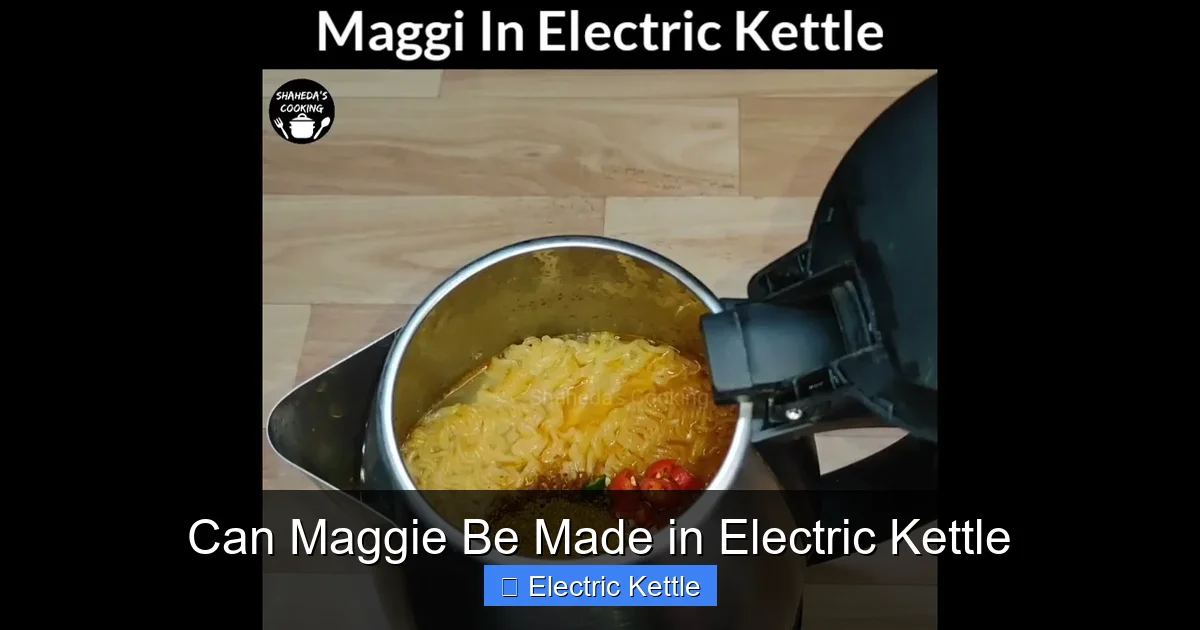
Visual guide about Can Maggie Be Made in Electric Kettle
Image source: i.ytimg.com
To understand why putting Maggie directly into your kettle is a bad idea, it helps to know how these appliances function. Electric kettles consist of a heating element (usually hidden beneath a stainless steel or glass base), a water reservoir, an automatic shut-off mechanism, and sometimes a mesh filter to catch mineral deposits. When you press the boil button, electricity heats the element, which rapidly brings water to a rolling boil—typically within 2–4 minutes.
This design is optimized for one task: heating pure water. Introducing solids like noodles, spices, or oil changes everything. Instant noodles release starch as they cook, which can coat the heating element and interior surfaces. Over time, this buildup insulates the element, making it less efficient and causing it to overheat. In extreme cases, burnt starch can emit smoke or even ignite—a serious safety concern.
Additionally, most kettles have narrow openings and fixed lids, making it difficult to clean out stuck food particles. Even if you manage to rinse it out, residual flavors (like strong curry or chili powder) can linger and affect the taste of your next cup of tea or coffee. And don’t forget warranties—manufacturers almost universally void coverage if you use the kettle for anything other than boiling water.
The Science Behind Starch and Scalding
Starch molecules in instant noodles gelatinize when exposed to hot water (around 60–70°C or 140–160°F). This is what gives cooked noodles their soft, chewy texture. However, if starch coats the heating element, it acts as an insulator, trapping heat and potentially causing the element to burn out prematurely. Some high-end kettles have protective coatings, but even these aren’t meant to withstand repeated exposure to food debris.
Moreover, rapid boiling with solids inside can cause “bumping”—sudden, violent eruptions of steam that splash hot liquid and food bits everywhere. This isn’t just messy; it’s a burn risk.
The Safe Way to Make Maggie Using Your Electric Kettle
So, how do you enjoy Maggie quickly and safely with your electric kettle? The answer is simple: **use the kettle only for boiling water**, then transfer that water to your noodles. Here’s a step-by-step method that works every time:
1. **Fill your kettle** with the right amount of water—usually just enough to cover your noodles (about 300–400 ml for one serving).
2. **Boil the water** using your kettle’s standard setting.
3. **While the water heats**, place your uncooked Maggie noodles in a heat-resistant bowl or mug. Break them up slightly if needed.
4. **Once boiling**, carefully pour the hot water over the noodles until they’re fully submerged.
5. **Cover the bowl** with a lid or plate to trap heat and speed up cooking.
6. **Wait 3–4 minutes**, stirring occasionally, until the noodles reach your desired texture.
7. **Add the seasoning packet** and mix well before eating.
This method mimics traditional stovetop cooking but eliminates the need for pots, pans, or supervision. It’s especially useful in situations where open flames or gas stoves aren’t allowed—like in dormitories, hotel rooms, or office break rooms.
Pro Tips for Perfect Kettle-Made Maggie
– **Use a wide-mouth mug or shallow bowl**: This allows even heat distribution and prevents noodles from clumping.
– **Don’t overfill the kettle**: Boiling excess water wastes energy and increases spill risk when pouring.
– **Stir halfway through**: This ensures all noodles cook evenly and prevents sticking.
– **Adjust water temperature if possible**: Some premium kettles let you select specific temperatures. For Maggie, 90–95°C (194–203°F) is ideal—hot enough to cook quickly but not so hot that it turns noodles mushy.
– **Rinse the bowl immediately after eating**: Starchy residue can harden and become difficult to clean later.
When (and When Not) to Use Your Kettle for Cooking
While making Maggie with boiled kettle water is perfectly safe, it’s important to recognize the limits of your appliance. Electric kettles excel at one thing: heating water fast. They are not multi-cookers, rice cookers, or soup makers. Attempting to cook complex meals—or even simple ones like oatmeal or eggs—inside the kettle can lead to damage or safety issues.
That said, there are a few food items that *can* be prepared safely using kettle-boiled water:
– Instant coffee or tea
– Cup noodles (like the method described above)
– Rehydrated soups or broths
– Oatmeal (when cooked in a separate container)
However, avoid these common mistakes:
– **Never put oil, butter, or dairy directly into the kettle**: These can smoke, burn, or leave permanent odors.
– **Don’t use the kettle to reheat leftover Maggie**: Reboiling seasoned noodles increases the risk of bacterial growth and flavor contamination.
– **Avoid flavored or coated noodles in the kettle**: Spicy or oily varieties leave stronger residues that are harder to clean.
Special Considerations for Travel and Small Spaces
One of the biggest advantages of using an electric kettle for Maggie is portability. Many compact, travel-friendly kettles are available that plug into standard outlets and boil water in minutes. These are lifesavers for backpackers, campers (with access to electricity), or anyone living in a tiny apartment without a full kitchen.
Just remember: always check local regulations. Some hotels and dorms prohibit personal kettles due to fire safety concerns. In those cases, consider using the hotel’s provided kettle—but only for water, never for direct cooking.
Choosing the Right Electric Kettle for Maggie Lovers
Not all electric kettles are created equal—especially when it comes to convenience for quick meals like Maggie. If you plan to use your kettle regularly for food prep (even indirectly), look for these features:
– **Variable temperature control**: Allows you to select lower temps for delicate foods. Perfect for preventing overcooked noodles.
– **Rapid boil technology**: Cuts down wait time—ideal when you’re hungry!
– **Wide opening or flip-top lid**: Makes pouring hot water safer and reduces splashing.
– **Removable mesh filter**: Helps catch limescale and is easier to clean.
– **Auto shut-off and boil-dry protection**: Essential safety features that prevent overheating if the kettle runs empty.
– **Stainless steel or BPA-free plastic interior**: Ensures no harmful chemicals leach into your water.
Popular brands like Breville, Cuisinart, and Hamilton Beach offer models with these capabilities. While they may cost more upfront, they’re worth the investment if you value both safety and versatility.
Budget-Friendly Options That Still Deliver
You don’t need to spend $100+ to get a reliable kettle. Basic models from brands like OXO, Mueller, or Amazon Basics often include auto shut-off and decent build quality for under $30. Just avoid ultra-cheap kettles with thin plastic bodies or no safety certifications—they’re more likely to fail or pose risks.
Cleaning and Maintenance: Keeping Your Kettle Fresh
Even if you’re only using your kettle to boil water for Maggie, regular cleaning is essential. Mineral deposits from hard water, plus occasional splashes of starch or spice, can build up over time and affect performance and taste.
Here’s a simple maintenance routine:
– **Weekly rinse**: After use, wipe the exterior and rinse the interior with clean water.
– **Monthly descaling**: Mix equal parts white vinegar and water, fill the kettle halfway, boil, let sit for 30 minutes, then rinse thoroughly. This removes limescale.
– **After accidental food contact**: If you ever spill Maggie water into the kettle, disassemble (if possible) and clean all parts immediately. Run a vinegar cycle to eliminate odors.
Avoid using abrasive scrubbers or harsh chemicals—they can scratch surfaces and leave residues. Stick to soft cloths and natural cleaners like vinegar or baking soda.
Signs Your Kettle Needs Attention
– Water tastes metallic or smells odd
– Boiling takes longer than usual
– Visible scale buildup on the heating element
– Unusual noises during operation
If you notice any of these, it’s time for a deep clean—or possibly a replacement.
Conclusion: Smart, Safe, and Satisfying
So, can Maggie be made in an electric kettle? Absolutely—but not by cooking the noodles inside the appliance. The safest, most effective method is to use your kettle to boil water, then pour that water over the noodles in a separate container. This approach gives you all the speed and convenience of modern kitchen tech without risking damage to your kettle or your safety.
Whether you’re a busy professional, a student on a budget, or just someone who loves a quick, comforting meal, mastering this technique opens up new possibilities for simple, no-fuss cooking. Just remember: respect your kettle’s purpose, keep it clean, and always prioritize safety over shortcuts.
With the right habits, your electric kettle can become one of your most trusted kitchen allies—not just for tea, but for tasty, homemade Maggie whenever the craving strikes.
Frequently Asked Questions
Can I put Maggie noodles directly into my electric kettle?
No, it’s not recommended. Putting noodles directly into the kettle can clog the filter, damage the heating element, and void your warranty. Always use the kettle only for boiling water.
What’s the safest way to make Maggie with an electric kettle?
Boil water in the kettle, then pour it over the noodles in a separate heat-safe bowl or mug. Cover and let sit for 3–4 minutes before adding seasoning.
Will cooking Maggie in my kettle ruin it?
Yes, if you cook noodles inside the kettle. Starch and spice residues can build up, cause overheating, and lead to permanent damage or safety hazards.
Can I use any type of electric kettle for this method?
Most standard electric kettles work fine, but models with temperature control offer better precision. Avoid kettles with very narrow spouts, as they increase spill risk.
Is it safe to make Maggie in a hotel room with a provided kettle?
Yes, as long as you only use the kettle to boil water—not to cook the noodles inside. Always check hotel policies first, as some prohibit personal cooking.
How often should I clean my kettle if I use it for Maggie?
Clean the exterior after each use and descale monthly with vinegar. If you accidentally get food residue inside, clean it immediately to prevent odors or buildup.