Using an electric kettle on a train is possible in some cases, but it depends heavily on the railway operator, train type, and local regulations. While modern trains with power outlets may allow low-wattage kettles, many railways prohibit them due to fire risks and power overload concerns. Always check official guidelines before packing your kettle for a journey.
Key Takeaways
- Check railway policies first: Most Indian Railways and international train operators have strict rules about high-wattage appliances like electric kettles. Always verify with official sources before use.
- Power outlet availability varies: Only certain trains—like AC coaches, premium classes, or modern high-speed trains—offer 230V power sockets suitable for small appliances.
- Wattage matters: Low-wattage kettles (under 500W) are more likely to be allowed than standard 1500W models, which can trip circuits or pose fire hazards.
- Safety is paramount: Unattended boiling, spills, or faulty kettles can cause accidents. Use only certified, well-maintained devices and never leave them unattended.
- Alternatives exist: Consider portable thermos flasks, instant coffee/soup sachets, or onboard catering instead of risking policy violations or safety issues.
- International differences apply: Rules in Europe, Japan, or the U.S. differ significantly—some allow kettles freely; others ban them entirely.
- Carry a travel adapter: If permitted, ensure your kettle has the right plug type or bring a compatible adapter for foreign outlets.
📑 Table of Contents
- Can We Use Electric Kettle in Train? A Complete Guide for Travelers
- Understanding Railway Policies on Electric Kettles
- Power Outlets on Trains: What You Need to Know
- Safety Risks of Using Electric Kettles on Trains
- Best Practices for Using an Electric Kettle on a Train
- Alternatives to Electric Kettles for Train Travel
- Country-Specific Guidelines: A Quick Reference
- Final Thoughts: Should You Bring an Electric Kettle on Your Train Journey?
Can We Use Electric Kettle in Train? A Complete Guide for Travelers
Imagine settling into your train seat after a long wait at the platform. The rhythmic clatter of wheels on tracks lulls you into relaxation—and then you remember: you forgot your morning tea. If you’ve packed an electric kettle, you might wonder, “Can we use electric kettle in train?” It’s a common question among frequent travelers, especially those who rely on hot water for tea, coffee, instant noodles, or baby formula.
The short answer? Maybe—but it’s not always straightforward. Whether you’re riding Indian Railways, a European high-speed train, or a cross-country Amtrak service, the rules vary widely. Some trains welcome small appliances; others treat them like contraband. Understanding the nuances can save you from embarrassment, fines, or even safety hazards.
In this guide, we’ll walk you through everything you need to know about using an electric kettle on a train. From official policies and technical requirements to practical tips and safer alternatives, we’ve got you covered. Whether you’re a daily commuter or a long-distance traveler, this article will help you make informed decisions—so you can enjoy your hot beverage without breaking the rules or risking your safety.
Understanding Railway Policies on Electric Kettles
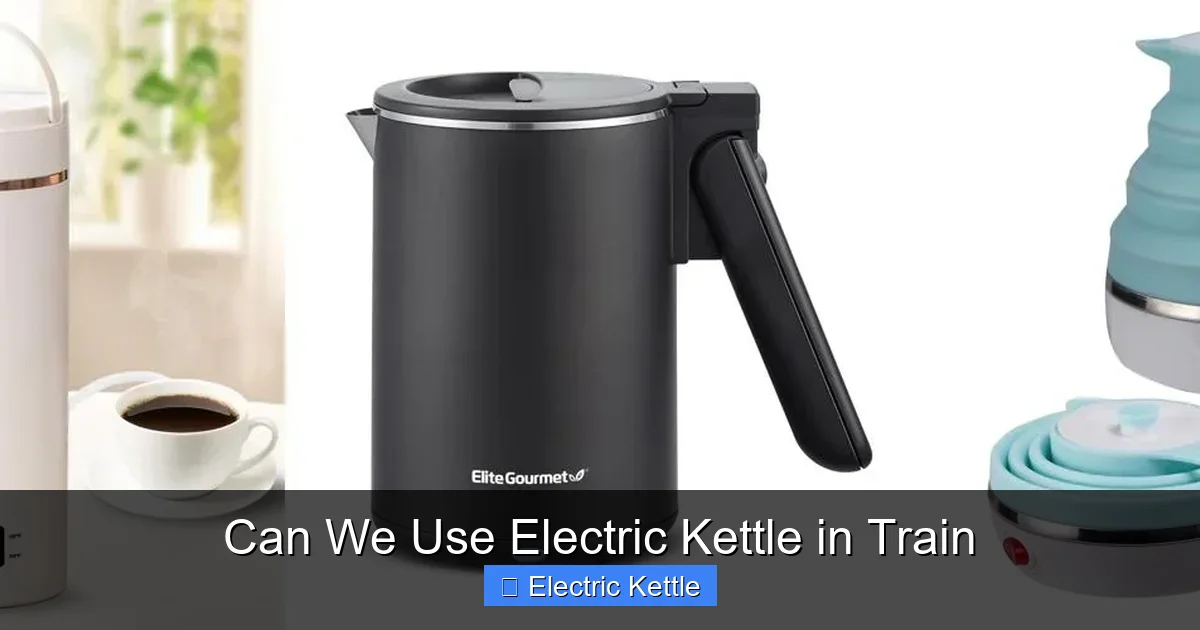
Visual guide about Can We Use Electric Kettle in Train
Image source: kitchensty.com
Railway authorities worldwide regulate passenger behavior not just for convenience, but for safety and operational efficiency. Electric kettles fall into a gray area: they’re useful, but potentially dangerous if misused. Let’s break down what major rail networks say.
Indian Railways: Strict but Flexible in Practice
Indian Railways, one of the world’s largest rail networks, officially prohibits the use of high-wattage electrical appliances in coaches. According to the Railway Board’s guidelines, items like irons, heaters, and kettles that draw more than 500 watts are banned due to fire risk and potential damage to onboard electrical systems. However, enforcement is inconsistent.
In practice, many passengers in AC 2-tier and AC 3-tier coaches quietly use low-wattage kettles (300–500W) during off-peak hours. Train staff may turn a blind eye—especially if the kettle is used responsibly and doesn’t cause circuit trips. That said, during inspections or in Sleeper Class (non-AC), using any external appliance can lead to warnings or confiscation.
Tip: If you’re traveling on Indian Railways, opt for a compact, low-wattage kettle and use it only when the train is stationary or moving steadily—not during acceleration or braking.
International Train Operators: A Mixed Bag
In Europe, policies vary by country and operator. Deutsche Bahn (Germany) allows small appliances like kettles in first-class compartments with power outlets, provided they’re under 1000W and used safely. Similarly, Eurostar permits kettles in Standard Premier and Business Premier classes, where dedicated power sockets are available.
Japan’s Shinkansen (bullet trains) are more restrictive. While outlets are common, using personal kettles is generally discouraged—and sometimes explicitly banned—due to strict fire safety codes. Staff may intervene if they see a passenger boiling water unsupervised.
In the U.S., Amtrak allows small appliances in sleeping cars and some coach seats with outlets, but kettles are often frowned upon due to spill risks and power demands. Always ask the attendant before plugging in.
The Bottom Line on Policies
There’s no universal rule. Always check the official website of the railway operator before your trip. Look for sections on “carry-on items,” “electrical appliances,” or “passenger guidelines.” When in doubt, call customer service or ask at the station.
Power Outlets on Trains: What You Need to Know
Even if your railway allows kettles, you’ll need a compatible power source. Not all train seats come equipped with outlets—and those that do may not deliver enough power.
Types of Power Outlets Found on Trains
Most modern trains offer one of three outlet types:
– **Standard AC outlets (230V/50Hz or 120V/60Hz):** Common in AC coaches, sleeper cabins, and premium classes. These can support small kettles, but wattage limits apply.
– **USB ports only:** Found in newer economy coaches. These are useless for kettles but great for charging phones.
– **High-voltage sockets (rare):** Some long-distance or luxury trains provide 110V or 230V outlets designed for laptops or medical devices—but rarely for high-draw appliances.
Wattage and Circuit Limitations
Train electrical systems are designed to handle lighting, air conditioning, and essential systems—not dozens of kettles running simultaneously. Most outlets are fused at 5–10 amps, meaning they can safely deliver 1100–2300 watts max (depending on voltage). However, sharing an outlet with other devices (laptops, chargers, fans) reduces available power.
A typical electric kettle uses 1200–1500 watts. Plugging one into a shared circuit can trip the breaker, cutting power to your entire coach. That’s why railways prefer low-wattage alternatives.
How to Test Outlet Compatibility
Before boiling water:
1. Check if the outlet works—try charging a phone first.
2. Look for labels indicating voltage/wattage limits.
3. Avoid using extension cords or multi-plug adapters, as these increase fire risk.
4. If the kettle doesn’t heat or the power cuts out immediately, unplug it—it’s drawing too much current.
Pro tip: Bring a wattage meter (available online for under $10) to test how much power your kettle uses and whether the outlet can handle it.
Safety Risks of Using Electric Kettles on Trains
Convenience shouldn’t come at the cost of safety. Electric kettles pose several risks in a moving train environment—risks that railway authorities take very seriously.
Fire and Electrical Hazards
Trains are enclosed spaces with flammable materials (upholstery, curtains, luggage). A faulty kettle, overheating element, or water spill near electrical components can spark a fire. Even a minor short circuit can escalate quickly in a confined carriage.
Additionally, using non-certified or counterfeit kettles increases the risk of electric shock or malfunction. Always use kettles with BIS (India), CE (Europe), or UL (U.S.) certification.
Spills and Burns
Trains move, sway, and brake unexpectedly. Pouring boiling water while the train lurches can cause severe burns—to you or nearby passengers. Wet floors also create slip hazards.
Never leave a boiling kettle unattended. And always place it on a stable, heat-resistant surface—not on fabric seats or plastic trays.
Overloading Circuits
As mentioned earlier, high-wattage kettles can overload circuits. This doesn’t just affect you—it can disable lighting, AC, or charging ports for everyone in your coach. In extreme cases, it may trigger emergency protocols or delays.
Noise and Disturbance
The bubbling and clicking of a kettle can disturb sleeping passengers, especially at night. Be mindful of others—use your kettle during daylight hours or in private cabins only.
Best Practices for Using an Electric Kettle on a Train
If you’ve confirmed that your train allows kettles and you have a safe, compatible setup, follow these best practices:
Choose the Right Kettle
Opt for a travel-friendly electric kettle with these features:
– **Low wattage (300–500W):** Reduces circuit load and increases approval chances.
– **Compact and lightweight:** Easy to carry and store.
– **Auto shut-off and boil-dry protection:** Prevents overheating if water runs out.
– **Detachable cord or foldable handle:** Saves space in your luggage.
– **Dual voltage (110V/230V):** Essential for international travel.
Popular models include the Mueller Ultra Compact Kettle, Brentwood Travel Kettle, or Indian brands like Prestige or Borosil that offer low-wattage travel versions.
Use It Responsibly
– Only use the kettle when seated securely—not while walking or during station stops.
– Fill it only to the minimum required level to reduce boiling time and energy use.
– Keep a towel nearby to wipe spills immediately.
– Never plug in more than one high-wattage device per outlet.
– Unplug the kettle as soon as boiling is complete.
Be Discreet and Respectful
Avoid drawing attention. Use your kettle quietly, and don’t leave it plugged in overnight. If a train attendant asks you to stop, comply politely—they’re enforcing safety rules, not being difficult.
Have a Backup Plan
Even if you’re allowed to use a kettle, outlets may be occupied or malfunctioning. Carry instant beverages, a thermos with hot water from the station, or use onboard catering services.
Alternatives to Electric Kettles for Train Travel
Sometimes, the safest and smartest choice is to skip the kettle altogether. Here are practical alternatives:
Thermos Flask
Fill a high-quality thermos with hot water at the station or café before boarding. A good vacuum flask keeps water hot for 6–12 hours—perfect for multiple cups of tea or coffee. Brands like Tiger, Zojirushi, or Milton offer excellent options.
Instant Beverages and Soup Sachets
Pack single-serve packets of tea, coffee, hot chocolate, or instant soup. Just add hot water from the train’s pantry or catering trolley. Most long-distance trains in India, Europe, and the U.S. offer hot water upon request.
Onboard Catering
Many trains serve hot meals and beverages. In Indian Railways, pantry cars offer tea, coffee, and snacks. European trains often have bistro cars. Use these services instead of carrying your own kettle.
Portable Water Heaters (Non-Electric)
Consider chemical-heating packets (like those used in military rations) or portable stoves—though these are often banned on trains too. Stick to electric-only solutions unless explicitly permitted.
Bottled Hot Water
Some stations sell sealed bottles of hot water. While less common, it’s worth asking at major terminals.
Country-Specific Guidelines: A Quick Reference
To help you plan your journey, here’s a snapshot of kettle policies by region:
India
– Allowed? Officially no for >500W kettles; low-wattage use tolerated in AC coaches.
– Outlets: Available in AC 2-tier, 3-tier, and 1st class.
– Tip: Use only during daytime and avoid Sleeper Class.
Europe (EU/UK)
– Allowed? Generally yes in first-class or compartments with outlets, if under 1000W.
– Outlets: Common in high-speed and intercity trains.
– Tip: Check with operators like SNCF, Trenitalia, or NS (Netherlands).
Japan
– Allowed? Discouraged; often prohibited on Shinkansen.
– Outlets: Available, but reserved for low-power devices.
– Tip: Use station facilities or buy hot drinks onboard.
United States (Amtrak)
– Allowed? Permitted in sleeping cars; discouraged in coaches.
– Outlets: Limited to certain seats and rooms.
– Tip: Ask the attendant before use.
Australia
– Allowed? Varies by operator; generally not permitted on regional trains.
– Outlets: Rare outside first-class or long-haul services.
– Tip: Rely on onboard catering or thermos.
Final Thoughts: Should You Bring an Electric Kettle on Your Train Journey?
So, can we use electric kettle in train? The answer is nuanced. While it’s technically possible on many modern trains—especially with low-wattage models and proper precautions—it’s not universally allowed or advisable.
Your best approach is to prioritize safety, respect railway rules, and consider alternatives. If you do bring a kettle, choose a safe, certified model, use it responsibly, and always confirm policies beforehand.
Remember: a few minutes of inconvenience is a small price to pay for the safety of hundreds of passengers and the smooth operation of the train. And honestly, a good thermos of hot water from the station might just give you better tea than a rushed boil in a moving carriage.
Travel smart, stay safe, and enjoy your journey—one sip at a time.
Frequently Asked Questions
Is it legal to use an electric kettle on Indian Railways?
Officially, Indian Railways prohibits high-wattage appliances (over 500W) in coaches due to fire and electrical risks. However, low-wattage kettles are sometimes tolerated in AC classes if used discreetly and safely. Always check current guidelines before traveling.
Can I use my electric kettle on a European train?
It depends on the operator and class of travel. Many European trains, especially first-class compartments on high-speed services, allow small kettles under 1000W. Check with companies like Deutsche Bahn, SNCF, or Eurostar before your trip.
What wattage kettle is safe for train use?
Kettles under 500 watts are safest and most likely to be accepted. They draw less power, reduce circuit overload risk, and are less likely to trip breakers. Avoid standard 1200–1500W household kettles.
Will using a kettle trip the train’s power supply?
Yes, if the kettle draws too much power or shares an outlet with other devices. This can cause circuit breakers to trip, cutting power to your coach. Always test the outlet first and avoid daisy-chaining appliances.
Are there penalties for using an electric kettle on a train?
Penalties vary. You might receive a warning, be asked to stop, or have the kettle confiscated. In rare cases, especially if safety is compromised, fines or removal from the train could occur. Always follow crew instructions.
What’s the best alternative to an electric kettle on a train?
A high-quality thermos flask filled with hot water before boarding is the safest and most reliable option. It’s allowed everywhere, requires no power, and keeps water hot for hours—perfect for tea, coffee, or instant meals.