Yes, you can make coffee in a Chefman electric kettle—but with important caveats. While these kettles are designed for boiling water, using them to brew coffee requires caution to avoid damage and ensure safety. This guide covers everything you need to know.
Have you ever stood in your kitchen, craving a hot cup of coffee, and thought, “Wait—can I just make coffee right in my Chefman electric kettle?” You’re not alone. With their sleek designs, fast boiling times, and user-friendly features, Chefman electric kettles have become a staple in modern kitchens. But while they’re fantastic for heating water for tea, soups, or instant noodles, the question of whether they can double as coffee brewers is a common one—and it deserves a clear, honest answer.
The short version? Yes, you *can* make coffee using a Chefman electric kettle, but not in the way you might imagine. These kettles aren’t built like French presses or drip coffee makers. They’re designed to boil water—pure and simple. That means you shouldn’t dump coffee grounds directly into the kettle and expect a perfect brew. Doing so can lead to clogged filters, burnt flavors, and even damage to your appliance. However, with a little creativity and the right technique, your Chefman kettle can play a crucial role in crafting a delicious cup of joe.
In this guide, we’ll walk you through everything you need to know about making coffee with a Chefman electric kettle—from safe brewing methods to cleaning tips and model-specific features. Whether you’re a coffee newbie or a seasoned barista at heart, you’ll learn how to use your kettle wisely, avoid common pitfalls, and enjoy rich, aromatic coffee without risking your appliance. So grab your favorite mug, and let’s dive in.
Key Takeaways
- Chefman kettles can boil water for coffee: They’re perfect for heating water quickly and efficiently, which is the first step in making great coffee.
- Direct brewing isn’t recommended: Most Chefman models aren’t designed to steep coffee grounds directly, which can clog filters and damage the heating element.
- Use pour-over or French press methods: Brew coffee separately using hot water from the kettle for the best results and to protect your appliance.
- Clean thoroughly after use: Coffee oils and residue can build up, so regular cleaning prevents odors and maintains performance.
- Check your model’s specs: Some Chefman kettles have built-in infusers or tea/coffee settings—use these features if available.
- Avoid instant coffee in the kettle: Adding instant granules directly can leave sticky residue and affect taste over time.
- Safety first: Never operate the kettle empty or with foreign objects inside to prevent overheating or electrical issues.
📑 Table of Contents
Understanding How Chefman Electric Kettles Work
Before we talk about coffee, it’s important to understand what your Chefman electric kettle is actually designed to do. At its core, an electric kettle is a heating appliance. It uses an internal heating element—usually hidden beneath a stainless steel or glass base—to bring water to a boil quickly and efficiently. Most Chefman models feature automatic shut-off, boil-dry protection, and temperature control settings, making them safe and convenient for everyday use.
These kettles are optimized for one primary task: heating water. They don’t have built-in brewing chambers, filters, or mechanisms to steep coffee grounds like a French press or pour-over cone. That’s a key distinction. While some higher-end kettles (like certain Breville or Cuisinart models) come with removable infusers for tea or coffee, many Chefman kettles do not. Even when they do, those infusers are typically designed for loose-leaf tea, not coarse coffee grounds, which can be much finer and more likely to slip through.
Another thing to consider is the material of the kettle. Chefman offers models in stainless steel, glass, and plastic. Stainless steel is durable and retains heat well, but it can absorb odors if not cleaned properly. Glass kettles let you see the water boiling, which is satisfying, but they’re more fragile. Plastic models are lightweight and affordable, but they’re more prone to retaining smells—especially from strong substances like coffee.
So, while your Chefman kettle can certainly heat the water you need for coffee, it’s not a one-stop brewing solution. Think of it as your personal water boiler—a powerful tool in your coffee-making arsenal, but not the entire toolkit.
Can You Brew Coffee Directly in a Chefman Kettle?
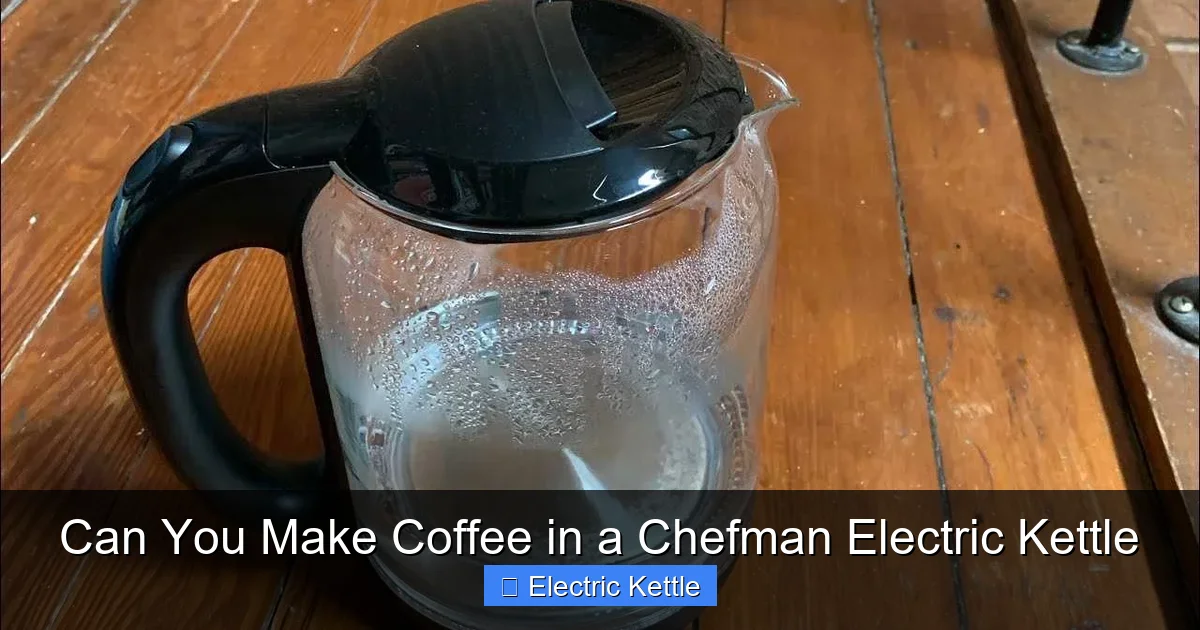
Visual guide about Can You Make Coffee in a Chefman Electric Kettle
Image source: kitchenadvising.com
Now, let’s address the million-dollar question: Can you actually brew coffee *inside* your Chefman electric kettle? The answer is a cautious “maybe,” but with strong warnings.
Technically, yes—you could add coffee grounds to the kettle, fill it with water, and let it boil. But this is **not recommended** for several important reasons.
First, coffee grounds are abrasive and can scratch the interior of your kettle, especially if it’s made of glass or has a non-stick coating. Over time, this can degrade the surface and create spots where bacteria or residue can build up.
Second, boiling coffee grounds directly can lead to over-extraction. Coffee brewed at boiling temperatures (212°F or 100°C) often tastes bitter and burnt. The ideal brewing temperature for most coffee is between 195°F and 205°F (90°C–96°C). While some Chefman models have variable temperature settings, even those may not cool the water quickly enough after boiling to hit that sweet spot.
Third, and perhaps most importantly, coffee grounds can clog the kettle’s spout, filter, or heating element. Chefman kettles often have small mesh filters near the spout to prevent debris from pouring out. Coffee grounds—especially fine ones—can get trapped in these filters, leading to poor water flow, strange noises, or even malfunctions.
There’s also the issue of cleanup. Coffee oils are sticky and aromatic. If you brew directly in the kettle, those oils will coat the interior, and over time, they can impart a coffee flavor to other beverages like tea or hot chocolate. That might sound nice at first, but it defeats the purpose of having a versatile appliance.
When It Might Be Okay (With Caution)
That said, there are a few scenarios where direct brewing might be acceptable—if done sparingly and with care.
If your Chefman kettle has a **built-in infuser basket** (some models do), and it’s specifically labeled for coffee or tea, you *might* be able to use it for coarse-ground coffee. In this case, the grounds are contained, reducing the risk of clogging. However, you should still avoid boiling the coffee for too long. Instead, heat the water to the right temperature, pour it over the grounds in the infuser, and let it steep for 4–5 minutes before removing the basket. Never let the kettle boil with the infuser in place for extended periods.
Another option is using **coarse-ground coffee** and a **fine-mesh strainer** or **coffee sock**. You could heat water in the kettle, then pour it into a separate container with the coffee and strainer. This mimics a French press method without risking your appliance.
But again, the safest and most effective approach is to use your Chefman kettle to heat water—then brew your coffee separately.
Best Coffee Brewing Methods Using a Chefman Kettle
So if you shouldn’t brew coffee directly in the kettle, how *should* you use your Chefman to make great coffee? The answer lies in using it as a high-quality water heater for traditional brewing methods. Here are the best ways to do it.
Pour-Over Coffee (e.g., Chemex, V60, Kalita Wave)
Pour-over brewing is one of the most popular and rewarding methods for coffee lovers. It gives you full control over extraction, resulting in a clean, flavorful cup. And your Chefman kettle is perfect for this.
Start by heating water in your Chefman kettle. If your model has temperature control, set it to around 200°F (93°C). If not, let the water boil, then wait 30 seconds to cool slightly. This brings it into the ideal range.
While the water heats, place a filter in your pour-over dripper and rinse it with hot water to remove any paper taste. Add your freshly ground coffee (medium-fine grind works best), then slowly pour the hot water in a circular motion, starting from the center and moving outward. Aim for a total brew time of 3–4 minutes.
The precision of pour-over brewing highlights the subtle notes in your coffee—fruity, floral, or nutty—depending on the bean. And since you’re only using the kettle to heat water, there’s no risk of damage or residue buildup.
French Press
The French press is beloved for its rich, full-bodied coffee. It’s also incredibly simple: add coarse grounds, pour hot water, steep, press, and enjoy.
Your Chefman kettle excels here. Heat water to just off the boil (around 200°F), then pour it over the grounds in your French press. Stir gently, place the lid on with the plunger up, and let it steep for 4 minutes. Then, press down slowly and pour.
Because the French press has its own built-in filter, you don’t need to worry about grounds getting into your kettle. This method is forgiving, easy to clean, and produces a robust cup—perfect for mornings when you want something strong and satisfying.
Instant Coffee (Yes, Really!)
We know—instant coffee isn’t everyone’s first choice. But let’s be honest: sometimes you just need a quick cup, and instant is perfectly acceptable.
Here’s how to make it better with your Chefman kettle. Instead of using a microwave or stovetop, heat fresh, filtered water in your kettle. Pour it over your instant coffee in a mug, stir well, and add milk or sweetener if desired.
The advantage? Your kettle heats water faster and more evenly than a microwave, and you avoid the “burnt” taste that can come from overheating. Plus, you’re not adding instant granules to the kettle itself—just using it to heat the water. This keeps your appliance clean and your coffee tasting fresher.
Espresso-Style Drinks (With a Moka Pot)
Love lattes or cappuccinos? You can make espresso-style coffee at home using a Moka pot—and your Chefman kettle can help.
Fill the bottom chamber of the Moka pot with water (not boiling), add finely ground coffee to the filter basket, and screw on the top. Place it on the stove and heat until the coffee bubbles up into the top chamber.
But here’s the twist: use your Chefman kettle to preheat the water. This reduces brew time and prevents the Moka pot from overheating, which can scorch the coffee. Just heat the water in the kettle, pour it into the Moka pot, and proceed as usual.
This method gives you a strong, concentrated coffee base that’s perfect for milk-based drinks. And again, your kettle stays clean and undamaged.
Cleaning and Maintenance After Coffee Use
Even if you’re only using your Chefman kettle to heat water for coffee, it’s important to clean it regularly. Coffee oils, mineral deposits, and leftover residue can build up over time, affecting both taste and performance.
Daily Cleaning Tips
After each use, rinse the kettle with warm water. If you notice any cloudiness or film, wipe the interior with a soft cloth or sponge. Avoid abrasive scrubbers, which can scratch the surface.
For plastic models, be extra vigilant. Plastic is porous and can absorb odors. If your kettle starts to smell like coffee even when making tea, it’s time for a deep clean.
Deep Cleaning Methods
Once a week, give your kettle a thorough cleaning. Here are two effective methods:
**Vinegar Solution:** Fill the kettle halfway with equal parts water and white vinegar. Bring it to a boil, then let it sit for 15–20 minutes. Pour out the solution, rinse thoroughly, and run a cycle with fresh water to remove any vinegar taste.
**Baking Soda Paste:** For stubborn stains or odors, make a paste with baking soda and water. Apply it to the interior, let it sit for 10 minutes, then scrub gently with a soft brush or sponge. Rinse well.
Avoid using bleach or harsh chemicals, as they can damage the kettle and leave toxic residues.
Descaling for Hard Water Areas
If you live in an area with hard water, mineral deposits (limescale) can build up on the heating element and interior walls. This reduces efficiency and can affect taste.
Use a descaling solution or the vinegar method mentioned above every 4–6 weeks. Some Chefman models have a “descale” indicator light—pay attention to it.
After descaling, always run 2–3 cycles with fresh water to ensure no vinegar or cleaner remains.
Model-Specific Features to Look For
Not all Chefman kettles are created equal. If you’re serious about using yours for coffee, consider these features when choosing or upgrading your model.
Variable Temperature Control
Some Chefman kettles offer multiple temperature settings (e.g., 160°F for delicate teas, 212°F for boiling). This is a game-changer for coffee lovers. You can heat water to the ideal 195°F–205°F range without guessing or waiting for it to cool.
Look for models like the Chefman RJ11-17-GP or RJ11-17-BR, which include precise temperature control.
Built-In Infuser Basket
A few Chefman kettles come with removable infusers designed for tea leaves. While not ideal for coffee, they *can* be used with coarse grounds if you’re careful. Just remember: never boil the kettle with the infuser in place for more than a minute or two.
Gooseneck Spout
Pour-over brewing requires precision. A gooseneck spout allows for slow, controlled pouring—essential for even extraction. While not all Chefman models have this, some newer versions do. If you’re into pour-over, this feature is worth the upgrade.
Keep-Warm Function
Some Chefman kettles can maintain water temperature for up to 30 minutes after boiling. This is useful if you’re making multiple cups or need hot water on demand. Just be cautious—keeping water hot for too long can promote bacterial growth, so don’t leave it on indefinitely.
Safety Tips and What to Avoid
Using your Chefman kettle for coffee is generally safe—if you follow basic guidelines. But there are a few things you should never do.
Never Add Coffee Grounds Directly
As we’ve stressed, pouring coffee grounds into the kettle and boiling them is a bad idea. It can clog the spout, damage the heating element, and leave behind stubborn residue.
Don’t Operate the Kettle Empty
Always ensure there’s water in the kettle before turning it on. Running it dry can overheat the element and cause permanent damage.
Avoid Instant Coffee in the Kettle
Adding instant coffee granules directly to the kettle may seem convenient, but it leaves a sticky film that’s hard to remove. It can also affect the taste of future brews.
Don’t Use Metal Utensils Inside
Stirring with a metal spoon can scratch the interior, especially in glass or coated kettles. Use silicone or wooden tools instead.
Unplug When Not in Use
Even with auto shut-off, it’s safer to unplug the kettle after use. This prevents accidental activation and saves energy.
Conclusion
So, can you make coffee in a Chefman electric kettle? The answer is a resounding “yes”—but not by brewing directly inside it. These kettles are designed to heat water, not steep coffee. By using your Chefman to boil water and then brewing with a pour-over, French press, or Moka pot, you can enjoy excellent coffee while protecting your appliance.
The key is to treat your kettle as a reliable water heater, not a coffee maker. Use the right temperature, clean it regularly, and avoid shortcuts that could damage it. With a little care and the right technique, your Chefman kettle can be an essential part of your daily coffee ritual.
Whether you’re sipping a delicate pour-over or a rich French press, your kettle has your back—just keep it clean, use it wisely, and never skip the fresh grind. Your taste buds (and your kettle) will thank you.
Frequently Asked Questions
Can I put coffee grounds directly in my Chefman kettle?
No, it’s not recommended. Coffee grounds can clog the spout, damage the heating element, and leave behind oily residue that’s hard to clean. Always brew coffee separately using hot water from the kettle.
What’s the best way to make coffee with a Chefman kettle?
The best method is to use the kettle to heat water, then brew using a pour-over, French press, or Moka pot. This protects your kettle and produces better-tasting coffee.
Can I use instant coffee with my Chefman kettle?
Yes, but only by heating water in the kettle and pouring it over instant coffee in a mug. Never add instant granules directly to the kettle.
How do I clean my Chefman kettle after making coffee?
Rinse it after each use and deep clean weekly with a vinegar-water solution. For odors, use a baking soda paste. Always descale if you have hard water.
Do any Chefman kettles have coffee brewing features?
Some models include infuser baskets or temperature control, which can help with coffee brewing—but they’re not full coffee makers. Check your model’s specs for details.
Is it safe to leave water in my Chefman kettle overnight?
It’s not recommended. Stagnant water can promote bacterial growth and leave mineral deposits. Empty and rinse the kettle after each use for best results.