Yes, you can plug an electric kettle into a surge protector—but only if it’s a heavy-duty model rated for high-wattage devices. Standard surge protectors may overheat or fail under the kettle’s power demand, creating a fire hazard. Always check wattage compatibility and use a surge protector designed for major appliances.
Key Takeaways
- Electric kettles draw high wattage (1500–3000W): Most standard surge protectors aren’t built to handle this load continuously, increasing overheating risks.
- Use only heavy-duty surge protectors: Look for models rated for 15 amps or higher with a joule rating of at least 1000 and built-in thermal protection.
- Avoid daisy-chaining devices: Never plug a kettle into a power strip that’s already connected to other high-wattage appliances like microwaves or space heaters.
- Check the manufacturer’s guidelines: Some kettle brands explicitly warn against using surge protectors—always read the user manual first.
- Wall outlets are safest for kettles: For daily use, plugging directly into a grounded wall outlet reduces fire and electrical risks.
- Surge protectors aren’t always necessary: If your home has modern wiring and whole-house surge protection, a standalone protector may be redundant.
- Regular inspection is key: Replace worn, warm, or damaged surge protectors immediately—they degrade over time and lose effectiveness.
📑 Table of Contents
- Can You Plug an Electric Kettle into a Surge Protector?
- Understanding Electric Kettle Power Requirements
- Types of Surge Protectors and Their Limitations
- Safety Risks of Using the Wrong Surge Protector
- Best Practices for Using Surge Protectors with Electric Kettles
- When It’s Safe—and When It’s Not
- Alternatives to Surge Protectors for Electric Kettles
- Conclusion
Can You Plug an Electric Kettle into a Surge Protector?
You’re making your morning tea, reach for your electric kettle, and notice it’s plugged into a surge protector. It works fine—so is it safe? The short answer is: it depends. While it’s technically possible to plug an electric kettle into a surge protector, doing so without caution can pose serious safety risks. Electric kettles are among the highest-wattage small appliances in your kitchen, often drawing between 1500 and 3000 watts of power. That’s more than a microwave, toaster, or coffee maker. Most standard surge protectors aren’t designed to handle such intense, sustained electrical loads.
This article will walk you through everything you need to know about using surge protectors with electric kettles—from safety concerns and power requirements to best practices and alternatives. Whether you’re a tea lover, coffee enthusiast, or just someone trying to keep their kitchen safe, understanding how your appliances interact with your electrical setup is crucial. We’ll break down the science, dispel myths, and give you practical tips to protect both your devices and your home.
Understanding Electric Kettle Power Requirements
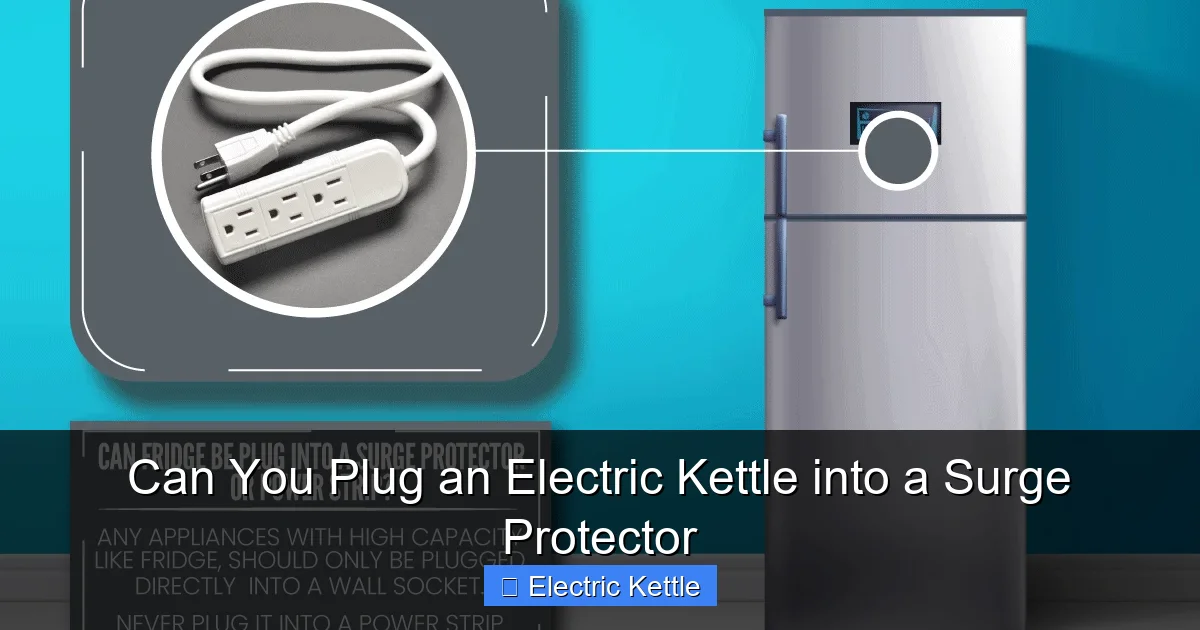
Visual guide about Can You Plug an Electric Kettle into a Surge Protector
Image source: kitchenseer.com
Before deciding whether to use a surge protector, it’s important to understand how much power your electric kettle actually uses. Most modern electric kettles operate at 120 volts (in the U.S.) and draw between 12 and 15 amps of current. Using the formula Watts = Volts × Amps, that translates to roughly 1440 to 1800 watts—though some high-performance models can reach up to 3000 watts. For comparison, a typical laptop uses about 65 watts, and a standard LED light bulb uses just 10 watts. Your kettle is pulling nearly 30 times more power than a light bulb.
This high wattage is necessary to heat water quickly. Electric kettles are designed to bring a full liter of water to a boil in just a few minutes, which requires a significant burst of energy. The heating element inside the kettle is essentially a resistor that converts electrical energy into heat. The more power it draws, the faster it heats. But this also means the kettle places a heavy demand on your home’s electrical circuit—and any device it’s plugged into, including surge protectors.
Why Wattage Matters for Surge Protectors
Surge protectors are not all created equal. Many people assume that any power strip with surge protection can handle any plug-in device. That’s not true. Standard surge protectors—the kind you might use for your TV, computer, or gaming console—are typically rated for lower-wattage devices. They’re built to protect sensitive electronics from voltage spikes, not to serve as heavy-duty power hubs for high-energy appliances.
When you plug a 1800-watt kettle into a surge protector rated for only 10 amps (1200 watts), you’re overloading it. The internal wiring and components aren’t designed to carry that much current continuously. Over time, this can cause the surge protector to overheat, melt, or even catch fire. Even if it doesn’t fail immediately, repeated use under stress can degrade its performance and shorten its lifespan.
Real-World Example: The Overloaded Power Strip
Imagine you’re in a small apartment with limited outlets. You’ve plugged your kettle, microwave, and space heater into the same power strip to save space. Sounds convenient, right? But here’s the problem: each of those devices draws over 1000 watts. Combined, they can easily exceed 3000 watts—far beyond what most power strips can safely handle. Even if the surge protector has a built-in circuit breaker, it may not trip fast enough to prevent damage.
In one real-life incident reported by the U.S. Fire Administration, a kitchen fire started when a kettle was plugged into a daisy-chained power strip that also powered a toaster and coffee maker. The strip overheated, melted, and ignited nearby paper towels. The fire spread quickly, causing thousands of dollars in damage. The lesson? Never assume a surge protector can handle multiple high-wattage devices at once—especially in the kitchen.
Types of Surge Protectors and Their Limitations
Not all surge protectors are created equal, and understanding the differences can help you make safer choices. There are three main types of surge protection devices: basic power strips, surge protectors, and heavy-duty surge protectors. Each has its own capabilities and limitations.
Basic Power Strips
These are the most common and often the cheapest options. They look like surge protectors but usually lack any real surge protection. Instead, they’re just multi-outlet extensions with a simple on/off switch. They’re fine for low-power devices like lamps, phone chargers, or clocks—but they should never be used with high-wattage appliances like electric kettles. Their internal wiring is too thin to handle sustained high current, and they offer no protection against power surges.
Standard Surge Protectors
These devices include basic surge protection circuitry designed to absorb voltage spikes from lightning strikes or grid fluctuations. They’re great for protecting computers, TVs, and home theater systems. However, most standard models are rated for 10–13 amps and 1200–1560 watts. While they might technically handle a kettle for a short time, they’re not built for continuous high-load use. Prolonged exposure to high wattage can cause internal components to degrade or overheat.
Look for key specs like joule rating (a measure of surge absorption capacity), clamping voltage (how quickly it responds to surges), and response time. A good standard surge protector might have a 600–1000 joule rating and a clamping voltage of 330V or lower. But again, even the best standard model isn’t ideal for a kettle.
Heavy-Duty Surge Protectors
These are the real deal. Designed for high-wattage appliances, heavy-duty surge protectors are built with thicker internal wiring, robust components, and advanced thermal protection. They’re often marketed for use with refrigerators, air conditioners, or power tools. Look for models rated at 15 amps or higher, with a wattage capacity of at least 1800 watts. Some even include features like automatic shutoff if overheating is detected.
For example, the Tripp Lite Isobar Ultra 8 is a heavy-duty surge protector rated for 15 amps and 1875 watts. It includes eight outlets, a 3000-joule surge rating, and a built-in circuit breaker. It’s one of the few models specifically recommended for high-draw appliances. If you must use a surge protector with your kettle, this type is your safest bet.
Whole-House Surge Protection
For ultimate safety, consider installing a whole-house surge protector at your main electrical panel. These devices protect your entire home from external surges caused by lightning or utility grid issues. They don’t replace outlet-level protection but work alongside it. If your home already has this system, you may not need a standalone surge protector for your kettle—especially if you’re plugging it directly into a wall outlet.
Safety Risks of Using the Wrong Surge Protector
Using an incompatible surge protector with your electric kettle isn’t just inefficient—it’s dangerous. The risks range from minor inconveniences to serious fire hazards. Understanding these dangers can help you make smarter choices.
Overheating and Melting
The most common risk is overheating. When a surge protector is overloaded, the internal wires and connections generate excess heat. Over time, this can cause the plastic casing to soften, warp, or melt. You might notice a burning smell, discoloration around the outlets, or even smoke. In extreme cases, melted plastic can expose live wires, increasing the risk of electric shock or fire.
Fire Hazards
Electrical fires often start silently. A surge protector under constant stress may not show obvious signs of failure until it’s too late. According to the National Fire Protection Association (NFPA), electrical distribution and lighting equipment were involved in an estimated 44,880 home structure fires in 2021. Many of these were linked to misuse of power strips and surge protectors.
A kettle left plugged into an overloaded surge protector overnight—or even during the day—can create a hidden fire risk. The heat builds up slowly, and if the protector is tucked behind a counter or under a cabinet, you may not notice until flames appear.
Reduced Lifespan of Appliances
Even if your surge protector doesn’t fail, using it improperly can damage your kettle. Voltage fluctuations, poor connections, or inconsistent power delivery can stress the heating element and internal circuitry. Over time, this may lead to shorter boiling times, inconsistent performance, or complete failure. Replacing a kettle every year or two gets expensive—and it’s avoidable.
Voided Warranties
Many electric kettle manufacturers include warnings in their user manuals about using surge protectors. For example, Breville and Cuisinart both advise against plugging their kettles into power strips or extension cords unless they’re specifically rated for high-wattage use. If your kettle fails and you’ve used an incompatible surge protector, the manufacturer may deny your warranty claim, leaving you to pay for repairs or a replacement.
Best Practices for Using Surge Protectors with Electric Kettles
So, what should you do? The safest approach is to plug your electric kettle directly into a grounded wall outlet. But if you must use a surge protector—perhaps due to outlet placement or home wiring limitations—follow these best practices.
Choose the Right Surge Protector
Only use a heavy-duty surge protector rated for at least 15 amps and 1800 watts. Check the label or product specifications before buying. Look for certifications from UL (Underwriters Laboratories) or ETL (Intertek), which indicate the device has been tested for safety. Avoid cheap, unbranded models from unknown manufacturers.
Plug In Directly—No Daisy-Chaining
Never plug your kettle into a surge protector that’s already connected to other high-wattage devices. This includes microwaves, toasters, space heaters, or hair dryers. Even if the total wattage seems within limits, the cumulative heat and current can overwhelm the circuit. Use a dedicated outlet or surge protector for your kettle only.
Inspect Regularly
Check your surge protector monthly for signs of wear: warmth, discoloration, frayed cords, or a burning smell. If it feels warm to the touch during use, unplug it immediately. Replace surge protectors every 3–5 years, even if they appear to be working. Surge protection components degrade over time and lose effectiveness.
Follow Manufacturer Guidelines
Always read your kettle’s user manual. Some brands, like Fellow and OXO, explicitly state that their kettles should not be used with power strips or extension cords. Others may allow it under certain conditions. When in doubt, follow the manufacturer’s advice.
Consider Alternatives
If you’re concerned about power surges, consider installing a whole-house surge protector or using a dedicated outlet for your kettle. You can also unplug the kettle when not in use—this eliminates the risk entirely and saves a small amount of standby power.
When It’s Safe—and When It’s Not
Let’s clarify: plugging an electric kettle into a surge protector isn’t inherently dangerous—if you do it correctly. Here’s a quick guide to help you decide.
Safe Scenarios
- You’re using a heavy-duty surge protector rated for 15 amps and 1800+ watts.
- The surge protector is plugged directly into a wall outlet—no extension cords or daisy-chaining.
- No other high-wattage devices are connected to the same circuit.
- The surge protector is in good condition, with no signs of damage or overheating.
- Your kettle’s manual allows for surge protector use.
Unsafe Scenarios
- You’re using a basic power strip or low-wattage surge protector.
- The surge protector feels warm or smells like burning.
- Multiple appliances are plugged into the same strip.
- The outlet is old, loose, or not grounded.
- You’re using an extension cord in addition to the surge protector.
Practical Tip: The “One High-Wattage Device Per Circuit” Rule
A good rule of thumb is to reserve one circuit for high-wattage appliances. In most homes, the kitchen has multiple circuits to handle the load. Try to plug your kettle into an outlet that’s not shared with the microwave, toaster, or dishwasher. This reduces the risk of overloading and ensures consistent power delivery.
Alternatives to Surge Protectors for Electric Kettles
If you’re worried about power surges but don’t want to risk using a surge protector, consider these safer alternatives.
Direct Wall Outlet Use
The simplest and safest option is to plug your kettle directly into a grounded wall outlet. Modern homes are built with safety in mind, and standard outlets are designed to handle high-wattage devices. Just make sure the outlet is in good condition and not overloaded with other plugs.
Dedicated Outlet Installation
If your kitchen lacks convenient outlets, consider hiring an electrician to install a dedicated outlet near your countertop. This outlet can be used exclusively for your kettle, eliminating the need for surge protectors or extension cords. It’s a small investment that pays off in safety and convenience.
Whole-House Surge Protection
For comprehensive protection, install a whole-house surge protector at your main electrical panel. These devices cost $200–$500 installed but protect all your appliances from external surges. They’re especially useful in areas prone to lightning storms or grid instability.
Unplugging When Not in Use
Many people leave their kettles plugged in 24/7, but this isn’t necessary. Unplugging your kettle when not in use reduces standby power consumption and eliminates any risk of electrical issues. It’s a simple habit that can make a big difference.
Conclusion
So, can you plug an electric kettle into a surge protector? Yes—but only if you use the right kind. Standard surge protectors aren’t built for the high wattage that kettles demand, and using them incorrectly can lead to overheating, fire, or appliance damage. The safest approach is to plug your kettle directly into a grounded wall outlet. If you must use a surge protector, choose a heavy-duty model rated for 15 amps and 1800+ watts, and never daisy-chain it with other high-draw devices.
Remember, safety isn’t just about convenience—it’s about protecting your home, your appliances, and your peace of mind. A few extra minutes to check your setup can prevent a costly or dangerous incident. Whether you’re brewing your morning coffee or preparing tea for guests, take a moment to think about where your kettle is plugged in. Your future self will thank you.
Frequently Asked Questions
Can I use any surge protector with my electric kettle?
No, not all surge protectors are suitable. Only heavy-duty models rated for 15 amps and at least 1800 watts should be used with electric kettles. Standard surge protectors may overheat or fail under the high power demand.
Is it safe to plug a kettle into a power strip?
It depends on the power strip. Basic power strips without surge protection or high-wattage ratings are unsafe. Use only heavy-duty surge protectors designed for major appliances, and avoid daisy-chaining with other devices.
Will using a surge protector damage my electric kettle?
It can, if the surge protector is underpowered or faulty. Poor power delivery or voltage fluctuations may stress the kettle’s heating element. Always use a compatible, high-quality surge protector or plug directly into a wall outlet.
Do I really need a surge protector for my kettle?
Not necessarily. If your home has modern wiring and whole-house surge protection, a standalone protector may be redundant. Unplugging the kettle when not in use is often the safest option.
What should I look for in a surge protector for high-wattage appliances?
Look for a model rated for 15 amps or higher, with a wattage capacity of at least 1800 watts. Choose one with a high joule rating (1000+), UL or ETL certification, and thermal protection features.
Can I plug my kettle and microwave into the same surge protector?
No, this is extremely dangerous. Both devices draw over 1000 watts, and combining them can easily exceed the surge protector’s capacity, leading to overheating or fire. Use separate outlets or circuits.