Steaming milk in an electric kettle is not recommended and can damage your appliance or create a safety hazard. While some kettles may briefly heat milk, they aren’t designed for it—leading to burnt residue, clogged vents, and potential malfunctions. For perfect frothed milk, use a dedicated milk frother or steam wand instead.
Key Takeaways
- Electric kettles are not designed for milk: Most models lack the temperature control and steam mechanisms needed to safely steam or froth milk.
- Risk of damage and malfunction: Milk can scorch, stick to heating elements, and clog internal components, leading to permanent damage.
- Fire and safety hazards: Overheating milk can cause overflow, smoke, or even fire, especially in kettles without automatic shut-off for dairy.
- Cleaning becomes difficult: Dried milk residue is tough to remove and can affect the taste of future boiled water.
- Better alternatives exist: Use a milk frother, French press, or stovetop steamer for safe and effective milk steaming.
- Check your manual first: A few specialized kettles claim milk compatibility—always verify manufacturer guidelines before attempting.
- Prevents cross-contamination: Using your kettle only for water keeps it clean and ensures pure-tasting hot beverages.
📑 Table of Contents
- Can You Steam Milk in an Electric Kettle?
- How Electric Kettles Work—And Why Milk Doesn’t Fit
- The Risks of Steaming Milk in an Electric Kettle
- When Might It Be Safe? (Spoiler: Rarely)
- Better Alternatives for Steaming Milk
- Cleaning and Maintenance Tips for Electric Kettles
- Final Thoughts: Stick to Water
Can You Steam Milk in an Electric Kettle?
If you’ve ever stood in your kitchen, staring at your electric kettle and a carton of milk, wondering, “Can I just steam this here?”—you’re not alone. With the rise of homemade lattes, cappuccinos, and creamy hot chocolates, many coffee lovers are looking for quick, convenient ways to froth milk without investing in extra gadgets. An electric kettle seems like a logical choice: it heats liquids fast, it’s always on the counter, and it’s already part of your daily routine. But before you pour that milk in, it’s important to understand what electric kettles are actually built for—and why steaming milk in one might be a recipe for disaster.
Electric kettles are engineered primarily to boil water. Their heating elements, thermostats, and automatic shut-off systems are calibrated for H₂O, not dairy. Milk behaves very differently when heated: it scalds easily, forms a skin, and can foam unpredictably. Unlike water, which evaporates cleanly, milk leaves behind sticky residues that cling to surfaces and are notoriously hard to clean. So while it might seem like a clever hack, using your electric kettle to steam milk can lead to burnt flavors, appliance damage, and even safety risks. In this article, we’ll explore why steaming milk in an electric kettle is generally a bad idea, what could go wrong, and what safer, more effective alternatives you can use instead.
How Electric Kettles Work—And Why Milk Doesn’t Fit
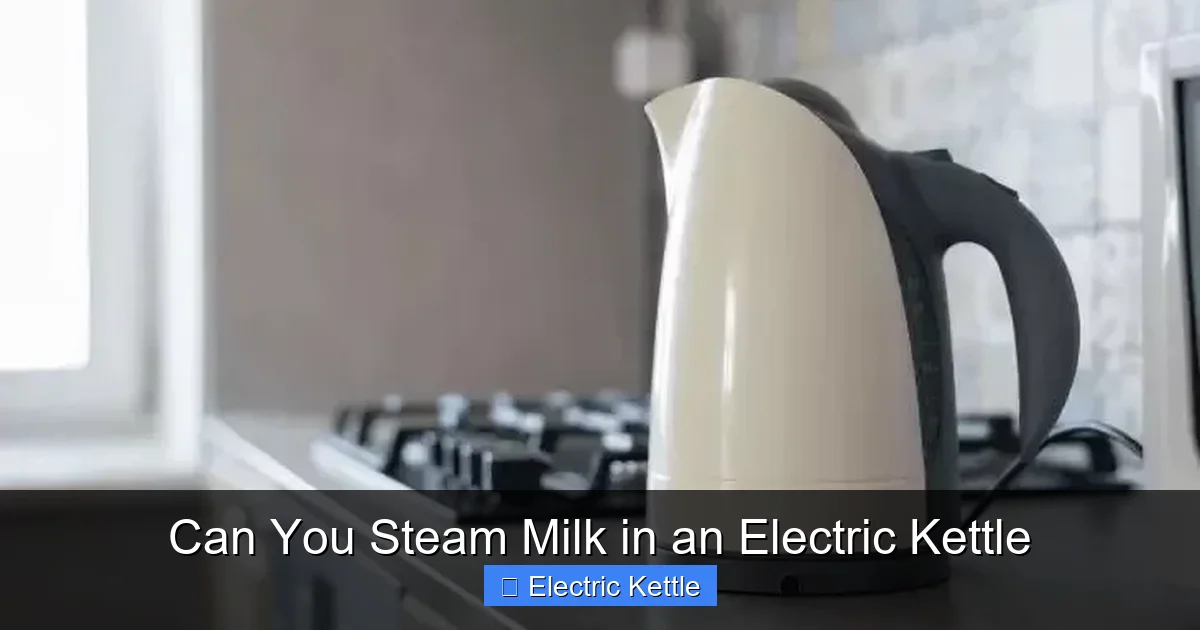
Visual guide about Can You Steam Milk in an Electric Kettle
Image source: irrorwxhiqijjr5q.ldycdn.com
To understand why milk and electric kettles don’t mix, it helps to know how these appliances function. Most electric kettles use a submerged or concealed heating element to rapidly bring water to a boil. Once the water reaches around 212°F (100°C), a thermostat triggers an automatic shut-off, preventing overheating and saving energy. This system works beautifully for water because it’s consistent, predictable, and leaves no residue.
Milk, on the other hand, is a complex emulsion of fats, proteins, and sugars. When heated, these components react differently. Proteins denature and coagulate, fats can separate, and sugars may caramelize—especially if the temperature climbs too high too quickly. Most electric kettles don’t have precise temperature controls, meaning they’ll blast milk with full heat until it boils over or burns. Even kettles with variable temperature settings are usually calibrated for water-based beverages like green tea or French press coffee, not dairy.
The Problem with Temperature Control
One of the biggest issues with steaming milk in an electric kettle is the lack of temperature precision. Ideal milk steaming happens between 140°F and 160°F (60°C–71°C)—hot enough to create microfoam and enhance sweetness, but not so hot that it scalds or separates. Most electric kettles either boil at 212°F or offer preset temperatures like 175°F or 195°F, which are still too high for milk. Without a way to stop heating at the right moment, you’re likely to end up with burnt, bitter milk or a messy overflow.
Heating Element Design Matters
Another critical factor is the design of the heating element. In many kettles, the element is located at the bottom or wrapped around the base. When milk is heated this way, it can create hot spots where the liquid scorches before the rest even warms up. This is especially true for whole milk or cream, which have higher fat content and are more prone to burning. Over time, these burnt patches harden and become nearly impossible to remove, leading to lingering odors and off-flavors in your next cup of tea.
The Risks of Steaming Milk in an Electric Kettle
While the idea of a one-pot wonder for your morning latte might be tempting, the risks far outweigh the convenience. From appliance damage to health and safety concerns, here’s what you need to know before trying to steam milk in your electric kettle.
Appliance Damage and Malfunction
Milk is sticky. When it heats up, it forms a thin film that clings to the interior surfaces of your kettle—especially around the heating element and the spout. Over time, this residue builds up and can interfere with the kettle’s performance. The thermostat may struggle to read temperatures accurately, the automatic shut-off might fail, or the heating element could overheat due to insulation from dried milk. In severe cases, the kettle may stop working altogether.
I once spoke with a customer who tried steaming oat milk in her glass electric kettle. After just two uses, the heating coil was caked with a brown, crusty layer. She couldn’t scrub it off, and the kettle started making a burning smell every time she boiled water. She ended up replacing it—costing her more than a dedicated milk frother would have.
Safety Hazards: Overflow, Smoke, and Fire
Milk has a tendency to foam when heated, especially if it’s cold or contains added thickeners (like in plant-based milks). This foam can rise rapidly and overflow from the kettle’s spout, spilling onto the heating base or electrical components. Not only is this a mess, but it can also cause short circuits or electrical fires.
Additionally, if milk burns onto the heating element, it can produce smoke and a strong, unpleasant odor. In rare cases, overheating dairy can lead to combustion—especially if the kettle lacks proper safety features. Most modern kettles have boil-dry protection, but this is designed for water, not milk. Once milk scorches, the kettle may not detect the change and continue heating, creating a dangerous situation.
Health and Taste Concerns
Even if your kettle survives the ordeal, the milk itself may not be safe or pleasant to drink. Burnt milk develops off-flavors and can harbor harmful bacteria if it’s been heated improperly. Proteins that have denatured at high temperatures may also be harder to digest. Plus, residual milk in the kettle can spoil between uses, leading to mold or bacterial growth—especially in hard-to-reach areas like the lid or spout.
And let’s be honest: no one wants their morning tea to taste like yesterday’s latte. Cross-contamination is a real issue when you use the same appliance for water and milk. Even with thorough cleaning, traces of dairy can linger and affect the flavor of your next brew.
When Might It Be Safe? (Spoiler: Rarely)
Now, before you throw your kettle out the window, there’s a small caveat: a handful of electric kettles are specifically designed to handle milk. These are usually high-end models marketed as “multi-purpose” or “coffee station” kettles, often with stainless steel interiors, precise temperature controls, and steam wands or frothing attachments.
Specialized Kettles for Milk
Brands like Breville, Smeg, and Fellow offer kettles with features like variable temperature settings, keep-warm functions, and even built-in milk frothers. For example, the Breville BKE830XL Smart Kettle has a “milk” setting that heats to 160°F and includes a frothing disk. These models are engineered to handle dairy safely, with materials that resist staining and mechanisms that prevent scorching.
If you own one of these kettles, the manufacturer’s instructions will usually confirm whether milk steaming is supported. Always follow their guidelines—don’t assume all kettles with temperature control can handle milk.
What If Your Kettle Isn’t Designed for Milk?
For the vast majority of electric kettles—especially basic models from brands like Hamilton Beach, Cuisinart, or OXO—the answer is clear: don’t use them for milk. Even if you’re careful, the risk of damage or malfunction is too high. The few minutes you save aren’t worth potentially ruining a $50–$100 appliance.
And if you’re thinking, “But I’ll just clean it really well afterward,” think again. Milk residue can seep into tiny crevices, under the lid, or around the heating coil. No amount of scrubbing guarantees it’s all gone. Over time, this buildup can affect performance and hygiene.
Better Alternatives for Steaming Milk
So, if your electric kettle isn’t the right tool, what is? Fortunately, there are several affordable, effective ways to steam and froth milk at home—without risking your kettle.
Handheld Milk Frothers
One of the most popular and budget-friendly options is a handheld milk frother. These small, battery-powered devices look like mini whisks and create rich, creamy foam in under a minute. Simply heat your milk on the stove or in the microwave, then insert the frother and whisk for 15–30 seconds. They’re great for lattes, hot chocolates, and even matcha.
Pros: Inexpensive ($10–$20), easy to clean, portable.
Cons: Doesn’t heat milk, requires a separate heating step.
French Press Method
Believe it or not, your French press can double as a milk frother. Heat your milk to around 150°F (use a thermometer or stop just before it simmers), then pour it into the French press. Pump the plunger up and down vigorously for 30 seconds to create foam. Let it sit for a minute to stabilize, then pour.
Pros: No extra gadget needed, creates thick foam.
Cons: Can be messy, harder to clean if milk dries inside.
Stovetop Steaming with a Saucepan
For a more traditional approach, heat milk in a small saucepan over medium-low heat. Use a whisk or milk frothing pitcher to create foam as it warms. Stir constantly to prevent scorching, and remove from heat as soon as it reaches 150–160°F. This method gives you full control over temperature and texture.
Pros: Full control, works with any milk.
Cons: Requires attention, risk of burning if not careful.
Electric Milk Frothers
If you’re serious about your coffee game, consider an electric milk frother. These countertop devices heat and froth milk automatically, often with settings for different types (whole, skim, almond, oat). Models like the Nespresso Aeroccino or the Breville Milk Cafe are popular choices.
Pros: Hands-free, consistent results, heats and froths in one step.
Cons: More expensive ($40–$100), takes up counter space.
Steam Wands on Espresso Machines
If you own an espresso machine with a steam wand, you’re already set. These wands inject steam directly into the milk, creating professional-quality microfoam perfect for latte art. Just be sure to purge the wand before and after use to prevent milk buildup.
Pros: Best foam quality, ideal for coffee drinks.
Cons: Requires an espresso machine, learning curve.
Cleaning and Maintenance Tips for Electric Kettles
Even if you never steam milk in your kettle, proper cleaning is essential to keep it functioning well and your water tasting fresh. Here’s how to maintain your electric kettle for long-term use.
Regular Descaling
Mineral buildup from hard water can affect performance and taste. Descale your kettle every 1–3 months using a mixture of equal parts water and white vinegar. Fill the kettle, boil, let it sit for 30 minutes, then rinse thoroughly. For stubborn scale, repeat or use a commercial descaling solution.
Wiping the Interior
After each use, wipe the inside with a soft, damp cloth. Avoid abrasive sponges or harsh chemicals, which can scratch the surface or leave residues. For glass kettles, a mixture of baking soda and water can help remove stains.
Checking the Filter and Spout
Many kettles have a mesh filter in the spout to catch limescale. Remove and rinse it regularly. If it’s clogged, soak it in vinegar or replace it if necessary.
Never Submerge the Base
Always unplug the kettle before cleaning, and never submerge the base or electrical components in water. Wipe the exterior with a damp cloth and dry thoroughly.
Final Thoughts: Stick to Water
At the end of the day, your electric kettle is a reliable workhorse designed for one primary task: boiling water. While it’s tempting to stretch its capabilities, steaming milk is a step too far. The risks—appliance damage, safety hazards, and off-flavors—simply aren’t worth it.
Instead, invest in a simple milk frother or use a stovetop method to achieve the creamy, frothy milk your coffee deserves. Your kettle will last longer, your drinks will taste better, and you’ll avoid the frustration of a burnt-out appliance.
So the next time you’re craving a latte, resist the urge to pour milk into your kettle. Grab a small saucepan, a frother, or that French press you’ve been meaning to use. Your taste buds—and your kettle—will thank you.
Frequently Asked Questions
Can I heat milk in an electric kettle if I watch it closely?
Even with close supervision, heating milk in an electric kettle is risky. Milk can scorch quickly, foam over, or leave residue that damages the appliance. It’s safer to use a method designed for milk.
What happens if I accidentally put milk in my electric kettle?
If you catch it early, pour it out immediately and rinse thoroughly. If it’s already heated, clean the kettle as soon as possible with warm soapy water and vinegar to remove residue. Monitor for strange smells or performance issues.
Are there any electric kettles that can steam milk?
Yes, a few high-end models like the Breville Smart Kettle have specific milk settings and frothing accessories. Always check the user manual to confirm compatibility before use.
Can I use plant-based milk in an electric kettle?
No—plant-based milks (like oat, almond, or soy) are even more prone to burning and foaming than dairy milk. They contain thickeners and sugars that can clog your kettle and create safety hazards.
How do I clean milk residue from my electric kettle?
Soak the kettle in a mixture of warm water and white vinegar for 30 minutes, then scrub gently with a soft brush or sponge. Rinse thoroughly and boil fresh water once to remove any lingering taste.
Is it safe to boil water after using the kettle for milk?
Only if the kettle is completely clean and free of milk residue. Any remaining dairy can burn, produce odors, or affect the taste of your water. When in doubt, avoid using the kettle for milk altogether.