You can steep tea in an electric kettle, but only if it has a built-in infuser or temperature control. Most standard kettles are designed just to boil water, so steeping directly risks damage and poor flavor. Always check your kettle’s features before brewing.
Key Takeaways
- Not all electric kettles are designed for steeping: Most are made to heat water only, not hold tea leaves for extended periods.
- Temperature control is essential: Different teas require specific water temperatures—green tea needs cooler water than black tea.
- Built-in infusers make steeping safe and easy: Kettles with mesh filters or tea baskets allow proper steeping without damaging the unit.
- Steeping in non-infuser kettles can cause residue and odors: Loose leaves may clog vents or leave behind stubborn stains and flavors.
- Always clean your kettle after steeping: Residual tea oils and particles can build up and affect future brews.
- Electric kettles with “keep warm” features are ideal for tea lovers: They maintain optimal drinking temperature without over-brewing.
- Using a separate teapot or infuser is often safer: For best results, heat water in the kettle and steep in a dedicated vessel.
📑 Table of Contents
- Can You Steep Tea in an Electric Kettle?
- How Electric Kettles Work
- Why Steeping Tea in an Electric Kettle Can Be Tricky
- When Is It Safe to Steep Tea in an Electric Kettle?
- How to Steep Tea in an Electric Kettle (Step-by-Step)
- Alternative Methods: Heating Water, Steeping Separately
- Cleaning and Maintenance Tips
- Conclusion
Can You Steep Tea in an Electric Kettle?
If you’re a tea lover with an electric kettle, you’ve probably wondered: *Can I just drop my tea bag or loose leaves right into the kettle and let it steep?* After all, it’s already heating the water—why not save a step and brew directly inside?
The short answer is: **yes, but only under the right conditions.** While some electric kettles are built to handle steeping, most are designed solely for boiling water. Using them to steep tea without the proper features can lead to burnt flavors, damaged components, or even safety hazards.
In this guide, we’ll explore whether steeping tea in an electric kettle is a smart move, what types of kettles support it, and how to do it safely and effectively. Whether you’re brewing delicate white tea or robust pu-erh, understanding your kettle’s capabilities will help you get the best flavor—without ruining your appliance.
How Electric Kettles Work
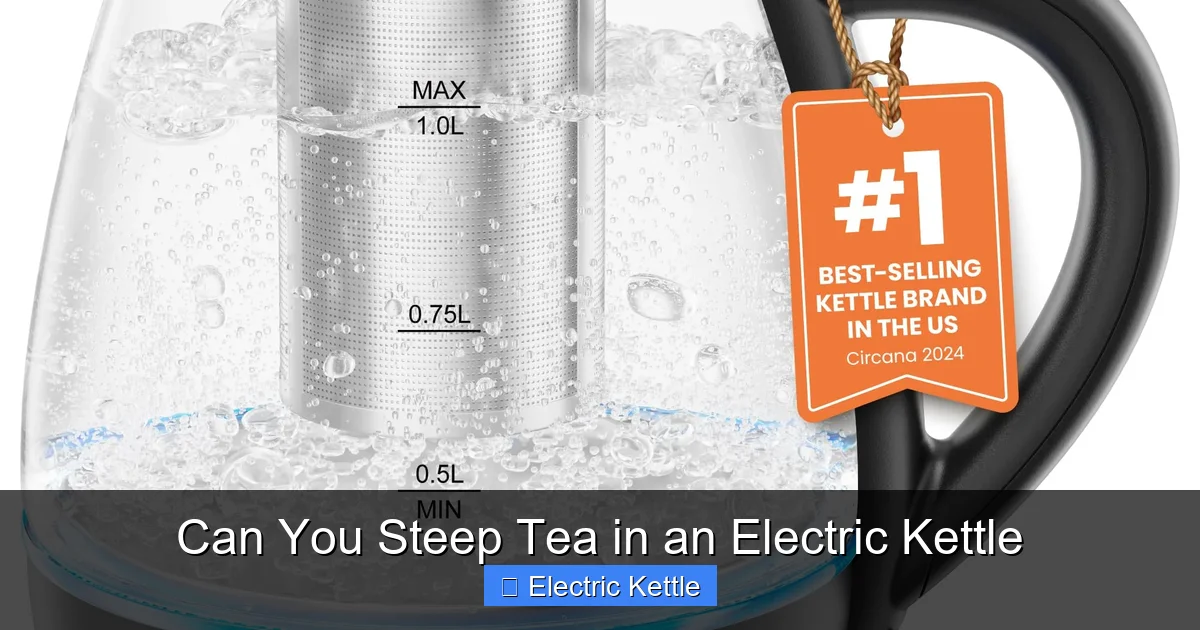
Visual guide about Can You Steep Tea in an Electric Kettle
Image source: m.media-amazon.com
Before we dive into steeping, it helps to understand how electric kettles function. Unlike stovetop kettles, electric models plug into an outlet and use an internal heating element—usually hidden beneath the base—to rapidly heat water. Most modern kettles shut off automatically once the water reaches boiling point (around 212°F or 100°C), thanks to a built-in thermostat.
But here’s the catch: **most electric kettles are not designed to hold water (or tea) for long periods.** Their primary job is to heat water quickly and efficiently, then turn off. They don’t have timers, infusers, or temperature hold features unless specifically built for tea brewing.
That means if you toss in a tea bag and walk away, you might end up with over-steeped, bitter tea—or worse, mineral and tea residue building up inside the kettle. Over time, this can affect performance, create unpleasant odors, or even shorten the lifespan of your appliance.
Types of Electric Kettles
Not all electric kettles are created equal. Here’s a quick breakdown of the main types and their suitability for steeping:
- Basic heating-only kettles: These are the most common. They boil water and shut off. No temperature control, no infuser. Not ideal for steeping.
- Temperature-controlled kettles: These allow you to select specific temperatures (e.g., 160°F for green tea, 200°F for oolong). Great for precision brewing, but still need an infuser for steeping.
- Tea-specific electric kettles: Designed with built-in infusers, keep-warm functions, and sometimes even timers. These are the best choice if you want to steep directly in the kettle.
- Smart kettles: Wi-Fi enabled models that let you control temperature and steeping time via an app. High-end, but excellent for tea enthusiasts.
If your kettle falls into the first category, it’s best to use it only for heating water—then transfer to a teapot or mug for steeping.
Why Steeping Tea in an Electric Kettle Can Be Tricky
At first glance, steeping tea in your electric kettle seems convenient. But there are several reasons why it’s not always the best idea—especially if your kettle isn’t designed for it.
Risk of Over-Steeping and Bitterness
One of the biggest issues is timing. Most electric kettles don’t have timers or automatic shut-off features for steeping. If you leave tea leaves or a tea bag in the kettle after the water boils, they’ll continue to steep indefinitely. This leads to over-extraction, which brings out bitter tannins—especially in green, white, or oolong teas.
For example, green tea should steep for just 2–3 minutes. Leave it in hot water for 10 minutes, and you’ll get a harsh, astringent brew. Without a way to remove the leaves promptly, you’re stuck with whatever flavor develops.
Residue and Buildup
Loose-leaf tea leaves are tiny and can easily slip through small openings. If you steep directly in a kettle without a fine-mesh infuser, particles may settle at the bottom or get sucked into the heating element or spout. Over time, this buildup can:
- Clog the spout, reducing water flow
- Leave behind tea oils that create a stale or rancid smell
- Stain the interior, making it harder to clean
- Affect the taste of future brews (imagine coffee-flavored tea!)
Even tea bags can leave behind residue, especially if they break apart. The paper or fabric can degrade in hot water, leaving fibers floating in your kettle.
Temperature Mismatch
Different teas require different water temperatures for optimal flavor:
- White tea: 160–185°F (70–85°C)
- Green tea: 160–180°F (70–82°C)
- Oolong tea: 185–205°F (85–96°C)
- Black tea: 200–212°F (93–100°C)
- Herbal tea: 212°F (100°C)
Most basic electric kettles only heat to boiling (212°F). If you use boiling water for green or white tea, you’ll scald the leaves, resulting in a bitter, flat taste. Without temperature control, you’re limited to black or herbal teas—and even then, timing is critical.
Potential Damage to the Kettle
Some electric kettles have plastic components, seals, or coatings that aren’t meant to be exposed to prolonged heat with organic matter like tea leaves. Steeping can cause:
- Warping or degradation of plastic parts
- Damage to the heating element from residue
- Corrosion or scaling if minerals in the tea interact with metal surfaces
Additionally, if tea residue dries inside the kettle, it can become difficult to remove and may require harsh cleaning agents—some of which can damage the interior lining.
When Is It Safe to Steep Tea in an Electric Kettle?
Now for the good news: **you can safely steep tea in an electric kettle—if it’s designed for it.** Here’s what to look for:
Built-In Infuser or Tea Basket
The most important feature is a removable infuser or tea basket. This mesh or perforated container holds the tea leaves, allowing water to flow through while keeping solids contained. It should be easy to insert, remove, and clean.
Many tea-specific electric kettles come with a stainless steel infuser that fits snugly inside the kettle. Some even have a lift-out design, so you can steep, then remove the basket to stop the brewing process.
For example, the *Breville BKE820XL IQ Electric Kettle* includes a removable tea infuser, making it perfect for steeping loose-leaf tea directly. Similarly, the *Cuisinart CPK-17 PerfecTemp* has a built-in infuser and multiple temperature settings.
Temperature Control
If your kettle offers adjustable temperature settings, you can match the water heat to the type of tea you’re brewing. This prevents scalding delicate leaves and ensures full flavor extraction.
Look for kettles with presets like “Green,” “White,” “Oolong,” and “Black”—these take the guesswork out of brewing.
Keep-Warm Function
Some advanced kettles have a “keep warm” feature that maintains the water at a steady temperature (usually around 160–185°F) after boiling. This is ideal for tea lovers who like to sip slowly without reheating.
For instance, the *Hamilton Beach 40880C* has a 30-minute keep-warm mode, so your tea stays at the perfect drinking temperature.
Timer or Auto-Shutoff for Steeping
A few high-end models include a steeping timer. You set the time (e.g., 3 minutes for green tea), and the kettle alerts you when it’s done—or even lifts the infuser automatically. This prevents over-steeping and ensures consistency.
While rare, these features are game-changers for serious tea drinkers.
How to Steep Tea in an Electric Kettle (Step-by-Step)
If your kettle has the right features, here’s how to steep tea safely and effectively:
Step 1: Check Your Kettle’s Capabilities
Before you start, confirm that your kettle has:
– A built-in infuser or tea basket
– Temperature control (optional but recommended)
– A keep-warm function (bonus)
If it lacks these, consider using the kettle only to heat water, then steeping in a separate vessel.
Step 2: Add Fresh, Cold Water
Always use fresh, cold water—not water that’s been sitting in the kettle. This ensures better taste and prevents reboiling, which can concentrate minerals and affect flavor.
Fill the kettle to the desired level, but don’t overfill. Leave some space to prevent boiling over.
Step 3: Insert the Infuser with Tea
Add your tea leaves or tea bag to the infuser. Use the right amount:
– 1 teaspoon of loose-leaf tea per cup
– 1 tea bag per cup
Avoid overpacking the infuser—leaves need room to expand and release flavor.
Step 4: Select the Right Temperature
If your kettle has temperature control, choose the appropriate setting:
– White tea: 160–185°F
– Green tea: 160–180°F
– Oolong: 185–205°F
– Black tea: 200–212°F
– Herbal: 212°F
If your kettle only boils water, let it cool for a few minutes before adding delicate teas.
Step 5: Start the Heating Process
Turn on the kettle. Most models will heat to the selected temperature and either shut off or switch to keep-warm mode.
If your kettle doesn’t have a steeping timer, set a kitchen timer for the recommended brew time.
Step 6: Steep for the Right Duration
Typical steeping times:
– White tea: 4–6 minutes
– Green tea: 2–3 minutes
– Oolong: 3–5 minutes
– Black tea: 3–5 minutes
– Herbal: 5–7 minutes
Avoid over-steeping—it leads to bitterness.
Step 7: Remove the Infuser
Once steeping is complete, immediately remove the infuser or tea bag. This stops the brewing process and prevents over-extraction.
If your kettle has a lift-out infuser, use it. Otherwise, carefully lift the basket with tongs or a spoon.
Step 8: Pour and Enjoy
Pour your tea into a cup or teapot. Add milk, honey, or lemon if desired.
If your kettle has a keep-warm function, you can leave the tea inside for up to 30 minutes—but don’t let it sit too long, as flavor can degrade.
Step 9: Clean the Kettle
After use, rinse the infuser and kettle interior with warm water. For stubborn residue, use a soft brush or a mixture of vinegar and water (1:1 ratio) to descale and clean.
Never use abrasive scrubbers or harsh chemicals—they can damage the kettle’s interior.
Alternative Methods: Heating Water, Steeping Separately
If your electric kettle isn’t designed for steeping, don’t worry—you can still use it to make great tea. In fact, this method is often preferred by tea connoisseurs.
Use the Kettle to Heat Water Only
Heat your water in the electric kettle, then pour it into a teapot, mug, or French press containing your tea leaves or bag. This gives you full control over steeping time and temperature.
For example:
1. Boil water in the kettle.
2. Pour into a pre-warmed teapot with loose-leaf oolong.
3. Steep for 4 minutes.
4. Strain and serve.
This method works with any kettle—even the most basic models.
Use a Tea Infuser or Strainer
Invest in a high-quality tea infuser, ball, or mesh strainer. These fit inside mugs or teapots and make steeping loose-leaf tea easy.
Popular options include:
– Stainless steel ball infusers
– Silicone tea brewers
– Reusable cotton tea bags
They’re affordable, reusable, and help prevent residue buildup in your kettle.
Try a French Press for Loose-Leaf Tea
A French press isn’t just for coffee. It’s excellent for steeping large-leaf teas like oolong or herbal blends. Simply add leaves, pour hot water, steep, then press down the plunger to separate the leaves.
It’s simple, effective, and easy to clean.
Cleaning and Maintenance Tips
Whether you steep in the kettle or not, regular cleaning is essential for great-tasting tea and a long-lasting appliance.
Daily Cleaning
– Rinse the kettle and infuser after each use.
– Wipe the exterior with a damp cloth.
– Empty any leftover water to prevent mineral buildup.
Weekly Deep Clean
– Mix equal parts white vinegar and water.
– Fill the kettle halfway and boil.
– Let it sit for 15–20 minutes.
– Rinse thoroughly with clean water.
– Boil fresh water once to remove any vinegar taste.
Descaling for Hard Water Areas
If you live in an area with hard water, limescale can build up quickly. Use a commercial descaling solution or repeat the vinegar method monthly.
Avoid using lemon juice alone—it’s less effective than vinegar for mineral deposits.
Cleaning the Infuser
– Remove and rinse immediately after use.
– Soak in warm, soapy water if needed.
– Use a small brush to clean mesh holes.
– Dry completely before storing.
Conclusion
So, can you steep tea in an electric kettle? **Yes—but only if your kettle is designed for it.** Models with built-in infusers, temperature control, and keep-warm functions make steeping safe, convenient, and delicious. However, most standard electric kettles are meant only for heating water, and using them to steep can lead to bitterness, residue, and potential damage.
For the best results, use your electric kettle to heat water, then steep in a dedicated teapot, mug, or French press. This gives you full control over temperature and timing—and protects your appliance from wear and tear.
If you’re serious about tea, consider upgrading to a tea-specific electric kettle. The investment pays off in flavor, convenience, and consistency.
Ultimately, great tea starts with great water—and the right tools. Whether you steep in the kettle or not, the key is to brew with care, clean regularly, and savor every sip.
Frequently Asked Questions
Can I put tea bags directly in my electric kettle?
It’s not recommended unless your kettle has a built-in infuser. Tea bags can leave residue, break apart, or cause over-steeping. For best results, heat water in the kettle and steep in a separate cup or teapot.
Will steeping tea in my kettle ruin it?
It can, especially if your kettle lacks an infuser or temperature control. Residue buildup, over-steeping, and exposure to prolonged heat with organic matter may damage components over time.
What’s the best electric kettle for steeping tea?
Look for models with temperature control, a built-in infuser, and a keep-warm function. Top picks include the Breville IQ, Cuisinart PerfecTemp, and Hamilton Beach 40880C.
Can I steep green tea in a regular electric kettle?
Only if you let the boiled water cool for 2–3 minutes first. Boiling water scalds green tea leaves, making them bitter. Use a thermometer or temperature-controlled kettle for best results.
How do I clean tea stains from my electric kettle?
Use a mixture of equal parts white vinegar and water. Boil, let sit for 15–20 minutes, then rinse thoroughly. Repeat if needed, and always follow up with a fresh water boil.
Is it safe to leave tea in the kettle after steeping?
Only if your kettle has a keep-warm function and you drink it within 30 minutes. Prolonged steeping leads to bitterness and can promote bacterial growth in warm, moist environments.