Using milk in an electric kettle is strongly discouraged due to safety hazards, residue buildup, and potential damage. While it may seem convenient for warming milk, the risks far outweigh the benefits, and safer alternatives exist.
Key Takeaways
- Electric kettles are designed for water: They heat water quickly and efficiently, but milk’s composition makes it unsuitable for these appliances.
- Milk can scorch and burn: Proteins and fats in milk can stick to the heating element, causing burning, unpleasant odors, and even fire hazards.
- Cleaning becomes difficult: Dried milk residue is tough to remove and can damage the kettle’s interior over time.
- Risk of bacterial growth: Leftover milk can spoil inside the kettle, promoting harmful bacteria if not cleaned immediately.
- Warranty and safety concerns: Using milk may void your warranty and increase the risk of electrical malfunctions.
- Safer alternatives exist: Use a milk frother, saucepan, or microwave for heating milk safely and effectively.
- Prevention is better than repair: Avoiding milk in kettles protects both your appliance and your health.
📑 Table of Contents
- Can You Use Milk in an Electric Kettle? The Truth You Need to Know
- Why Electric Kettles Are Made for Water—Not Milk
- The Risks of Putting Milk in an Electric Kettle
- What Happens If You Accidentally Use Milk?
- Safer Alternatives for Heating Milk
- Tips for Maintaining Your Electric Kettle
- Conclusion: Stick to Water for Your Electric Kettle
Can You Use Milk in an Electric Kettle? The Truth You Need to Know
You’ve just finished a long day, and all you want is a warm cup of hot chocolate or a soothing mug of golden milk. You reach for your trusty electric kettle—fast, efficient, and always ready. But then a thought crosses your mind: *Can I just pour milk into the kettle and heat it up?* After all, it heats water in seconds. Why not milk?
It’s a tempting idea. No need to dirty another pot. No waiting for the stove to warm up. Just pour, press the button, and enjoy. But before you hit that power switch, stop and think. While electric kettles are fantastic for boiling water, they are not designed for dairy or other liquids like milk. In fact, using milk in an electric kettle can lead to a host of problems—some inconvenient, others potentially dangerous.
In this article, we’ll dive deep into why milk and electric kettles don’t mix. We’ll explore the science behind the risks, the damage it can cause to your appliance, and the health concerns that come with improper use. We’ll also share safer, smarter ways to heat milk so you can still enjoy your favorite warm drinks without compromising safety or performance.
Why Electric Kettles Are Made for Water—Not Milk
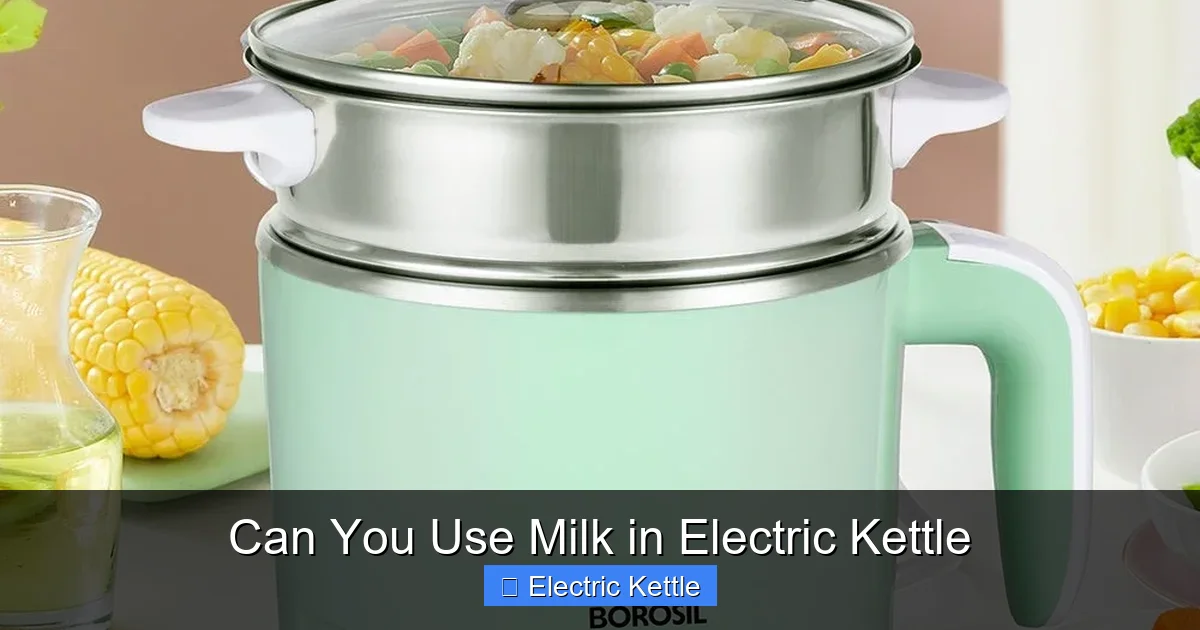
Visual guide about Can You Use Milk in Electric Kettle
Image source: 5.imimg.com
Electric kettles are precision appliances built with one primary purpose: to heat water quickly and efficiently. From the materials used in their construction to the design of the heating element, every component is optimized for H₂O. Let’s break down why this matters when it comes to using milk.
The Science of Heating: Water vs. Milk
Water has a simple molecular structure and consistent boiling point (100°C or 212°F at sea level). It heats evenly, evaporates cleanly, and doesn’t leave behind sticky residues. Electric kettles are calibrated to reach this temperature rapidly, often in under five minutes, thanks to high-wattage heating elements submerged in or wrapped around the base.
Milk, on the other hand, is a complex liquid. It contains water, but also proteins (like casein and whey), fats, sugars (lactose), and minerals. These components behave very differently when heated. Proteins denature and coagulate at high temperatures, while fats can separate and burn. Lactose can caramelize, creating a sticky, browned layer.
When you heat milk in an electric kettle, these reactions happen quickly and unpredictably. The milk doesn’t just get hot—it can scorch, foam over, or form a crust on the heating element. This not only affects the taste and texture of your milk but also damages the kettle.
How Electric Kettles Work
Most electric kettles use one of two heating methods: immersion heating or concealed heating.
In immersion kettles, a metal coil sits directly in the liquid. When electricity flows through it, the coil heats up and transfers heat to the surrounding water. In concealed models, the heating element is hidden beneath a flat base, which then warms the water above it.
Both designs rely on consistent thermal conductivity and clean surfaces. When milk is introduced, its proteins and fats coat the heating element or base. This layer acts as an insulator, reducing heat transfer efficiency. Over time, this buildup can cause the kettle to overheat, trigger automatic shut-offs, or even fail completely.
Additionally, many kettles have automatic shut-off features that detect when water has reached boiling point. These sensors are calibrated for water’s boiling behavior. Milk, however, can foam and bubble differently, tricking the sensor into thinking it’s boiled when it hasn’t—or worse, not shutting off when it should because the foam insulates the sensor.
The Risks of Putting Milk in an Electric Kettle
Now that we understand the basic incompatibility, let’s look at the real-world consequences of using milk in your electric kettle. These aren’t just minor inconveniences—they can affect your health, your appliance, and even your home’s safety.
1. Scorching and Burning
One of the most immediate risks is scorching. Milk contains proteins that denature at around 70°C (158°F). When heated too quickly or unevenly—common in electric kettles—these proteins clump together and stick to hot surfaces. The result? A burnt, yellowish film that’s difficult to remove.
This scorching not only ruins the taste of your milk (imagine sipping hot chocolate with a burnt aftertaste), but it also creates smoke and unpleasant odors. In severe cases, the burning can produce a smell strong enough to linger in your kitchen for hours.
Worse still, if the kettle continues heating after the milk burns, the residue can carbonize. This blackened layer is not only unsightly but can also release harmful compounds when reheated. Over time, repeated scorching can permanently damage the kettle’s interior.
2. Difficult and Ineffective Cleaning
Cleaning a kettle after using milk is a nightmare. Unlike water, which leaves no residue, milk dries into a sticky, gummy film. If you don’t clean the kettle immediately, this residue hardens and becomes nearly impossible to remove with regular washing.
Even if you rinse it right away, milk can seep into tiny crevices around the heating element or lid seal. Over time, this trapped milk can spoil, leading to mold or bacterial growth. Imagine turning on your kettle days later and releasing a foul odor into your kitchen—or worse, unknowingly drinking contaminated water.
Many users try to clean with vinegar or baking soda, but these methods are often ineffective against dried milk proteins. You might end up scrubbing for hours with a brush, only to find stubborn spots remain. In some cases, the damage is so severe that the kettle becomes unusable.
3. Bacterial Contamination and Health Risks
Milk is a breeding ground for bacteria. When left at room temperature, bacteria like *Salmonella*, *E. coli*, and *Listeria* can multiply rapidly. Even if you heat the milk, any residue left in the kettle can become a petri dish for microbes.
If you use the kettle again without thorough cleaning, you risk contaminating your next batch of water or tea. This cross-contamination can lead to foodborne illness, especially in children, the elderly, or those with weakened immune systems.
Moreover, reheating spoiled milk residue can release harmful volatile compounds. These aren’t just smelly—they can be toxic if inhaled or ingested. The risk is higher in enclosed spaces like small kitchens or apartments.
4. Damage to the Kettle and Voided Warranties
Most electric kettle manufacturers explicitly state in their user manuals that only water should be used. Using milk or other liquids can void your warranty. Why? Because it’s considered misuse of the appliance.
When milk burns or leaves residue, it can damage internal components. The heating element may corrode faster, sensors can malfunction, and seals may degrade. In some cases, the kettle may stop working altogether.
Even if the kettle still functions, its performance will decline. It may take longer to boil water, make strange noises, or fail to shut off automatically. These issues not only reduce convenience but can also pose electrical hazards.
5. Fire and Electrical Hazards
In extreme cases, using milk in an electric kettle can lead to fire. If milk foams over the top, it can drip into the electrical base or cord, causing short circuits. The combination of moisture, sugar, and electricity is a dangerous mix.
Additionally, if the heating element overheats due to insulating milk residue, it can ignite nearby materials. While rare, there have been reports of kettles catching fire after being used with sugary or dairy liquids.
Even if a fire doesn’t occur, electrical malfunctions can lead to shocks or burns. The risk is higher in older or poorly maintained kettles.
What Happens If You Accidentally Use Milk?
We’ve all made mistakes. Maybe you were half-asleep, distracted, or simply didn’t think it through. If you’ve already poured milk into your electric kettle, don’t panic—but act quickly.
Immediate Steps to Take
1. **Turn off and unplug the kettle immediately.** Do not attempt to use it again until it’s fully cleaned.
2. **Let it cool completely.** Never handle a hot kettle, especially if milk has spilled into the base.
3. **Empty any remaining milk.** Pour it out carefully to avoid splashing.
4. **Rinse thoroughly with warm water.** Use a soft sponge or cloth to wipe the interior. Avoid abrasive scrubbers that can scratch the surface.
5. **Soak if necessary.** Fill the kettle with warm water and a few drops of dish soap. Let it sit for 15–30 minutes to loosen residue.
6. **Use a vinegar solution for tough spots.** Mix equal parts white vinegar and water, boil it in the kettle (if safe to do so), then let it sit for an hour before rinsing. *Note: Only do this if your kettle is designed for vinegar cleaning and you’re certain no milk remains in the base.*
7. **Dry completely.** Wipe the interior and exterior with a clean towel, then leave the lid open to air-dry.
When to Consider Replacement
If you notice any of the following, it may be time to replace your kettle:
– Persistent burnt smell even after cleaning
– Discoloration or blackening inside the kettle
– Strange noises or failure to heat properly
– Leaking or electrical issues
These signs indicate internal damage that cleaning can’t fix. Continuing to use a damaged kettle risks safety and performance.
Safer Alternatives for Heating Milk
Just because you can’t use your electric kettle for milk doesn’t mean you’re out of options. There are several safe, effective ways to heat milk—many of which are just as convenient.
1. Use a Milk Frother or Steamer
If you enjoy lattes, cappuccinos, or hot chocolate, a milk frother is a worthwhile investment. These devices are specifically designed to heat and froth milk without scorching. Many models heat milk to the perfect temperature (around 60–65°C or 140–150°F) and create a creamy foam.
Electric frothers are quick and easy to use—just pour in milk, press a button, and wait. Some even have temperature settings for different types of milk (whole, skim, almond, etc.). They’re also easy to clean, often with dishwasher-safe parts.
2. Heat Milk on the Stovetop
The classic method still works best for many people. Use a small saucepan over low to medium heat. Stir constantly to prevent scorching and ensure even heating.
To avoid boiling over, fill the pan no more than halfway. Use a wooden spoon or silicone spatula to scrape the bottom and sides. Remove from heat just before it reaches a boil—milk can foam up quickly.
This method gives you full control over temperature and texture. It’s ideal for recipes that require precise heating, like custards or sauces.
3. Use the Microwave
For a quick fix, the microwave is your friend. Pour milk into a microwave-safe mug or container. Heat in 20–30 second intervals, stirring in between, until warm.
Be careful not to overheat. Milk can superheat in the microwave, meaning it reaches boiling point without bubbling. When disturbed, it can erupt suddenly, causing burns.
To prevent this, place a wooden stir stick or microwave-safe object in the mug. This provides nucleation sites for bubbles to form safely.
4. Try a Double Boiler
For delicate tasks like making hot chocolate or warming baby formula, a double boiler is gentle and effective. Fill the bottom pot with water and bring to a simmer. Place the milk in the top pot, stirring occasionally.
This method prevents direct heat contact, reducing the risk of scorching. It’s slower than other methods but offers excellent control.
5. Invest in a Dedicated Milk Warmer
Some appliances are designed specifically for heating milk. These include electric milk warmers, bottle warmers, or even smart kettles with milk modes (though these are rare and expensive).
These devices often have temperature controls and automatic shut-off features, making them safe and convenient.
Tips for Maintaining Your Electric Kettle
To keep your electric kettle in top condition—and avoid the temptation to misuse it—follow these simple maintenance tips.
Clean Regularly
Even if you only use water, mineral deposits can build up over time. Clean your kettle monthly with a vinegar solution: fill halfway with equal parts water and white vinegar, boil, let sit for an hour, then rinse thoroughly.
For daily use, wipe the exterior with a damp cloth and dry immediately.
Descale When Needed
Hard water leaves limescale, which can affect taste and performance. If you notice white deposits or slower heating, it’s time to descale. Use a commercial descaler or the vinegar method above.
Store Properly
Keep your kettle in a dry place with the lid open to prevent moisture buildup. Avoid stacking heavy items on top, which can damage the lid or base.
Follow the Manual
Always read the user manual. It contains important safety information, cleaning instructions, and warranty details. Ignoring it can lead to damage or voided coverage.
Conclusion: Stick to Water for Your Electric Kettle
So, can you use milk in an electric kettle? The short answer is no—and for good reason. While it might seem like a time-saving hack, the risks far outweigh the benefits. From scorching and difficult cleaning to bacterial growth and potential fire hazards, using milk in your kettle is a recipe for trouble.
Electric kettles are engineered for one purpose: heating water. They’re fast, efficient, and reliable—when used correctly. Introducing milk disrupts this balance and can lead to irreversible damage.
The good news? You don’t have to give up warm milk drinks. With tools like milk frothers, stovetop pans, or microwaves, you can heat milk safely and effectively. These methods may take a little extra effort, but they protect your appliance, your health, and your peace of mind.
Remember: prevention is always better than repair. By using your electric kettle as intended, you’ll enjoy years of reliable service and delicious hot beverages. So the next time you’re craving a warm drink, reach for the right tool—not a shortcut that could cost you more in the long run.
Your kettle—and your taste buds—will thank you.
Frequently Asked Questions
Can I use milk in an electric kettle if I clean it right away?
Even with immediate cleaning, using milk in an electric kettle is not recommended. Proteins and fats can still stick to the heating element, and residual milk may remain in hard-to-reach areas, leading to odors, bacteria, or damage over time.
What happens if milk boils over in my electric kettle?
If milk boils over, it can drip into the electrical base or cord, causing short circuits, malfunctions, or even fire hazards. Always clean the exterior and base thoroughly if this happens, and inspect for damage before using again.
Can I use almond milk or other plant-based milks in an electric kettle?
No. Plant-based milks contain proteins, oils, and sugars that behave similarly to dairy milk when heated. They can also scorch, foam, and leave residue, damaging your kettle and posing the same risks.
Is it safe to boil milk in any type of kettle?
Even stovetop kettles or kettles with milk settings are not ideal for regular milk use. Most are still prone to scorching unless specifically designed and labeled for dairy. Always check the manufacturer’s guidelines.
How do I remove burnt milk smell from my electric kettle?
Try boiling a mixture of water and white vinegar, then let it sit for an hour before rinsing. For persistent odors, repeat the process or use a specialized kettle cleaner. If the smell remains, the kettle may be permanently damaged.
Can using milk in my kettle void the warranty?
Yes. Most manufacturers explicitly state that using liquids other than water voids the warranty. If damage occurs from milk use, you likely won’t be eligible for repairs or replacements under warranty.