When it comes to keeping your knives razor-sharp and performing at their peak, choosing the right sharpener isn’t just a matter of convenience—it’s a critical decision that affects safety, efficiency, and the longevity of your blades. Whether you’re a home cook preparing meals for your family, a professional chef working in a high-volume kitchen, or an outdoor enthusiast relying on a reliable blade in the field, a dull knife is more than just an inconvenience. It’s a hazard. Studies have shown that dull knives cause more accidents than sharp ones because they require excessive force, increasing the risk of slips and cuts. This is why investing in a quality sharpener isn’t optional—it’s essential.
In today’s market, two of the most popular and effective sharpening technologies dominate the conversation: diamond and ceramic sharpeners. Each offers distinct advantages and trade-offs in terms of speed, precision, durability, and ease of use. Diamond sharpeners, known for their aggressive cutting action and long lifespan, are often favored by professionals and those dealing with very dull or damaged blades. Ceramic sharpeners, on the other hand, are celebrated for their ability to produce a fine, polished edge with minimal metal removal—ideal for maintaining already sharp knives. But with so many models, brands, and claims flooding the market, it’s easy to feel overwhelmed. How do you know which one is right for your needs? What features truly matter? And how much should you realistically spend?
This comprehensive guide is designed to cut through the noise and give you everything you need to make an informed decision. You’ll learn the key differences between diamond and ceramic sharpeners, understand how performance varies across different knife types and use cases, and discover what to look for when evaluating build quality, durability, and value. We’ll also highlight common pitfalls to avoid, break down pricing tiers, and share expert tips to help you get the best deal. By the end, you’ll have a clear roadmap to choosing the sharpener that aligns perfectly with your lifestyle, budget, and sharpening goals.

What to Look for When Buying Buying Guide
1. Budget & Price Range
Your budget plays a significant role in determining which type of sharpener—and which specific model—you can afford. Diamond sharpeners tend to be more expensive upfront due to the cost of industrial-grade diamond particles bonded to steel or aluminum surfaces. Entry-level diamond rods or pull-through sharpeners can start around $20, while high-end systems with multiple grit stages and ergonomic designs can exceed $200. Ceramic sharpeners, especially handheld rods or electric models with ceramic wheels, often fall into a similar price range, though basic ceramic honing rods can be found for under $15.
However, price doesn’t always correlate directly with performance. A $30 ceramic rod may outperform a $50 diamond sharpener in edge refinement, while a premium diamond system might restore a severely damaged blade faster than any ceramic alternative. Consider not just the initial cost but also long-term value: how often will it need replacing? Does it come with a warranty? Are replacement parts available? For most home users, a mid-range model ($40–$80) offers the best balance of affordability and capability.
2. Performance Specifications
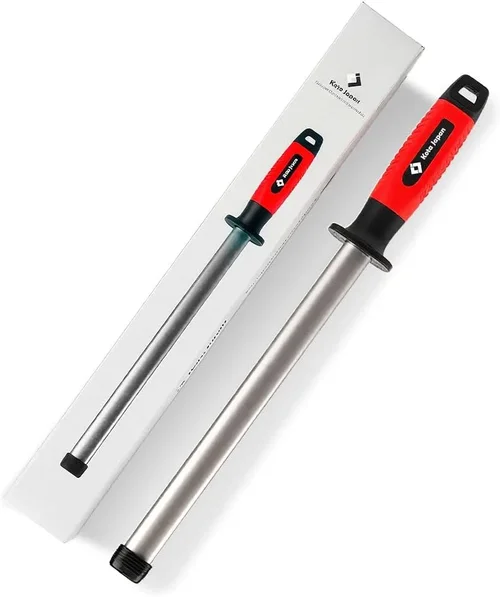
Performance boils down to two core metrics: cutting speed and edge quality. Diamond sharpeners excel at rapid metal removal, making them ideal for reshaping edges, repairing chips, or restoring heavily used knives. They typically feature coarse (100–300 grit), medium (400–600), and fine (800–1200+) diamond coatings, allowing for progressive sharpening. Because diamond is the hardest known material, it cuts through steel efficiently—even high-hardness Japanese blades like VG-10 or ZDP-189.
Ceramic sharpeners, by contrast, are slower but deliver a finer, more polished edge. Most ceramic rods operate in the 1000–3000 grit range, which is excellent for honing and refining an already sharp blade. They’re less effective on extremely dull or damaged edges because they remove metal more slowly. However, for daily maintenance or touch-ups, ceramics produce a smoother, sharper finish that enhances slicing performance—especially on delicate tasks like chopping herbs or slicing tomatoes.
Another performance factor is angle consistency. Many modern sharpeners include guides or preset angles (e.g., 15°, 20°) to ensure uniformity. Diamond systems often offer adjustable angles, giving advanced users greater control. Ceramic rods usually require manual technique, which demands practice but allows for nuanced edge customization.
3. Build Quality & Durability
A sharpener is only as good as its construction. Look for materials that resist wear, corrosion, and deformation over time. High-quality diamond sharpeners use stainless steel or aircraft-grade aluminum bases with electroplated or sintered diamond particles. Electroplated diamonds are cheaper but may wear off faster; sintered (brazed) diamonds are fused into the base and last significantly longer—often decades with proper care.
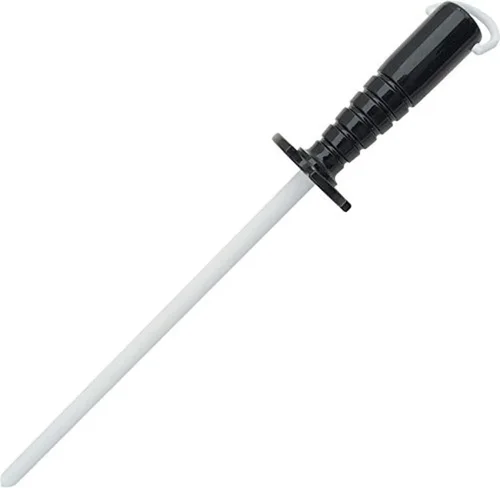
Ceramic sharpeners rely on hardened alumina or zirconia-based compounds. Premium models use dense, fine-grained ceramics that resist chipping and maintain their shape. Avoid cheap ceramic rods with porous or brittle structures—they can crack under pressure or wear unevenly. Handle materials matter too: rubberized grips, non-slip bases, and ergonomic designs improve safety and control during use.
Durability also extends to maintenance. Diamond surfaces are virtually maintenance-free—just rinse and dry. Ceramic rods may require occasional cleaning with a soft brush to remove metal particles, and some benefit from light oiling to prevent micro-cracking. Always check manufacturer guidelines.
4. Features & Functionality
Modern sharpeners come packed with features designed to simplify the process and improve results. Multi-stage systems—common in both diamond and ceramic designs—allow you to progress from coarse to fine grits in one device. Some include built-in angle guides, magnetic knife rests, or LED lighting for precision work. Electric models automate the motion, reducing user error but increasing cost and complexity.
Portability is another functional consideration. Folding diamond rods or compact ceramic sticks are great for campers, hunters, or travelers. Fixed-base systems offer stability but aren’t ideal for on-the-go use. Consider whether you need a sharpener for kitchen countertops, toolboxes, or backpacks.
Ease of cleaning and storage also matters. Removable heads, dishwasher-safe components, and protective sheaths extend usability. Some high-end models even include storage cases or wall mounts. Think about your workflow: do you prefer quick touch-ups or full sharpening sessions? Your answer will influence which features are must-haves versus nice-to-haves.
5. Brand Reputation
Not all sharpeners are created equal—even within the same category. Established brands like Lansky, Work Sharp, Chef’s Choice, and Böker have built reputations for reliability, innovation, and customer support. They often invest in R&D to improve grit consistency, ergonomics, and compatibility with various knife steels. Lesser-known or generic brands may cut corners on materials or quality control, leading to inconsistent performance or premature failure.
Research brand history: How long have they been in business? Do they specialize in sharpening tools or offer a broad range of kitchen gadgets? Read professional reviews and user testimonials. Brands with strong warranties (e.g., lifetime guarantees) typically stand behind their products. Avoid “as-seen-on-TV” gimmicks that promise miraculous results without technical backing.
6. Warranty & Support
A solid warranty reflects manufacturer confidence in product durability. Diamond sharpeners from reputable brands often come with 5–10 year warranties, sometimes even lifetime coverage against defects. Ceramic models may have shorter warranties (1–3 years) due to the fragility of ceramic materials, though some premium lines offer extended protection.
Customer support is equally important. Can you easily contact the company if something breaks? Are replacement parts (like ceramic wheels or diamond plates) readily available? Do they provide detailed usage instructions or video tutorials? A responsive support team can turn a frustrating experience into a positive one, especially if you’re new to sharpening.
7. Size & Portability
The physical dimensions of your sharpener affect where and how you use it. Countertop systems (like electric or guided-angle models) offer precision but take up space. Handheld rods or sticks are compact and travel-friendly but require steady hands. Consider your environment: a busy restaurant kitchen might prioritize speed and stability, while a backpacker needs something lightweight and rugged.
Weight matters too. Heavy diamond plates provide stability but aren’t ideal for field use. Lightweight ceramic rods are easy to carry but may lack the heft needed for aggressive sharpening. Look for a balance that suits your primary use case.
8. User Reviews & Ratings
Never underestimate the power of real-world feedback. Check verified purchase reviews on platforms like Amazon, REI, or specialty knife forums. Look for patterns: Do multiple users praise the edge quality? Are there recurring complaints about breakage or inconsistency? Pay attention to reviews from people with similar knife types and usage levels as you.
Be wary of overly glowing reviews that lack detail—they may be fake. Instead, focus on balanced assessments that mention both pros and cons. Videos demonstrating actual sharpening sessions can be especially helpful for visual learners.
Different Types of Buying Guide

Common Buying Mistakes to Avoid
❌ Mistake: Choosing Based Solely on Price
Why it’s bad: Opting for the cheapest option often means sacrificing durability, precision, and safety. A $10 ceramic rod may chip easily or wear unevenly, while a bargain-bin diamond sharpener might use low-quality diamonds that flake off.
What to do instead: Focus on value, not just cost. Invest in a mid-range model from a trusted brand that balances affordability with performance. Think of it as a long-term tool—not a disposable gadget.
❌ Mistake: Ignoring Knife Compatibility
Why it’s bad: Not all sharpeners work well with every knife type. Hardened Japanese blades (e.g., HRC 60+) can be damaged by overly aggressive diamond surfaces if used incorrectly. Conversely, soft German steel may not benefit from ultra-fine ceramic finishes.
What to do instead: Match your sharpener to your knife’s steel hardness and intended use. Use coarse diamonds for restoration, ceramics for maintenance. When in doubt, consult the knife manufacturer’s recommendations.
❌ Mistake: Over-Sharpening or Using Incorrect Angles
Why it’s bad: Removing too much metal shortens a knife’s lifespan. Using the wrong angle (e.g., 20° on a Japanese knife designed for 15°) dulls the edge or creates a weak micro-bevel.
What to do instead: Learn your knife’s ideal angle and stick to it. Use guided systems for consistency, and limit sharpening sessions to when truly needed—usually every 3–6 months for home use.
❌ Mistake: Neglecting Maintenance
Why it’s bad: Metal particles accumulate on sharpening surfaces, reducing effectiveness. Dirty or clogged sharpeners can scratch blades or create uneven edges.
What to do instead: Clean your sharpener regularly. Rinse diamond surfaces with water; scrub ceramic rods with a nylon brush. Store in a dry place to prevent corrosion.
❌ Mistake: Buying Without Testing or Research
Why it’s bad: Impulse purchases based on flashy ads or influencer endorsements often lead to disappointment. You might end up with a tool that doesn’t suit your skill level or kitchen setup.
What to do instead: Read detailed reviews, watch demo videos, and if possible, test models in-store. Many outdoor retailers allow hands-on trials.
❌ Mistake: Assuming All Ceramics Are Equal
Why it’s bad: Cheap ceramic rods use low-density materials that wear quickly or break under pressure. They may also produce inconsistent edges.
What to do instead: Look for high-alumina or zirconia-based ceramics with fine grain structure. Premium brands like Idahone or Wüsthof offer superior ceramic rods worth the investment.
❌ Mistake: Overlooking Ergonomics and Safety
Why it’s bad: A poorly designed handle or unstable base increases the risk of slips, especially when applying pressure. Fatigue from awkward grips can lead to inconsistent strokes.
What to do instead: Choose models with non-slip grips, balanced weight distribution, and secure bases. Safety should never be compromised for speed or cost.
Budget Guidelines: How Much Should You Spend?
- Entry-Level ($15–$40): Ideal for occasional users or those new to sharpening. Expect basic ceramic rods or single-grit diamond sticks. Performance is adequate for light maintenance but may lack durability or precision. Great for testing your needs before upgrading.
- Mid-Range ($40–$100): The sweet spot for most home cooks and enthusiasts. Offers multi-grit diamond systems, high-quality ceramic rods, or hybrid designs. Includes features like angle guides, ergonomic handles, and better materials. Provides excellent value and longevity.
- Premium ($100–$250): Designed for professionals, serious collectors, or frequent users. Features sintered diamond plates, precision-engineered ceramic wheels, adjustable angles, and robust construction. Often includes warranties and customer support. Delivers consistent, professional-grade results.
- Luxury ($250+): Top-tier electric systems or custom-built sharpening stations. Used in commercial kitchens or by master bladesmiths. Incorporates advanced technology like variable speed motors, digital angle readouts, and interchangeable abrasives. Overkill for casual users but unmatched in performance.
Expert Tips for Getting the Best Deal
- Buy during off-seasons: Look for discounts in late winter or early spring when demand for kitchen tools dips. Retailers often clear inventory before new models launch.
- Check specialty retailers: Stores like ChefKnivesToGo, KnifeCenter, or REI often have exclusive deals, bundle offers, or loyalty programs not available on mainstream platforms.
- Sign up for newsletters: Many brands offer 10–15% off your first purchase when you subscribe. You’ll also get alerts about flash sales or limited-edition releases.
- Consider refurbished or open-box items: Certified pre-owned sharpeners from reputable sellers can save 20–40% off retail. Ensure they come with a warranty and are thoroughly inspected.
- Read return policies carefully: Some retailers charge restocking fees or only accept returns within 14 days. Choose sellers with flexible, no-hassle return windows—especially important for online purchases.
- Test before committing: If buying in-store, ask to try the sharpener on a demo knife. Feel the grip, check stability, and assess ease of use. Your hands will tell you more than any spec sheet.
- Bundle with knife purchases: Some knife makers offer free or discounted sharpeners when you buy a qualifying blade. It’s a great way to get a matched set.
- Watch for Black Friday and Prime Day: Major sales events often feature deep discounts on premium sharpening systems. Set price alerts to catch the best deals.

Frequently Asked Questions
Q: Can I use a diamond sharpener on ceramic knives?
A: No. Ceramic knives are extremely hard but brittle. Diamond sharpeners can chip or crack them. Most ceramic knives require professional diamond wheel grinding or are considered non-sharpenable by consumers.
Q: Will a ceramic sharpener fix a chipped blade?
A: Generally, no. Ceramic abrasives are too fine to remove significant metal. For chips, start with a coarse diamond sharpener to reshape the edge, then finish with ceramic for polishing.
Q: How often should I sharpen my knives?
A: It depends on usage. Home cooks may need full sharpening every 3–6 months, with weekly honing. Professionals might sharpen daily. Listen to your knife—if it struggles to slice paper or tomatoes, it’s time.
Q: Are electric sharpeners better than manual ones?
A: Electric models offer speed and consistency but can remove too much metal if misused. Manual sharpeners give more control and are gentler on blades. Choose based on your skill level and needs.
Q: Do I need both diamond and ceramic sharpeners?
A: Not necessarily, but many enthusiasts prefer a combo approach: diamond for restoration, ceramic for maintenance. Hybrid systems offer both in one unit, saving space and cost.
Q: Can I sharpen serrated knives with these tools?
A: Standard rods won’t work well on serrations. Look for specialized serrated knife sharpeners with tapered or grooved ceramic/diamond surfaces designed to fit serration valleys.
Q: How do I know if my sharpener is wearing out?
A: Diamond surfaces may show dull patches or reduced cutting speed. Ceramic rods can develop flat spots or micro-cracks. Replace when performance declines noticeably.
Q: Is it safe to sharpen knives on a countertop?
A: Yes, if the sharpener has a non-slip base or is clamped securely. Never hold a sharpener in one hand while sharpening with the other—this increases injury risk.
Q: What’s the difference between honing and sharpening?
A: Honing realigns the edge (daily maintenance); sharpening removes metal to create a new edge (less frequent). Ceramic rods are great for honing; diamonds for sharpening.
Q: Can I use oil or water with my sharpener?
A: Most modern diamond and ceramic sharpeners are dry-use only. Avoid lubricants unless specified by the manufacturer—they can clog pores or damage coatings.
Our Final Recommendations
- Best for Budget-Conscious Buyers: Idahone Ceramic Honing Rod ($25–$35) – Reliable, durable, and perfect for daily maintenance. Great entry point for beginners.
- Best Overall Value: Lansky Diamond Deluxe Sharpening System ($70–$90) – Adjustable angles, multiple grits, and rock-solid build. Ideal for home cooks who want precision without breaking the bank.
- Best Premium Option: Work Sharp Guided Field Sharpener Pro ($120–$150) – Combines diamond and ceramic stages with a guided angle system. Rugged, portable, and built for serious users.
- Best for Beginners: Chef’s Choice Trizor XV EdgeSelect ($100–$130) – Electric, foolproof, and produces professional-level edges with minimal effort. Perfect for those intimidated by manual sharpening.
- Best for Advanced Users: Böker Ceramic Rod with Ergonomic Handle ($60–$80) – High-density ceramic, superb edge refinement, and excellent control. Favored by chefs and knife enthusiasts for finishing touches.
Conclusion: Making the Right Choice
Choosing between a diamond and ceramic sharpener ultimately comes down to understanding your specific needs, knife collection, and sharpening goals. Diamond sharpeners are the workhorses—built for speed, durability, and heavy-duty restoration. Ceramic sharpeners are the artists—crafting fine, polished edges ideal for maintenance and precision tasks. Neither is universally “better”; they serve different purposes in the sharpening ecosystem.
As you weigh your options, remember that the best sharpener is the one you’ll actually use consistently. A high-end diamond system gathering dust in a drawer does less good than a simple ceramic rod you reach for every week. Prioritize ease of use, compatibility with your knives, and long-term value over flashy features or brand names.
Take the time to assess your current knives: Are they dull, chipped, or just need a touch-up? How often do you cook? Do you prefer hands-on control or automated convenience? Answering these questions will guide you toward the right tool—and keep your blades performing at their peak for years to come.
Invest wisely, maintain regularly, and never underestimate the confidence that comes from wielding a truly sharp knife. Your kitchen—and your safety—will thank you.