When it comes to baking, precision isn’t just a suggestion—it’s a necessity. Whether you’re crafting delicate macarons, fluffy sourdough loaves, or rich chocolate ganache, the difference between success and a kitchen disaster often comes down to one small but critical tool: your kitchen scale. While measuring cups and spoons have long been staples in home kitchens, professional bakers and serious enthusiasts know that weighing ingredients delivers far more consistent, reliable results. Flour packed too tightly into a cup can throw off your ratios, while humidity can affect how liquids settle in a measuring jug. A scale eliminates guesswork and ensures repeatability—especially important when you’re perfecting a recipe or scaling it up or down.
In today’s market, you’ll find two main types of kitchen scales: digital and analog (also known as mechanical or balance scales). Each has its strengths, weaknesses, and ideal use cases. Choosing between them isn’t just about personal preference—it’s about understanding how each type performs under real-world baking conditions, how durable they are, what features matter most to your workflow, and whether they fit your budget and kitchen setup. With so many options flooding the market—from ultra-cheap plastic models to sleek, high-precision digital units with Bluetooth connectivity—it’s easy to feel overwhelmed. That’s where this comprehensive buying guide comes in.
By the end of this article, you’ll have a clear understanding of what separates digital from analog kitchen scales, how to evaluate key performance metrics like accuracy and capacity, which features are worth paying for, and how to avoid common purchasing pitfalls. We’ll break down everything from build quality and ease of use to long-term reliability and value for money. Whether you’re a weekend baker experimenting with new recipes or a seasoned home chef aiming for bakery-level precision, this guide will equip you with the knowledge to choose the right scale for your needs—without overspending or settling for subpar performance.

What to Look for When Buying a Kitchen Scale
1. Accuracy and Precision
Accuracy refers to how close a scale’s measurement is to the true weight of an ingredient, while precision describes how consistent those measurements are across multiple readings. For baking—especially with finicky recipes like French pastries or bread dough—even a 5-gram discrepancy in flour can alter texture and rise. Most modern digital scales offer accuracy within ±1 gram, with high-end models reaching ±0.1 grams. Analog scales, by contrast, typically measure in 5- or 10-gram increments, making them less suitable for small quantities like yeast, salt, or spices.
Look for digital scales that display weights in 0.1-gram increments if you plan to bake professionally or experiment with advanced techniques. Also, check if the scale has a “tare” function, which allows you to zero out the weight of a bowl or container so you only measure the ingredient itself. This is non-negotiable for efficient, mess-free baking.
2. Capacity and Range
Kitchen scales vary widely in maximum capacity, typically ranging from 2 kg (about 4.4 lbs) to 10 kg (22 lbs). For most home bakers, a 5 kg capacity is more than sufficient—it handles large batches of dough, whole chickens for roasting, or multiple ingredients in one bowl. However, if you frequently bake in bulk or prepare meals for large families, consider a higher-capacity model.
More important than max capacity is the scale’s ability to remain accurate across its entire range. Some cheaper digital scales lose precision when nearing their limit. Check product specs for “linearity error” or user reviews mentioning accuracy issues at high weights. Analog scales often maintain consistency better at full capacity due to their mechanical design, but they lack fine resolution.
3. Build Quality and Durability
A kitchen scale takes daily abuse: spills, flour dust, dropped utensils, and constant cleaning. A flimsy plastic housing or wobbly platform won’t last long. Look for scales with stainless steel platforms—they’re easy to wipe clean, resist corrosion, and feel solid under hand. The base should be stable and non-slip, ideally with rubber feet to prevent sliding on countertops.
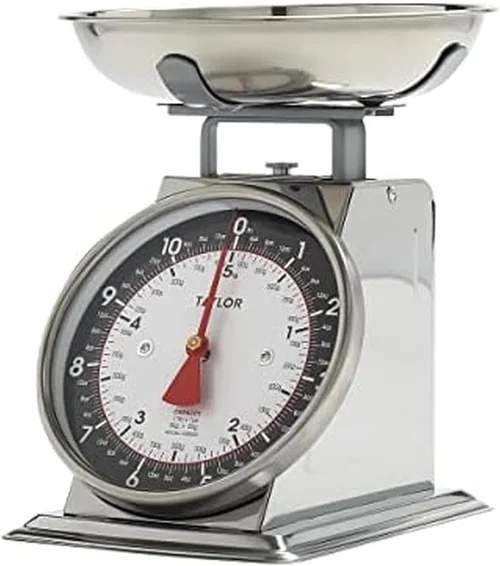
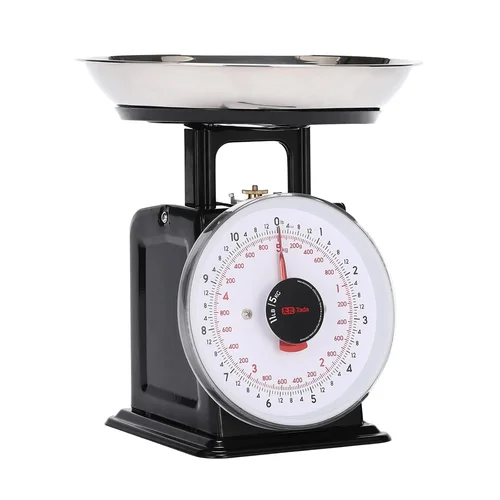
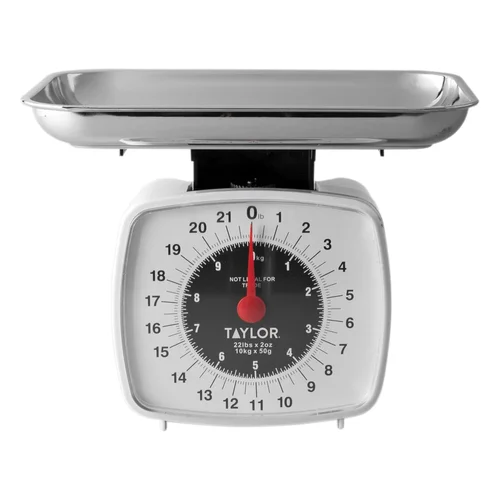
Digital scales with sealed buttons or touch-sensitive controls fare better against moisture and crumbs than models with exposed mechanical switches. Analog scales, while generally robust, can suffer from spring fatigue over time, leading to drift in readings. If you opt for analog, choose one with a metal spring mechanism rather than plastic components.
Avoid scales with thin, brittle plastic bodies—even if they’re inexpensive, they’re likely to crack or warp within months. Investing in a well-built scale pays off in longevity and reliability.
4. Features and Functionality
Beyond basic weighing, modern digital scales offer a suite of features that can streamline your baking process:
– Tare function: Essential for adding multiple ingredients to the same bowl without recalculating.
– Unit conversion: Switch seamlessly between grams, ounces, pounds, milliliters (for water-based liquids), and even tablespoons or cups (though these are less accurate).
– Auto-off: Saves battery life by powering down after inactivity—useful if you forget to turn it off.
– Backlit display: Helps read measurements in dimly lit kitchens.
– Timer or clock: Handy for proofing dough or tracking bake times without reaching for your phone.
– Bluetooth/app integration: Found on premium models, these sync with baking apps to guide you through recipes step-by-step with real-time weight feedback.
Analog scales are feature-light by design—they weigh and that’s it. While this simplicity appeals to minimalists, it limits versatility. Consider whether extra features enhance your workflow or just add complexity.
5. Ease of Use and Readability
A scale is only useful if you can read and operate it comfortably. Digital displays should be large, clear, and positioned so you can see them without bending over—especially important when your hands are covered in dough. Avoid models with tiny fonts or dim screens.
Button layout matters too. Tare, unit toggle, and power buttons should be intuitive and responsive. Touch controls look sleek but can be frustrating if they don’t register light presses. Physical buttons offer more tactile feedback.
Analog scales rely on a needle and dial. These can be hard to read accurately, especially in low light or if the dial is small. Parallax error—misreading the needle due to viewing angle—is common. If you choose analog, pick one with a large, high-contrast dial and a magnifying lens if possible.
6. Power Source and Battery Life
Digital scales run on batteries—typically AAA or CR2032 coin cells. Check how many batteries are required and how long they last. High-drain features like backlights or constant Bluetooth connectivity shorten battery life. Some models include rechargeable batteries via USB-C, which is eco-friendly and convenient.
Analog scales require no power, making them ideal for off-grid use or as a backup during power outages. However, their lack of electronic components also means no auto-off or memory functions.
Consider your usage pattern: if you bake daily, a rechargeable digital scale may save money and hassle over time. Occasional bakers might prefer the simplicity of battery-powered or analog options.
7. Brand Reputation and Customer Support
Not all kitchen scales are created equal—even within the same price range. Established brands like OXO, Escali, MyWeigh, and Salter have built reputations for reliability, accurate calibration, and responsive customer service. Cheaper off-brand models may cut corners on components or lack proper quality control.
Research warranty terms: reputable brands often offer 2–5 years of coverage, while budget options may provide only 90 days. Check if the company provides replacement parts, calibration tools, or troubleshooting guides. User forums and Reddit threads can reveal common failure points (e.g., cracked displays, unresponsive tare buttons).
Avoid no-name brands sold exclusively through third-party Amazon sellers with vague return policies. If something goes wrong, you may be stuck with a defective product.
8. Size, Weight, and Portability
Kitchen space is precious. A bulky scale that dominates your countertop may end up stored in a cabinet—defeating its purpose. Look for compact designs that fit under cabinets or slide into drawers. Foldable or detachable platforms are rare but useful for small kitchens.
Weight matters less for stationary use, but if you plan to move the scale between locations (e.g., from kitchen to pantry), lighter models are easier to handle. Travel bakers might appreciate ultra-portable digital scales under 300 grams.
Analog scales are often heavier due to metal components but tend to have smaller footprints. Digital models with large displays may be wider but thinner.
Different Types of Kitchen Scales

Common Buying Mistakes to Avoid
❌ Mistake: Prioritizing Price Over Accuracy
Why it’s bad: The cheapest scales often sacrifice sensor quality, leading to inconsistent readings. A $10 scale might say 100g when it’s actually 95g—enough to ruin a cake batter or sourdough starter.
What to do instead: Spend at least $25–$30 for a reliable digital scale. Look for models with verified accuracy specs and positive reviews mentioning precision.
❌ Mistake: Ignoring the Tare Function
Why it’s bad: Without tare, you’ll need separate bowls for every ingredient, creating more cleanup and increasing cross-contamination risk. It also slows down your workflow significantly.
What to do instead: Ensure any digital scale you consider has a dedicated, responsive tare button. Test it in-store if possible.
❌ Mistake: Choosing Analog for Precision Baking
Why it’s bad: Analog scales can’t measure below 5g accurately, making them unsuitable for recipes requiring small amounts of leavening agents, salt, or flavor extracts.
What to do instead: Reserve analog scales for rough measurements (like checking produce weight) and use digital for all baking tasks.
❌ Mistake: Overlooking Platform Material
Why it’s bad: Plastic platforms scratch easily, trap grease, and can warp with heat. They’re also harder to sanitize thoroughly.
What to do instead: Always choose stainless steel platforms—they’re non-porous, dishwasher-safe, and resist staining.
❌ Mistake: Buying Based Solely on Looks
Why it’s bad: A sleek, minimalist design might hide poor build quality or a tiny display. Fashion shouldn’t trump function in the kitchen.
What to do instead: Read hands-on reviews that discuss real-world usability, not just aesthetics.
❌ Mistake: Skipping Calibration Checks
Why it’s bad: Even high-quality scales can drift out of calibration over time due to temperature changes or drops.
What to do instead: Learn how to calibrate your scale (many digital models have a calibration mode) and test it monthly with known weights.
❌ Mistake: Assuming All Digital Scales Are Equal
Why it’s bad: Sensor technology varies widely. Some use low-cost load cells that degrade quickly; others employ high-precision strain gauges.
What to do instead: Stick to reputable brands with transparent specs and avoid “too good to be true” deals on unknown platforms.
Budget Guidelines: How Much Should You Spend?
– Entry-Level ($15–$25): At this price, expect basic digital scales with ±1g accuracy, plastic platforms, and limited features. Suitable for occasional bakers who measure larger quantities (flour, sugar). Avoid for delicate recipes. Brands like Amazon Basics or generic imports dominate here—buy only if you prioritize cost above all.
– Mid-Range ($25–$50): This is the sweet spot for most home bakers. You’ll find stainless steel platforms, reliable tare functions, clear displays, and ±0.5–1g accuracy. Models from OXO, Escali, and MyWeigh offer excellent value. These scales handle everything from cookies to bread with confidence.
– Premium ($50–$100): Ideal for serious bakers and cooking enthusiasts. Expect ±0.1g precision, rechargeable batteries, backlit displays, multiple unit options, and robust build quality. Some include timers or app connectivity. Perfect for macarons, brioche, or any recipe demanding exact ratios.
– Luxury ($100+): Reserved for professionals or tech lovers. These scales offer commercial-grade durability, IPX7 waterproof ratings, certified calibration, and advanced smart features. Examples include the MyWeigh iBalance or Acaia Lunar. Only necessary if you bake daily or run a small bakery from home.
Expert Tips for Getting the Best Deal
– Buy during off-seasons: Kitchen gadgets often go on sale post-holidays (January–March) or during back-to-school periods (July–August). Black Friday and Prime Day offer deep discounts, but compare prices beforehand—some retailers inflate pre-sale prices.
– Check manufacturer websites directly: Brands like Escali and OXO occasionally run exclusive promotions or bundle deals not available on Amazon. Signing up for newsletters can unlock first-access sales.
– Read recent reviews: Product quality can change over time as manufacturers switch suppliers. Look for reviews from the past 6–12 months, not just the overall rating.
– Consider refurbished or open-box items: Certified refurbished scales from reputable sellers (like Amazon Renewed or brand outlets) often come with warranties and cost 20–40% less.
– Test in-store when possible: Visit kitchen supply stores to compare display readability, button feel, and platform size. You can’t assess ergonomics from photos alone.
– Verify return policies: Ensure the retailer allows returns if the scale doesn’t meet your expectations. Some third-party sellers have strict no-return rules.
– Invest in calibration weights: A small set of 5g, 10g, and 50g weights ($10–$15) lets you verify your scale’s accuracy anytime—peace of mind worth the cost.
– Don’t ignore warranty length: A longer warranty often signals confidence in product longevity. Aim for at least 2 years.

Frequently Asked Questions
Q: Can I use a kitchen scale for both baking and cooking?
A: Absolutely! While this guide focuses on baking, digital kitchen scales are equally useful for cooking—measuring meat portions, portioning soups, or making pasta dough. Just ensure it has sufficient capacity and easy unit switching.
Q: Do I really need a scale if I’m just baking simple cookies?
A: Even simple recipes benefit from weighing. One cup of all-purpose flour can weigh anywhere from 120g to 150g depending on how it’s scooped. Using a scale ensures your cookies turn out the same every time—no more dense or crumbly surprises.
Q: How do I clean my kitchen scale?
A: For digital scales, wipe the platform with a damp cloth and mild detergent. Avoid submerging the unit or using abrasive cleaners. Analog scales can often be wiped down similarly, but check the manual—some have removable platforms for deeper cleaning.
Q: Will a digital scale work with wet ingredients?
A: Yes, as long as you use a bowl or container. Never pour liquids directly onto the scale unless it’s specifically rated for liquid measurement (rare). Most scales handle indirect weighing just fine.
Q: How often should I calibrate my scale?
A: Ideally, every 1–3 months, or if you notice inconsistent readings. Environmental factors like humidity and temperature can affect calibration over time.
Q: Can I weigh ingredients in ounces on a digital scale?
A: Yes—most digital scales allow you to switch between metric (grams) and imperial (ounces, pounds). Some even offer fluid ounces for water-based liquids (since 1ml of water ≈ 1g at room temperature).
Q: Are smart scales worth the extra cost?
A: Only if you frequently follow complex recipes or want to track nutritional data. For most home bakers, a standard digital scale with tare and unit conversion is sufficient. Smart features add complexity and potential points of failure.
Q: What’s the difference between “precision” and “kitchen” scales?
A: Precision scales (sometimes called jewelry or lab scales) measure down to 0.01g and are used for very small quantities. Kitchen scales typically start at 0.1g or 1g. Use a precision scale only if you’re working with espresso, spices, or molecular gastronomy.
Q: My analog scale is drifting—can it be fixed?
A: Sometimes. Gently tapping the scale or adjusting the zero knob may help temporarily. However, worn springs usually require professional repair or replacement. Digital scales are easier to recalibrate at home.
Q: Should I buy a scale with a larger platform?
A: Only if you regularly use wide bowls. A large platform can make it harder to read the display if it overhangs the base. Compact platforms are fine for most mixing bowls under 8 inches in diameter.
Our Final Recommendations
– Best for Budget-Conscious Buyers: OXO Good Grips Stainless Steel Food Scale ($35)
Offers excellent build quality, clear display, and reliable tare function at an accessible price. Perfect for beginners who want durability without overspending.
– Best Overall Value: Escali Primo Digital Scale ($40)
Combines ±1g accuracy, stainless steel platform, and intuitive controls in a compact design. Consistently praised for longevity and ease of use.
– Best Premium Option: MyWeigh iBalance 750 ($90)
Features ±0.1g precision, rechargeable battery, and a sleek glass platform. Ideal for advanced bakers who demand laboratory-level accuracy.
– Best for Beginners: Amazon Basics Digital Kitchen Scale ($20)
Simple, affordable, and functional. Great for those testing the waters of weighed baking before investing in a higher-end model.
– Best for Advanced Users: Acaia Lunar Scale ($180)
Designed for coffee and baking pros, this Bluetooth-enabled scale offers real-time data logging, app-guided recipes, and industrial-grade components. Overkill for casual use—but unmatched for precision work.
Conclusion: Making the Right Choice
Choosing between a digital and analog kitchen scale ultimately comes down to your baking style, frequency, and need for precision. Digital scales dominate for good reason—they offer unmatched accuracy, convenience, and features that streamline the baking process. Analog scales have their place as reliable, no-frills backups or for those who prefer mechanical simplicity, but they fall short when precision matters most.
As you evaluate options, remember that the best scale isn’t necessarily the most expensive or feature-packed—it’s the one that fits seamlessly into your kitchen routine, delivers consistent results, and withstands daily use. Prioritize accuracy, build quality, and essential functions like tare and unit conversion. Avoid the temptation to cut corners on price if it means sacrificing reliability.
Baking is both an art and a science, and your tools should support both. With the right scale, you’ll spend less time troubleshooting failed batches and more time enjoying the fruits of your labor—whether that’s a perfectly risen loaf, a tender crumb cake, or a batch of chewy chocolate chip cookies that disappear in minutes. Take the time to choose wisely, and your future self (and your taste buds) will thank you.