Electric kettles are among the most energy-efficient ways to boil water, often using less energy than stovetops or microwaves. With rapid heating technology and precise temperature control, they save time, electricity, and money—especially when used correctly.
Key Takeaways
- Electric kettles are highly energy-efficient: They convert up to 80% of electrical energy into heat, minimizing waste compared to gas or induction stovetops.
- They boil water faster: Most electric kettles heat water in 3–5 minutes, reducing overall energy consumption.
- Use only the water you need: Overfilling leads to wasted energy; filling to the minimum or exact level improves efficiency.
- Modern features enhance savings: Variable temperature settings and auto-shutoff prevent over-boiling and reduce unnecessary power use.
- They outperform microwaves and stovetops: Studies show electric kettles use 20–50% less energy than microwaves and up to 30% less than gas stoves.
- Regular maintenance boosts efficiency: Descaling removes mineral buildup that insulates heating elements and slows performance.
- Long-term savings add up: Switching to an electric kettle can save households $10–$20 annually on energy bills.
📑 Table of Contents
- Do Electric Kettles Use Less Energy? The Truth About Efficiency
- How Electric Kettles Work: The Science of Speed and Efficiency
- Comparing Energy Use: Electric Kettle vs. Stovetop vs. Microwave
- Smart Usage Tips to Maximize Energy Savings
- The Environmental and Financial Benefits of Using an Electric Kettle
- Common Myths About Electric Kettle Energy Use
- Conclusion: Yes, Electric Kettles Use Less Energy—When Used Right
Do Electric Kettles Use Less Energy? The Truth About Efficiency
If you’ve ever stood over a whistling stovetop kettle, waiting impatiently for your morning tea, you’ve probably wondered: is there a faster, smarter way? Enter the electric kettle—a sleek, modern appliance that’s become a kitchen staple in homes around the world. But beyond convenience, one of the biggest questions people ask is: Do electric kettles use less energy?
The short answer? Yes—most of the time. Electric kettles are designed to heat water quickly and efficiently, using less electricity than many traditional methods like gas stoves, induction cooktops, or even microwaves. But like any appliance, their energy efficiency depends on how you use them, the model you choose, and how well you maintain them. In this guide, we’ll break down the science behind electric kettle efficiency, compare them to other heating methods, and share practical tips to help you save energy—and money—every time you boil water.
Whether you’re a tea lover, coffee enthusiast, or just someone who wants to reduce their household energy use, understanding how electric kettles work can make a real difference. Let’s dive into the details and uncover why this humble kitchen gadget might be one of the greenest choices you can make.
How Electric Kettles Work: The Science of Speed and Efficiency
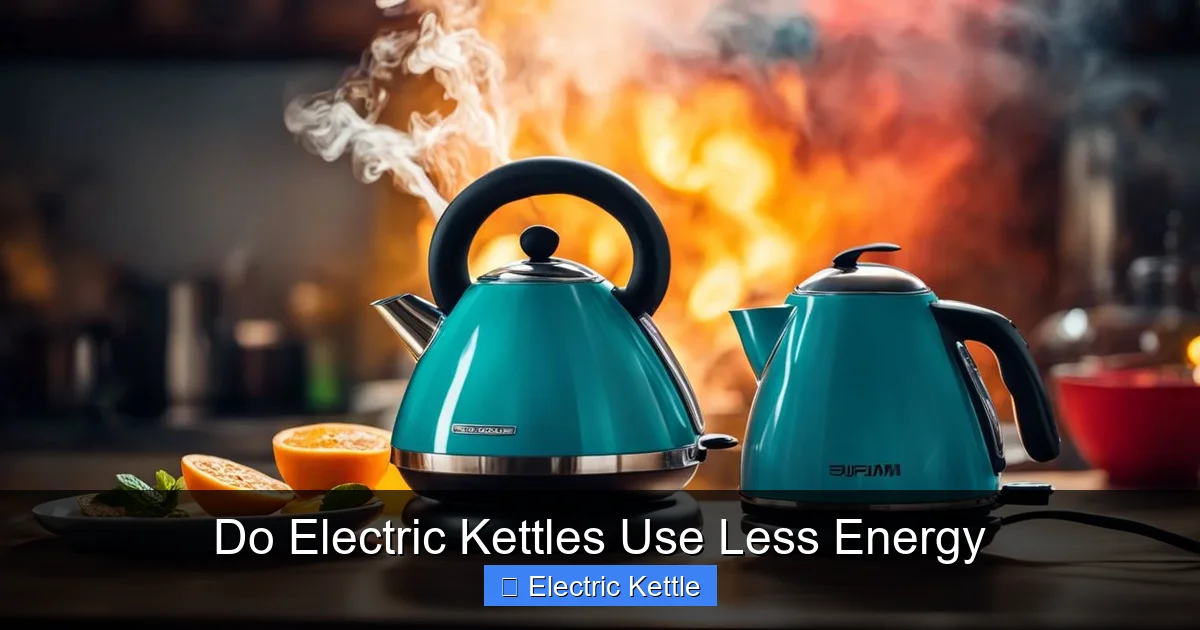
Visual guide about Do Electric Kettles Use Less Energy
Image source: app.agilitywriter.ai
At first glance, an electric kettle looks simple—just a container with a heating element and a power cord. But beneath its sleek exterior lies a clever design built for speed and energy efficiency. Unlike stovetop kettles that rely on external heat sources (like gas flames or electric coils), electric kettles have built-in heating elements submerged directly in the water. This direct contact allows for rapid heat transfer, meaning less energy is lost to the surrounding air.
When you plug in an electric kettle and turn it on, electricity flows through a coiled metal element at the base of the unit. This element heats up almost instantly—within seconds—and transfers that heat directly to the water. Because the heat source is inside the water, there’s minimal waste. In fact, modern electric kettles can convert up to 80% of the electrical energy they consume into usable heat. That’s significantly higher than gas stoves, which often lose 40–50% of their energy to the air around the pot.
Another key factor is insulation. Many high-quality electric kettles feature double-walled construction or thermal insulation that keeps water hot longer after boiling. This means you’re less likely to reboil water unnecessarily, which saves both time and electricity. Some premium models even include keep-warm functions that maintain temperature for up to an hour without constant reheating.
Heating Element Types and Their Impact on Efficiency
Not all electric kettles are created equal. The type of heating element plays a major role in how efficiently your kettle uses energy. There are two main types: concealed and exposed.
Concealed heating elements are housed under a smooth, flat base inside the kettle. This design protects the element from mineral buildup (a common issue in hard water areas) and makes cleaning easier. Because the element isn’t directly exposed to water, it heats more evenly and lasts longer. Models with concealed elements often heat water faster and use less energy over time.
Exposed heating elements, on the other hand, are visible coils at the bottom of the kettle. While they can heat water quickly, they’re more prone to scaling from mineral deposits, especially in areas with hard water. Over time, this buildup acts as an insulator, forcing the element to work harder and use more energy to achieve the same result. That’s why regular descaling is crucial for maintaining efficiency in kettles with exposed elements.
Power Ratings and What They Mean
Electric kettles typically range from 1,200 to 3,000 watts. At first glance, higher wattage might seem like it uses more energy—but that’s not the whole story. A higher wattage kettle heats water faster, which can actually reduce total energy consumption. For example, a 3,000-watt kettle might boil a liter of water in 3 minutes, while a 1,500-watt model takes 6 minutes. Even though the high-wattage kettle uses more power per second, it finishes the job in half the time, often resulting in lower total energy use.
Think of it like a sprint versus a marathon: the sprinter burns more energy per second but finishes quickly, while the marathon runner takes longer and may end up using more total energy. The same principle applies to kettles. Faster boiling = less time the appliance is running = less electricity consumed overall.
That said, if you only boil small amounts of water (like a single cup), a lower-wattage kettle might be more efficient because it doesn’t waste energy heating excess capacity. Choosing the right size and power for your needs is key to maximizing efficiency.
Comparing Energy Use: Electric Kettle vs. Stovetop vs. Microwave
To truly understand whether electric kettles use less energy, we need to compare them to the alternatives. Let’s look at the three most common ways people heat water: gas stovetops, electric stovetops (including induction), and microwaves.
Electric Kettle vs. Gas Stovetop
Gas stoves are popular for their instant heat and precise control, but they’re not the most efficient way to boil water. When you place a kettle on a gas burner, much of the heat escapes around the sides of the pot, warming the air instead of the water. Studies show that gas stoves typically transfer only 40–50% of their energy to the water, with the rest lost to the environment.
In contrast, electric kettles direct nearly all their energy into the water. A 2010 study by the UK’s Energy Saving Trust found that electric kettles use about 25% less energy than gas stoves to boil the same amount of water. That means if you boil water daily, switching from gas to an electric kettle could save you several dollars a year on your energy bill.
Electric Kettle vs. Electric Stovetop
Electric coil and smooth-top stovetops are more efficient than gas, but still lag behind electric kettles. These stoves transfer about 70–80% of their energy to the pot, but they take longer to heat up and cool down. Plus, if your stovetop kettle isn’t flat-bottomed or doesn’t make full contact with the burner, even more heat is wasted.
Induction stovetops are more efficient, reaching up to 85% energy transfer, but they require compatible cookware and still take longer than an electric kettle. A typical induction stove might take 5–7 minutes to boil a liter of water, while a 2,500-watt electric kettle does it in under 4 minutes. Faster boiling = less energy used overall.
Electric Kettle vs. Microwave
Microwaves are often seen as a quick fix for heating water, but they’re surprisingly inefficient for this task. Microwaves heat water by agitating molecules, but they don’t heat evenly—leading to “hot spots” and the risk of superheating (where water gets hotter than boiling point without bubbling). This can be dangerous and wastes energy.
Moreover, microwaves are designed for heating food, not water. They use more energy per boil than electric kettles and take longer. A 2018 study by the University of Cambridge found that microwaves use up to 50% more energy than electric kettles to heat the same volume of water. So while it might seem convenient to zap a cup of water in the microwave, it’s actually one of the least efficient methods.
Real-World Example: A Week of Boiling
Let’s say you boil 1 liter of water every morning for tea or coffee. Here’s how the energy use stacks up over a week:
– Electric kettle (2,500W, 4 minutes per boil): ~0.17 kWh per day → ~1.2 kWh per week
– Gas stovetop (medium flame, 7 minutes): ~0.25 kWh per day → ~1.75 kWh per week
– Microwave (1,000W, 5 minutes): ~0.08 kWh per use, but less efficient heating → ~1.5 kWh per week
Even though the microwave uses less power, its inefficiency means it ends up consuming more total energy. The electric kettle comes out on top—faster, safer, and more energy-efficient.
Smart Usage Tips to Maximize Energy Savings
Even the most efficient electric kettle can waste energy if used improperly. The good news? Small changes in habits can lead to big savings over time. Here are some practical tips to help you get the most out of your kettle while using the least amount of energy.
Only Boil What You Need
This is the #1 rule for energy-efficient boiling. Many people fill their kettles to the max, even when they only need one cup of water. But heating extra water uses extra energy—and that energy is wasted if you don’t use it.
Most electric kettles have minimum and maximum fill lines. Use the minimum line for small amounts (like one or two cups) and only fill to the max when you need a full kettle. Some newer models even have cup-level markings inside, so you can measure exactly how much water you need.
For example, boiling 500ml of water instead of 1 liter uses roughly half the energy. Over a month, that small change can save you several cents—and over a year, it adds up.
Use the Right Temperature Setting
Not all beverages need boiling water. Black tea and French press coffee do well at 100°C (212°F), but green tea, white tea, and some herbal infusions taste better at lower temperatures—around 70–85°C (158–185°F).
Many modern electric kettles come with variable temperature controls, allowing you to select the ideal heat for your drink. Using a lower temperature not only preserves flavor but also saves energy. Heating water to 80°C instead of 100°C can reduce energy use by 20–30%.
If your kettle doesn’t have preset temperatures, you can still save energy by turning it off a minute or two early and letting residual heat bring the water to a boil. Or, use a thermometer to monitor the temperature and stop heating when you reach your target.
Descale Regularly
Hard water contains minerals like calcium and magnesium that build up inside your kettle over time. This limescale forms a layer on the heating element, acting as an insulator that slows heat transfer. As a result, your kettle takes longer to boil and uses more energy.
Descaling is simple: fill the kettle with equal parts water and white vinegar, let it sit for an hour, then boil and rinse thoroughly. Do this every 1–2 months, depending on your water hardness. Some kettles even have built-in descaling indicators that alert you when it’s time.
A clean heating element works faster and more efficiently, saving energy and extending the life of your appliance.
Unplug When Not in Use
Even when turned off, some electric kettles draw a small amount of standby power—especially models with digital displays or keep-warm functions. While this “phantom load” is minimal, it adds up over time.
To eliminate it entirely, unplug your kettle when you’re not using it. If that’s inconvenient, consider using a smart plug that cuts power completely when the kettle is off.
Choose Energy-Efficient Models
When shopping for a new kettle, look for energy-efficient features like:
– Rapid-boil technology (under 4 minutes for 1 liter)
– Concealed heating elements
– Variable temperature settings
– Auto shutoff and boil-dry protection
– Insulated walls to retain heat
Some kettles are even ENERGY STAR certified, meaning they meet strict efficiency guidelines set by the U.S. Environmental Protection Agency. While these models may cost a bit more upfront, they pay for themselves in energy savings over time.
The Environmental and Financial Benefits of Using an Electric Kettle
Switching to an electric kettle isn’t just good for your wallet—it’s good for the planet, too. Let’s break down the real-world impact of choosing this efficient appliance.
Lower Carbon Footprint
Electricity generation does produce carbon emissions, but because electric kettles are so efficient, their overall environmental impact is lower than gas or inefficient electric methods. In regions where the grid uses renewable energy (like wind or solar), the carbon footprint drops even further.
For example, boiling water on a gas stove releases about 0.15 kg of CO₂ per liter. An electric kettle powered by the average U.S. grid emits about 0.10 kg of CO₂ per liter—and even less if your electricity comes from clean sources.
Over a year, a household that boils water daily could prevent several kilograms of CO₂ emissions simply by switching to an electric kettle.
Cost Savings Over Time
Let’s do the math. Suppose you boil 1 liter of water every day. At an average electricity rate of $0.13 per kWh:
– Electric kettle: ~0.17 kWh/day → ~$8.00/year
– Gas stovetop: ~0.25 kWh equivalent → ~$11.50/year
– Microwave: ~0.20 kWh equivalent → ~$9.50/year
That’s a savings of $1.50–$3.50 per year just by using an electric kettle. Multiply that by a family of four, and the savings grow. Over 10 years, that’s $15–$35 saved—enough to buy a new kettle.
And remember, these numbers don’t account for the time saved. Faster boiling means less waiting, which adds up to real convenience in a busy household.
Long-Term Durability and Reduced Waste
High-quality electric kettles are built to last. With proper care, many models last 5–10 years. That’s fewer appliances in landfills and less resource consumption over time.
Plus, because electric kettles are so efficient, they reduce the need for multiple heating devices. Instead of using a stovetop kettle, microwave, and electric kettle, you can consolidate your water heating into one reliable, energy-saving appliance.
Common Myths About Electric Kettle Energy Use
Despite their efficiency, electric kettles are surrounded by misconceptions. Let’s clear up some of the most common myths.
Myth 1: “Higher Wattage Means More Energy Use”
As we discussed earlier, wattage refers to power, not total energy. A high-wattage kettle uses more power per second but finishes faster, often resulting in lower total energy consumption. It’s the duration of use that matters most.
Myth 2: “Boiling Water Multiple Times Wastes a Lot of Energy”
Reboiling water does use extra energy, but the amount is small—especially if the water is still warm. If you’re reheating water within an hour, the energy cost is minimal. The real waste comes from overfilling and boiling more than you need in the first place.
Myth 3: “Electric Kettles Are Only for Tea”
Electric kettles are incredibly versatile. They’re great for instant coffee, oatmeal, pasta, sterilizing baby bottles, and even making quick soups. Their speed and precision make them useful for many kitchen tasks—not just beverages.
Myth 4: “All Electric Kettles Are the Same”
Quality varies widely. Cheap kettles may have poor insulation, exposed elements, or no temperature control—all of which reduce efficiency. Investing in a well-designed model pays off in performance and energy savings.
Conclusion: Yes, Electric Kettles Use Less Energy—When Used Right
So, do electric kettles use less energy? The answer is a resounding yes—especially when compared to gas stoves, electric stovetops, and microwaves. With their direct heating, rapid boil times, and smart features, electric kettles are one of the most efficient ways to heat water in the home.
But efficiency isn’t just about the appliance—it’s about how you use it. By boiling only what you need, maintaining your kettle, and choosing energy-conscious settings, you can maximize savings and minimize waste. Over time, these small choices add up to meaningful reductions in energy use, cost, and environmental impact.
Whether you’re brewing your morning tea, preparing instant oatmeal, or sterilizing a bottle, an electric kettle offers a fast, safe, and eco-friendly solution. So next time you reach for the kettle, know that you’re not just saving time—you’re making a smart, sustainable choice for your home and the planet.
Frequently Asked Questions
Do electric kettles use less energy than stovetops?
Yes, electric kettles typically use 20–30% less energy than gas or electric stovetops. They heat water faster and transfer more energy directly to the water, reducing waste.
Is it more efficient to boil water in a microwave or electric kettle?
Electric kettles are more efficient. Microwaves use more energy overall and heat water unevenly, making them less effective and potentially unsafe for boiling water.
Does overfilling an electric kettle waste energy?
Yes. Boiling more water than you need uses extra energy. Always fill to the minimum or exact amount required to improve efficiency.
How often should I descale my electric kettle?
Descale every 1–2 months if you have hard water, or every 3–4 months with soft water. Regular descaling keeps the heating element efficient and extends the kettle’s life.
Can using an electric kettle save me money on my energy bill?
Yes. Switching from a stovetop or microwave can save $10–$20 per year, depending on usage. Over time, these savings add up.
Are variable temperature kettles worth the extra cost?
Yes, especially if you drink different types of tea or coffee. They save energy by heating water to the exact temperature needed, avoiding unnecessary boiling.