Most electric tea kettles do not whistle—they beep, flash, or shut off automatically when water boils. Unlike traditional stovetop kettles that rely on steam pressure to create a whistle, electric models use internal thermostats and sensors. However, a few specialty electric kettles do include whistling features for those who love the classic sound.
Key Takeaways
- Most electric kettles don’t whistle: They use electronic alerts like beeps or lights instead of steam-powered whistles.
- Whistling requires steam pressure: Traditional kettles whistle because steam builds up and escapes through a spout mechanism—electric kettles heat water differently.
- Some models offer simulated whistles: A few electric kettles include built-in audio alerts that mimic the classic whistle sound.
- Auto shut-off is standard: Electric kettles turn off automatically when boiling, reducing the need for a warning sound.
- Whistling isn’t necessary for safety: Modern electric kettles have multiple safety features, making a whistle more nostalgic than functional.
- Stovetop kettles still dominate whistling: If you love the sound, a stovetop model may be a better choice.
- Consider your needs: Choose based on convenience, noise preference, and kitchen setup—not just whether it whistles.
📑 Table of Contents
- Do Electric Tea Kettles Whistle? The Surprising Truth
- Why Don’t Most Electric Kettles Whistle?
- Are There Electric Kettles That Do Whistle?
- Electric vs. Stovetop Kettles: A Comparison
- Why the Whistle Matters (Even If It’s Not Essential)
- How to Choose the Right Kettle for You
- Conclusion: Whistling or Not, the Choice Is Yours
Do Electric Tea Kettles Whistle? The Surprising Truth
If you’ve ever stood in the kitchen, waiting for that familiar, high-pitched whistle to signal your tea is ready, you might be wondering: do electric tea kettles whistle too? After all, they’re faster, more convenient, and often sleeker than their stovetop cousins. But when the water hits boiling point, do they let out that nostalgic, attention-grabbing sound?
The short answer? Most electric tea kettles do not whistle. Instead, they rely on modern technology—like beeps, lights, or automatic shut-off—to let you know the water is ready. This might come as a surprise if you’re used to the classic stovetop kettle that sings when it’s done. But there’s a good reason for this difference, and understanding it can help you choose the right kettle for your kitchen.
Electric kettles are designed for efficiency and safety. They heat water quickly using an internal heating element, and once the water reaches boiling temperature, a thermostat triggers the kettle to turn off. This process doesn’t create the same kind of steam pressure buildup that causes a traditional kettle to whistle. So while the sound might be missing, the function is still there—just in a different form.
Why Don’t Most Electric Kettles Whistle?
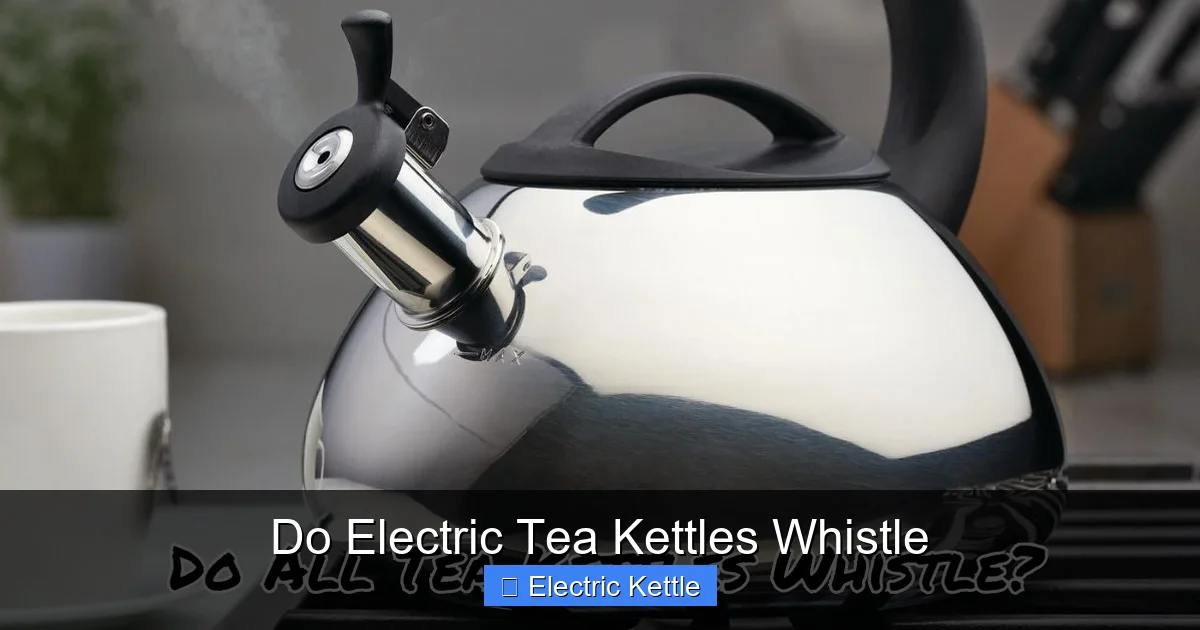
Visual guide about Do Electric Tea Kettles Whistle
Image source: homeandcooks.com
To understand why electric kettles typically don’t whistle, it helps to know how a traditional stovetop kettle works. When you heat water on the stove, steam builds up inside the kettle. As the pressure increases, the steam is forced through a small opening in the spout, vibrating a metal reed or passing through a chamber that creates the whistling sound. It’s a simple, mechanical process that’s been around for over a century.
Electric kettles, on the other hand, operate differently. They have a sealed heating element at the base, and the water heats from the bottom up. Once the water reaches boiling point (usually around 212°F or 100°C), a bimetallic strip or electronic sensor detects the temperature and cuts off the power. This automatic shut-off happens quickly and quietly—no steam buildup, no whistle.
Another factor is design. Electric kettles are often made with plastic or stainless steel bodies and have tight-fitting lids to retain heat and prevent spills. This sealed environment doesn’t allow steam to escape in the same way a stovetop kettle does. Without that controlled release of steam through a whistle mechanism, there’s no sound.
Additionally, manufacturers prioritize quiet operation. Many people use electric kettles early in the morning or late at night, and a loud whistle could be disruptive. Instead, they opt for gentle beeps or LED indicators that are noticeable but not jarring.
The Role of Steam Pressure
Steam pressure is the key ingredient in a whistling kettle. In a stovetop model, as water boils, steam accumulates inside the sealed chamber. The only way for that steam to escape is through the spout, and if there’s a whistle mechanism in place, it forces the steam through a narrow passage, creating vibrations that produce sound.
Electric kettles don’t rely on this principle. Because they heat water rapidly and shut off automatically, there’s less opportunity for steam to build up to the levels needed to trigger a whistle. Even if a small amount of steam is produced, it’s usually vented quietly through a small hole in the lid or spout, not directed into a whistle chamber.
Some high-end electric kettles do include a steam vent, but it’s designed for safety—not sound. Its purpose is to prevent pressure buildup and potential splattering, not to create a musical alert.
Modern Alerts: Beeps, Lights, and More
So if electric kettles don’t whistle, how do they let you know the water is ready? Most models use one or more of the following alerts:
– **Audible beeps:** A short series of beeps signals that boiling is complete. These are usually soft and polite, not loud or shrill.
– **LED indicators:** Many kettles have lights that change color or turn off when the water boils. For example, a blue light might glow during heating and turn off when done.
– **Auto shut-off:** The kettle simply stops heating and powers down. Some models go into standby mode, while others require you to press a button to restart.
– **Keep-warm function:** Certain kettles maintain the water at a set temperature after boiling, often with a gentle hum or light.
These features are not only convenient but also safer. There’s no risk of the kettle boiling dry or overheating, which can happen with stovetop models if left unattended.
Are There Electric Kettles That Do Whistle?
While the majority of electric kettles don’t whistle, there are a few exceptions. Some manufacturers have introduced models with built-in audio alerts that mimic the sound of a traditional whistle. These are often marketed as “whistling electric kettles” or “retro-style” models.
These kettles don’t use steam to create the sound. Instead, they have a small speaker or buzzer that plays a recorded whistle tone when the water reaches boiling point. It’s a digital simulation, not a mechanical one, but it can satisfy those who miss the classic sound.
One example is the *Cuisinart CPK-17 PerfecTemp*, which offers a “whistle” option among its multiple temperature settings. When set to boil, it emits a short, whistle-like beep. Another is the *Hamilton Beach 40880*, which includes a “ready” beep that some users describe as whistle-like.
However, these are still the minority. Most electric kettles stick to standard beeps or lights. If a true whistle is important to you, you might need to look for a hybrid model or consider a stovetop kettle instead.
Hybrid and Retro-Style Models
A growing trend in kitchen appliances is the “retro” or “vintage” design, and electric kettles are no exception. Some brands have released electric kettles that look like classic stovetop models—complete with a spout, handle, and even a faux whistle mechanism. While these don’t actually whistle using steam, they often include a sound effect to enhance the nostalgic experience.
These hybrid models appeal to people who love the aesthetic of old-fashioned kettles but want the convenience of electric heating. They’re especially popular in modern farmhouse or industrial-style kitchens.
Keep in mind that these kettles are usually more expensive than standard electric models. You’re paying for design and branding as much as functionality. But if the look and sound matter to you, it could be worth the investment.
DIY Whistling Solutions
For the truly devoted whistle lover, there’s always the DIY route. Some people attach small, battery-powered whistle devices to their electric kettles. These are usually magnetic or adhesive and activate when they detect heat or steam.
While this isn’t a common solution, it shows how much some people value the sound. It also highlights a key point: the whistle isn’t just about function—it’s about ritual, comfort, and tradition.
That said, DIY modifications can void warranties or pose safety risks if not done carefully. It’s usually better to choose a kettle that meets your needs out of the box.
Electric vs. Stovetop Kettles: A Comparison
When deciding between an electric and stovetop kettle, the whistle is just one factor to consider. Here’s a quick comparison to help you choose:
Speed and Efficiency
Electric kettles are significantly faster than stovetop models. Most can boil a full liter of water in 3–5 minutes, depending on wattage. Stovetop kettles take longer, especially on gas or induction stoves.
Electric kettles are also more energy-efficient. They transfer heat directly to the water, with minimal loss to the surrounding air. Stovetop kettles lose heat through the sides and bottom, especially if the burner is larger than the kettle base.
Convenience and Safety
Electric kettles win on convenience. They have automatic shut-off, precise temperature control (on some models), and often a keep-warm function. You can walk away and trust the kettle to turn off when done.
Stovetop kettles require more attention. You need to monitor them to avoid boiling dry or overheating. However, they don’t need electricity, making them ideal for camping or power outages.
Noise and Aesthetics
If you love the sound of a whistling kettle, stovetop models are the clear winner. The mechanical whistle is satisfying and hard to replicate digitally.
Electric kettles are quieter, which is great for open-plan homes or early mornings. But if you miss the sound, you might find the silence a little anticlimactic.
In terms of design, electric kettles come in a wide range of styles—modern, minimalist, colorful, or retro. Stovetop kettles tend to have a more classic, timeless look.
Maintenance and Durability
Both types require regular cleaning to prevent limescale buildup, especially in hard water areas. Electric kettles with removable filters are easier to clean.
Stovetop kettles are generally more durable because they have fewer electronic parts. Electric kettles can fail if the heating element or thermostat malfunctions.
Why the Whistle Matters (Even If It’s Not Essential)
You might be thinking, “So what if it doesn’t whistle? As long as the water boils, who cares?” And you’re not wrong—functionally, the whistle isn’t necessary. Modern electric kettles are safe, efficient, and reliable without it.
But the whistle is more than just a signal. It’s a sensory cue, a moment of anticipation, a small ritual in a busy day. For many people, that sound signals comfort, warmth, and a pause in the routine. It’s the sound of tea time, of slowing down, of home.
In a world of silent appliances and digital notifications, the whistle stands out as something analog, human, and deeply familiar. It’s no wonder some people feel a pang of nostalgia when they switch to an electric kettle.
That doesn’t mean electric kettles are inferior. On the contrary, they represent progress—faster heating, better safety, smarter design. But they do change the experience in subtle ways.
The Psychology of Sound in the Kitchen
Sound plays a powerful role in how we interact with our environment. The sizzle of bacon, the hum of a refrigerator, the click of a toaster—these sounds shape our routines and emotions.
The whistle of a kettle is particularly evocative. It’s often associated with comfort, hospitality, and care. Think of a parent making tea for a sick child, or a friend offering you a cup when you’re feeling down. The whistle is part of that story.
Electric kettles, with their quiet efficiency, shift that narrative. They’re more about speed and convenience than ritual. That’s not a bad thing—it’s just different.
Who Might Miss the Whistle?
Certain groups are more likely to miss the whistle:
– **Older adults:** Those who grew up with stovetop kettles may find the silence disorienting or less reassuring.
– **Tea enthusiasts:** People who enjoy the full tea-making experience might prefer the sensory cues of a traditional kettle.
– **Nostalgia lovers:** Anyone who values tradition and routine may feel the absence of the whistle.
On the flip side, younger users or those with busy lifestyles might prefer the quiet efficiency of an electric kettle.
How to Choose the Right Kettle for You
When shopping for a kettle, don’t let the whistle—or lack thereof—be the only deciding factor. Consider your lifestyle, kitchen setup, and personal preferences.
Ask Yourself These Questions
– **Do you value speed and convenience?** If so, an electric kettle is likely the better choice.
– **Do you enjoy the ritual of tea-making?** A stovetop kettle might enhance that experience.
– **Is noise a concern?** Electric kettles are quieter, which is great for shared spaces.
– **Do you need precise temperature control?** Some electric kettles offer variable settings for different teas.
– **Are you eco-conscious?** Electric kettles are generally more energy-efficient.
– **Do you have limited counter space?** Stovetop kettles take up less room when not in use.
Top Features to Look For
Whether you choose electric or stovetop, here are some features to consider:
– **Auto shut-off:** Essential for safety.
– **Boil-dry protection:** Prevents damage if the kettle is turned on empty.
– **Removable filter:** Makes cleaning easier.
– **Cordless design:** More convenient for pouring.
– **Water level window:** Helps you measure the right amount.
– **Temperature control:** Ideal for green or white teas that require lower temperatures.
Recommended Models
If you want an electric kettle with a whistle-like sound:
– *Cuisinart CPK-17 PerfecTemp*: Offers multiple temperature settings and a whistle-like beep.
– *Hamilton Beach 40880*: Includes a “ready” beep that mimics a whistle.
If you prefer a quiet, efficient electric kettle:
– *Breville BKE820XL IQ*: Fast, precise, and sleek.
– *OXO Brew Classic*: Simple, reliable, and easy to use.
If you’re set on a real whistle:
– *Chantal Vintage Tea Kettle*: Classic stovetop design with a loud, clear whistle.
– *Le Creuset Enamel-on-Steel Kettle*: Stylish and durable, with a reliable whistle.
Conclusion: Whistling or Not, the Choice Is Yours
So, do electric tea kettles whistle? The answer is mostly no—but that doesn’t make them any less useful or enjoyable. While they don’t produce the same steam-powered whistle as stovetop models, they offer modern alternatives like beeps, lights, and automatic shut-off that are just as effective.
The absence of a whistle reflects a shift in how we use kitchen appliances: faster, quieter, and more automated. But for those who cherish the sound, there are options—whether it’s a retro-style electric kettle with a simulated whistle or a trusty stovetop model that sings when it’s ready.
Ultimately, the best kettle is the one that fits your lifestyle and makes your tea time a little more pleasant. Whether it whistles, beeps, or simply glows, the important thing is that it brings you warmth, comfort, and a moment of calm in your day.
So go ahead—fill it up, turn it on, and enjoy your tea. Whistling or not, it’s still a small luxury worth savoring.
Frequently Asked Questions
Do all electric kettles beep when done?
No, not all electric kettles beep. Some only have LED lights or rely solely on auto shut-off. Check the product description to see what kind of alert system it uses.
Can I modify my electric kettle to whistle?
While you can attach external whistle devices, it’s not recommended. Modifications can void warranties and pose safety risks. It’s safer to choose a kettle with a built-in alert you like.
Why do some electric kettles have a steam vent?
The steam vent prevents pressure buildup and reduces splattering. It’s for safety, not for creating a whistle sound.
Are whistling electric kettles louder than regular ones?
Simulated whistles are usually no louder than standard beeps. The sound is often softer and more melodic, designed to mimic the classic tone without being disruptive.
Do electric kettles use more electricity than stovetop ones?
No, electric kettles are generally more energy-efficient. They heat water faster and lose less heat to the environment.
Can I use an electric kettle on a gas stove?
No, electric kettles are designed to plug into an outlet. Using them on a stove can damage the base and pose a fire hazard.