Rapid boil kettles can save electricity when used correctly, thanks to their high-efficiency heating elements and faster boiling times. However, energy savings depend on factors like kettle capacity, usage habits, and whether you only boil the water you need.
Key Takeaways
- Faster boiling reduces energy waste: Rapid boil kettles heat water quicker, minimizing standby heat loss and cutting overall electricity use.
- Higher wattage doesn’t always mean higher costs: While rapid boil kettles often have higher wattage, their shorter run times can result in lower total energy consumption.
- Efficiency depends on usage habits: Boiling only the water you need—not filling the kettle to the top every time—maximizes energy savings.
- Modern features enhance efficiency: Auto shut-off, temperature control, and insulated designs help reduce unnecessary energy use.
- They’re more efficient than stovetops: Electric kettles, especially rapid boil models, use up to 50% less energy than gas or electric stovetops.
- Long-term savings add up: Over time, using a rapid boil kettle efficiently can lower your electricity bill and reduce your carbon footprint.
📑 Table of Contents
- Do Rapid Boil Kettles Save Electricity? A Complete Guide
- How Rapid Boil Kettles Work
- Energy Efficiency: Rapid Boil vs. Traditional Methods
- Factors That Affect Energy Savings
- Tips to Maximize Energy Savings with a Rapid Boil Kettle
- Environmental Impact and Long-Term Savings
- Common Myths About Rapid Boil Kettles and Electricity
- Conclusion
Do Rapid Boil Kettles Save Electricity? A Complete Guide
If you’ve ever stood in your kitchen waiting for a pot of water to boil on the stove, you know the frustration. It feels like forever. That’s why so many people have switched to electric kettles—especially rapid boil kettles. They promise hot water in under three minutes, making your morning tea or instant coffee a breeze. But with all that speed, you might be wondering: do rapid boil kettles actually save electricity, or are they just fast at using up your energy?
The short answer? Yes, rapid boil kettles can save electricity—but only if you use them wisely. These appliances are designed for efficiency, not just speed. They heat water faster and more directly than stovetops, which means less energy is wasted. But like any appliance, their real-world impact depends on how you use them. In this guide, we’ll break down how rapid boil kettles work, compare their energy use to other methods, and share practical tips to help you get the most out of your kettle while keeping your electricity bill low.
How Rapid Boil Kettles Work
At first glance, a rapid boil kettle might seem like magic. You press a button, and in under three minutes, you have piping hot water. But it’s not magic—it’s smart engineering.
High-Wattage Heating Elements
Most rapid boil kettles come with heating elements rated between 1500 and 3000 watts. That’s significantly higher than standard electric kettles, which typically range from 1200 to 1800 watts. The higher the wattage, the more power the kettle can draw at once, which translates to faster heating. Think of it like a sports car versus a sedan—both can get you to your destination, but the sports car does it in less time.
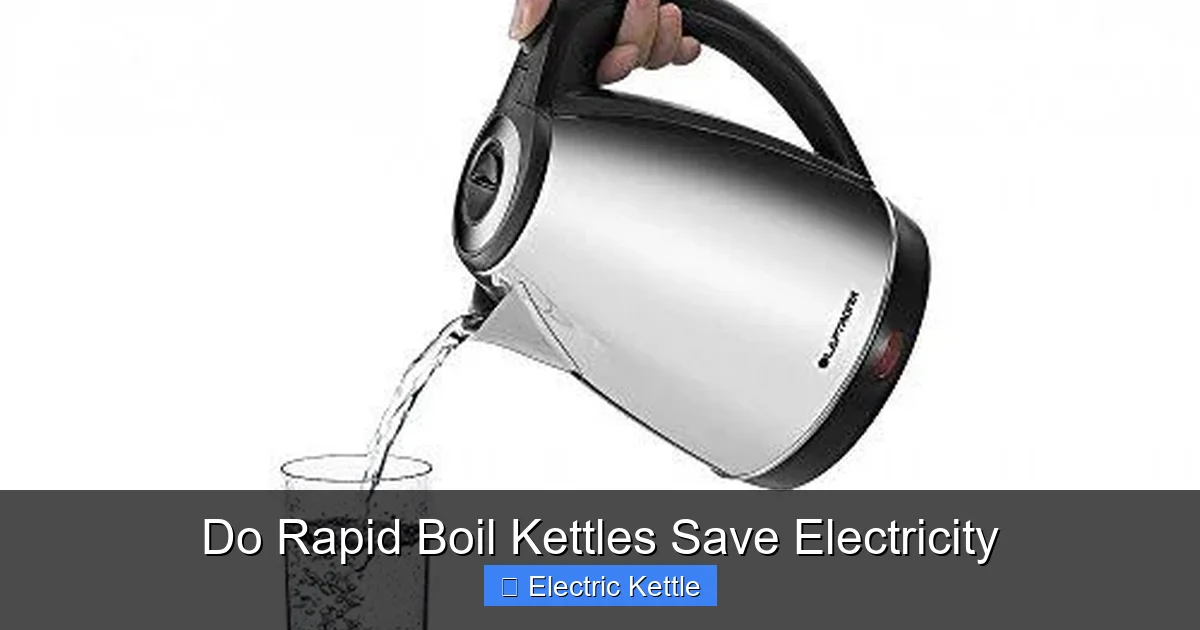
Visual guide about Do Rapid Boil Kettles Save Electricity
Image source: i.pinimg.com
Direct Heat Transfer
Unlike stovetops, where heat travels from the burner to the pot and then to the water, electric kettles transfer heat directly to the water. The heating element is usually located at the base of the kettle and is in direct contact with the water. This direct transfer minimizes energy loss. There’s no wasted heat going into the air or heating up a metal pot unnecessarily.
Insulated Design
Many modern rapid boil kettles feature double-walled or insulated designs. These help retain heat, so the water stays hot longer without needing to reheat. This is especially useful if you’re making multiple cups of tea or coffee in a short time. Instead of reboiling cold water, you can use the residual heat, saving both time and electricity.
Smart Features
Some rapid boil kettles come with advanced features like variable temperature settings, auto shut-off, and keep-warm functions. These aren’t just convenient—they’re energy-saving tools. For example, if you only need water at 80°C for green tea, you can set the kettle to stop heating at that temperature instead of boiling it to 100°C. This prevents overheating and reduces energy use.
Energy Efficiency: Rapid Boil vs. Traditional Methods
Now that we understand how rapid boil kettles work, let’s compare their energy use to other common methods of heating water.
Electric Kettle vs. Stovetop
Studies show that electric kettles are significantly more energy-efficient than stovetops. According to the U.S. Department of Energy, electric kettles use about 20–30% less energy than electric stovetops and up to 50% less than gas stovetops. The reason? Stovetops lose a lot of heat to the surrounding air. Even with a lid on, only about 60–70% of the heat from a gas flame or electric coil actually reaches the water. In contrast, electric kettles direct nearly all their energy into the water.
Rapid Boil vs. Standard Electric Kettle
You might think that because rapid boil kettles use more watts, they must use more electricity. But that’s not necessarily true. Electricity consumption is measured in kilowatt-hours (kWh), which is calculated by multiplying power (in kilowatts) by time (in hours). A rapid boil kettle might use 3000 watts (3 kW), but if it boils water in 2 minutes (0.033 hours), it uses about 0.1 kWh. A standard 1500-watt kettle that takes 4 minutes (0.067 hours) uses about 0.1 kWh as well. So even though the rapid boil model has higher wattage, its shorter run time can balance out the energy use.
Real-World Example
Let’s say you boil 1 liter of water every day. Using a rapid boil kettle (3000W, 2 minutes), you’d use about 0.1 kWh per day. Over a month (30 days), that’s 3 kWh. At an average electricity rate of $0.15 per kWh, that’s just $0.45 per month. A standard kettle (1500W, 4 minutes) would use the same amount of energy—so in this case, both are equally efficient. But if the rapid boil kettle boils faster and you only use it for the water you need, it could actually save energy in practice.
Factors That Affect Energy Savings
While rapid boil kettles are inherently more efficient, their real-world energy savings depend on several factors.
How Much Water You Boil
This is the biggest factor. Boiling more water than you need wastes energy. For example, if you only need one cup of water but fill the kettle to its maximum capacity, you’re heating four times as much water as necessary. That extra water takes longer to heat and uses more electricity. Rapid boil kettles are fast, but they still consume more energy when boiling larger volumes.
Frequency of Use
If you boil water multiple times a day, small inefficiencies add up. For instance, reboiling water that has cooled down uses more energy than keeping it warm. Some kettles have a “keep warm” function that maintains the temperature for up to an hour. This can be more efficient than reheating cold water, especially if you’re making several hot drinks in a row.
Kettle Maintenance
Over time, mineral buildup (limescale) can form inside your kettle, especially if you live in a hard water area. This layer acts as an insulator, reducing the efficiency of the heating element. As a result, the kettle takes longer to boil water and uses more electricity. Regular descaling—using vinegar or a commercial descaler—can restore efficiency and save energy in the long run.
Standby Power and Auto Shut-Off
Some kettles consume a small amount of electricity even when not in use, especially if they have digital displays or keep-warm functions. However, most modern rapid boil kettles have auto shut-off features that turn the kettle off immediately after boiling. This prevents unnecessary energy use and reduces the risk of overheating.
Tips to Maximize Energy Savings with a Rapid Boil Kettle
You don’t need to give up convenience to save electricity. With a few smart habits, you can enjoy fast boiling while keeping your energy use low.
Boil Only What You Need
Always measure the water you need before boiling. Most kettles have markings inside to help you pour the right amount. If you’re making one cup of tea, don’t fill the kettle to the top. This simple habit can reduce your energy use by up to 50%.
Use the Right Temperature Setting
If your kettle has variable temperature controls, use them. Boiling water to 100°C uses more energy than heating it to 80°C or 90°C. For green tea, 70–80°C is ideal. For coffee, 90–96°C is best. Avoid boiling water unnecessarily—it’s a waste of energy and can even affect the taste of your drink.
Keep Your Kettle Clean
Descale your kettle every 1–2 months, depending on water hardness. A clean heating element transfers heat more efficiently, reducing boiling time and energy use. Plus, it extends the life of your kettle.
Unplug When Not in Use
Even though most kettles have auto shut-off, unplugging them when not in use eliminates any standby power consumption. This is especially helpful if you don’t use your kettle daily.
Use the Keep-Warm Function Wisely
If your kettle has a keep-warm feature, use it for short periods—like during a morning coffee routine. But don’t leave it on for hours. The energy used to maintain temperature can add up over time.
Choose an Energy-Efficient Model
When buying a rapid boil kettle, look for models with high energy efficiency ratings. Features like insulated walls, rapid heating elements, and precise temperature control can make a big difference. Some kettles even have eco-modes that optimize energy use.
Environmental Impact and Long-Term Savings
Beyond your electricity bill, using a rapid boil kettle efficiently has broader benefits.
Lower Carbon Footprint
Electricity generation often relies on fossil fuels, so reducing your energy use helps lower greenhouse gas emissions. By boiling only the water you need and using an efficient kettle, you’re doing your part for the environment.
Cost Savings Over Time
While a rapid boil kettle might cost more upfront than a basic model, the long-term savings can add up. If you save just $0.50 per month on electricity, that’s $6 per year. Over five years, that’s $30—enough to offset the initial investment. Plus, you’re saving time, which is priceless.
Durability and Lifespan
High-quality rapid boil kettles are built to last. With proper care, they can serve you for 5–10 years. That’s fewer replacements, less waste, and more savings over time.
Common Myths About Rapid Boil Kettles and Electricity
There are a lot of misconceptions out there. Let’s clear them up.
Myth: Higher Wattage Means Higher Bills
Not necessarily. Wattage is just a measure of power—how much energy the kettle can use at once. What matters more is how long it runs. A high-wattage kettle that boils water quickly can use less total energy than a low-wattage one that takes longer.
Myth: Rapid Boil Kettles Are Always More Efficient
Only if used correctly. If you’re constantly boiling full kettles for one cup of tea, you’re wasting energy. Efficiency depends on usage habits, not just the appliance.
Myth: Electric Kettles Are Bad for the Environment
Compared to stovetops, electric kettles are generally more efficient and produce fewer emissions per boil. Plus, as the grid becomes greener with renewable energy, the environmental impact will continue to decrease.
Conclusion
So, do rapid boil kettles save electricity? The answer is a qualified yes. These kettles are designed for speed and efficiency, and when used properly, they can reduce your energy consumption compared to stovetops and even standard electric kettles. Their high-wattage heating elements, direct heat transfer, and smart features make them powerful tools for quick, energy-conscious boiling.
But the real key to saving electricity isn’t just the kettle—it’s how you use it. Boiling only the water you need, maintaining your kettle, and using temperature controls wisely can make a big difference. Over time, these small habits lead to noticeable savings on your electricity bill and a smaller environmental footprint.
If you’re looking to upgrade your kitchen appliances, a rapid boil kettle is a smart investment. It’s faster, more efficient, and more convenient than traditional methods. Just remember: speed doesn’t have to mean waste. With a little mindfulness, you can enjoy hot water in seconds—without the guilt.
Frequently Asked Questions
Do rapid boil kettles use more electricity than regular kettles?
Not necessarily. While rapid boil kettles often have higher wattage, they boil water faster, which can result in similar or even lower total energy use. The key is how much water you boil and how often.
Can using a rapid boil kettle reduce my electricity bill?
Yes, especially if you boil only the water you need and use energy-saving features like temperature control and auto shut-off. Over time, these habits can lead to noticeable savings.
Are rapid boil kettles more efficient than stovetops?
Yes. Electric kettles, including rapid boil models, are typically 20–50% more energy-efficient than gas or electric stovetops because they transfer heat directly to the water with minimal loss.
Does limescale affect energy efficiency?
Absolutely. Mineral buildup insulates the heating element, making it harder to heat water. This increases boiling time and energy use. Regular descaling helps maintain efficiency.
Is it better to reboil water or use a keep-warm function?
Using a keep-warm function is usually more efficient than reboiling cold water, especially if you’re making multiple drinks in a short time. Just don’t leave it on for too long.
Do rapid boil kettles consume power when not in use?
Most modern models have auto shut-off and consume little to no standby power. However, unplugging the kettle when not in use eliminates any potential energy drain.