Yes, an electric kettle uses a small amount of electricity when plugged in—even when not boiling water. This is due to standby power consumption from internal electronics like LED displays, timers, or keep-warm functions. While the draw is minimal, unplugging your kettle when not in use can save energy and reduce your electricity bill over time.
Key Takeaways
- Standby power consumption: Most modern electric kettles draw a small amount of electricity when plugged in, even when idle, due to internal electronics.
- Energy-efficient models matter: Kettles with auto-shutoff, no display, or minimal features consume less standby power than those with digital screens or keep-warm modes.
- Unplugging saves energy: Simply unplugging your kettle when not in use can eliminate standby power waste and reduce long-term energy costs.
- Boiling uses the most power: The majority of a kettle’s electricity use happens during the actual boiling process, not when it’s idle.
- Smart habits reduce waste: Boil only the water you need, clean your kettle regularly, and avoid frequent reboiling to maximize efficiency.
- Phantom load adds up: While one kettle uses little standby power, combined with other appliances, it contributes to household “vampire” energy drain.
- Eco-friendly choices help: Opting for energy-efficient kettles and mindful usage supports sustainability and lowers your carbon footprint.
📑 Table of Contents
- Does a Kettle Use Electricity When Plugged In?
- How Electric Kettles Work
- Standby Power: The Hidden Energy Drain
- How Much Electricity Does Boiling Water Actually Use?
- Should You Unplug Your Kettle When Not in Use?
- Energy-Efficient Kettle Features to Look For
- Environmental and Cost Impact
- Conclusion: Smart Habits for a Greener Kitchen
Does a Kettle Use Electricity When Plugged In?
You’ve probably stood in your kitchen, staring at your electric kettle, wondering: “Is it using electricity right now—even though it’s not boiling?” It’s a smart question, especially if you’re trying to cut down on energy bills or live a more eco-conscious lifestyle. The short answer? Yes, your electric kettle does use a small amount of electricity when it’s plugged in, even when it’s not actively heating water.
But don’t panic—this isn’t a major energy hog. Unlike your refrigerator or air conditioner, your kettle isn’t running constantly. However, modern electric kettles often come with features like digital displays, LED indicators, timers, or keep-warm functions. These components need a tiny bit of power to stay ready, and that’s where the electricity use comes in—even when the kettle is “off.”
Understanding how and why your kettle uses power when idle can help you make smarter choices about energy use. In this guide, we’ll break down exactly how much electricity your kettle consumes, why it happens, and what you can do to minimize waste. Whether you’re a tea lover who boils water multiple times a day or someone who uses their kettle just once in the morning, this information will help you save energy and money.
How Electric Kettles Work
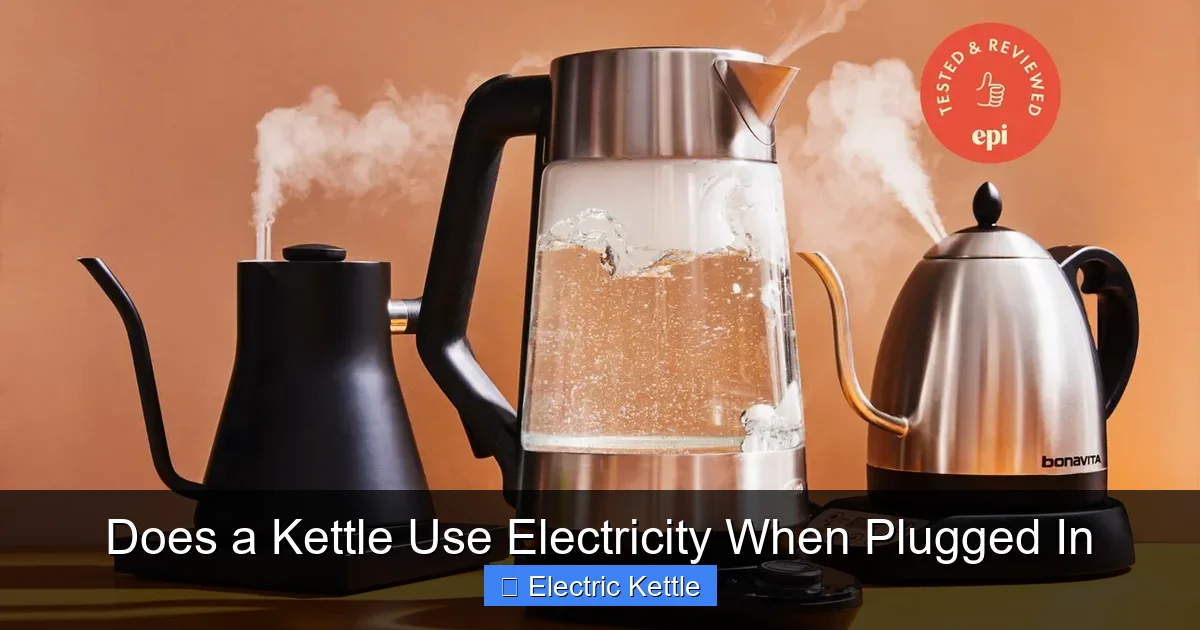
Visual guide about Does a Kettle Use Electricity When Plugged In
Image source: assets.epicurious.com
Before we dive into electricity use, let’s quickly understand how an electric kettle functions. Most people think of a kettle as a simple appliance—plug it in, press a button, and water boils. But there’s a bit more going on under the hood.
An electric kettle contains a heating element, usually located at the base, that heats up when electricity flows through it. When you fill the kettle with water and turn it on, the heating element rapidly increases in temperature, transferring heat to the water. Once the water reaches boiling point (around 100°C or 212°F), a thermostat detects the temperature and automatically shuts off the heating element. This is why your kettle turns off on its own—no need to watch it like a hawk.
But here’s the thing: even after the boiling stops, some kettles continue to use a small amount of power. Why? Because many modern models include additional features that require electricity to operate. For example, a digital display showing the water temperature, a keep-warm function that maintains heat for minutes or hours, or an LED light that indicates the kettle is on—all of these need a trickle of power to function.
So while the main heating element only uses electricity during the boiling phase, the supporting electronics can draw power continuously as long as the kettle is plugged in. This is known as “standby power” or “phantom load,” and it’s more common than you might think.
Types of Electric Kettles and Their Power Needs
Not all electric kettles are created equal. The amount of electricity a kettle uses when plugged in depends largely on its design and features. Let’s look at the most common types:
– **Basic kettles:** These are the simplest models—no digital screens, no timers, just a heating element and an automatic shutoff. When not in use, they use almost no electricity when plugged in. The only draw might come from a tiny LED light, but even that is minimal.
– **Kettles with keep-warm function:** These models can keep water hot for 30 minutes to several hours after boiling. To do this, they use a low-power heating cycle that kicks in periodically. While this is convenient, it means the kettle is using electricity even when you’re not actively boiling water.
– **Smart or programmable kettles:** These high-tech models often include digital displays, temperature control, timers, and even Wi-Fi connectivity. They’re designed for precision and convenience, but they also consume more standby power because their electronics are always “awake” and ready.
– **Kettles with LED indicators or lights:** Even a simple LED that lights up when the kettle is on or plugged in uses a small amount of electricity. While it’s not much—maybe 0.5 to 1 watt—it adds up over time if the kettle is left plugged in 24/7.
So, if you’re concerned about electricity use, the type of kettle you own makes a difference. A basic model will have the lowest standby consumption, while a smart kettle with multiple features will use more.
Standby Power: The Hidden Energy Drain
You might be thinking, “How much electricity can a kettle really use when it’s not doing anything?” It’s a fair question. After all, it’s not running a motor or cooling system like a fridge. But even small amounts of standby power can add up—especially when you consider how many devices in your home are plugged in all the time.
Standby power, also called “vampire power” or “phantom load,” refers to the electricity consumed by appliances when they’re turned off but still plugged in. This happens because many devices have internal circuits that stay active to power displays, clocks, remote controls, or sensors.
For electric kettles, standby power typically ranges from **0.5 to 3 watts**, depending on the model. Let’s put that into perspective:
– A 1-watt device left plugged in for 24 hours uses 24 watt-hours (Wh) of electricity per day.
– Over a month (30 days), that’s 720 Wh, or 0.72 kilowatt-hours (kWh).
– At an average electricity rate of $0.13 per kWh, that’s about **9 cents per month**—or just over $1 per year.
So, while the cost is small, it’s not zero. And if you have multiple appliances doing the same thing—your TV, microwave, phone charger, coffee maker—the cumulative effect can be significant. In fact, studies show that standby power can account for **5–10% of a household’s total electricity use**.
Why Do Kettles Use Standby Power?
So why do kettles use any power at all when they’re not boiling? It usually comes down to one or more of these reasons:
– **LED indicators:** A small light that shows the kettle is plugged in or heating uses a tiny amount of power.
– **Digital displays:** If your kettle shows water temperature or has a timer, it needs power to run the screen.
– **Keep-warm function:** This feature reheats the water periodically to maintain temperature, using low-level electricity.
– **Internal sensors and circuitry:** Even basic kettles have thermostats and safety mechanisms that require a small power supply to stay active.
Some manufacturers design kettles to minimize standby use by using energy-efficient components or allowing users to fully power down the device. But unless the kettle is completely unplugged, there’s usually some level of power draw.
Real-World Example: Measuring Standby Use
Let’s say you have a mid-range electric kettle with a digital temperature display and a keep-warm function. You leave it plugged in all day, every day. Using a plug-in energy monitor (a handy tool you can buy for under $20), you measure its power consumption.
– When boiling: 1500 watts (typical for a standard kettle)
– When idle (plugged in, not boiling): 1.2 watts
– When in keep-warm mode: 50 watts (for short bursts every few minutes)
Over a week, the idle power use adds up to about 2 kWh. That’s not a lot, but it’s the equivalent of running a 100-watt light bulb for 20 hours. Multiply that by all the devices in your home, and you start to see how “small” energy drains can impact your overall usage.
How Much Electricity Does Boiling Water Actually Use?
Now, let’s talk about the main event: boiling water. This is where your kettle uses the most electricity—by far. But even here, the amount depends on several factors, including how much water you’re boiling, the starting temperature, and the efficiency of your kettle.
On average, an electric kettle uses between **1200 and 1500 watts** of power. Most kettles can boil 1 liter (about 4 cups) of water in 3 to 5 minutes. Let’s do the math:
– 1500 watts × 4 minutes = 1500 × (4/60) hours = 100 watt-hours (0.1 kWh)
– At $0.13 per kWh, boiling 1 liter costs about **1.3 cents**
So, each time you boil a full kettle, it costs just over a penny. That’s incredibly efficient compared to using a stovetop kettle or microwave, which often use more energy to achieve the same result.
Factors That Affect Boiling Efficiency
Not all boiling sessions are equal. Here’s what can increase or decrease your kettle’s energy use:
– **Amount of water:** Boiling only the water you need saves energy. Heating 500 ml uses about half the electricity of heating 1 liter.
– **Starting temperature:** Cold tap water takes longer to boil than water that’s already warm (like from a previous boil or hot water tap).
– **Kettle material and design:** Kettles with better insulation or flat heating elements transfer heat more efficiently.
– **Limescale buildup:** Mineral deposits from hard water insulate the heating element, making it work harder and use more electricity.
– **Altitude:** Water boils at lower temperatures at higher altitudes, which can slightly reduce energy use—but also affect brewing times for tea or coffee.
Practical Tips to Reduce Boiling Energy Use
You don’t need to give up your morning tea to save energy. Small changes can make a big difference:
– **Boil only what you need:** If you’re making one cup of tea, don’t fill the kettle to the max. Use the minimum line or measure with a cup.
– **Use cold water:** Contrary to popular belief, starting with cold water is more efficient than using hot tap water, which may have been heated by your water heater.
– **Descale regularly:** Clean your kettle every few months to remove limescale, which reduces efficiency.
– **Avoid reboiling:** If water has already been boiled, it’s usually safe to reheat without boiling again—unless you’re concerned about taste or bacteria.
– **Choose an efficient model:** Look for kettles with rapid-boil technology, insulated walls, or energy-saving modes.
Should You Unplug Your Kettle When Not in Use?
Now that we know kettles use a small amount of electricity when plugged in, the next question is: should you unplug it?
The answer depends on your habits and priorities.
If you use your kettle multiple times a day—say, for tea, coffee, or instant meals—unplugging it each time might be inconvenient. But if you only use it once in the morning or sporadically, unplugging it can save energy and reduce standby waste.
Pros of Unplugging
– **Eliminates standby power use:** No electricity is drawn when the kettle is unplugged.
– **Extends appliance life:** Reduces wear on internal components from constant power exposure.
– **Safer in case of power surges:** Unplugged devices are protected from electrical spikes.
– **Peace of mind:** You know you’re not wasting energy unnecessarily.
Cons of Unplugging
– **Inconvenience:** Having to plug in the kettle every time can be a hassle.
– **Forgetfulness:** You might forget to plug it back in when you need it.
– **Wear on the plug:** Frequent plugging and unplugging can loosen the connection over time.
A Balanced Approach
You don’t have to choose between convenience and efficiency. Here are some smart compromises:
– **Unplug overnight or when away:** If you’re not using the kettle for several hours, unplug it.
– **Use a smart plug:** Plug your kettle into a smart plug that you can control via an app or voice assistant. Set it to turn off automatically during certain hours.
– **Choose a kettle with low standby use:** Some models are designed to use less than 0.5 watts when idle—look for energy-efficient certifications like ENERGY STAR.
Energy-Efficient Kettle Features to Look For
If you’re in the market for a new kettle or want to upgrade your current one, here are some features that can help reduce electricity use—both during boiling and when idle.
Auto Shutoff and Boil-Dry Protection
This is a must-have safety feature that also saves energy. The kettle automatically turns off when water reaches boiling point or if it’s turned on without water. This prevents overheating and reduces unnecessary power use.
Variable Temperature Control
Not all beverages need boiling water. Green tea, for example, brews best at 70–80°C (158–176°F). A kettle with temperature settings lets you heat water to the exact level needed, saving energy and improving taste.
Insulated Walls or Double-Wall Design
Kettles with insulated bodies retain heat longer, so water stays hot without needing to be reheated. This is especially useful if you’re making multiple cups in a short time.
Quick-Boil Technology
Some kettles use high-wattage elements or optimized heating designs to boil water faster. Less time boiling = less energy used.
No Display or Minimal Electronics
If you don’t need a digital screen or timer, choose a basic model. These use the least standby power and are often more durable.
ENERGY STAR Certification
While not all kettles are rated by ENERGY STAR, some models meet strict efficiency guidelines. Look for this label when shopping.
Environmental and Cost Impact
Let’s zoom out and look at the bigger picture. How does your kettle’s electricity use affect your wallet and the planet?
Annual Cost of Standby Use
As we calculated earlier, a kettle using 1 watt of standby power costs about $1.20 per year. That’s not much—but consider this:
– The average U.S. household has **over 40 devices** that use standby power.
– Combined, these can add **$100–$200 per year** to your electricity bill.
– On a global scale, standby power accounts for **1% of worldwide CO₂ emissions**—equivalent to the emissions of millions of cars.
So while your kettle alone isn’t a major contributor, it’s part of a larger pattern of energy waste.
Carbon Footprint of Boiling Water
Every time you boil water, you’re using electricity—and that electricity often comes from fossil fuels. In the U.S., about 60% of electricity is generated from coal, natural gas, and oil. Each kWh of electricity produces about 0.9 pounds of CO₂.
Boiling 1 liter of water uses 0.1 kWh, which equals **0.09 pounds of CO₂**. That might seem small, but if you boil water 3 times a day, that’s over 100 pounds of CO₂ per year—just from your kettle.
By boiling only what you need and using an efficient kettle, you can reduce this impact significantly.
Conclusion: Smart Habits for a Greener Kitchen
So, does a kettle use electricity when plugged in? Yes—but only a small amount, thanks to standby power from internal electronics. The real energy use happens during boiling, and that’s where you have the most control.
The good news? Small changes can lead to meaningful savings—both in energy and cost. Unplugging your kettle when not in use, boiling only the water you need, and choosing an energy-efficient model are simple steps that add up over time.
You don’t have to sacrifice convenience to be eco-friendly. With a little awareness and a few smart habits, you can enjoy your daily cup of tea while minimizing your environmental footprint. After all, sustainability isn’t about perfection—it’s about progress.
So next time you reach for the kettle, ask yourself: Do I need to boil a full pot? Can I unplug it after use? These small choices matter. And who knows? You might just inspire others to do the same.
Frequently Asked Questions
Does an electric kettle use electricity when turned off but still plugged in?
Yes, most electric kettles use a small amount of electricity when plugged in, even when turned off. This is due to standby power consumed by LED lights, digital displays, or internal sensors. The amount is usually less than 3 watts.
How much does it cost to leave a kettle plugged in all the time?
Leaving a kettle plugged in 24/7 typically costs less than $2 per year in electricity, depending on the model and local rates. While the cost is low, it adds to overall household energy waste.
Is it safe to leave an electric kettle plugged in?
Yes, it’s generally safe to leave an electric kettle plugged in, as long as it’s in good condition and has safety features like auto shutoff. However, unplugging it reduces fire risk and eliminates standby power use.
Can unplugging my kettle save money on my electricity bill?
Unplugging your kettle can save a small amount on your bill—typically under $2 per year. While the savings are modest, it contributes to reducing overall household energy waste when combined with other habits.
Do all electric kettles use standby power?
Not all kettles use significant standby power. Basic models with no display or lights use very little. However, kettles with digital screens, timers, or keep-warm functions draw more power when plugged in.
What’s the most energy-efficient way to boil water?
The most efficient way is to use an electric kettle and boil only the water you need. Electric kettles are faster and more efficient than stovetops or microwaves, especially when used correctly.