Yes, an electric kettle boils water faster than most stovetop methods. Thanks to direct heating elements and high wattage, electric kettles heat water more efficiently, saving you time and energy—especially when you’re in a rush for your morning coffee or tea.
Key Takeaways
- Electric kettles boil water faster: Most models can bring a full liter of water to a boil in 3–5 minutes, outperforming stovetop kettles.
- Higher wattage = faster boiling: Electric kettles typically range from 1200W to 3000W, allowing rapid heat transfer directly to the water.
- Energy efficiency matters: Electric kettles use less energy overall because they heat only the water, not the surrounding air or pot.
- Temperature control adds precision: Many modern electric kettles offer variable temperature settings, perfect for different beverages like green tea or French press coffee.
- Stovetop kettles lose heat: Heat escapes around the pot on gas or electric stoves, making them slower and less efficient.
- Convenience and safety features: Auto shut-off, boil-dry protection, and cordless designs make electric kettles safer and easier to use daily.
- Best for small to medium volumes: Electric kettles excel at heating 1–2 liters quickly, ideal for home and office use.
📑 Table of Contents
- Does an Electric Kettle Boil Water Faster? The Short Answer
- How Electric Kettles Work: The Science Behind the Speed
- Comparing Electric Kettles to Stovetop Methods
- Energy Efficiency: Faster Isn’t Just About Time
- Advanced Features That Enhance Speed and Convenience
- Real-World Examples: How Fast Is Fast?
- Tips to Maximize Boiling Speed
- Are There Any Downsides?
- Conclusion: Yes, Electric Kettles Boil Water Faster—and Better
Does an Electric Kettle Boil Water Faster? The Short Answer
If you’ve ever stood over a whistling stovetop kettle, tapping your foot and checking the clock, you’ve probably wondered: *Is there a faster way?* The answer is a resounding yes—especially if you’re using an electric kettle. In most cases, an electric kettle boils water significantly faster than traditional stovetop methods. Whether you’re brewing tea, making instant coffee, or preparing oatmeal, speed matters. And when it comes to boiling water quickly and efficiently, electric kettles are the clear winners.
But why exactly are they faster? It’s not just about convenience—it’s about science. Electric kettles are designed with direct heating elements that transfer energy straight into the water, minimizing heat loss. Unlike stovetop kettles, which rely on indirect heat from a burner, electric models heat water from the bottom up with precision and power. This means less waiting, less wasted energy, and more time enjoying your hot beverage.
How Electric Kettles Work: The Science Behind the Speed
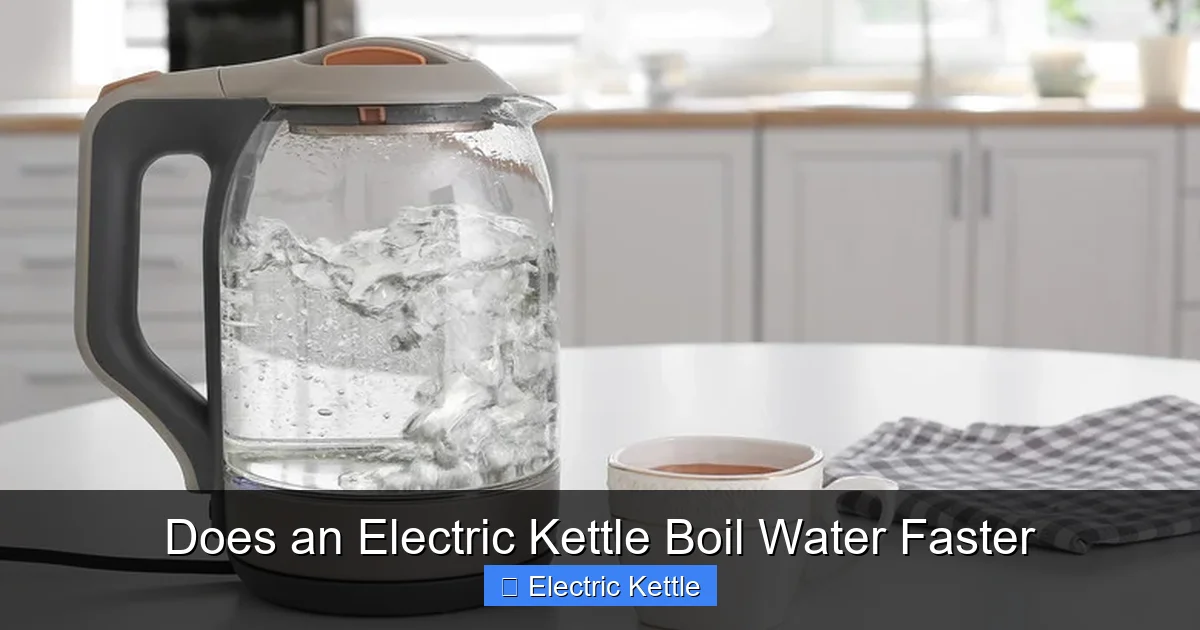
Visual guide about Does an Electric Kettle Boil Water Faster
Image source: tastingtable.com
To understand why electric kettles boil water faster, it helps to know how they work. At the heart of every electric kettle is a heating element—usually a coiled metal component located at the base of the unit. When you plug in the kettle and turn it on, electricity flows through this element, causing it to heat up rapidly. This heat is then transferred directly to the water inside the kettle.
Direct vs. Indirect Heating
One of the biggest advantages electric kettles have over stovetop models is direct heating. In a stovetop kettle, heat must travel from the burner (gas flame or electric coil) through the metal of the pot and into the water. This process is inefficient because heat is lost to the surrounding air and the pot itself. In contrast, electric kettles heat the water directly through the immersed or base-mounted heating element. There’s minimal energy loss, which translates to faster boiling times.
For example, a typical stovetop kettle might take 6–8 minutes to boil a liter of water on a gas stove. Meanwhile, a 1500-watt electric kettle can do the same job in just 3–4 minutes. That’s a time savings of up to 50%—something you’ll notice every morning when you’re rushing out the door.
Wattage and Boiling Speed
Wattage plays a huge role in how fast an electric kettle can boil water. Most household electric kettles range from 1200 watts to 3000 watts. The higher the wattage, the more power the kettle has to generate heat, and the faster the water will boil.
Let’s break it down with a practical example:
– A 1200W kettle might take about 5 minutes to boil 1 liter of water.
– A 1800W kettle can do it in roughly 3.5 minutes.
– A high-performance 3000W model (common in commercial or premium home kettles) can boil the same amount in under 3 minutes.
This difference becomes even more noticeable when you’re heating smaller amounts. Many electric kettles are optimized for efficiency with lower volumes, so boiling just enough water for one cup can take less than 2 minutes. That’s a game-changer for solo coffee drinkers or tea lovers who don’t want to wait.
Comparing Electric Kettles to Stovetop Methods
To truly appreciate how much faster electric kettles are, let’s compare them side by side with common stovetop options: gas stoves, electric coil stoves, and induction cooktops.
Gas Stovetop Kettles
Gas stoves are popular for their instant heat and control, but they’re not the most efficient for boiling water. Heat from the flame spreads outward and escapes around the sides of the kettle, wasting energy. Studies show that gas stoves transfer only about 40–55% of their heat energy to the pot. The rest is lost to the air.
In real-world testing, a standard gas stovetop kettle takes about 6–8 minutes to boil a full liter of water, depending on flame intensity and kettle material. Even with a well-fitting lid and a heavy-bottomed pot, you’re still losing time and energy.
Electric Coil Stovetops
Electric coil stoves are slightly more efficient than gas, but they still suffer from indirect heating. The coil must heat up first, then transfer that heat to the kettle. This process takes time, and like gas stoves, a significant amount of heat is lost to the surrounding area.
Boiling a liter of water on an electric coil stove typically takes 7–9 minutes. That’s slower than both gas and electric kettles, making it the least efficient option for quick boiling.
Induction Cooktops
Induction stovetops are the fastest stovetop option because they use magnetic fields to heat the pot directly—no flames or glowing coils. They’re highly efficient, transferring up to 85% of their energy to the cookware. However, they require compatible cookware (magnetic materials like cast iron or certain stainless steels), and even then, they’re not as fast as a high-wattage electric kettle.
An induction-compatible kettle might boil water in 4–5 minutes—faster than gas or coil stoves, but still slower than most electric kettles. Plus, you need to own an induction cooktop, which isn’t common in all households.
The Verdict: Electric Kettles Win on Speed
When you add it all up, electric kettles consistently outperform stovetop methods in boiling speed. They’re designed specifically for one task—boiling water—and they do it better than multipurpose stovetops. Whether you’re using gas, electric, or induction, an electric kettle will almost always boil water faster.
Energy Efficiency: Faster Isn’t Just About Time
Speed isn’t the only benefit. Electric kettles are also more energy-efficient, which means they use less electricity to achieve the same result. This is important not just for your utility bill, but for the environment.
How Much Energy Do Electric Kettles Use?
The average electric kettle uses between 1200W and 1800W of power. To boil 1 liter of water, it typically consumes about 0.1 to 0.15 kWh of electricity. At the U.S. average electricity rate of $0.15 per kWh, that’s just 1.5 to 2.25 cents per boil.
Compare that to a gas stove, which might use 0.05 therms of natural gas per boil. At $1.20 per therm, that’s about 6 cents—nearly three times more expensive. And that’s before accounting for the longer boiling time and greater heat loss.
Why Electric Kettles Are More Efficient
Electric kettles are efficient for several reasons:
– **Targeted heating:** The heating element is in direct contact with the water, so almost all the energy goes into heating the liquid.
– **Insulated design:** Many modern kettles have double-walled or insulated bodies that retain heat and reduce energy loss.
– **Automatic shut-off:** Once the water reaches boiling point, the kettle turns off automatically, preventing unnecessary energy use.
– **Precise volume control:** You can boil only the amount of water you need, avoiding waste.
For example, if you only need one cup of water for tea, an electric kettle can heat just that amount in under 2 minutes. On a stovetop, you’d likely use a full kettle or pot, heating more water than necessary and wasting energy.
Environmental Impact
Using less energy means a smaller carbon footprint. Even if your electricity comes from fossil fuels, the efficiency of electric kettles reduces overall emissions compared to gas stoves. And if you’re on a renewable energy plan (solar, wind, hydro), the environmental benefit is even greater.
Advanced Features That Enhance Speed and Convenience
Modern electric kettles aren’t just faster—they’re smarter. Many come with features that improve performance, safety, and user experience.
Variable Temperature Control
Not all beverages require boiling water. Green tea, for instance, brews best at 160–185°F (70–85°C), while French press coffee needs water just off the boil (195–205°F or 90–96°C). High-end electric kettles offer variable temperature settings, allowing you to select the perfect heat level for your drink.
This precision not only improves flavor but also saves time. Instead of boiling water and waiting for it to cool, you can heat it to the ideal temperature in one step. Some models even have preset buttons for tea, coffee, and baby formula.
Rapid Boil Technology
Many electric kettles advertise “rapid boil” or “fast boil” modes. These use higher wattage or optimized heating elements to reduce boiling time even further. For example, the Breville BKE820XL Smart Kettle can boil 1 liter in under 3 minutes thanks to its 1500W element and smart heating algorithm.
Keep-Warm Function
Some kettles include a keep-warm feature that maintains the water at a set temperature for up to 60 minutes. This is great if you’re making multiple cups or preparing a meal that requires hot water at different stages. You save time by not having to reboil, and you avoid overheating the water.
Safety and Design Features
Safety is a major advantage of electric kettles. Most models include:
– **Auto shut-off:** Turns off when water reaches boiling point.
– **Boil-dry protection:** Shuts off if there’s no water inside.
– **Cool-touch exterior:** Prevents burns, even when the water is boiling.
– **Cordless design:** Makes pouring easier and reduces clutter.
These features not only protect you but also extend the life of the kettle by preventing damage from overheating or dry running.
Real-World Examples: How Fast Is Fast?
Let’s look at some real-world scenarios to see how electric kettles perform in everyday use.
Morning Coffee Routine
Imagine you’re making French press coffee. You need 32 ounces (about 1 liter) of water just off the boil.
– **Stovetop kettle (gas):** 7 minutes to boil, plus 2 minutes to cool slightly = 9 minutes total.
– **Electric kettle (1800W):** 3.5 minutes to reach 200°F, ready to pour = 3.5 minutes total.
That’s a time savings of over 5 minutes—more than half the wait time.
Tea Time for One
You want a single cup of green tea.
– **Stovetop:** You fill a small pot, wait 4–5 minutes for it to boil, then let it cool for 2–3 minutes. Total: 7–8 minutes.
– **Electric kettle:** Boil 1 cup (8 oz) in 1.5 minutes at 175°F. Total: 1.5 minutes.
The electric kettle is nearly 5 times faster.
Office or Dorm Use
In shared spaces, speed and quiet operation matter. Electric kettles are compact, plug into any outlet, and often operate more quietly than gas stoves. They’re ideal for quick breaks without disturbing others.
Tips to Maximize Boiling Speed
Even with a fast electric kettle, a few simple tips can help you boil water even quicker:
– **Use cold tap water:** Contrary to popular belief, cold water boils faster than hot. Hot water from the tap may contain more dissolved minerals and can take longer to reach boiling point.
– **Cover the kettle:** Always use the lid. It traps heat and reduces boiling time by up to 30%.
– **Don’t overfill:** Only boil the amount of water you need. Smaller volumes heat faster.
– **Descale regularly:** Mineral buildup (especially in hard water areas) insulates the heating element, slowing performance. Clean your kettle every few months with vinegar or a descaling solution.
– **Use a high-wattage model:** If speed is your priority, choose a kettle with at least 1500W—preferably 1800W or higher.
Are There Any Downsides?
While electric kettles are fast and efficient, they’re not perfect for every situation.
Power Dependency
Electric kettles require an electrical outlet. If you’re camping, traveling, or experiencing a power outage, you’ll need a backup method like a camp stove or portable gas burner.
Initial Cost
High-quality electric kettles with advanced features can cost $50–$150, which is more than a basic stovetop kettle. However, the long-term savings in time, energy, and convenience often justify the investment.
Capacity Limits
Most electric kettles hold 1–1.7 liters. If you need to boil large volumes (like for pasta or soup), a stovetop pot may be more practical.
Noise Level
Some electric kettles make a noticeable humming or clicking sound when heating. While not loud, it might be distracting in quiet environments.
Conclusion: Yes, Electric Kettles Boil Water Faster—and Better
So, does an electric kettle boil water faster? Absolutely. Thanks to direct heating, high wattage, and smart design, electric kettles consistently outperform stovetop methods in both speed and efficiency. Whether you’re brewing tea, making coffee, or preparing a quick meal, an electric kettle can save you valuable time and energy.
Beyond speed, modern electric kettles offer precision temperature control, safety features, and energy savings that make them a worthwhile addition to any kitchen. While they may not replace stovetop cooking entirely, they’re the best tool for one of the most common kitchen tasks: boiling water.
If you’re still using a stovetop kettle and find yourself waiting impatiently for the whistle, it might be time for an upgrade. An electric kettle isn’t just faster—it’s smarter, safer, and more convenient. And in today’s fast-paced world, those advantages add up quickly.
Frequently Asked Questions
How much faster is an electric kettle than a stovetop kettle?
An electric kettle typically boils water 30–50% faster than a stovetop kettle. For example, a 1-liter boil might take 3–4 minutes in an electric kettle versus 6–8 minutes on a gas stove.
Does wattage affect how fast an electric kettle boils water?
Yes, higher wattage means faster boiling. A 1200W kettle will take longer than an 1800W or 3000W model. Choose a higher-wattage kettle if speed is a priority.
Can I boil water faster by using hot tap water in an electric kettle?
No, it’s better to use cold water. Hot tap water may contain more dissolved minerals and can actually take longer to boil. Cold water heats more efficiently and safely.
Are electric kettles energy-efficient?
Yes, electric kettles are highly energy-efficient because they heat water directly with minimal heat loss. They use less energy than stovetop methods for the same task.
Do electric kettles work during a power outage?
No, electric kettles require electricity to function. If the power is out, you’ll need a gas stove, camp stove, or other non-electric heating method.
How often should I clean my electric kettle?
Clean your electric kettle every 1–3 months, especially if you live in an area with hard water. Mineral buildup can slow heating and affect taste. Use vinegar or a descaling solution.