Electric kettles are among the most energy-efficient appliances for boiling water, using far less electricity than stovetops or microwaves. While they do consume a noticeable amount of power per use, their speed and efficiency make them cost-effective and eco-friendly in the long run.
Key Takeaways
- Electric kettles are highly efficient: They convert over 80% of energy into heat, minimizing waste compared to other methods.
- Power usage depends on wattage: Most kettles range from 1200W to 3000W, with higher wattage boiling water faster but using more electricity per minute.
- Boiling only what you need saves energy: Overfilling leads to wasted electricity—fill only to the level required.
- They’re cheaper than stovetops or microwaves: Studies show electric kettles use up to 50% less energy than gas stoves for the same task.
- Modern kettles have energy-saving features: Auto shut-off, temperature control, and insulated designs reduce unnecessary power use.
- Daily usage adds up, but costs remain low: Even with frequent use, an electric kettle typically costs just a few cents per day to operate.
- Maintenance improves efficiency: Descaling regularly prevents limescale buildup, which can increase energy consumption over time.
📑 Table of Contents
- Does Electric Kettle Consume a Lot of Electricity?
- How Much Electricity Does an Electric Kettle Use?
- Are Electric Kettles Energy Efficient?
- Cost of Running an Electric Kettle
- Environmental Impact of Electric Kettles
- Common Myths About Electric Kettle Electricity Use
- Tips to Maximize Efficiency and Minimize Waste
- Conclusion
Does Electric Kettle Consume a Lot of Electricity?
If you’ve ever stood in your kitchen watching your electric kettle heat up, you might have wondered: “Is this thing eating up my electricity bill?” It’s a fair question. After all, electric kettles are powerful devices—some can boil a full liter of water in under three minutes. That kind of speed makes you think twice about energy use.
But here’s the good news: despite their high wattage, electric kettles are actually some of the most energy-efficient appliances in your kitchen. They’re designed to heat water quickly and directly, with minimal heat loss. Unlike stovetops, which lose heat to the surrounding air, or microwaves, which heat water unevenly and slowly, electric kettles focus their energy right where it’s needed—inside the water.
So, do electric kettles consume a lot of electricity? The short answer is: not really. While they do use a significant amount of power during operation, they do so for such a short time that the total energy consumed per use is quite low. In fact, boiling a full kettle once a day costs just a few cents on your monthly bill. When used wisely, an electric kettle can actually help you save energy and money compared to other methods.
How Much Electricity Does an Electric Kettle Use?
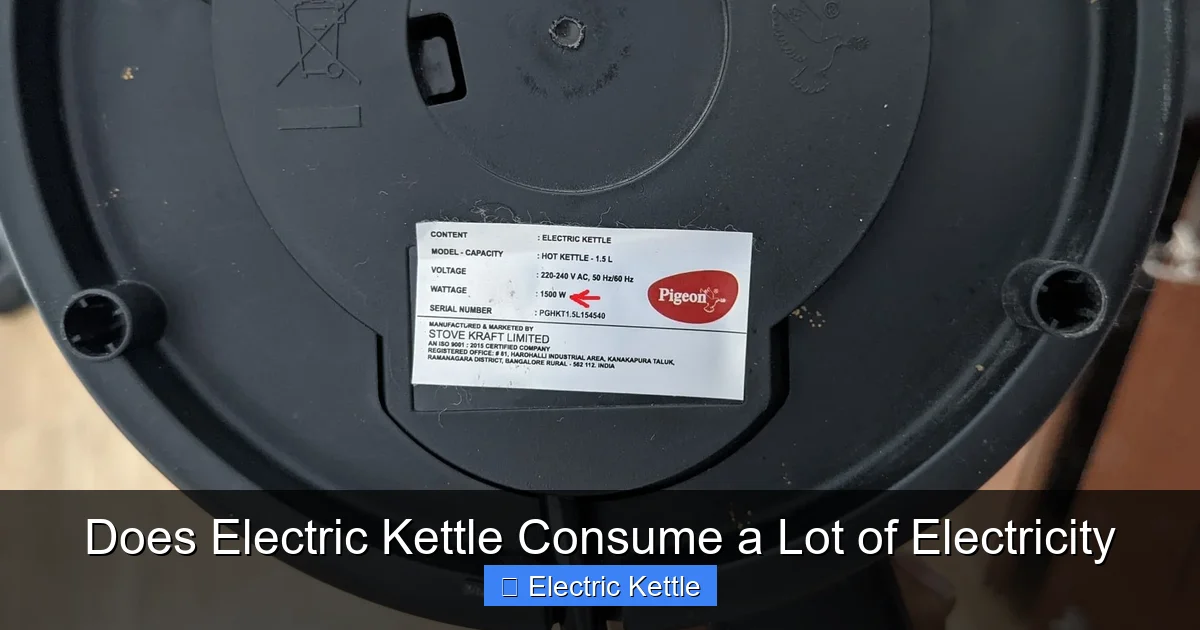
Visual guide about Does Electric Kettle Consume a Lot of Electricity
Image source: letsavelectricity.com
To understand whether your electric kettle is a power hog, let’s break down the numbers. Most household electric kettles operate between 1200 watts (W) and 3000W. The higher the wattage, the faster the kettle boils water. For example, a 1500W kettle might take about 4 minutes to boil 1 liter of water, while a 3000W model could do it in under 2 minutes.
But how much electricity does that actually translate to? Electricity usage is measured in kilowatt-hours (kWh), which is the amount of energy used by a 1,000-watt device running for one hour. So, if you run a 1500W kettle for 4 minutes (which is 4/60 = 0.067 hours), the calculation looks like this:
1.5 kW × 0.067 hours = 0.1005 kWh
That means boiling one liter of water uses about 0.1 kWh of electricity. Now, let’s put that into real-world cost. The average electricity rate in the U.S. is around $0.15 per kWh. So, each time you boil a full kettle, it costs roughly:
0.1 kWh × $0.15 = $0.015
That’s just 1.5 cents per boil. Even if you boil water five times a day, that’s only 7.5 cents daily—or about $2.25 per month. Compared to other kitchen appliances, that’s incredibly efficient.
Factors That Affect Electricity Consumption
Not all electric kettles use the same amount of electricity. Several factors influence how much power your kettle consumes:
- Kettle wattage: Higher wattage means faster boiling, but also higher power draw. A 3000W kettle uses more electricity per minute than a 1200W model, but it finishes the job quicker.
- Amount of water: Boiling a full kettle uses more energy than boiling half a liter. Always fill only what you need.
- Starting water temperature: Cold tap water takes longer to heat than water that’s already warm. In winter, your kettle may work harder.
- Kettle efficiency: Older or poorly designed kettles may lose heat through the body or base, reducing efficiency.
- Frequency of use: The more you use your kettle, the more electricity it consumes overall—though each individual use remains low.
Comparing Electric Kettles to Other Appliances
To truly understand whether electric kettles consume a lot of electricity, it helps to compare them to other common methods of heating water.
Let’s look at a gas stovetop. A typical gas burner uses about 10,000 BTUs (British Thermal Units) per hour. To boil 1 liter of water, it might take 8–10 minutes. Converting BTUs to kWh (1 kWh ≈ 3,412 BTUs), that’s roughly 0.23 to 0.29 kWh per boil—more than double the energy used by an electric kettle.
Microwaves are another option, but they’re even less efficient. A 1000W microwave might take 3–4 minutes to heat a cup of water, but because microwaves heat unevenly and waste energy, the actual efficiency is lower. Studies show microwaves can use up to 50% more energy than electric kettles for the same task.
Even electric stovetops aren’t as efficient. They lose heat to the air and take longer to transfer energy to the pot. An electric coil stove might use 1.5–2 kWh to boil the same amount of water an electric kettle does in under 0.1 kWh.
So, while electric kettles do use a burst of high power, their speed and direct heating make them the most energy-efficient choice for boiling water.
Are Electric Kettles Energy Efficient?
Yes—electric kettles are among the most energy-efficient appliances for heating water. Their efficiency comes from several design features:
- Direct heating: The heating element is submerged in water, so nearly all the energy goes into heating the water, not the air or the kettle body.
- Fast boiling: Because they heat water quickly, they minimize standby losses and reduce total energy use.
- Automatic shut-off: Most modern kettles turn off as soon as the water reaches boiling point, preventing unnecessary energy waste.
- Insulated models: Some high-end kettles have double walls or vacuum insulation to keep water hot longer, reducing the need to reboil.
In fact, studies by energy agencies and consumer groups consistently rank electric kettles as the most efficient way to boil water. The U.S. Department of Energy notes that electric kettles can be up to 80% more efficient than stovetops, especially gas ones.
Energy Efficiency Ratings and Labels
In many countries, appliances come with energy efficiency labels that help consumers compare models. In the European Union, for example, kettles may carry an EU Energy Label rating from A (most efficient) to G (least efficient). Look for kettles with higher ratings to ensure you’re getting a model that uses electricity wisely.
Even without formal labels, you can assess efficiency by checking:
– Wattage (lower is better if speed isn’t a priority)
– Boil time (faster is usually more efficient)
– Insulation features
– Auto shut-off and temperature control
Real-World Efficiency Tips
To get the most out of your electric kettle’s efficiency:
- Boil only what you need: Filling the kettle to the brim when you only need one cup wastes energy. Most kettles have minimum and maximum markings—use them.
- Descale regularly: Limescale buildup insulates the heating element, making it work harder. Clean your kettle every few months with vinegar or a descaling solution.
- Use cold water: Starting with cold water ensures consistent heating. Pre-warmed water from the tap can vary in temperature and affect efficiency.
- Unplug when not in use: While modern kettles use very little standby power, unplugging eliminates any vampire drain.
Cost of Running an Electric Kettle
Now that we know how much electricity an electric kettle uses, let’s talk money. How much does it actually cost to run one?
As we calculated earlier, boiling a full 1.5-liter kettle once uses about 0.15 kWh. At $0.15 per kWh, that’s 2.25 cents per boil. If you boil water twice a day, that’s 4.5 cents daily, or about $1.35 per month. Over a year, that’s just $16.20.
Compare that to other appliances:
– A 100-watt light bulb running 5 hours a day costs about $2.70 per month.
– A refrigerator uses around 50–100 kWh per month, costing $7.50 to $15.
– An electric oven can use 2–5 kWh per hour, costing $0.30 to $0.75 per use.
So, even with daily use, an electric kettle is one of the cheapest appliances to operate.
Cost Comparison: Electric Kettle vs. Alternatives
Let’s say you boil 1 liter of water once a day for a month (30 days). Here’s how the costs stack up:
- Electric kettle (1500W): 0.1 kWh × 30 = 3 kWh → $0.45
- Gas stovetop: 0.25 kWh equivalent × 30 = 7.5 kWh → $1.13
- Microwave (1000W, 4 minutes): 0.067 kWh × 30 = 2 kWh → $0.30 (but less efficient, so actual cost may be higher)
- Electric stovetop: 0.3 kWh × 30 = 9 kWh → $1.35
Even though the microwave appears cheaper, it’s less efficient and heats water unevenly, often requiring longer heating times. The electric kettle remains the most reliable and cost-effective option.
Tips to Reduce Running Costs
Want to save even more? Try these simple tips:
- Use a kettle with temperature control: If you’re making green tea, you don’t need boiling water. Heating to 80°C uses less energy than boiling to 100°C.
- Choose a lower-wattage model: If speed isn’t critical, a 1200W kettle uses less power per minute than a 3000W one.
- Boil in batches: If you need hot water for multiple drinks, boil once and pour as needed.
- Keep it clean: A descaled kettle heats faster and uses less energy.
Environmental Impact of Electric Kettles
Beyond cost, many people care about the environmental impact of their appliances. Does using an electric kettle contribute significantly to your carbon footprint?
The answer depends on your energy source. If your electricity comes from renewable sources like wind or solar, your kettle’s environmental impact is minimal. But if your grid relies heavily on coal or natural gas, every kWh contributes to CO₂ emissions.
On average, burning fossil fuels to generate 1 kWh of electricity produces about 0.9 pounds (0.4 kg) of CO₂. So, boiling your kettle once a day (0.1 kWh) adds about 0.09 pounds of CO₂ daily—or 32.85 pounds per year.
That might sound like a lot, but compare it to driving a car: the average car emits about 1 pound of CO₂ per mile. So, your daily kettle use is equivalent to driving less than 0.1 miles.
Still, small changes add up. Using your kettle efficiently—boiling only what you need, descaling regularly, and choosing energy-efficient models—helps reduce your overall impact.
Are Electric Kettles Eco-Friendly?
Electric kettles are generally eco-friendly for several reasons:
- High efficiency: Less energy waste means lower emissions.
- Long lifespan: A quality kettle can last 5–10 years with proper care.
- Recyclable materials: Many kettles are made from stainless steel and plastic, which can be recycled.
- Reduced need for disposable cups: Using a kettle encourages home brewing, cutting down on single-use coffee cups.
To maximize eco-friendliness, choose a durable, repairable model and avoid replacing it unnecessarily.
Common Myths About Electric Kettle Electricity Use
There are several myths floating around about electric kettles and electricity consumption. Let’s clear them up.
Myth 1: “Electric kettles use more electricity than ovens or fridges.”
False. While kettles have high wattage, they run for only a few minutes. Ovens and fridges run for hours or continuously, using far more total energy. A single oven use can consume 2–5 kWh—equivalent to boiling your kettle 20–50 times.
Myth 2: “Boiling a full kettle is always more efficient than boiling half.”
Not necessarily. While there’s some fixed energy cost (like heating the kettle body), boiling more water does use more electricity. If you only need one cup, boiling a full kettle wastes energy. Efficiency comes from matching the amount boiled to your actual need.
Myth 3: “All electric kettles use the same amount of electricity.”
No. Wattage, design, age, and maintenance all affect consumption. A well-maintained 1200W kettle can be more efficient than a dirty 3000W model.
Myth 4: “You should never reboil water—it uses extra electricity.”
Reboiling water does use a small amount of extra energy, but it’s negligible. The real concern is taste—reboiled water can taste flat due to reduced oxygen. But in terms of electricity, the cost is minimal.
Tips to Maximize Efficiency and Minimize Waste
Getting the most out of your electric kettle isn’t just about saving money—it’s about using energy wisely. Here are some practical tips:
- Fill to the right level: Use the minimum marking for small amounts, and don’t overfill.
- Descale every 1–3 months: Use white vinegar or a commercial descaler to remove limescale.
- Choose the right temperature: Use variable-temperature kettles for different beverages.
- Unplug when not in use: Prevents phantom load, though the savings are small.
- Use a kettle with a lid lock: Prevents heat loss during boiling.
- Keep the base clean: Dust and debris can interfere with the connection and reduce efficiency.
Conclusion
So, does electric kettle consume a lot of electricity? The answer is a clear no—when used properly, electric kettles are among the most energy-efficient ways to boil water. They use a burst of high power for a short time, resulting in low total energy consumption and minimal cost.
Compared to stovetops, microwaves, and even electric stoves, kettles win in speed, efficiency, and cost-effectiveness. With smart habits—like boiling only what you need, descaling regularly, and choosing energy-efficient models—you can enjoy hot water anytime without worrying about your electricity bill or environmental impact.
In a world where energy efficiency matters more than ever, the humble electric kettle proves that sometimes, the simplest tools are the smartest. So go ahead—boil that water. Your wallet and the planet will thank you.
Frequently Asked Questions
How much electricity does an electric kettle use per boil?
An average 1500W electric kettle uses about 0.1 kWh to boil 1 liter of water. This costs roughly 1.5 cents per use, depending on your electricity rate.
Is it cheaper to boil water in an electric kettle or on a gas stove?
Yes, electric kettles are generally cheaper and more efficient than gas stoves. They use up to 50% less energy to boil the same amount of water.
Does boiling a full kettle use more electricity than boiling half?
Yes, boiling more water requires more energy. Always fill your kettle only to the level you need to avoid wasting electricity.
Can I reduce my electric kettle’s energy use?
Absolutely. Boil only what you need, descale regularly, use temperature control, and choose an energy-efficient model to minimize consumption.
Are electric kettles bad for the environment?
Not really. Their high efficiency means lower energy use and fewer emissions. Impact depends on your electricity source, but overall, they’re eco-friendly.
Should I unplug my electric kettle when not in use?
While modern kettles use very little standby power, unplugging eliminates any vampire drain and is a good habit for energy conservation.