Electric kettles are actually among the most energy-efficient appliances for boiling water, despite their high wattage. They heat water faster and waste less energy compared to stovetops or microwaves, making them a smart choice for daily use.
Key Takeaways
- Electric kettles use high wattage but operate quickly: While they draw more power (1500–3000W), they boil water in 2–4 minutes, reducing overall energy use.
- They are more efficient than stovetops and microwaves: Electric kettles transfer up to 80% of energy directly to water, compared to 30–50% for gas stoves.
- Overfilling increases electricity consumption: Heating more water than needed wastes energy—only boil what you need.
- Modern kettles have energy-saving features: Auto shut-off, temperature control, and保温 (keep-warm) functions help reduce unnecessary usage.
- Regular maintenance improves efficiency: Descaling prevents mineral buildup that insulates heating elements and slows heating.
- Usage frequency impacts total cost: Frequent users benefit most from efficiency, but occasional users should still avoid over-boiling.
- Environmental impact is lower than alternatives: Faster heating and less wasted heat make electric kettles greener than most kitchen heating methods.
📑 Table of Contents
- Introduction: The Truth About Electric Kettle Energy Use
- How Electric Kettles Work and Why They’re Efficient
- How Much Electricity Does an Electric Kettle Actually Use?
- Electric Kettle vs. Other Water Heating Methods
- Tips to Reduce Electric Kettle Energy Consumption
- Environmental Impact: Are Electric Kettles Eco-Friendly?
- Conclusion: Smart Use Makes All the Difference
Introduction: The Truth About Electric Kettle Energy Use
You’ve probably stood in your kitchen, kettle in hand, wondering: “Does this thing really use that much electricity?” It’s a fair question. After all, electric kettles often have power ratings between 1500 and 3000 watts—higher than many other kitchen appliances. That number alone can make you pause before hitting the boil button. But here’s the surprising truth: **electric kettles are actually some of the most energy-efficient ways to heat water**, despite their high wattage.
Think of it like a sports car. A sports car might have a powerful engine, but if it gets you from point A to point B in half the time, it uses less fuel overall. The same logic applies to electric kettles. They draw a lot of power, but they do the job fast—boiling a liter of water in just a few minutes. Compare that to a gas stove, which can take 8–12 minutes to do the same, and you start to see why efficiency isn’t just about wattage. It’s about how effectively that energy is used.
In this article, we’ll dive deep into how electric kettles work, how much electricity they really consume, and whether they’re worth the energy cost. We’ll compare them to other common methods like stovetops and microwaves, break down real-world usage scenarios, and share practical tips to help you save energy without sacrificing convenience. Whether you’re a tea lover, a coffee enthusiast, or just someone trying to lower their electricity bill, this guide will give you the facts you need.
How Electric Kettles Work and Why They’re Efficient
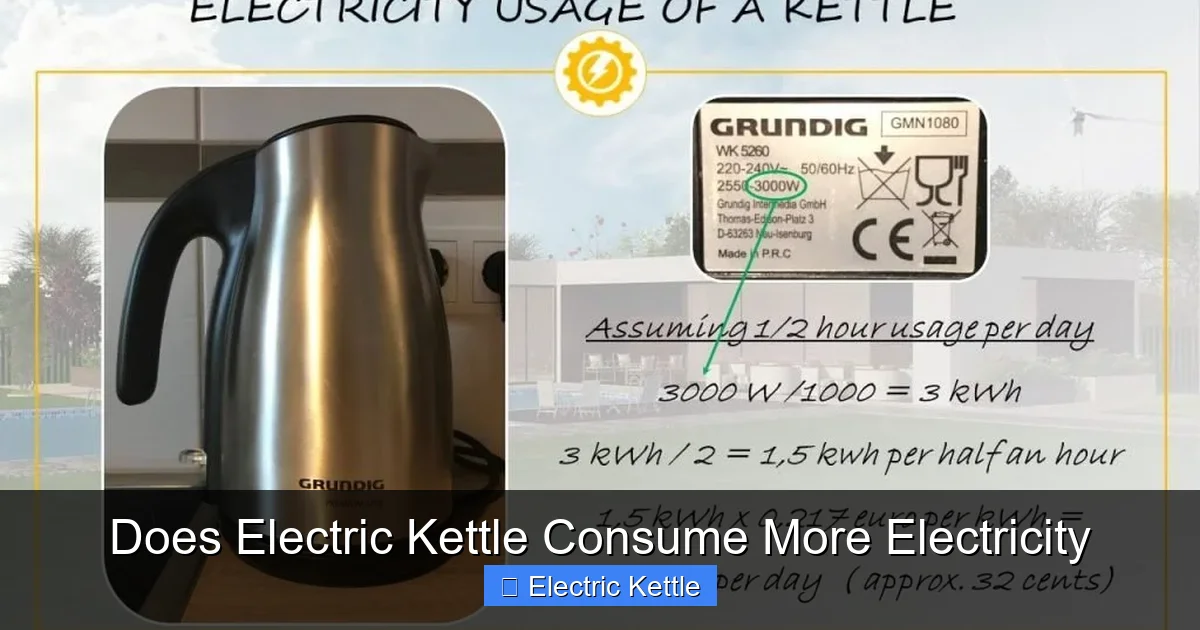
Visual guide about Does Electric Kettle Consume More Electricity
Image source: effiworkx.com
To understand whether electric kettles consume more electricity, it helps to know how they work. At the heart of every electric kettle is a heating element—usually a coiled metal wire or a flat disc—located at the base of the unit. When you plug in the kettle and press the switch, electricity flows through this element, turning electrical energy into heat. That heat is transferred directly to the water inside the kettle, raising its temperature until it reaches boiling point.
One of the key reasons electric kettles are so efficient is their **direct energy transfer**. Unlike gas stoves, where heat must travel from the flame to the pot and then to the water (with lots of heat lost to the air), electric kettles heat the water almost instantly and with minimal waste. Most modern kettles are designed with insulated walls and sealed lids, which help retain heat and reduce energy loss.
Power vs. Efficiency: Understanding the Difference
It’s easy to confuse high wattage with high energy consumption, but they’re not the same thing. Wattage measures how much power an appliance uses at any given moment. A 3000W kettle uses more power than a 1500W one, but if it boils water twice as fast, it might actually use less total energy.
Let’s look at an example. Suppose you need to boil 1 liter of water:
– A 3000W kettle might take 3 minutes.
– A 1500W kettle might take 6 minutes.
Even though the 3000W kettle uses twice the power, it runs for half the time. The total energy used (measured in watt-hours) could be roughly the same—or even less—for the faster kettle. This is why **speed matters more than wattage** when it comes to efficiency.
Energy Transfer Efficiency Compared to Other Appliances
Studies have shown that electric kettles transfer about 70–80% of their energy directly into the water. That’s impressive when you compare it to other common methods:
– **Gas stoves**: Only 30–50% efficient. Much of the heat escapes around the pot.
– **Microwaves**: Around 50–60% efficient, but they heat unevenly and often require longer times for large volumes.
– **Electric stovetops**: Slightly better than gas, at 60–70%, but still slower than kettles.
So even though an electric kettle might seem like a power-hungry device, it’s actually one of the most efficient tools in your kitchen for boiling water.
How Much Electricity Does an Electric Kettle Actually Use?
Now let’s get into the numbers. How much electricity does an electric kettle consume in real life? The answer depends on several factors: the kettle’s wattage, how much water you’re boiling, how often you use it, and how efficiently you use it.
Calculating Energy Consumption: A Practical Example
Let’s say you have a 2000W electric kettle and you boil 1 liter of water every morning for your coffee. On average, it takes about 3.5 minutes (or 0.058 hours) to bring that water to a boil.
To calculate energy use:
Energy (kWh) = Power (kW) × Time (hours)
= 2 kW × 0.058 hours
= 0.116 kWh per use
Now, if you do this once a day for 30 days:
0.116 kWh × 30 = 3.48 kWh per month
At an average electricity rate of $0.15 per kWh, that’s about **$0.52 per month**—less than the cost of a single coffee. Even if you boil water twice a day, you’re still only spending around $1.04 per month.
Comparing Daily Usage Scenarios
Let’s look at a few common scenarios to see how usage affects consumption:
– **Light user (once a day, 1 liter)**: ~3.5 kWh/month → ~$0.53
– **Moderate user (twice a day, 1.5 liters total)**: ~7 kWh/month → ~$1.05
– **Heavy user (5 times a day, 2.5 liters total)**: ~17.5 kWh/month → ~$2.63
Even for heavy users, the cost remains low. For comparison, leaving a 60W light bulb on for 8 hours a day uses about 14.4 kWh/month—more than a light kettle user.
Factors That Influence Energy Use
Not all kettle uses are equal. Here are some factors that can increase or decrease electricity consumption:
– **Amount of water**: Boiling 2 liters uses roughly twice the energy of 1 liter.
– **Starting water temperature**: Cold tap water takes longer to heat than room-temperature water.
– **Altitude**: Water boils at lower temperatures at higher altitudes, which can slightly reduce heating time.
– **Kettle age and condition**: Older kettles with limescale buildup heat less efficiently.
– **Frequency of use**: Frequent boiling without cooling between uses can reduce efficiency slightly.
The biggest factor? **Overfilling**. Many people fill the kettle to the max even when they only need one cup. This wastes energy and increases your bill over time.
Electric Kettle vs. Other Water Heating Methods
So, how does an electric kettle stack up against other ways of heating water? Let’s compare it to the most common alternatives: gas stoves, electric stovetops, and microwaves.
Electric Kettle vs. Gas Stove
Gas stoves are popular, but they’re not the most efficient. When you boil water on a gas burner, a lot of heat escapes into the air instead of going into the pot. Studies show that only about 30–50% of the energy from the flame actually heats the water.
Let’s say it takes 10 minutes to boil 1 liter of water on a gas stove. A typical gas burner uses about 10,000 BTUs per hour. Converting that to electricity equivalents, that’s roughly 2.93 kWh of energy input to produce about 1.5 kWh of useful heat—meaning over half the energy is wasted.
In contrast, the same 1 liter boiled in a 2000W electric kettle in 3.5 minutes uses only 0.116 kWh of electricity. Even accounting for power plant inefficiencies (since most electricity comes from fossil fuels), the electric kettle still comes out ahead in terms of **end-use efficiency**.
Electric Kettle vs. Electric Stovetop
Electric coil or glass-top stoves are more efficient than gas, but still slower than kettles. They typically take 6–8 minutes to boil a liter of water and have an efficiency of around 60–70%.
Using the same calculation:
– 1500W stovetop × 0.125 hours (7.5 minutes) = 0.1875 kWh
– That’s about 60% more energy than the electric kettle (0.116 kWh)
So even though both use electricity, the kettle is significantly more efficient because it heats water faster and with less waste.
Electric Kettle vs. Microwave
Microwaves are great for reheating food, but they’re not ideal for boiling water. They heat water unevenly and can cause superheating (where water gets hotter than boiling point without bubbling, then erupts when disturbed).
A typical microwave uses 1000–1500W and takes 3–5 minutes to boil 1 cup (250ml) of water. To boil 1 liter, you’d need to do it in batches, which increases total time and energy use.
Example:
– 1200W microwave × 0.083 hours (5 minutes per cup × 4 cups) = 0.4 kWh
– That’s over 3 times more energy than the electric kettle
Plus, microwaves are less efficient at transferring energy to water—only about 50–60% of the energy actually heats the water.
Real-World Cost Comparison
Let’s put it all together with a monthly cost comparison for boiling 1 liter of water once a day:
| Method | Energy Use (kWh/month) | Cost (@ $0.15/kWh) |
|———————-|————————|——————–|
| Electric Kettle | 3.48 | $0.52 |
| Electric Stovetop | 5.63 | $0.84 |
| Gas Stove | ~6.5 (equivalent) | ~$0.98 |
| Microwave (batches) | 12.0 | $1.80 |
As you can see, the electric kettle is the clear winner in both efficiency and cost.
Tips to Reduce Electric Kettle Energy Consumption
Even though electric kettles are efficient, there are still ways to use them smarter and save even more energy. Small changes in habits can add up over time.
Only Boil What You Need
This is the #1 tip for saving energy. If you only need one cup of water, don’t fill the kettle to the top. Every extra milliliter you heat is wasted energy. Most kettles have clear water level markers—use them.
For example:
– Boiling 500ml instead of 1 liter uses half the energy.
– Over a month, that could save you 1.74 kWh—enough to power a laptop for 10 hours.
Use the Right Temperature Setting
Many modern electric kettles come with temperature control. Green tea, for instance, brews best at 70–80°C, not 100°C. Using a lower temperature setting saves energy and improves flavor.
If your kettle has this feature, use it. Even reducing the temperature by 20°C can cut energy use by 20–25%.
Descale Regularly
Mineral buildup from hard water insulates the heating element, making it harder to transfer heat. This forces the kettle to work longer and use more energy.
Descaling once a month (or more often in hard water areas) keeps your kettle running efficiently. Use vinegar or a commercial descaling solution—just follow the manufacturer’s instructions.
Unplug When Not in Use
Some kettles have digital displays or保温 (keep-warm) functions that draw a small amount of standby power. If you’re not using the kettle for a while, unplug it to avoid phantom energy loss.
Even if it’s just 5–10 watts, over a month that can add up to 0.36–0.72 kWh—enough to boil water twice.
Choose an Energy-Efficient Model
When buying a new kettle, look for features like:
– Auto shut-off (turns off when water boils)
– Keep-warm function (maintains temperature without reheating)
– Insulated walls (reduces heat loss)
– Variable temperature control
These features not only save energy but also improve safety and convenience.
Environmental Impact: Are Electric Kettles Eco-Friendly?
With climate change on everyone’s mind, it’s natural to ask: are electric kettles bad for the environment?
The short answer is: **they’re one of the greener options**, especially when compared to gas or microwave heating.
Lower Carbon Footprint
Because electric kettles are so efficient, they require less total energy to boil water. Less energy means fewer greenhouse gas emissions—especially if your electricity comes from renewable sources like wind or solar.
Even in regions where electricity is generated from coal, the efficiency of electric kettles often offsets the higher carbon intensity of the grid. A study by the UK’s Energy Saving Trust found that electric kettles produce about 30% less CO₂ per boil than gas stoves.
Reduced Heat Waste
Gas stoves release a lot of heat into your kitchen, which can increase cooling costs in summer. Electric kettles, by contrast, contain most of their heat within the unit. This means less wasted energy and a more comfortable kitchen environment.
Longevity and Recyclability
Most electric kettles last 5–10 years with proper care. When they do reach end-of-life, many components (like stainless steel and copper) are recyclable. Choosing a durable, repairable model reduces electronic waste.
Conclusion: Smart Use Makes All the Difference
So, does an electric kettle consume more electricity? The answer is nuanced. Yes, it uses a lot of power in a short burst—but because it’s so fast and efficient, it often uses less total energy than slower methods like stovetops or microwaves.
The key takeaway? **Electric kettles are energy-efficient when used wisely.** By boiling only what you need, maintaining your kettle, and choosing the right settings, you can enjoy hot water quickly and cheaply—without guilt.
Whether you’re brewing your morning tea, making instant oatmeal, or preparing baby formula, the electric kettle remains one of the most practical and eco-friendly tools in the modern kitchen. It’s not just convenient—it’s smart.
So go ahead, press that button. Your wallet—and the planet—will thank you.
Frequently Asked Questions
Does an electric kettle use more electricity than a microwave?
No, an electric kettle typically uses less electricity than a microwave for boiling water. Microwaves require multiple batches to heat larger volumes, increasing total energy use, while kettles heat water faster and more efficiently in a single cycle.
Is it cheaper to boil water on a gas stove or electric kettle?
An electric kettle is usually cheaper and more efficient than a gas stove. Despite higher wattage, kettles boil water faster and waste less heat, resulting in lower overall energy consumption and cost.
How much does it cost to run an electric kettle daily?
Boiling 1 liter of water once a day in a 2000W kettle costs about $0.52 per month at $0.15 per kWh. Even with multiple daily uses, the cost remains under $3 per month for most households.
Can overfilling an electric kettle increase electricity use?
Yes, overfilling wastes energy. Heating more water than needed increases boiling time and electricity consumption. Always boil only the amount of water you actually need.
Do electric kettles use electricity when turned off?
Most kettles use no power when off, but models with digital displays or保温 (keep-warm) functions may draw small amounts of standby power. Unplugging when not in use eliminates this.
Are newer electric kettles more energy-efficient?
Yes, newer models often include energy-saving features like auto shut-off, temperature control, and better insulation, which reduce unnecessary energy use and improve overall efficiency.